
Review · WHALE WATCHING WITH A MARINE BIOLOGIST
Lahaina: Day or Sunset Whale Watching Tour with Naturalist
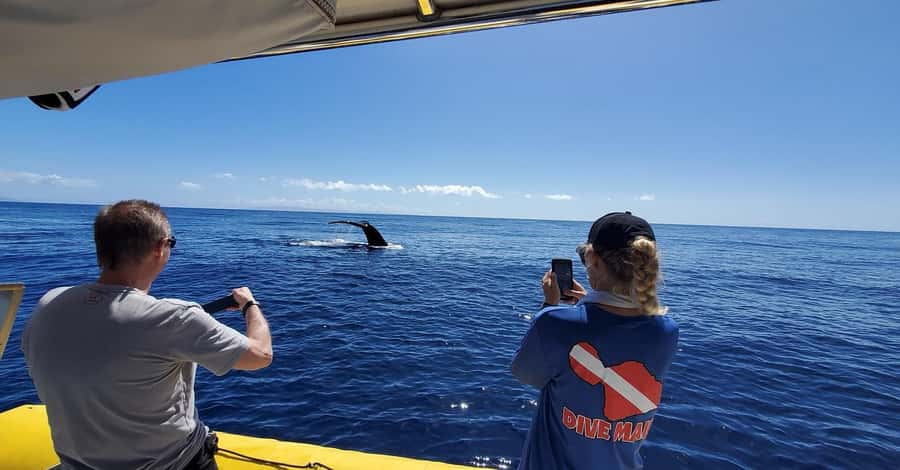
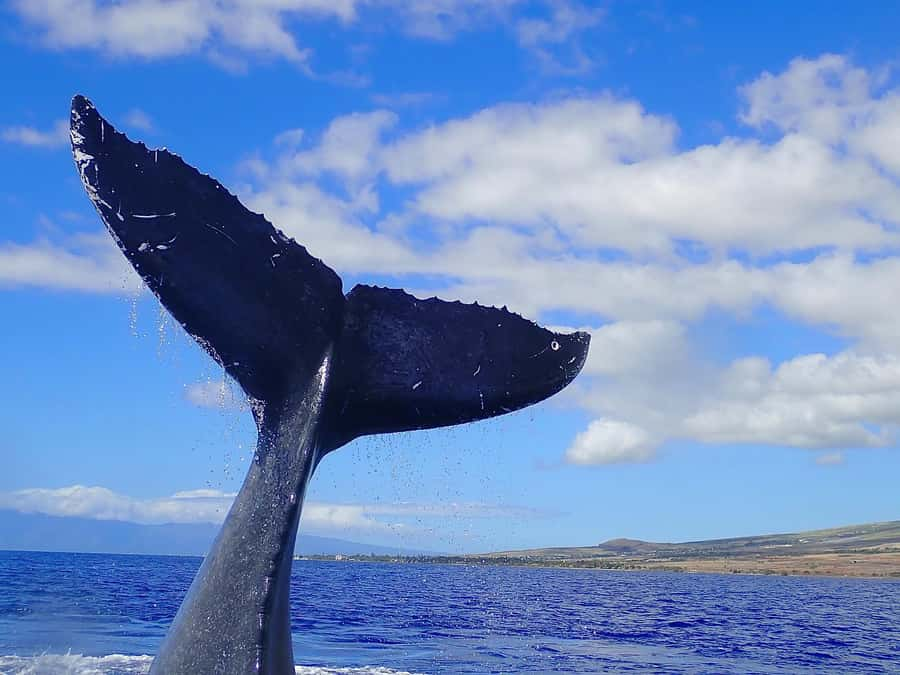
Humpback whales are the stars here, but the small raft is what makes this Lahaina outing special. You sit low on the water, close enough to see whales surface, circle, or sometimes pass beneath the boat. The crew uses a hydrophone and speakers so you can hear the animals, not just watch them.
I especially like the small-boat setting and the way the naturalists turn each sighting into a lesson. Guides including Renee, Rene, Joe, Marina, and Brian have earned strong praise for explaining whale behavior in clear, lively terms. The tradeoff is motion: wind can make the raft rocky, so this is not a good pick for young children, pregnant people, or anyone with serious back or heart concerns.
Key points at a glance
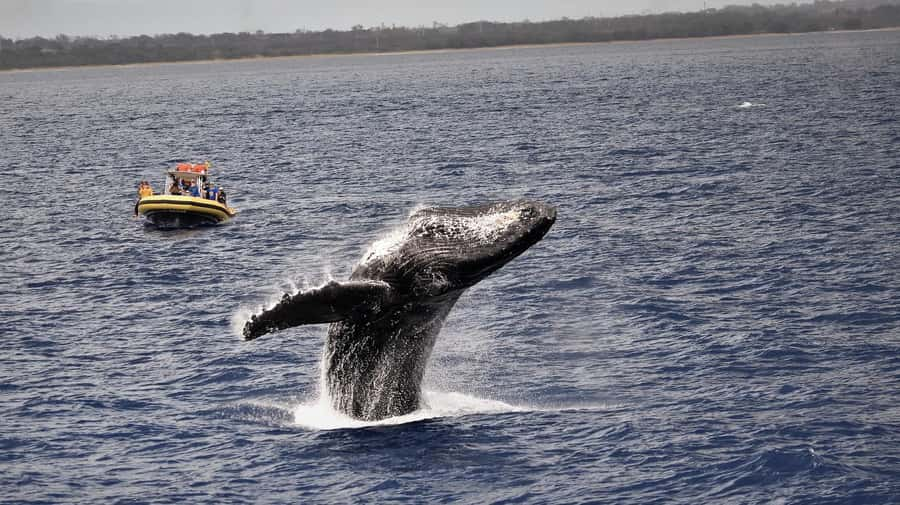
- Small raft, low viewing position: The custom-built inflatable boat puts you close to the water and can make whale encounters feel unusually personal.
- Whale songs on board: A hydrophone and speakers let you listen to humpbacks beneath the surface.
- Naturalists add real context: Crew members such as Renee, Rene, Joe, and Marina explain mating, birth, behavior, and what to watch for.
- A strong winter activity: Humpbacks come to Maui’s waters each winter to mate and give birth, with especially active sightings reported from January through March.
- Sightings are guaranteed: If conditions or whale activity produce no sightings, you receive a free trip for another day.
- Bring motion-sickness help: The raft can be bumpy in wind, and previous participants specifically recommended taking Dramamine if you are prone to seasickness.
Why this Lahaina whale tour feels different
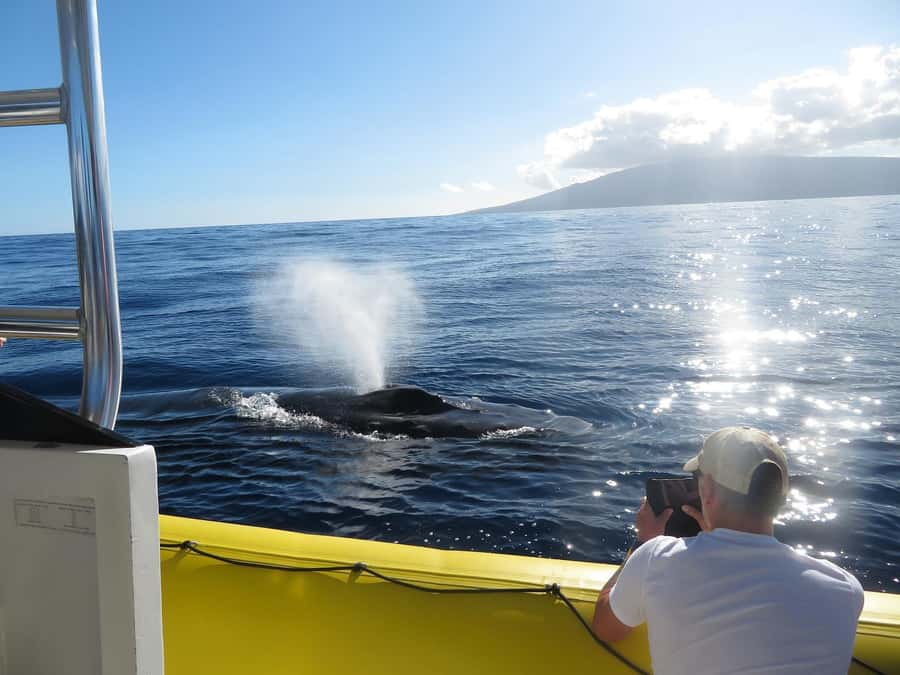
A large sightseeing boat gives you space and a steady platform. This trip takes the opposite approach. The inflatable raft keeps the group close to the sea, with a lower line of sight that can make a whale’s back, fin, or blow feel right at eye level.
That position matters. A whale surfacing beside a high boat can seem distant even when it is nearby. From a low raft, the same animal may feel much closer. Several outings have included whales moving under the boat, while other trips produced breaching whales, mothers with calves, and groups circling the raft.
I would not book this expecting a staged animal show. Whales decide where they go and how long they stay. Some departures produce repeated breaches and several close encounters. Others may bring only a few sightings. The crew can search good areas, but it cannot control the animals.
The guarantee helps soften that uncertainty. If you see no whales, you can return for another trip on a different day. You still need enough time in Lahaina to use that option, so it is smart to schedule this early in your stay rather than on your final morning.
More Whale Watching with a Marine Biologist in Maui:
- Azores: Whale Watching & Islet Boat Tour w/ Marine Biologist
★ 4.7 · 2,945 reviews - São Miguel: Whale-Watching Cruise with Marine Biologist
★ 4.6 · 1,311 reviews - SMALL GROUP Whale Watch | Cabo San Lucas | Biologist | FREE Pics
★ 5.0 · 1,106 reviews
From 1223 Front Street to the Auau Channel
You meet at Dive Maui at 1223 Front Street. The meeting point is easy to reach on foot if you are already near central Lahaina, and the listed route involves about a five-minute walk each way from the starting point to the boat area.
Parking is available along Front Street or at Lahaina Cannery Mall. Arrive on time. The boats leave on schedule, and a late arrival can mean missing the departure.
There is no hotel pickup or drop-off, so you need to arrange your own way to Front Street. Food and drinks are also not included. For a short trip of 90 minutes to two hours, that is manageable, but I would eat beforehand and bring any needed water in a suitable container. Glass objects are not allowed.
Once aboard, the raft heads toward the Auau Channel and the Maui Nui whale sanctuary. The ride itself is part of the setting, with open water and views around Maui’s coast, but the main purpose is to reach the waters used by humpbacks during their seasonal stay.
The exact sailing time can vary within the advertised range. A 90-minute trip gives you a brisk wildlife outing, while a two-hour departure leaves more time to search and watch. Check the available start times when booking, especially if you are choosing a sunset departure and have dinner plans afterward.
Humpbacks in Maui’s winter waters
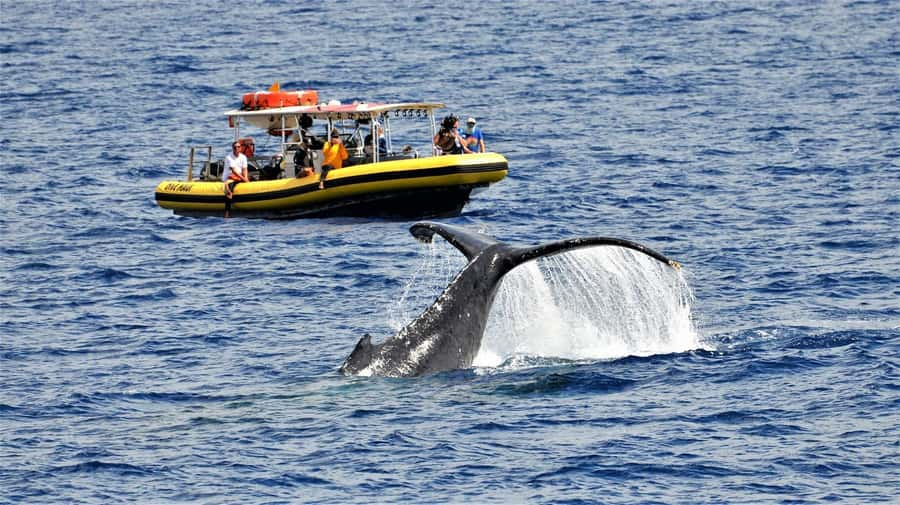
Every winter, humpback whales migrate to the waters around Maui to mate and give birth. The Auau Channel is part of the Maui area where these whales gather, making the season a natural fit for a whale-watching trip.
The supplied departures show strong activity from December through March, with sightings also possible near the end of the season in April. January and February appear especially promising for action, with reports of breaches, whales near the raft, and mothers with young. Still, this is nature, not a timed performance.
The naturalist helps you get more from quiet periods. Instead of staring at empty water, you learn what to watch for: a blow, a back rolling below the surface, a fin, a tail, or a sudden breach. The guide can also explain why whales are in Maui’s waters and what their behavior may mean.
That educational side is a major part of the value. The best trips are not only about counting whales. You come away with a better sense of what you are seeing and why the animals gather here. Renee and Rene have been singled out for making the subject clear and engaging, while Joe, Marina, Brian, and other crew members have also been praised for their instruction and care.
What the custom-built raft changes
The raft carries a relatively small group, with one departure reporting about 17 people and a stated maximum of 20. Capacity can vary by trip, but this is clearly a more intimate setup than a large excursion vessel.
A smaller group gives you a better chance of seeing over the side and hearing the guide. It also lets the captain position the boat without having to manage a huge crowd. One especially successful departure reached a whale area before other boats arrived, allowing the group some quiet time before the animals moved elsewhere.
That advantage comes with a cost. The raft has less protection from wind and waves than a larger boat. One person described a windy outing as rocky at first, with smoother water later. Another advised Dramamine for anyone sensitive to motion.
I would bring the same caution to a sunset departure. A late trip may offer beautiful changing light, but you should be ready for open-water movement and cooler conditions. The supplied information does not list clothing or camera rules, so keep your gear simple and secure. Loose items can be awkward on a moving raft.
The experience is not suitable for children under two, pregnant people, people with back problems, people with heart problems, or wheelchair users. Service animals are allowed. Those limits are not minor details: the low, moving raft is the heart of the trip, and it will not suit every body.
More Sunset Whale Watching Tours in Maui:
- Maui Premium Sunset Dinner Cruise & Whale Watch
★ 4.5 · 504 reviews - West Maui Sunset Whale Watch
★ 5.0 · 117 reviews - From Ma’alaea Harbor: Sunset Whale Watch Tour Aboard the Malolo
★ 4.0 · 58 reviews - Los Cristianos: Eco Yacht Whale Watching Tour at Sunset
★ 4.6 · 2,130 reviews
Listening to whales through the hydrophone
The hydrophone is one of the most memorable features. It picks up underwater whale sounds and sends them through speakers on the boat, giving you a chance to hear the songs while the whales are nearby.
This changes the mood of the outing. You are not simply scanning the surface for a breach. You can listen during a quieter stretch and connect the sounds with the animal behavior the naturalist describes. The sound may not be constant, since whale activity changes, but having the equipment onboard adds a sense of place that a standard visual-only trip lacks.
I like this feature because it rewards attention. A breach lasts only a moment. A whale song gives you something to focus on between surface sightings. For children old enough to handle the raft, that mix of sound, science, and wildlife can make the outing especially memorable, although the age minimum remains two and the motion may still be difficult for younger children.
What the strongest sightings can look like
The best reports from this trip describe more than a distant blow. Whales have surfaced close to the raft, swum underneath it several times, and stayed nearby for minutes. Other departures included mothers, babies, escorts, dolphins, competition pods, and repeated breaches.
Those moments are possible, not promised. You may get a spectacular show, or you may see fewer whales while still learning a great deal. One departure had limited whale action, yet the guide made the outing worthwhile through explanation and attention to the conditions.
The captain’s role matters just as much as the naturalist’s. A skilled captain reads the water, moves efficiently, and positions the raft so people can see without turning the trip into a frantic chase. Reports from the past few seasons repeatedly credit the captains with reaching active areas and placing the boat well.
Good wildlife watching also requires restraint. The crew’s job is to give you a close look while respecting the animals and the rules that govern encounters. A whale choosing to pass near the raft is far more special than a forced approach.
Day trip or sunset outing?
Both versions last about 90 minutes to two hours, so the choice comes down to your schedule and preferred atmosphere. A daytime departure gives you more straightforward viewing conditions and makes it easier to see surface details. If whale watching is a top priority, I would choose a daytime time slot and leave room in your schedule for a possible second outing.
A sunset trip can fit nicely after a morning on Maui. It may offer softer light and a calmer end-of-day feeling, but you should not choose it only for scenery. The main draw remains the whales, and their activity can be just as unpredictable at sunset as during the day.
The tour runs from Lahaina rather than collecting you from your hotel. Plan to reach Front Street early enough to park or walk from nearby lodging. Because the crew leaves on time, I would not combine the departure with a tight reservation or a long drive from another part of the island.
Is $80 a fair price?
At $80 per person, this sits in a reasonable range for a short, specialized wildlife trip. You are paying for the boat, captain, naturalist, access to the whale grounds, and the hydrophone experience. Food, drinks, and transportation to the meeting point are not part of the price.
The value is strongest when the small raft is important to you. A large vessel may be a better choice if you want a steadier ride or more room. This tour earns its price through the close-to-the-water viewpoint and the chance to hear the whales, not through onboard extras.
The free return trip also adds practical value if there are no sightings. It does not remove the need for flexible planning, since you must have another available day to use it. If you are in Maui for a week, booking early gives you the best chance to make that promise useful.
The overall rating is 4.9 from 71 reviews, and the praise is unusually consistent around three points: the crew’s whale expertise, the captain’s positioning, and the close encounters made possible by the raft. One person who had taken several whale watches called this one the best, while another advised doing it twice. I would read that as a sign that the crew adds real value, not as a guarantee of dramatic behavior on every departure.
Who should book this outing?
I would recommend it to families with older children, couples, solo visitors, and anyone who wants a more personal whale watch than a large boat usually provides. It is also a good fit if you enjoy learning as much as photographing, since the naturalist is central to the experience.
You should think twice if you get seasick, dislike open-water motion, or need a stable, accessible platform. Take motion-sickness medicine before departure if you already know you need it. Do not wait until the raft is moving.
This is also a strong choice for repeat visitors to Maui. The whale season changes from day to day, and the crew may find different behavior each time. If you are hoping to see a mother and calf, hear songs, or watch a breach, adding a second attempt can make sense if your schedule allows.
Practical details before you go
Book with enough time to choose a departure that fits your plans. The tour offers free cancellation up to 24 hours before departure and allows you to reserve now and pay later, which helps if weather may affect your Maui schedule.
The trip requires good weather. If poor conditions cancel it, you are offered another date or a full refund. That policy is useful, but remember that good weather does not promise active whales.
The tour is conducted in English. Bring only what you need, avoid glass, and secure anything you carry. Since the raft can be windy and wet, I would favor practical clothing over anything delicate, though the supplied information does not specify required clothing or equipment.
Should you book the Lahaina whale tour?
Book it if you want close, low-on-the-water whale watching with a guide who explains what you are seeing. The combination of a custom raft, hydrophone, experienced captains, and naturalists such as Renee, Rene, Joe, and Marina gives this short trip more substance than a simple boat ride.
Skip it if you need a smooth, highly stable vessel or cannot spare time for a weather change. For everyone else, $80 is a fair price for a focused Maui wildlife outing, especially during the winter whale season. Schedule it early in your stay, take motion precautions, and keep one flexible day available in case you want to use the free return trip.
FAQ
Where does the whale-watching tour meet?
You meet at Dive Maui at 1223 Front Street in Lahaina.
How long does the tour last?
The experience lasts between 90 minutes and two hours, depending on the selected departure.
What area does the boat visit?
The raft travels to the Auau Channel and the Maui Nui whale sanctuary.
Can I choose a sunset departure?
Yes. The experience offers day or sunset whale-watching options, with starting times shown according to availability.
Are whale sightings guaranteed?
If no whales are seen, you receive a free trip for another day.
What happens if bad weather cancels the tour?
You can choose a different date or receive a full refund.
Is food or hotel transportation included?
No. Hotel pickup, hotel drop-off, food, and drinks are not included.
Who should not take this tour?
The experience is not suitable for children under two, pregnant people, people with back or heart problems, or wheelchair users. Service animals are allowed.
More Evening Trips in Maui
- Funchal: Dolphin and Whale Watching Sunset Sailing Tour
★ 4.7 · 1,642 reviews - Monterey: Sunset Whale Watching Cruise with A Guide
★ 4.7 · 519 reviews - Vancouver Sunset Whale Watching Adventure with Free Photos
★ 5.0 · 454 reviews - Victoria Sunset Whale-Watching Cruise
★ 5.0 · 281 reviews
New whale trips around Maui
- Whale Watch Sail Ma’alaea★ 4.9 · 27 reviews
- Whalewatch Deluxe Tour from Ma’alaea Harbor★ 4.5 · 37 reviews
- Deluxe Whale Watching Sail on Maui★ 5.0 · 53 reviews
- 2.5 Hour Whale Escape Tour★ 5.0 · 44 reviews
- West Maui Sunset Whale Watch★ 5.0 · 117 reviews
- Whale Watch and Scenic Tour from Kayak★ 4.5 · 16 reviews
- Whale Watching Experience★ 5.0 · 142 reviews
- From Ma’alaea Harbor, Maui: Whale Watch Cruise Aboard Malolo★ 4.0 · 9 reviews
Whale Watching with a Marine Biologist, compared.
Whale Watching & Islet Boat Tour w/ Marine Biologist
Read our review →
São Miguel: Whale-Watching Cruise with Marine Biologist
Read our review →
SMALL GROUP Whale Watch | Cabo San Lucas | Biologist | FREE Pics
Read our review →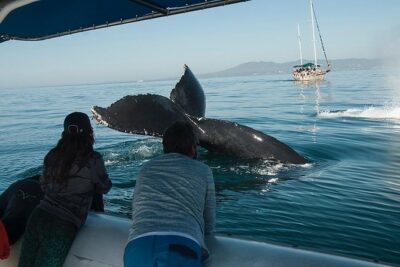
Whale and Dolphin Watching with a Biologist in Puerto Vallarta
Read our review →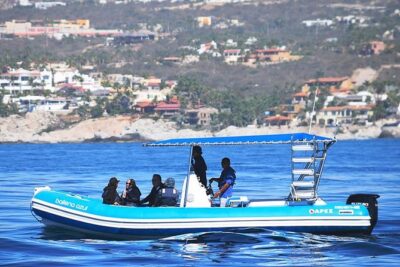
ZODIAC Whale Watch Tour | Cabo San Lucas | Biologist | FREE Pics
Read our review →
Arrábida Dolphin and Whale Watching with Biologist
Read our review →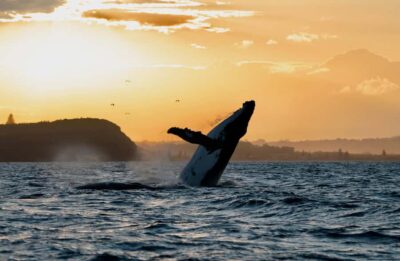
Byron Bay: Whale Watching Cruise with a Marine Biologist
Read our review →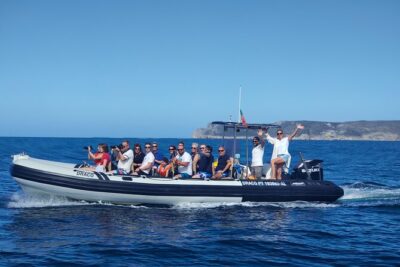
Arrábida Dolphin and Whale Watching tour with biologist
Read our review →Browse the lists this tour appears in