
Review · FRENCH POLYNESIA WHALE WATCHING TOURS
Bora Bora Whale Watching
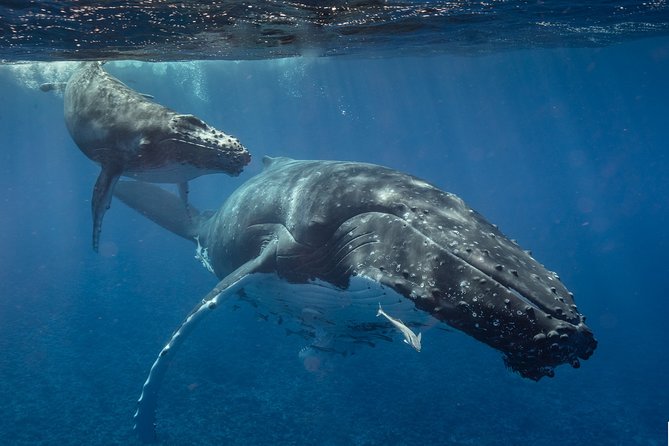
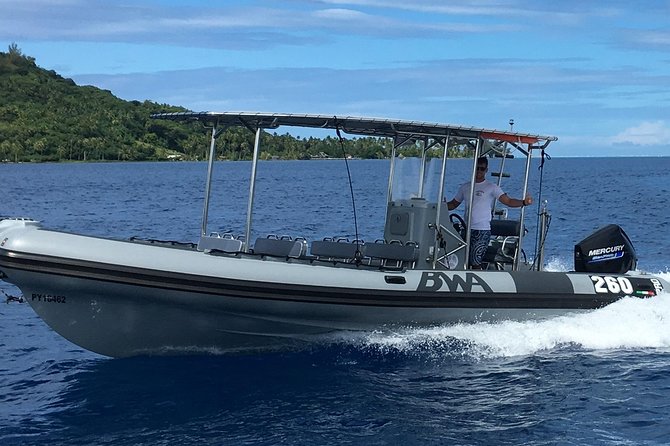
Bora Bora Whale Watching is built around one thrilling possibility: hearing humpback songs underwater, then seeing a whale surface, breach, or accept your presence in the sea. The outing uses a new 26-foot inflatable boat, which keeps the group small and puts you close to the water.
I like the private format and the hydrophone. With only your party aboard, you get personal attention rather than a crowded boat outing, and the underwater microphone adds something special even when whales stay too far away for swimming. The crew also provides hotel pickup, drinks, snorkel gear, and a light refreshment.
The catch is simple: whales are wild, and this is not a guaranteed swim. Rough Pacific conditions can make the ride uncomfortable, prevent you from entering the water, or even stop the trip altogether. At $309.73 per person, that uncertainty matters.
Key points to know before you book
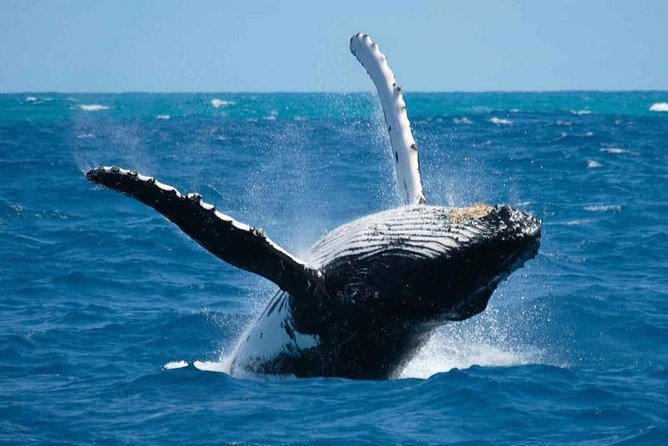
- The whale encounter is never guaranteed: You might see breaches, fins, or a mother and calf, but the animals decide how close they come.
- A hydrophone adds real value: You can listen for humpback songs while the crew searches the ocean.
- This is a small private outing: The experience is for your party, with a maximum of 10 people per booking and up to 12 participants noted for the activity.
- Swimming depends on two conditions: The sea must be safe, and the whales must tolerate the approach.
- The open-water ride can be rough: Several outings have involved choppy seas, so sun protection and motion tolerance are important.
- Dolphins and turtles may appear: They are welcome surprises, not promised parts of the trip.
Setting out from Bora Bora for the open ocean
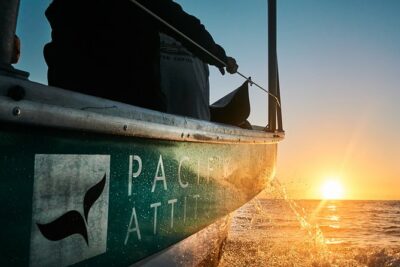
The trip lasts about three and a half hours, including hotel pickup and drop-off when a pontoon is available. The boat is a new 26-foot inflatable craft, a size that suits a small wildlife search better than a large sightseeing vessel. You have less shelter from wind and spray, but the crew can move quickly and keep the group close together.
Two naturalist guides accompany you, including a captain and a guide who handles the commentary and whale search. Their job is not simply to drive toward the first whale sighting. They use experience, visual scanning, and the hydrophone to work out where the animals may be moving.
That process can take time. You might spend long stretches looking across open water, waiting for a blow, a back, or a distant splash. I would treat this as a wildlife expedition, not a tightly scheduled attraction. The crew can work hard and still come up empty.
Hotel pickup is useful in Bora Bora, where getting between resorts and activity operators can add cost and fuss. Confirm the pickup details when you book, since the included transfer is specified for locations with a pontoon. Bottled water, soft drinks or juice, and light refreshments help, though alcoholic drinks are not included and can be purchased separately.
More whale watching around French Polynesia worth comparing
- Swimming with Whales in Moorea (Half Day tour)
★ 4.5 · 264 reviews - Whale Tour – Observe and swim with whales
★ 5.0 · 257 reviews - Whale Watching Tours in Bora Bora
★ 4.5 · 250 reviews
The hydrophone is more than a useful gadget
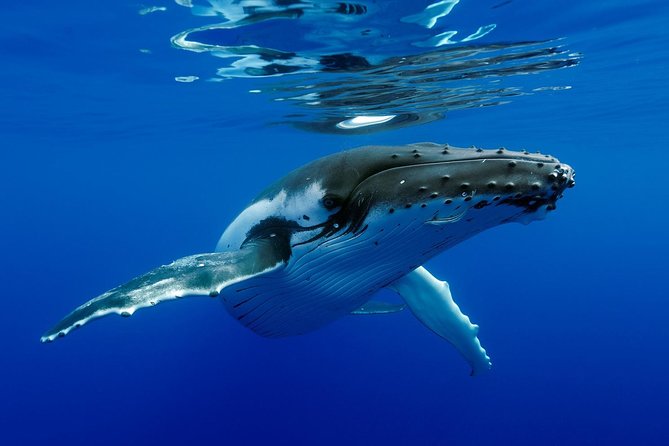
The underwater hydrophone is one of the strongest reasons to choose this tour instead of a basic boat ride. Humpback whales are famous for their songs, and the microphone lets you listen for them below the surface even before you see an animal.
That changes the mood of the search. Instead of staring at an empty horizon for three hours, you have another way to connect with what is happening under the boat. The guide can explain what you are hearing and provide information about humpback behavior.
The hydrophone cannot guarantee a sighting. It is a search tool, not a whale magnet. Still, I value it because it makes the time between sightings more meaningful and gives the guides another way to read the water.
The crew also offers live commentary throughout the trip. The supplied information does not name individual guides, but the captain and guide are central to the quality of the outing. A friendly, clear explanation matters here, especially when the wildlife does not cooperate.
What the whale search is really like
The main goal is to find migrating humpback whales in the Pacific Ocean around Bora Bora. Once the crew spots a whale, they assess its movement and the sea conditions before deciding how close to approach.
You may see a whale surface at a distance, watch it travel near the boat, or catch a dramatic breach. One particularly successful outing included a mother and calf, while another produced a whale jumping close to the boat. Those moments can make the entire search worthwhile.
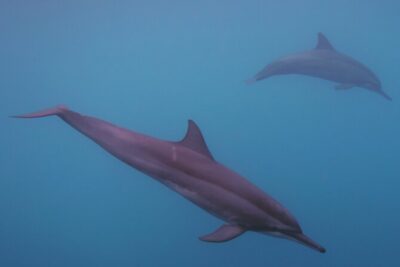
You might also see dolphins playing around the bow wave. A turtle has appeared on at least one outing as well. These sightings add variety, but I would not book this experience mainly for dolphins or turtles. The focus is humpbacks.
Some trips find whales but cannot offer a swim. A whale may remain too far away, move off, or show signs that it does not want an approach. The crew’s response is to respect the animal rather than force the encounter. That is good wildlife practice, but it can feel disappointing when swimming was the part you had imagined most.
Other trips find no whales at all. The guides may extend the search, as happened on one outing that received roughly an extra hour of effort, but even more time cannot control the ocean. If a no-sighting experience would spoil your day, choose a different Bora Bora activity or set your expectations very carefully.
Swimming with humpbacks depends on nature
If the sea is calm enough and the whales allow it, you may enter the water with snorkel equipment and swim near them. The wording matters: this is an opportunity, not a promise.
There are two separate hurdles. First, the sea must be safe. Rough water can make a swim unpleasant or impossible, even when whales are nearby. Second, the whales must accept the situation. The crew cannot make a wild animal remain in place for swimmers.
When it works, this is the experience’s great prize. One successful outing included swimming with a mother and calf. Another allowed a swimmer to observe a whale underwater after the boat joined another boat to watch it. That kind of encounter is rare enough to feel genuinely special.
You should also understand that getting in the water may not mean an easy, close approach. The animals may remain at a distance, and visibility or waves may limit what you can see. The guides make the decision based on conditions and animal behavior.
Snorkel equipment is provided. Bring a suit that is comfortable for swimming, but do not assume you will spend a long time in the water. The trip may be entirely boat-based if the whales remain distant or the sea turns rough.
Same sea, a different boat:
- Swim with humpback whales
★ 5.0 · 224 reviews - Humpback whale watching and marine life in Moorea
★ 5.0 · 199 reviews - Half day whale tour 4h00
★ 4.5 · 181 reviews - Private tour observing and swimming with humpback whales in Moorea
★ 5.0 · 126 reviews
Rough water is the main practical drawback
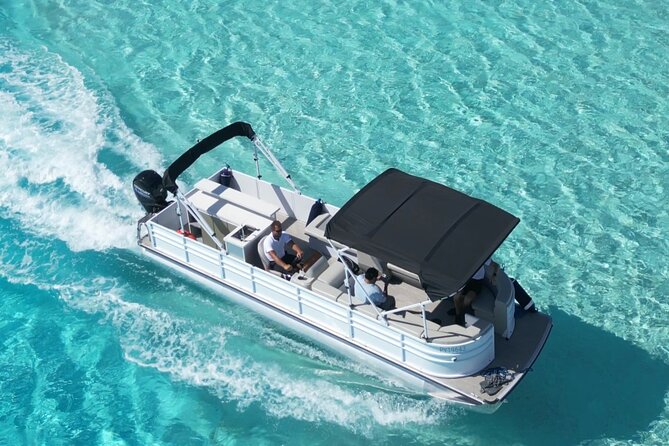
The Pacific can make this a bumpy outing. Several accounts describe rough water, and one person found the ride back especially hard on the body. Another saw whales but could not swim because the conditions were too rough.
The 26-foot inflatable boat gives the crew a nimble platform, but it does not turn a choppy ocean into a calm lagoon. You should expect spray, movement, and a full stretch of open-water travel. If you are prone to seasickness, ask your medical professional about suitable precautions before your trip.
Sun protection also matters. One unsuccessful outing left a participant sunburned during the long search. Wear strong sun protection, bring a hat that will not blow away, and use the provided water. The supplied information does not specify storage space or shade, so pack lightly and protect anything you bring from spray.
This is not the best choice for someone who wants a gentle, effortless boat tour. It suits you better if you can accept some physical discomfort in exchange for a chance at a rare wildlife encounter.
Small groups make the experience feel personal
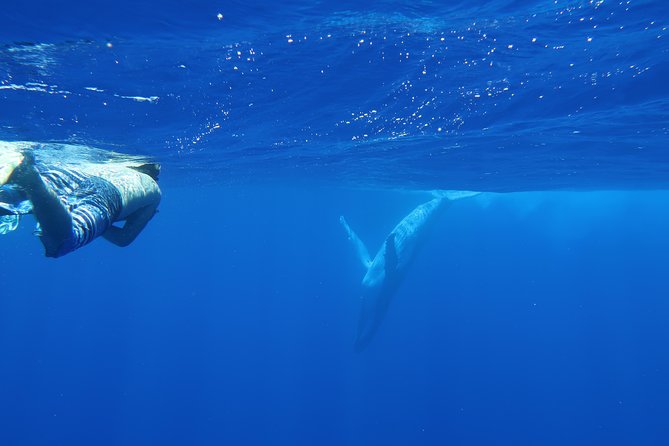
The private booking is a real advantage. Your party receives the crew’s attention, and you can ask questions without competing with a large group. The guides can explain what they are seeing, adjust the pace of the search, and give you a clearer sense of why they are changing direction.
The capacity information has two figures: a maximum of 10 people per booking and a maximum of 12 participants for the activity. Ask the operator how your specific reservation will be handled, especially if you are booking near the upper limit. In practice, the small-boat design is intended for a personal outing rather than a large crowd.
A small group also helps when the crew uses the hydrophone. You can hear the explanation and watch the water without a dozen people pushing for the same spot. On the other hand, a private booking does not give you a private whale. The wildlife result remains unpredictable for every group.
What the $309.73 price buys you
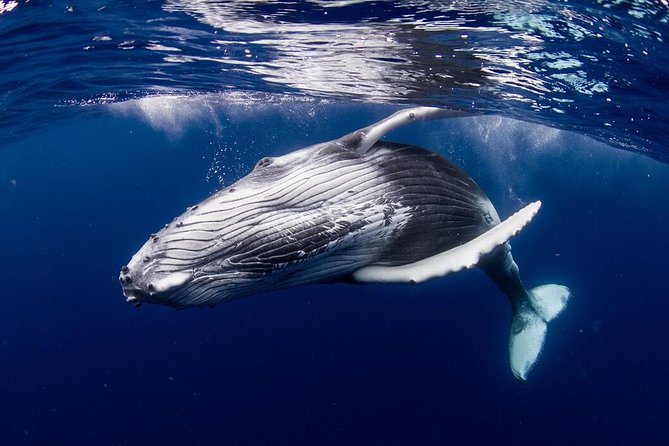
At $309.73 per person, this is a costly half-day activity. You are paying for a private boat, two crew members, hotel transfer when available, commentary, snorkel equipment, refreshments, bottled water, and the chance to encounter one of the ocean’s most impressive animals.
The value depends on how you measure success. If you see humpbacks breach and hear them through the hydrophone, the price may feel justified. If you swim near a whale, it can become one of the defining memories of your Bora Bora stay.
If you see only a distant whale, the value is less clear. If you see nothing, it can feel like an expensive boat ride, even when the crew searches longer than planned. That is not a flaw the operator can fully fix, but it is a financial risk you should accept before paying.
I would compare this with the cost of other private Bora Bora outings and ask yourself how much you value a possible wildlife encounter. The private format gives the price more substance than a standard transport trip, but no package can guarantee the moment you are buying.
What to bring and how to prepare
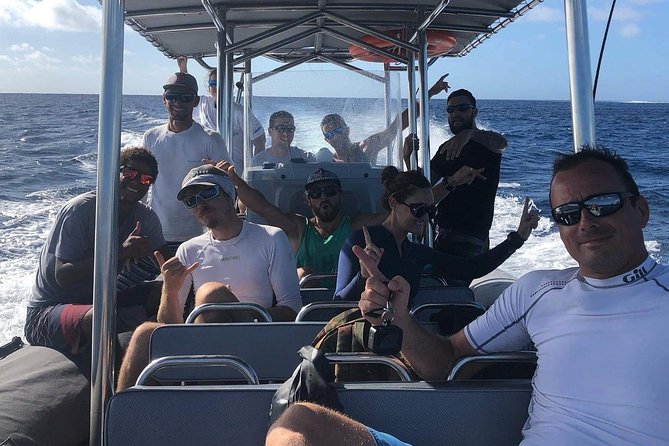
You receive snorkel equipment, water, and light refreshments, so you do not need to pack a full meal. Alcohol is not included, though it is available to purchase.
I would bring:
- Reef-safe sun protection
- A hat with a secure fit
- Swimwear and a dry change of clothes
- A towel, if your hotel does not provide one
- Any motion-sickness supplies you normally use
- A waterproof case for your phone
Do not count on receiving crew photos or videos. The activity does not include photography or video service. One customer had trouble with a GoPro and was unable to obtain a copy of footage recorded by a crew member, so bring working equipment if capturing the moment matters to you.
The most important item is patience. You may spend much of the trip searching, listening, and waiting. That is part of responsible wildlife watching, not wasted time.
Weather cancellations and flexible planning
Good weather is required. If poor conditions cancel the trip, you are offered another date or a full refund. This is sensible for an open-water activity, especially one that may involve swimming.
You can cancel for a full refund up to 24 hours before the start time. Changes or cancellations inside that window are not accepted for a refund. The operator may also cancel if the minimum number of participants is not met, with a new date, another experience, or a full refund offered.
I would schedule this early in your Bora Bora stay if you have room in your itinerary. That gives you a better chance of moving the outing if weather interrupts it. The advance booking pattern is about 72 days, so planning ahead is wise during busy periods.
Who will enjoy this whale-watching trip
I think this suits you if you:
- Want a private, small-group wildlife outing
- Are excited by the possibility of swimming near humpbacks
- Can handle an open-water boat ride
- Appreciate naturalist commentary and animal behavior
- Can accept that no whale sighting is guaranteed
- Have enough time in Bora Bora to reschedule if weather interferes
I would hesitate if you need a calm ride, a fixed sightseeing schedule, or a guaranteed swim. Families and mixed-age groups should also consider how everyone handles rough water, since most travelers can participate but the trip is still physically demanding when conditions worsen.
The strongest part of the experience is not a polished set of scheduled stops. It is the search itself, the sudden blow on the horizon, the sound through the hydrophone, and the possibility that a whale chooses to come close. That unpredictability is both the appeal and the risk.
Should you book Bora Bora Whale Watching?
Book it if the chance to see humpbacks in the wild matters more to you than certainty. The private boat, two-person crew, hydrophone, hotel transfer, and included snorkel gear give the outing real substance, and successful trips can include breaches, dolphins, turtles, and swimming with a mother and calf.
Skip it if paying $309.73 for a possible no-sighting would leave you bitter. The crew can search hard, extend the outing, and explain what is happening, but nobody can control the whales or the sea.
For the right person, this is a memorable and refreshingly honest wildlife experience. Go ready for rough water, open skies, and a long search. If the whales decide to cooperate, you may get a Bora Bora memory that no scheduled lagoon stop can match.
FAQ
How long does Bora Bora Whale Watching last?
The experience lasts approximately 3 hours and 30 minutes.
What is the price per person?
The listed price is $309.73 per person.
Is hotel pickup and drop-off included?
Hotel pickup and drop-off are included when there is a pontoon available.
Is swimming with the whales guaranteed?
No. Swimming depends on safe sea conditions and whether the whales accept the approach. You may see whales without entering the water.
What equipment is provided?
Snorkeling equipment and a hydrophone are provided. Bottled water and light refreshments are also included.
How many people can join the activity?
The booking information states a maximum of 10 people per booking, while the activity capacity is listed as up to 12 participants.
What happens if bad weather cancels the trip?
You will be offered another date or a full refund if poor weather causes the operator to cancel the experience.
New whale trips around French Polynesia
- Whale Watching Activity★ 5.0 · 8 reviews
- Observe and Swim with Whales in Tahiti★ 4.5 · 14 reviews
- Tahiti, land of whales: a unique experience!★ 5.0 · 11 reviews
- Whale watching in the calm of the peninsula with Tātahi tours★ 5.0 · 6 reviews
- Whale watching DE Tahiti Peninsula★ 5.0 · 12 reviews
- Half Day Whale Watching in a Small Shared Group★ 5.0 · 33 reviews
- Whale watching DE Humpback West Coast of Tahiti★ 5.0 · 3 reviews
- 4 Hours of Humpback Whale Watching in Tahiti★ 5.0 · 36 reviews
French Polynesia Whale Watching Tours, compared.
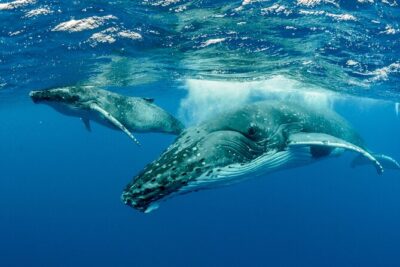
Swimming with Whales in Moorea (Half Day tour)
Read our review →
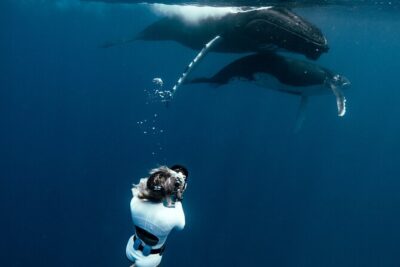
Humpback whale watching and marine life in Moorea
Read our review →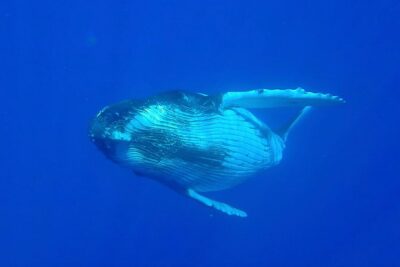
Private tour observing and swimming with humpback whales in Moorea
Read our review →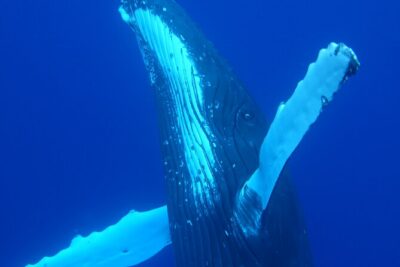
Browse the lists this tour appears in