
Review · TAHITI WHALE WATCHING TOURS
Whale watching in the calm of the peninsula with Tātahi tours
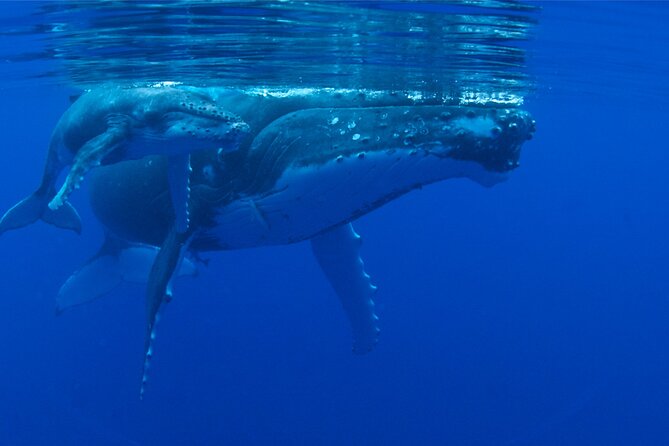
The best part of this outing is its setting: Tahiti’s quiet peninsula waters, far from the crowds and busy boat traffic of better-known resort areas. You’ll cruise between Toahotu and Teahupoo, look for whales, hear their songs through a hydrophone, and reach Fenua Aihere, a roadless part of Tahiti that can only be reached by boat.
I like the small maximum group of 12, which gives the trip a calmer feel, and I like the respectful approach to getting in the water only after a detailed briefing and when conditions allow. The main catch is the strict cancellation rule, so you’ll need a good weather window and confidence in your travel plans.
Key points to know
- Whale watching between Toahotu and Teahupoo: The trip takes place along Tahiti’s quieter southern peninsula rather than in a busy harbor setting.
- Fenua Aihere by boat: This roadless area gives the outing a sense of true remoteness and cannot be reached by car.
- Hydrophone on board: You may hear whale song as well as search for whales at the surface.
- Water entry only after a briefing: Snorkeling with the whales depends on sea and weather conditions, and animal welfare comes first.
- Small group of up to 12 people: The limited capacity suits anyone who prefers a less crowded boat trip.
- Four hours with supplies included: Snorkeling gear, water, fruit, and snacks are provided, but hotel transfers are not.
Why the Tahiti peninsula makes this whale trip different
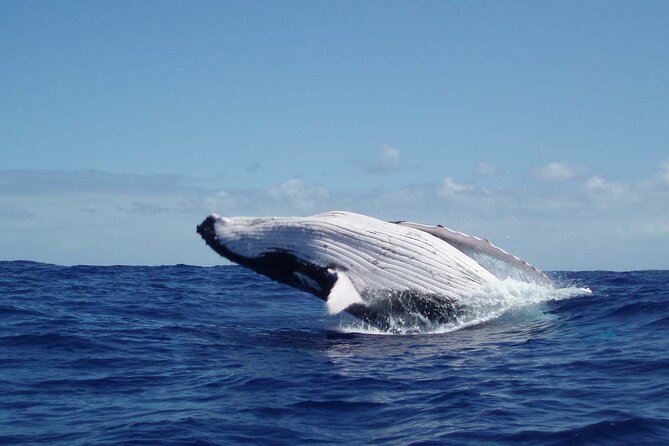
Many whale-watching outings begin in places where boats, hotels, and tour groups crowd the shoreline. Tātahi Tours takes a different approach. The trip runs along the peninsula from Toahotu toward Teahupoo, where the coast feels more open and less developed.
That quiet matters. You are not simply ticking whales off a list. You are spending several hours on a less-trafficked stretch of Tahiti, with the chance to enjoy the sea without a constant stream of other boats around you. I like that the setting is part of the experience rather than just the backdrop.
The outing also reaches Fenua Aihere, an area without a road. That detail gives you a clear idea of the place. Access is by boat, and the visit adds a sense of distance from ordinary Tahiti life. If you want a polished resort excursion with easy road access and many nearby facilities, this may feel too remote. If you want to see a quieter side of the island, it is a strong fit.
The four-hour duration gives the crew time to search rather than rush from one fixed stop to another. Whale watching is never a guaranteed wildlife show, so the extra time on the water matters. It gives you more room to enjoy the coast, listen for whales, and wait for the right moment.
More whale watching around French Polynesia worth comparing
- Swimming with Whales in Moorea (Half Day tour)
★ 4.5 · 264 reviews - Whale Tour – Observe and swim with whales
★ 5.0 · 257 reviews - Whale Watching Tours in Bora Bora
★ 4.5 · 250 reviews
Sailing from Toahotu toward Teahupoo
The meeting point is at 6M9R+3X in Taiʻarapu-Ouest, French Polynesia. You should plan your route carefully because hotel pickup is not included. The activity begins and ends at the meeting point, so you are responsible for getting there and returning to your accommodation afterward.
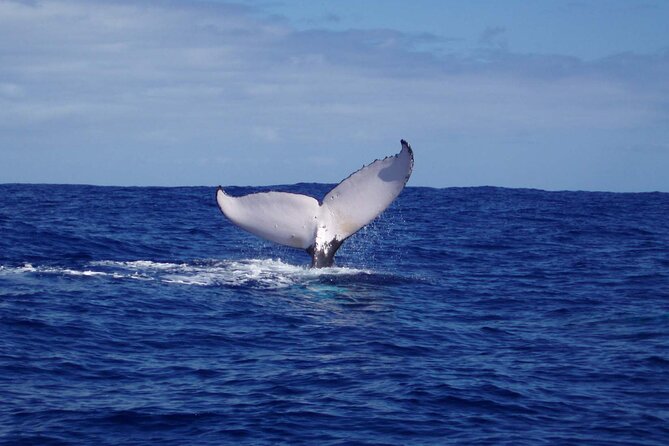
Once aboard, you’ll sail between Toahotu and Teahupoo while the crew searches for whales. The route itself is part of the appeal. Teahupoo is famous for its powerful wave, and the trip gives you the chance to admire this legendary surf spot from the water.
You may not be a surfer, and you do not need to be. Seeing Teahupoo from a boat offers a useful change of scale. From shore, it is easy to think of the wave as a distant spectacle. From the sea, you get a closer sense of the water and the coastline that made the place famous.
The route also helps explain why this outing feels different from a standard coastal cruise. You are moving through a wild, preserved part of the peninsula, not simply circling a resort area. Bring a patient attitude. The crew is searching for moving wildlife, not taking you to a fixed aquarium-style viewing point.
Learning how whales live before entering the water
During the trip, the crew provides information about whale behavior, lifestyle, and physical characteristics. This briefing gives structure to the outing. Instead of watching a distant back or tail without context, you’ll have a better idea of what you are seeing and why the animals behave as they do.
The briefing is especially important because entering the water is not automatic. The crew explains how the experience will work, and you enter only if conditions allow. That may mean suitable sea conditions, appropriate circumstances around the animals, and a safe moment for everyone involved.
I appreciate this cautious method. The main attraction is getting close to whales, but the animals are wild and should not be treated like a scheduled performance. A calm approach protects the quality of the encounter. It also means you should not book this trip expecting a guaranteed swim.
One account of the outing described seeing at least 20 whales and entering the water with full respect for the animals. That is an impressive possibility, but it should not be read as a promise. Whale numbers, behavior, and sea conditions change from day to day. The sensible expectation is a well-managed search with a chance of seeing whales at the surface and, if approved by the crew, entering the water.
Listening to whale song through a hydrophone
The hydrophone is one of the most distinctive parts of the trip. This underwater microphone lets you listen for whale song from the boat. It adds a second way to experience the animals, even when they are below the surface or out of clear view.
That matters because whale watching is often quiet. You may spend time scanning the water without an immediate sighting. The hydrophone gives that waiting period a purpose. You are not only looking for a blow, fin, or tail. You are also listening to the underwater world.
For me, this is one of the better reasons to choose a specialist whale outing over a simple boat ride. The experience is not limited to photography. Sound can make the whales feel present even when visibility is poor, and it helps you understand that much of their activity takes place beneath the surface.
The hydrophone also makes the trip worthwhile if the whales do not cooperate visually. It cannot replace a close sighting, but it gives the outing another layer and makes the time on the water feel less dependent on a single dramatic moment.
Same sea, a different boat:
- Swim with humpback whales
★ 5.0 · 224 reviews - Humpback whale watching and marine life in Moorea
★ 5.0 · 199 reviews - Half day whale tour 4h00
★ 4.5 · 181 reviews - Private tour observing and swimming with humpback whales in Moorea
★ 5.0 · 126 reviews
Fenua Aihere, a place reached only by boat
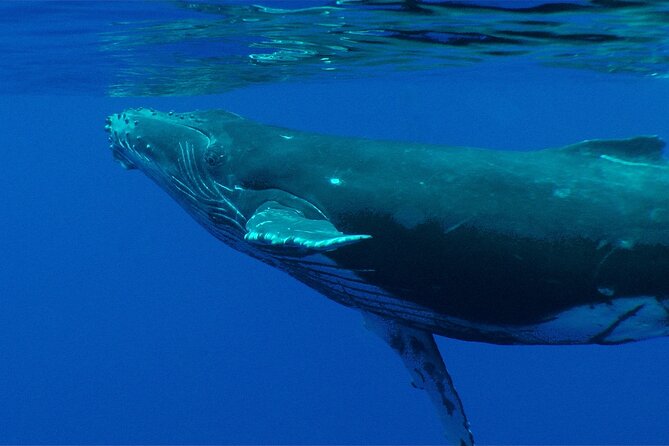
Fenua Aihere is one of the trip’s strongest features. Because there is no road, the area is accessible only by boat. That gives the stop a clear sense of separation from the developed parts of Tahiti.
You should think of this as a place to appreciate rather than a conventional attraction with signs, shops, and facilities. The value lies in the setting and the sense of distance. The boat is your link to an area that ordinary sightseeing routes cannot reach by car.
The lack of roads also creates a practical consideration. You should not expect the comfort or convenience of a developed visitor site. The provided water, fruit, and snacks help, but hotel facilities are not coming with you. Pack only what you need for several hours on the water and keep your plans flexible.
Fenua Aihere works best for people who enjoy places that feel less managed. It adds variety to the whale search and gives you a memorable geographic marker for the trip. You are not simply going out, turning around, and returning to the marina. You are reaching a part of the peninsula with no road connection.
When snorkeling with whales is allowed
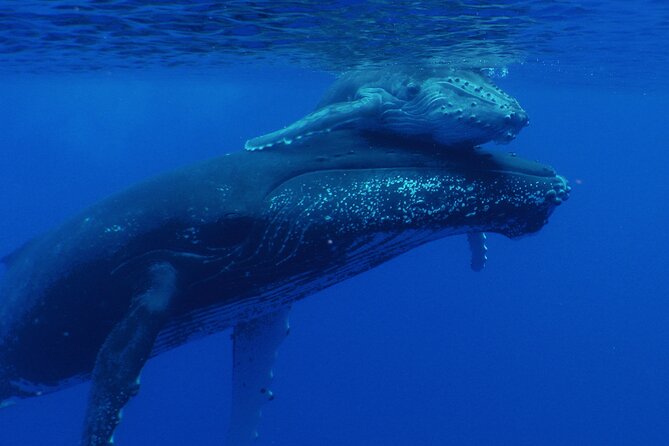
Snorkeling equipment is included, and the crew may invite you into the water after the briefing if conditions permit. That can be the most thrilling part of the experience, but it is also the part that requires the most realistic expectations.
The water entry depends on conditions. The crew will decide when it is appropriate, and you should be prepared for the possibility of remaining on the boat. This is not a weakness in the operation. It is the responsible way to handle an encounter with large wild animals.
The supplied gear keeps the trip simple. You do not need to arrange separate snorkeling equipment, and water and snacks are also included. The details are modest, but they matter during a four-hour outing. You can focus on the sea rather than wondering where to buy a drink or rent a mask.
I would treat the water entry as a bonus, not the sole reason to book. Choose this trip because you want a calm whale search with the possibility of snorkeling, not because you expect a guaranteed in-water encounter. That mindset will make the experience more enjoyable and more respectful.
What the four-hour format means for value
The price is $193.13 per person. That is not a budget boat ride, but the cost covers about four hours on the water, snorkeling equipment, water, fruit, snacks, wildlife interpretation, a hydrophone, and access to a remote stretch of the peninsula.
The group limit of 12 improves the value. A smaller boat group usually means less crowding around the viewing area and a more personal feel during the briefing. The limited capacity also suits people who find large group excursions noisy or hurried.
The price is harder to justify if you want a guaranteed whale sighting, a guaranteed swim, or hotel pickup. None of those outcomes is promised, and transportation to the meeting point is your responsibility. The value comes from the full setting: a quiet route, a specialist search, a hydrophone, the possibility of entering the water, Teahupoo, and Fenua Aihere.
The trip is booked an average of 15 days ahead, so I would not leave it until the last minute if your schedule is fixed. That timing also gives you a useful planning clue. You may want to place it early enough in your Tahiti stay to allow another date if weather causes a cancellation, provided your itinerary has room.
Who will enjoy Tātahi Tours most
I would recommend this outing to you if you value nature, quiet water, and a smaller group more than a tightly scripted sightseeing schedule. It suits people who want to see a less developed side of Tahiti and who are happy to wait patiently for wildlife.
It is also a good match for anyone curious about whale behavior. The briefing and hydrophone make the trip more than a surface-level cruise. You get information about how whales live, then a chance to listen for them underwater.
Most people can participate, according to the activity information, and the experience is near public transportation. Still, you should consider your own comfort with a four-hour boat trip and a possible water entry. The details do not specify the boat layout, sea conditions, or exact snorkeling requirements, so ask Tātahi Tours directly if you have specific mobility or medical concerns.
This is less suitable if you need a fixed list of guaranteed stops. The whale search controls the pace, and the water entry depends on conditions. It is also less suitable if you want door-to-door convenience, since hotel transfer is not included.
Practical planning for the meeting point and weather
You receive a mobile ticket, which is handy when you are moving around Tahiti and do not want to manage printed paperwork. Confirmation is sent within 48 hours of booking, subject to availability.
The activity starts at the listed meeting point in Taiʻarapu-Ouest and returns there at the end. Check your transport plan before booking. The fact that the meeting point is near public transportation may help, but the tour does not include a hotel transfer.
Weather deserves serious attention. The outing requires good conditions, and if poor weather forces a cancellation, you are offered a different date or a full refund. At the same time, the standard cancellation policy is strict: the experience is non-refundable and cannot be changed for personal reasons after booking.
That combination means you should book carefully. Weather-related protection is provided if the operator cancels, but you do not get the same flexibility if your own plans change. I would avoid placing this trip on the final morning of a short stay unless you have no other option.
What to bring and what is already supplied
Tātahi Tours provides snorkeling equipment, water, snacks, and fruit. That covers the basic needs for the four-hour outing and reduces the amount you need to organize before departure.
You should still plan for a boat day. Bring practical sun protection and any personal items you need, but avoid overpacking. Since the exact onboard storage arrangements are not given, compact belongings are the sensible choice.
The most important thing to bring is patience. Whale watching involves time spent scanning the water and waiting for the right conditions. A phone or camera may be useful, but the hydrophone and the setting are just as important as a photograph.
Do not build your expectations around one specific wildlife moment. You might see whales at the surface, hear them below, and possibly enter the water. You might also spend more time searching than swimming. The trip is strongest when you value the whole four-hour experience.
Is this Tahiti whale tour worth booking?
I would book Tātahi Tours if you want a small-group outing in one of Tahiti’s quietest coastal areas, and if you appreciate responsible wildlife viewing more than guaranteed results. The combination of whale search, hydrophone, Teahupoo, and boat-only access to Fenua Aihere gives the trip real character.
The price makes sense for a four-hour specialist experience with equipment and refreshments included, especially with a maximum of 12 people. It makes less sense if hotel pickup, a guaranteed sighting, or a guaranteed swim is essential.
Book well ahead, leave room in your schedule for weather, and treat snorkeling as a possibility rather than a promise. If that approach suits you, this is a thoughtful way to spend half a day on Tahiti’s preserved peninsula.
FAQ
How long is the whale-watching experience?
The activity lasts approximately four hours.
Where does the tour begin and end?
It begins at 6M9R+3X Taiʻarapu-Ouest, French Polynesia, and ends back at the same meeting point.
Is hotel transportation included?
No. Hotel transfer is not included. The meeting point is near public transportation.
Is snorkeling equipment provided?
Yes. Snorkeling equipment is included, along with water, snacks, and fruit.
Will I definitely enter the water with the whales?
No. You may enter the water after a detailed briefing if conditions allow. The water entry is not guaranteed.
What happens if poor weather cancels the activity?
If poor weather causes the cancellation, you are offered a different date or a full refund. Personal cancellations or changes are non-refundable.
New whale trips around French Polynesia
- Whale Watching Activity★ 5.0 · 8 reviews
- Observe and Swim with Whales in Tahiti★ 4.5 · 14 reviews
- Tahiti, land of whales: a unique experience!★ 5.0 · 11 reviews
- Whale watching DE Tahiti Peninsula★ 5.0 · 12 reviews
- Half Day Whale Watching in a Small Shared Group★ 5.0 · 33 reviews
- Whale watching DE Humpback West Coast of Tahiti★ 5.0 · 3 reviews
- 4 Hours of Humpback Whale Watching in Tahiti★ 5.0 · 36 reviews
- WHALE TOUR – Watching and Swimming with Whales★ 5.0 · 52 reviews
Tahiti Whale Watching Tours, compared.
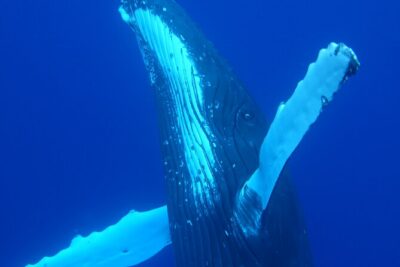

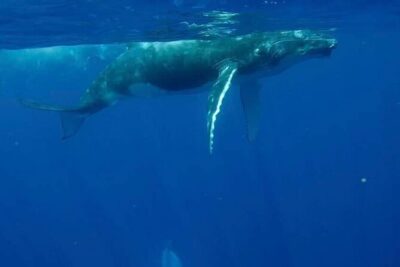
Guided Small Group Whale Watching and Swim Tour Tahiti
Read our review →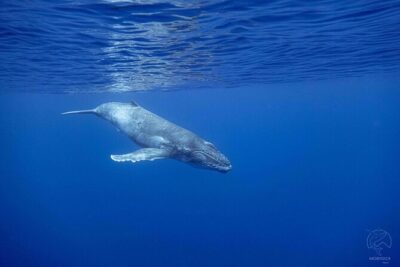
Whale watching on the preserved and quiet coast of Paea (Pk26)
Read our review →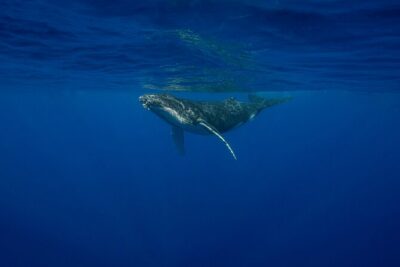
Half Day Whale Watching in a Small Shared Group
Read our review →
Browse the lists this tour appears in