
Review · MUSEUMS
Húsavík: Whale Museum Entry Ticket
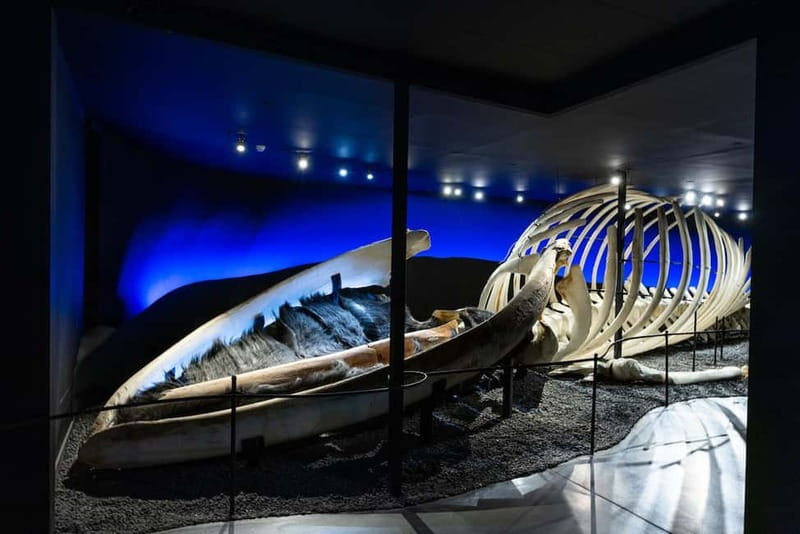
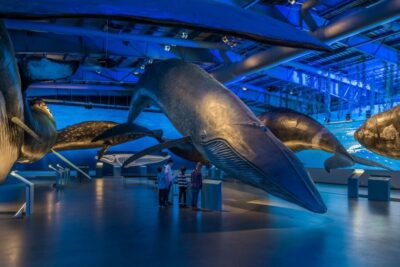
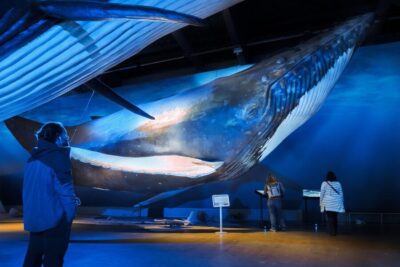
Húsavík Whale Museum puts real scale in front of you. Its 13 whale skeletons show just how large and varied these animals are, while eight exhibition spaces explain their biology, behavior, senses, and place in Icelandic culture.
I like the clear focus on real specimens and the way the museum links science with the history of whaling. I also like that your ticket covers every exhibition space for the day, giving you room to read at your own pace. The main drawback is access: the first floor works for wheelchair users, but the second floor does not.
Key points
- Thirteen real whale skeletons give the museum its strongest visual impact.
- Eight exhibition spaces cover evolution, senses, behavior, mating, species, conservation, and whaling in Iceland.
- A permanent exhibit explains how whales experience the world, not just what they look like.
- The Atlantic Ocean species section helps you compare the whales you may see around Iceland.
- Souvenir purchases support conservation efforts, adding a practical way to support the museum’s work.
- One-day admission costs $21 per person, with access to all exhibition spaces.
Why Húsavík Whale Museum Deserves Time
Húsavík is well known for whale watching, but the sea does not always provide a perfect show. Weather, timing, and animal behavior are all beyond your control. The museum gives you a useful second part to the whale experience, one that works in any weather and does not depend on spotting a single fin.
I like this combination. A boat trip can show you whales in their natural setting, while the museum explains what you are seeing. Even if you are not planning a whale-watching outing, the museum gives you a clearer sense of the animals that live in the waters around Iceland.
The visit is also easy to fit into a day in town. Your admission is valid for one day, and the ticket includes all eight exhibition spaces rather than just a single featured display. That matters because the museum covers several subjects, and you will get more from it if you allow enough time to read and compare the exhibits.
More Museum Visits in Iceland:
- Reykjavik: Whales of Iceland Museum Entrance Ticket
★ 4.4 · 493 reviews - Reykjavik: Whale Watching Tour, Whales of Iceland Exhibition
★ 4.4 · 187 reviews - Reykjavik: Whale Watching Excursion & Whale Exhibition
★ 4.5 · 42 reviews
Start With the Real Whale Skeletons
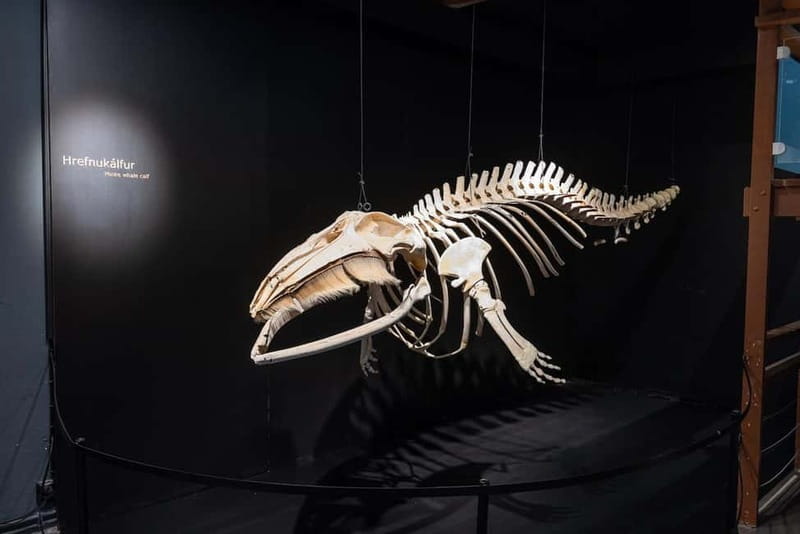
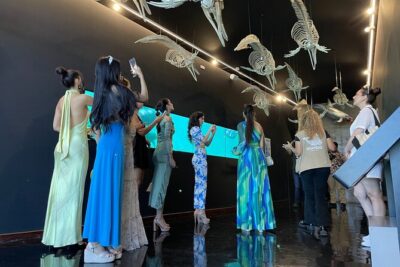
The skeleton collection is the museum’s most immediate draw. You see 13 real whale skeletons, not just drawings or scale models. That makes size, bone structure, and body shape much easier to grasp.
A whale skeleton can look almost architectural. The long spine, ribs, jaw, and flippers show how an animal built for life in water is put together. You can also compare the skeletons and notice that whales are not all shaped the same way. Their bodies reflect different sizes, feeding styles, and ways of moving through the sea.
The skeletons are especially useful for families. Children often understand scale faster when they can look up at an actual specimen rather than read a number on a panel. Adults get something from them too, especially if a whale-watching trip left you wondering how such a large animal can move so quietly.
One verified booking review singled out the skeletons as impressive. That praise makes sense, since the physical specimens are the part of the museum you cannot replace with a short online article or a quick photograph.
Eight Exhibition Spaces With More Than One Story
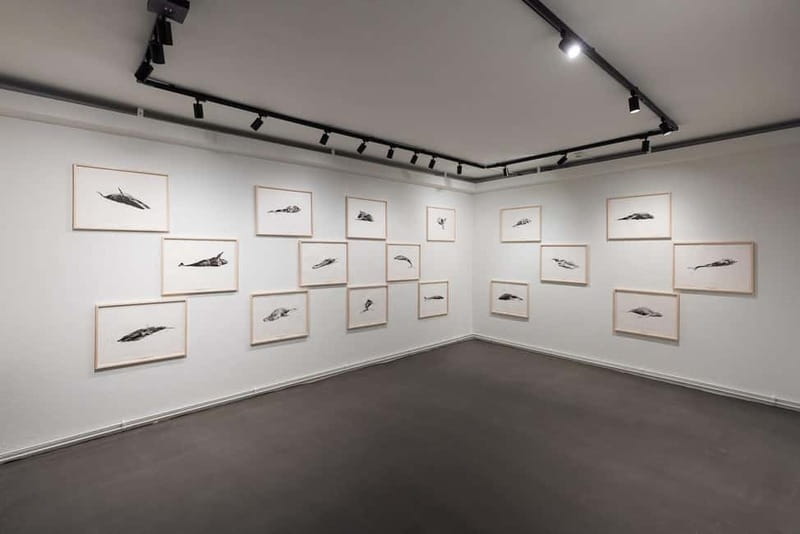
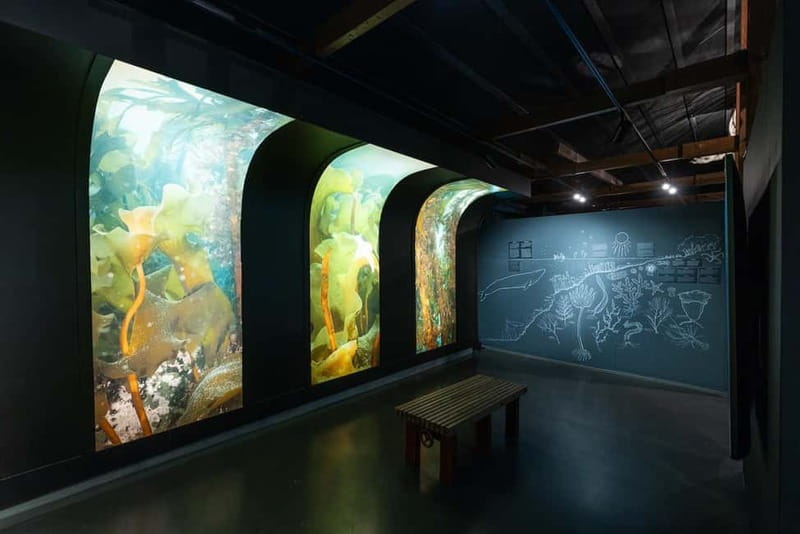
The museum is not only a collection of bones. Its eight exhibition spaces build a broader picture of whales and their connection to Iceland. The permanent exhibit covers evolutionary history, sensory perception, behavior, mating patterns, and the main whale species found in the Atlantic Ocean.
I recommend giving each subject some attention rather than rushing straight to the skeletons. The displays are arranged around questions that help you understand whales as living animals. How did they develop? How do they sense their surroundings? How do they behave with one another? What species are found in the surrounding ocean?
This structure gives the visit a sensible flow. You begin with the long story of whale evolution, then move toward the way whales function and communicate, before considering individual species and human activity. The format should suit both a first-time visitor and someone who already knows a little about marine life.
Because the museum offers informative presentations and interactive displays, you are not limited to reading wall text. The supplied information does not specify the exact format of every interactive feature, so I would treat them as helpful additions rather than plan the visit around a particular activity.
Whale Evolution and the Long Road Back to the Sea
The evolutionary section explains how whales developed over time. That context matters because whales look so unlike most land mammals, yet their story is tied to life on land and in water.
The museum uses this section to place modern whales within a longer biological story. You can expect information about how their bodies changed, how they adapted to marine life, and why their anatomy looks the way it does today.
This is one of the most useful parts for anyone who has only encountered whales as large shapes at the surface. Evolution helps explain the details you see in the skeletons. The bones are not just large; they are evidence of adaptation.
I like having this material near the physical specimens. You can read about change over time, then look at the skeletons and connect the text with something concrete. That combination tends to stay with you longer than either a display or a lecture alone.
More Entry Tickets in Iceland:
- Whales Of Iceland Admission Ticket
★ 4.0 · 239 reviews - Reykjavik: Premium Whale Watching with Flexible Ticket
★ 4.1 · 54 reviews - Reykjavík: Whale Watching Cruise and FlyOver Combo Ticket
★ 4.6 · 7 reviews - Aquarium of Genoa Ticket and Whale Watching Cruise
★ 4.2 · 170 reviews
How Whales Sense Their World
Whales do not experience the ocean in the same way you do. The museum has a section devoted to sensory perception, which gives you a closer look at how whales gather information and respond to their surroundings.
This subject adds depth to the visit. You are not only learning where whales live or how big they are. You are considering how they find their way, interact with one another, and function in an environment where visibility can vary.
The information is also useful before a whale-watching trip. You may watch the sea differently after learning that a whale’s world depends on more than what appears above the surface. Instead of waiting only for a dramatic breach, you begin to think about the animal’s behavior and the signals you may not see.
The museum’s focus on sensory perception is a strong reason to visit even if you already know the basic whale species. It moves the subject beyond simple identification and toward the way whales live.
Behavior, Mating Patterns, and Atlantic Species
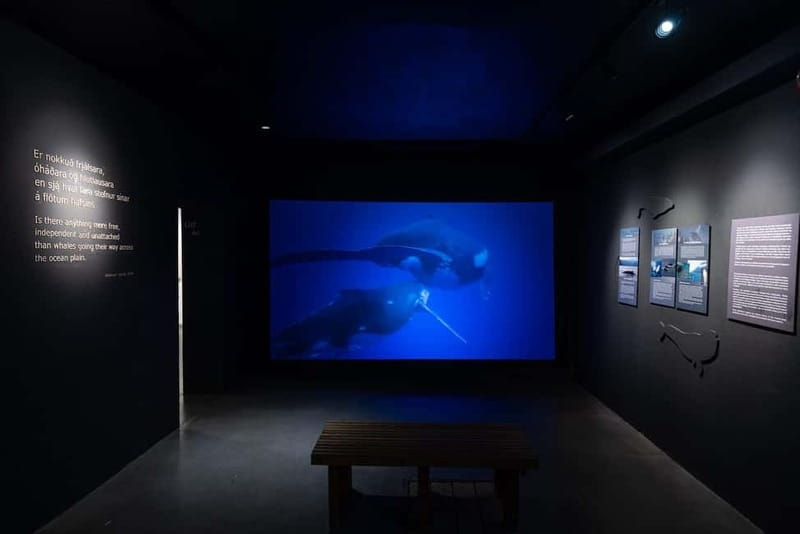
Another part of the permanent exhibit covers whale behavior and mating patterns. These subjects help explain whales as social and active animals, rather than museum objects arranged for display.
The species section focuses on the main whales found in the Atlantic Ocean. That regional focus is practical for a visit to Iceland. You are learning about animals connected to the surrounding waters, not only distant species with no link to your trip.
You can use this section as preparation for seeing whales at sea, or as a way to make sense of what you may have already seen. The information should help you distinguish between broad types of whales and understand that different species have different habits and physical traits.
The museum does not present every part of whale life as a simple spectacle. By including behavior and mating, it gives you a fuller picture of the animals. That balance is important, particularly in a place where whale watching and whaling are both part of the local story.
Iceland’s Whaling Past and Conservation Work
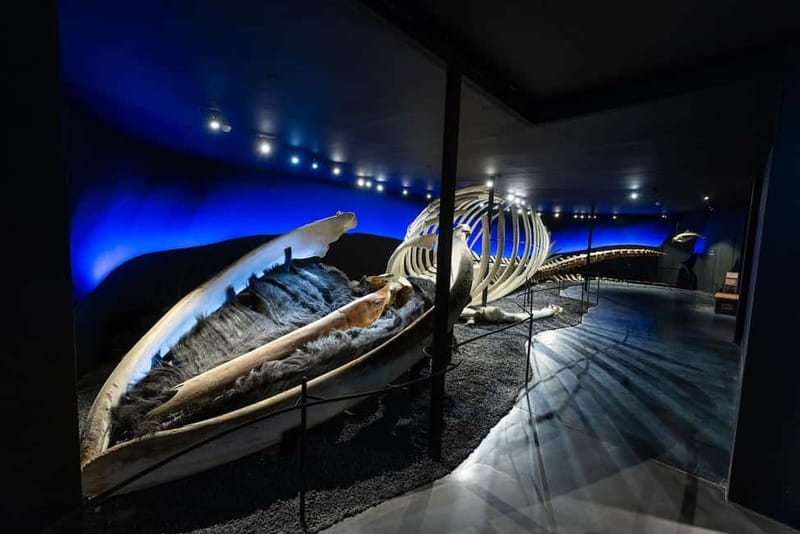
The museum also explains the history of whaling in Iceland. This subject may be uncomfortable, but it belongs in a museum about whales in Iceland. You need that context to understand how people have used the sea, how whales became part of local life, and why conservation matters today.
The presentation connects human activity with the biology and importance of whales in marine ecosystems. That makes the conservation message more grounded. Instead of treating protection as an abstract idea, the museum shows why knowledge of whales and their place in the ocean matters.
I appreciate that the museum includes both the past and the current need for stewardship. You are not asked to look at whales only as symbols or tourist attractions. The exhibits encourage a more careful view of the animals and the ocean around them.
You can also support the museum’s conservation efforts by purchasing a souvenir. That is optional, of course, but it gives you a direct way to contribute beyond the admission fee. I would see the shop as a sensible final stop after the exhibits, especially if you want something connected to the museum’s work.
What $21 Buys You
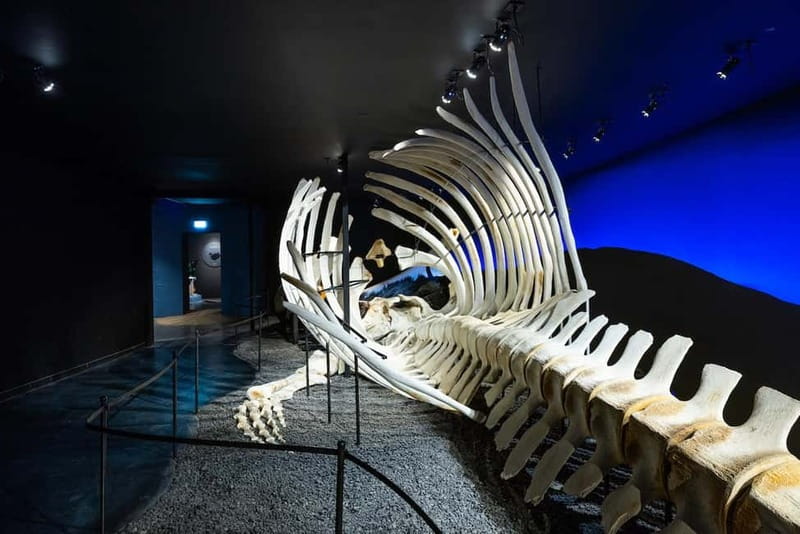
At $21 per person, the ticket is not a throwaway stop, but it offers more than a quick display room. You receive entrance to the museum and access to all eight exhibition spaces for one day. The value depends on how much attention you give the exhibits.
If you spend only a few minutes looking at the skeletons, the price may feel high. If you read through the sections on evolution, perception, behavior, mating, species, whaling, and conservation, the visit becomes a substantial educational stop.
The museum also has value as a weather-proof plan. Northern Iceland can change quickly, and an indoor attraction gives you something dependable to do when outdoor plans are less appealing. It is also a useful option for families, since the skeletons provide an immediate visual hook while the displays offer material for older children and adults.
Admission includes the full museum rather than a limited area. That makes the ticket easier to justify for anyone interested in marine life, natural history, or Icelandic culture.
Access, Language, and Practical Details
The host or greeter language is English, and the museum information is provided in English. That makes the visit straightforward for English-speaking visitors who want to follow the science and cultural material without a language barrier.
The entrance, souvenir shop, and first floor are wheelchair accessible. The second floor is not wheelchair accessible, so this is an important point to consider before booking. The supplied information does not give further details about lifts, seating, or assistance, so you should contact the museum directly if you need specific arrangements.
The ticket is valid for one day, and availability includes starting times that you can check when booking. You can cancel up to 24 hours in advance for a full refund, and the reserve-now, pay-later option keeps payment from being due immediately. These terms are useful if your northern Iceland plans depend on weather or changing road conditions.
No individual guide names are provided, and this is best understood as a museum admission rather than a named guided tour. You can expect an English-language museum experience, but you should not book it expecting a personal guide to lead you through every display.
Who Will Get the Most From This Visit
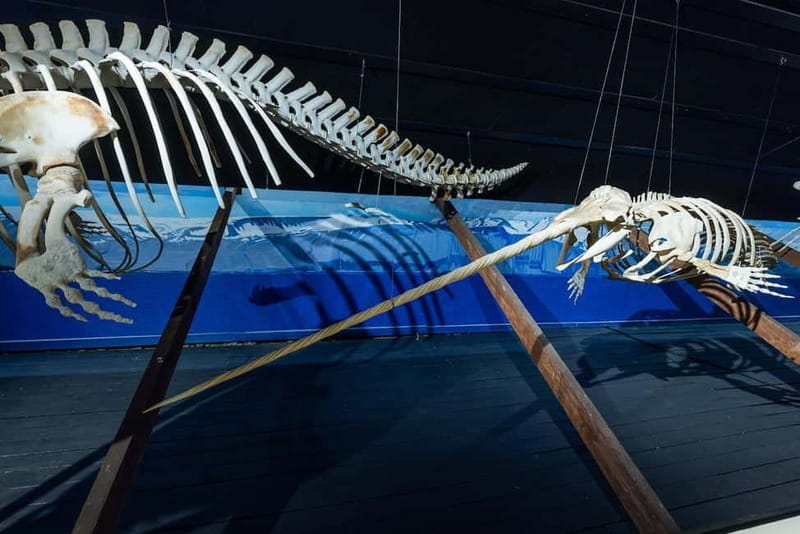
I would recommend the museum to several kinds of visitors:
- Whale-watching enthusiasts who want more context before or after time at sea.
- Families looking for a clear, visual introduction to whale biology.
- Nature-minded visitors interested in conservation and marine ecosystems.
- Anyone curious about Icelandic whaling and the relationship between people and the ocean.
- Rainy-day planners who want a dependable indoor stop in Húsavík.
- Photography and anatomy fans who enjoy the scale and structure of real skeletons.
You may find it less rewarding if you want a fast attraction with little reading. The museum covers several subjects, and the best value comes from taking time with the displays. The second-floor access limit may also rule it out for some wheelchair users, even though key areas on the first floor are accessible.
Should You Book the Húsavík Whale Museum?
Book it if you want more than a brief look at whales. The 13 real skeletons provide the strongest reason to enter, while the eight exhibition spaces add useful material on evolution, senses, behavior, Atlantic species, whaling, and conservation.
At $21, I would make room for it if you have an interest in marine life or if weather disrupts outdoor plans. It is also a good companion to whale watching because it helps you understand the animals beyond the few moments they appear at the surface.
Skip it only if your schedule is extremely tight, you are unlikely to read the exhibits, or the second-floor access issue is a serious concern. For most visitors with time in Húsavík, this is a worthwhile educational stop with real specimens, a clear subject, and a practical connection to Iceland’s ocean.
FAQ
Where is the Húsavík Whale Museum?
The museum is in Húsavík in northeastern Iceland.
How much does admission cost?
The listed price is $21 per person.
How long is the ticket valid?
The admission is valid for one day.
What does the ticket include?
It includes entrance to the Húsavík Whale Museum and access to all exhibition spaces.
How many exhibition spaces does the museum have?
The museum has eight exhibition spaces.
How many real whale skeletons are on display?
The museum displays 13 real whale skeletons.
What subjects does the museum cover?
The exhibits cover whale evolution, sensory perception, behavior, mating patterns, Atlantic whale species, conservation, and the history of whaling in Iceland.
Is the museum wheelchair accessible?
The entrance, souvenir shop, and first floor are wheelchair accessible. The second floor is not wheelchair accessible.
What language is available at the museum?
The host or greeter language is English, and the listed activity language is English.
Can I cancel the booking?
Yes. You can cancel up to 24 hours in advance for a full refund.
New whale trips around Iceland
- Reykjavik: Whale Watching & Lava Show★ 5.0 · 4 reviews
- Akureyri: Whale Watching Tour & Forest Lagoon Entrance★ 3.8 · 4 reviews
- Reykjavik: Whale & Marine Adventure Tour★ 4.3 · 71 reviews
- Icelandic Horse Riding and Whale Watching Cruise from Reykjavík★ 4.0 · 14 reviews
- Whale Wonders Morning Expedition from Reykjavík★ 4.0 · 10 reviews
- Whales Of Iceland Admission Ticket★ 4.0 · 239 reviews
- Whale Watching and Northern Lights Half-Day Combo Tour★ 4.5 · 43 reviews
- Whale Watching by RIB Speedboat from Downtown Reykjavik★ 4.5 · 26 reviews
Museums, compared.
Whale Watching Tour, Whales of Iceland Exhibition
Read our review →
Deluxe Whale Watching and Whales of Iceland Exhibition Combo from Reykjavik
Read our review →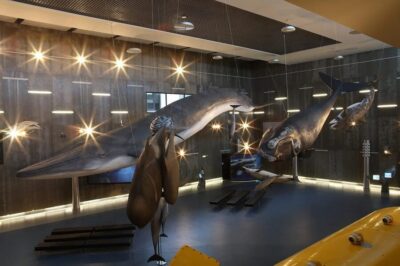
Browse the lists this tour appears in