
Review · MUSEUMS
Reykjavik: Whale Watching Tour, Whales of Iceland Exhibition
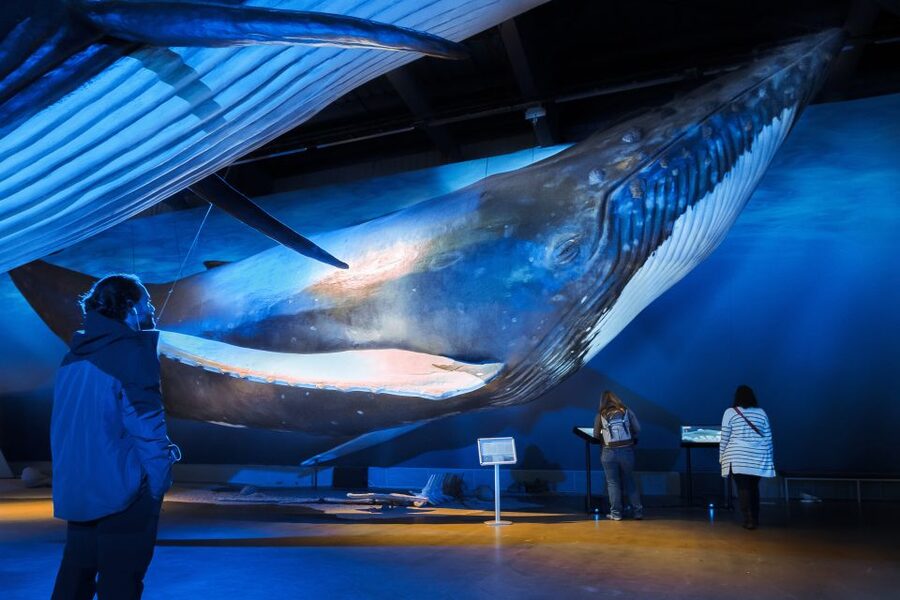
The best part of this Reykjavik outing is the contrast: first you search Faxaflói Bay for a living whale, then you stand beside a full-size model and grasp its true scale. A humpback surfacing near the boat can be thrilling, but the museum helps you understand what you just saw.
I like the large whale-watching boat, which gives you room to move between outdoor viewing areas and warmer indoor seats. I also like the free return ticket if the sea stays quiet, plus the museum’s 23 life-size models, which turn hard-to-picture facts into something you can see up close.
The main drawback is simple: wildlife follows its own schedule. Sightings are less likely outside April through September, and even in summer nothing is promised. The boat can also be cold and windy, so warm layers matter more than fashionable Iceland photos.
Key points to know before you book
- Two-part experience: Search for whales in Faxaflói Bay, then visit the Whales of Iceland Exhibition.
- Common sightings: Minke whales, humpback whales, white-beaked dolphins, and harbor porpoises are the main possibilities.
- Helpful guides: Guides including Lucas, Daniel, Oskar, and Ivan have been praised for clear explanations and good humor.
- Good cold-weather setup: Thermal overalls are supplied, with children’s sizes available, and there are indoor areas on the boat.
- Useful backup plan: If you see no wildlife, you receive a free ticket to try the boat trip again.
- Flexible museum order: You can visit the exhibition before or after the boat tour.
Sailing from Reykjavik’s Old Harbor
Your boat trip begins at the local partner’s office near Reykjavik’s Old Harbor. From there, you head into Faxaflói Bay, the broad body of water that opens west from the capital.
This is not a quick harbor cruise. The boat spends about three hours looking for marine life, so patience is part of the deal. Your guide explains what you are seeing, answers questions, and helps you learn how to watch the water. You are not simply waiting for a black fin to appear. You are learning where and when to look.
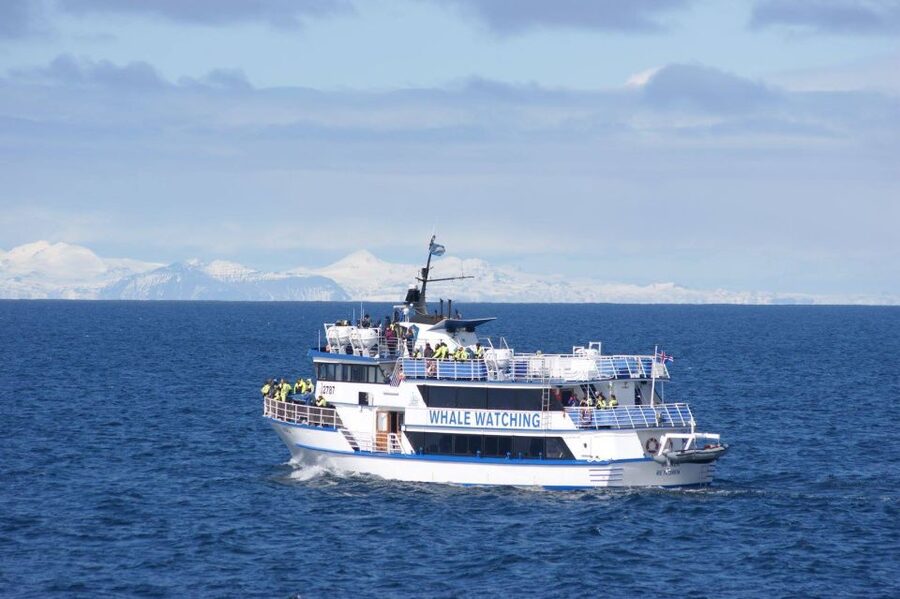
The boat is one of the larger whale-watching vessels in Iceland. That matters on a busy departure because you have more room to spread out, change viewing spots, and step inside when the wind gets sharp. One useful tip is to arrive early if you want a strong position upstairs. A parent traveling with a disabled daughter arrived about 40 minutes ahead to make the gangplank and seating easier.
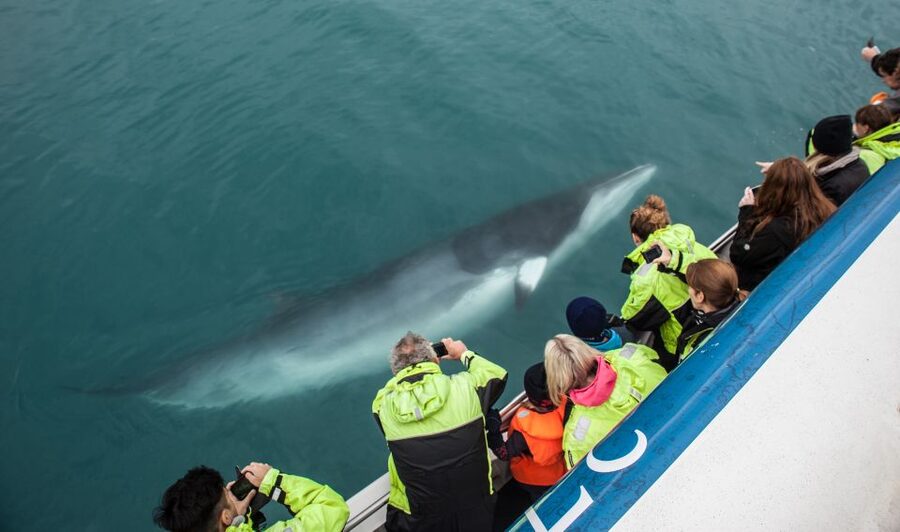
The upper deck offers the broadest views, but it is also the coldest place to sit. Bring several warm layers, a hat, gloves, and sturdy shoes. Thermal overalls are supplied, including children’s sizes, but they work best over sensible clothing rather than as a replacement for it. Sunscreen is worth packing in summer, when the open deck can be bright even if the air feels cool.
More Museum Visits in Reykjavik:
- Reykjavik: Whales of Iceland Museum Entrance Ticket
★ 4.4 · 493 reviews - Reykjavik: Whale Watching Excursion & Whale Exhibition
★ 4.5 · 42 reviews - Deluxe Whale Watching and Whales of Iceland Exhibition Combo from Reykjavik
★ 4.5 · 13 reviews
What you may see in Faxaflói Bay
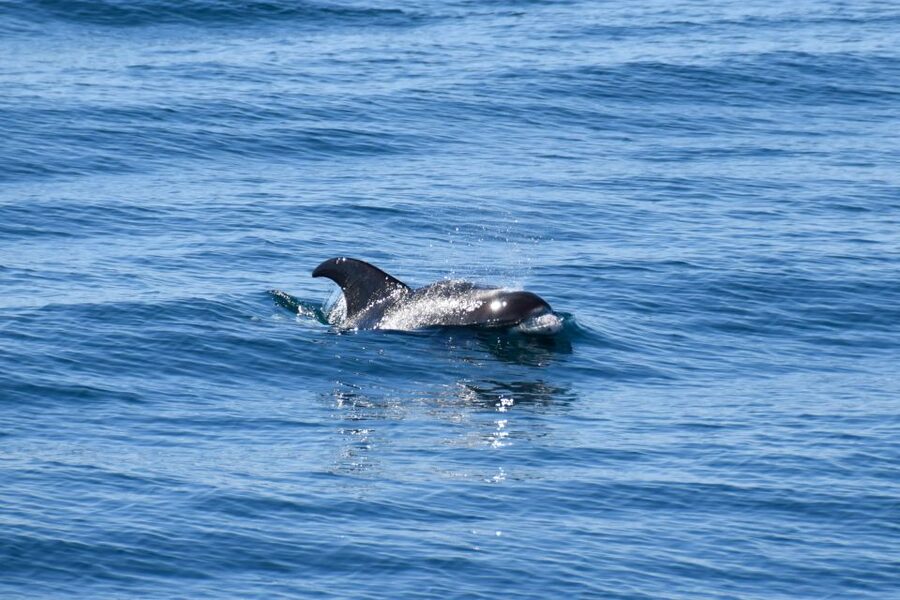
The usual targets are minke whales, humpback whales, white-beaked dolphins, and harbor porpoises. Seals and seabirds can also appear, adding interest when the larger animals stay below the surface.
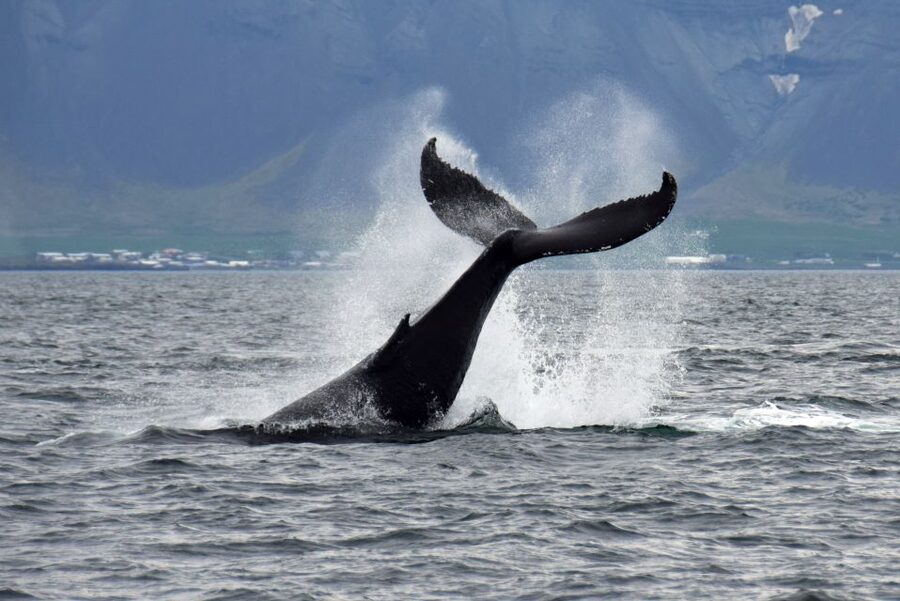
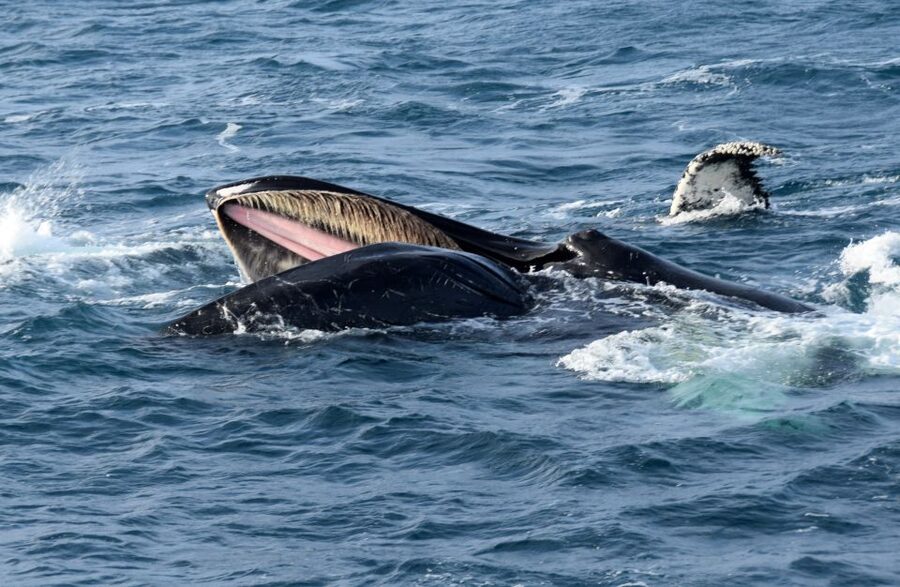
Minke whales can be difficult to catch at first. They surface quickly, and you may see only a small fin and a smooth back before the animal slips away. Humpbacks are larger and often easier to follow, especially when one remains near the boat for several breaths.
Several outings have produced close humpback encounters, including groups of two or three animals spending time near the vessel. One trip included a young humpback that stayed in the area, while another brought a humpback close enough for clear photographs and video. Breaching is never something you can schedule, but a past outing even included one whale breaking the surface.
Dolphins can change the mood of the whole boat. White-beaked dolphins may travel in groups and move quickly across the water, giving you several chances to spot them from different sides. Harbor porpoises are smaller and less dramatic, so your guide’s help is useful.
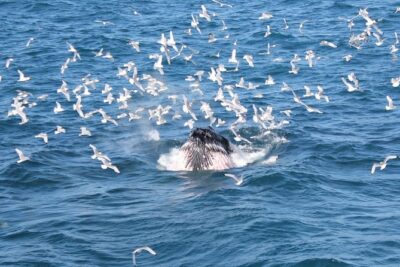
Keep your eyes on the sky as well as the sea. Northern gannets have been seen hunting around the boat, dropping fast toward the water. These birds give you something to watch while the crew searches for whales, and they make the bay feel like a working ecosystem rather than a stage built for one photo.
Guides who make the search easier
The guide is a major part of this experience. Names praised on past departures include Lucas, Daniel, Oskar, Ivan, Andrea, and Jonathan. You should not expect one particular guide on your date, but the pattern is clear: the strongest part of the boat trip is often the guide’s ability to keep the search interesting.
A good guide teaches you how to spot a whale yourself. Ivan, for example, has been praised for showing people what to look for rather than simply pointing out animals after they appear. Oskar has been noted for finding minke whales while keeping the group entertained. Daniel helped maintain a positive mood even when one early humpback was hard to see.
The explanations cover the animals and the area around you. Guides may discuss whale behavior, the species in Icelandic waters, and the signs that suggest an animal is about to surface. The information is useful because whale watching can otherwise feel like staring at a large sheet of moving water.
Wind can make live commentary hard to hear, especially on the upper deck. This is one reason to move indoors now and then, or stand close enough to the guide when an explanation begins. The boat also offers free WiFi, and photographs taken during the trip may be shared for free, a practical bonus if your own camera misses the key moment.
The cold, the comfort, and the practical boat details
I would treat this as an outdoor activity with indoor relief, not a warm cruise. The thermal overalls help, and several outings have included complimentary motion-sickness tablets before departure or on board. Refreshments are available for purchase, but food and drinks are not included in the price.
The boat has room to find your preferred spot. You can watch from outside for the best open views, then go inside to warm up. That flexibility is especially useful for families and anyone who does not want to stand in cold wind for three hours.
Bring comfortable shoes. The deck may feel less tiring in footwear with a firm grip, and you will have a better time if you can move safely between viewing areas. If you are sensitive to motion, take advantage of the available tablets and avoid treating the trip as a race to remain outside from start to finish.
The experience is wheelchair accessible, but the gangplank and seating may still deserve advance attention. If you have mobility concerns, arrive early and speak with the staff at the meeting point. One family did exactly that to make boarding more manageable.
More whale watching around Reykjavik worth comparing
- Reykjavík: Whale Watching and Marine Life Cruise
★ 4.6 · 9,838 reviews - Reykjavík: Whale Watching Cruise on the Amelia Rose Yacht
★ 4.5 · 2,911 reviews - The Original Classic Whale Watching from Reykjavik
★ 4.5 · 2,626 reviews - Reykjavik: Whale Watching Tour with Expert Guide
★ 4.3 · 2,422 reviews
Whales of Iceland and its full-size models
The museum is located at Fiskislod 23, a separate stop from the harbor office. You can visit it before or after the boat trip, which makes this package easier to fit around your day in Reykjavik.
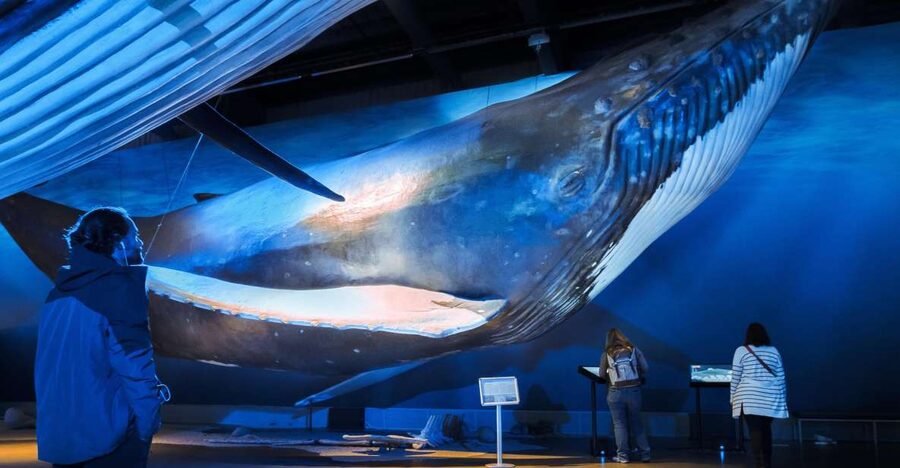
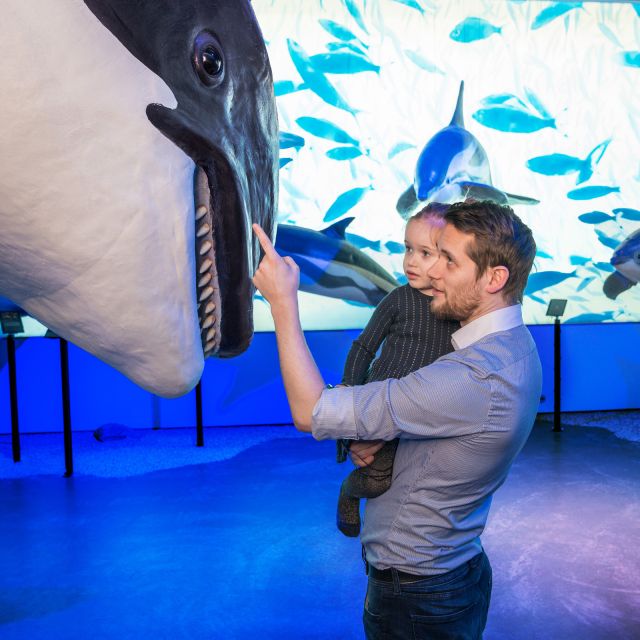
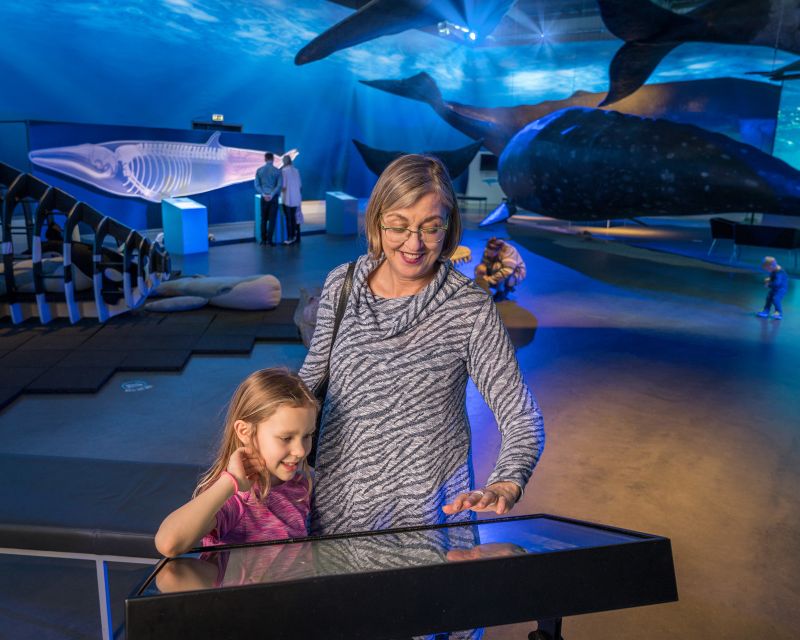
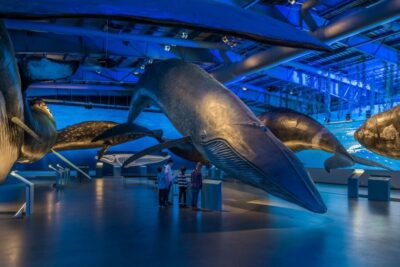
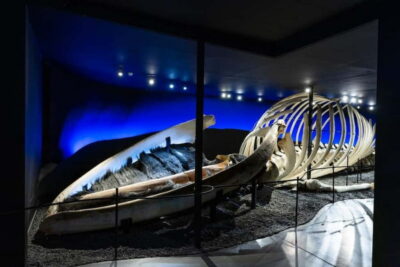
The main attraction is a collection of 23 life-size models representing whale species found in Icelandic waters. The models are not a substitute for seeing a real animal, but they solve a problem that many whale trips leave behind: scale. A whale surfacing at a distance can look surprisingly small. Standing beside a full-size model gives you a much clearer sense of the animal’s length and shape.
The exhibition also uses information stations, videos, audio guides, and virtual reality headsets. The audio guide is available in English, German, Icelandic, Chinese, Spanish, Portuguese, Japanese, French, Polish, and Finnish. Ask for the language you need when you arrive.
You can also join one of two live-guided museum tours, at 10:30 AM or 1:30 PM. These tours are free for ticket holders. Check the timing before you plan your day, especially if you want the boat and live museum talk in a particular order.
The museum has a café where you can stop for coffee and a pastry. That small pause is useful after the boat trip, particularly if the weather has been rough. The exhibition is mostly about the models, so do not expect a traditional collection of many different objects. Its strength is physical scale and visual context.
One past visitor found the museum good but fairly small, with the models as its main feature. That is a fair way to set your expectations. If you enjoy animal science and visual displays, you may spend a rewarding hour there. If you want a large, object-filled museum, the visit may feel limited.
How to plan the order of the two activities
The flexible order is one of the package’s best practical features. You might begin at the museum, then take the boat when your scheduled departure arrives. This gives you background before the search and helps you understand the animals you hope to see.
You can also sail first and visit the museum afterward. I prefer this order for most people because the models then answer questions created by the boat ride. If you see a humpback, standing beside a full-size model later makes the encounter easier to picture. If you see only dolphins or a distant minke whale, the museum still fills in the gaps.
Check the museum’s opening hours carefully if you are taking the exhibition at the end of your day. One past outing ran into trouble because the museum closed at 5 PM, leaving too little time before a flight the next day. The package gives you flexibility, but you still need to use it.
The full activity lasts about 3.5 hours, though the boat portion can occupy roughly three hours. Allow extra time for getting between the harbor meeting point and Fiskislod 23, and do not build a tight airport connection around the final museum visit.
The best season and the real odds of seeing whales

April through September is the strongest period for whale watching in Iceland. That does not guarantee a sighting, but conditions and wildlife patterns generally give you better odds during these months.
Winter trips can still work. Departures in November, December, February, and March have produced minke whales, humpbacks, dolphins, porpoises, and even dramatic close encounters. One March outing produced several whales despite the season, while February trips included humpbacks and a seal.
Still, you should book with the right mindset. A wildlife trip is a search, not a performance. The boat crew can look in promising areas, but no guide can order a whale to surface beside the rail. If nothing appears, the complimentary return ticket gives you another chance, though you still need time in your schedule to use it.
The best way to judge the experience is not only by the number of species you see. A single humpback close to the boat can be more memorable than a long list of distant sightings. Dolphins, porpoises, seals, and seabirds also make the trip worthwhile when whales remain elusive.
Is the $123 price good value?
At $123 per person, this is not a cheap add-on. The value depends on how much you want both parts of the experience.
The price includes the guided boat trip, thermal overalls, WiFi, museum admission, parking, and a free return ticket if the trip produces no sightings. You also receive access to the museum’s digital and audio resources, and the live-guided museum tour costs nothing extra for ticket holders.
Compared with paying for a boat trip and museum separately, the package is easier to justify if you plan to do both anyway. The repeat ticket improves the value because a quiet first outing does not leave you with nothing. Food, drinks, and hotel transfers cost extra, so budget for those separately.
I would recommend it most strongly to families, first-time whale watchers, and people who want context rather than a boat ride alone. Children can use the supplied overalls, and the museum gives them a close look at animals that may appear only briefly at sea. It also suits anyone building a full day around Reykjavik’s harbor and nearby attractions.
You may find the price harder to justify if you have little interest in museums, are visiting outside the main whale-watching season, or have only a short window before a flight. In those cases, the boat trip’s uncertainty and the museum’s relatively focused size deserve careful thought.
Who should book this experience?
Book it if you want a well-supported first whale-watching trip, especially between April and September. The guides help you read the water, the boat offers indoor and outdoor viewing, and the return ticket protects you against a completely empty outing.
It is also a good choice for a family or mixed-age group. Thermal overalls come in children’s sizes, the museum provides a calmer second activity, and the café offers a simple place to rest. The accessible setup is helpful, but discuss boarding needs at the meeting point and arrive early if the gangplank may be difficult.
I would skip it only if your schedule cannot tolerate a three-hour search at sea, or if you need guaranteed wildlife. No whale tour can offer that. For most people who accept the uncertainty, the combination of live animals, strong guides, and full-size museum models gives the $123 price a fair case.
FAQ
Where does the boat tour depart?
You meet at the local partner’s office near Reykjavik’s Old Harbor. The Whales of Iceland Exhibition is at Fiskislod 23.
How long does the experience take?
The full experience lasts about 3.5 hours. The boat portion may take around three hours, with the museum visit included in the overall activity.
What whales and animals might I see?
The most common sightings are minke whales, humpback whales, white-beaked dolphins, and harbor porpoises. Seals and seabirds may also appear, but wildlife sightings are not guaranteed.
What happens if I see no wildlife?
You receive a complimentary ticket to visit again if there are no sightings on your tour.
Which languages are available?
The live boat guide speaks English. The audio guide is available in English, German, Icelandic, Chinese, Spanish, Portuguese, Japanese, French, Polish, and Finnish. German is also available as a second language on the Andrea from May 1 through September 30.
Is the experience wheelchair accessible?
Yes, the activity is wheelchair accessible. If you need extra time or assistance with the gangplank and seating, arrive early and speak with the staff at the meeting point.
New whale trips around Reykjavik
- Reykjavik: Whale Watching & Lava Show★ 5.0 · 4 reviews
- Reykjavik: Whale & Marine Adventure Tour★ 4.3 · 71 reviews
- Whale Wonders Morning Expedition from Reykjavík★ 4.0 · 10 reviews
- Whales Of Iceland Admission Ticket★ 4.0 · 239 reviews
- Whale Watching and Northern Lights Half-Day Combo Tour★ 4.5 · 43 reviews
- Whale Watching by RIB Speedboat from Downtown Reykjavik★ 4.5 · 26 reviews
- Whale Watching and Golden Circle Tour from Reykjavik★ 4.0 · 28 reviews
- Reykjavik Whale Watching and Lava Show★ 4.0 · 4 reviews
Museums, compared.
Deluxe Whale Watching and Whales of Iceland Exhibition Combo from Reykjavik
Read our review →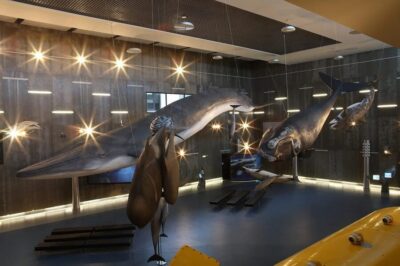

Browse the lists this tour appears in