
Review · MADEIRA WHALE WATCHING TOURS
Caniçal : Madeira Whale Museum Entry ticket
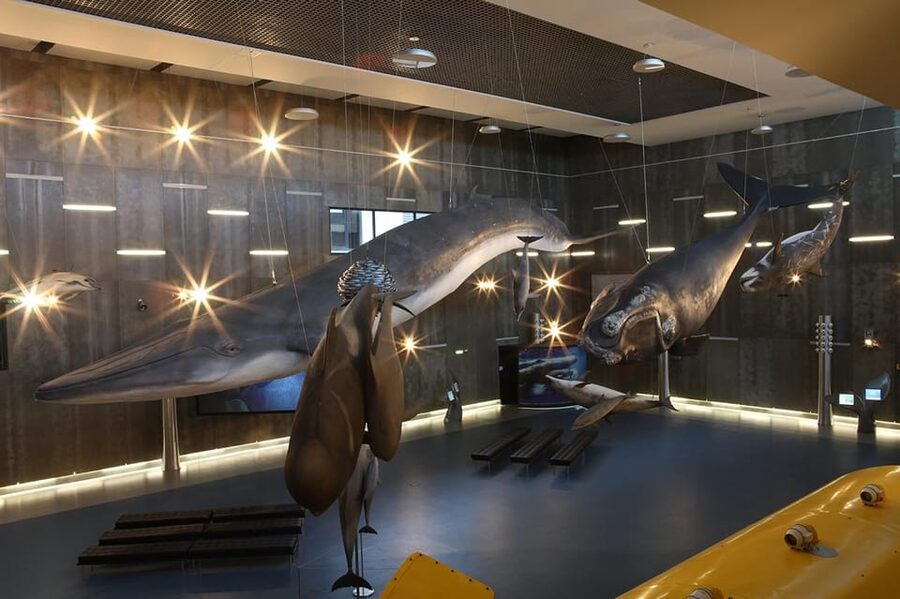
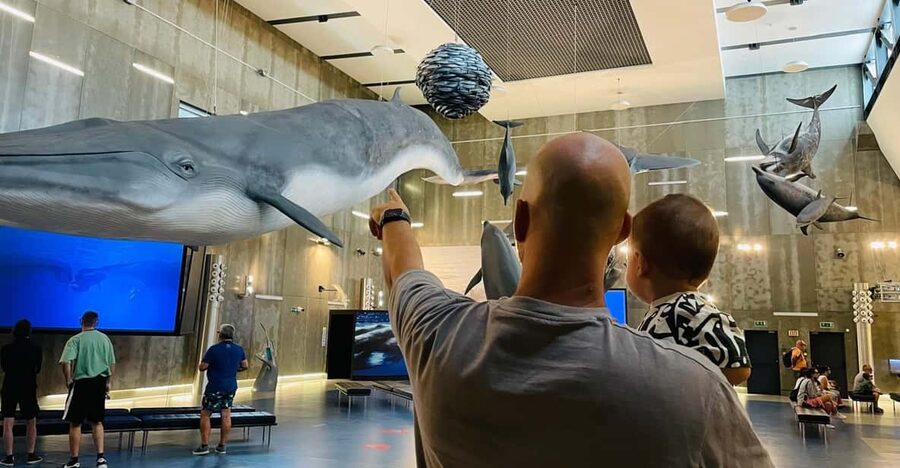
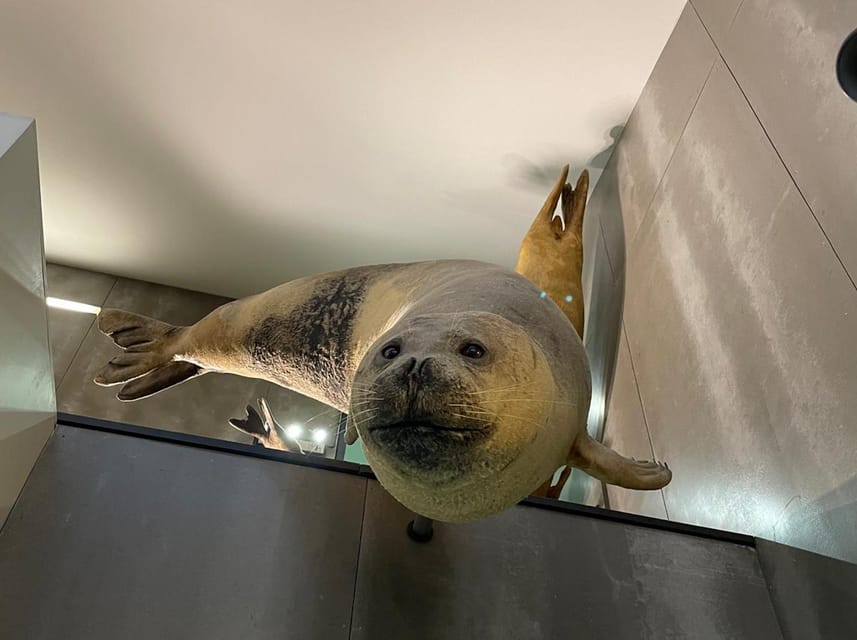
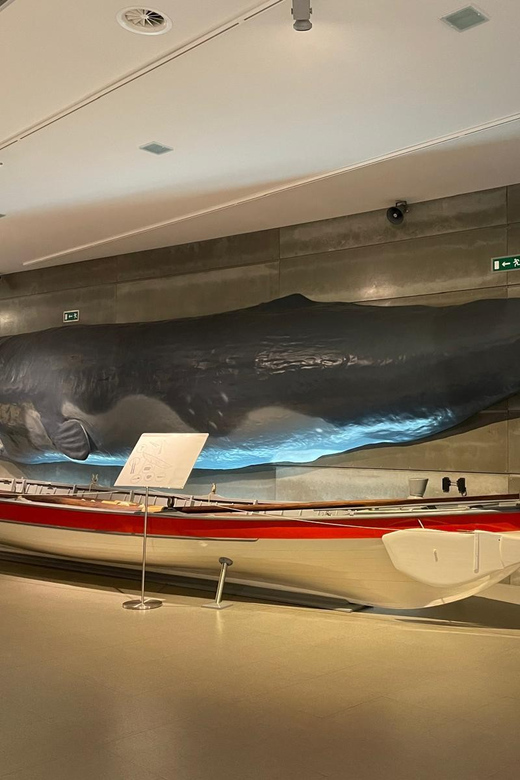
The most striking part of the Madeira Whale Museum is its scale. Life-size whale and dolphin models move through the exhibition halls, giving you a clear sense of how enormous these animals are without putting you on a boat or requiring a full-day excursion. The stereoscopic 3D films add a second layer, showing marine life in a way that works well for both adults and children.
I like the museum’s honest treatment of Madeira’s whaling past, and I like that it does not stop at old tools and photographs. Its current work in marine research and conservation connects the island’s past with the future of its surrounding waters. The main consideration is that this is a museum visit, not a whale-watching trip, so you will not see live animals or travel out to sea.
Key points to know before you go
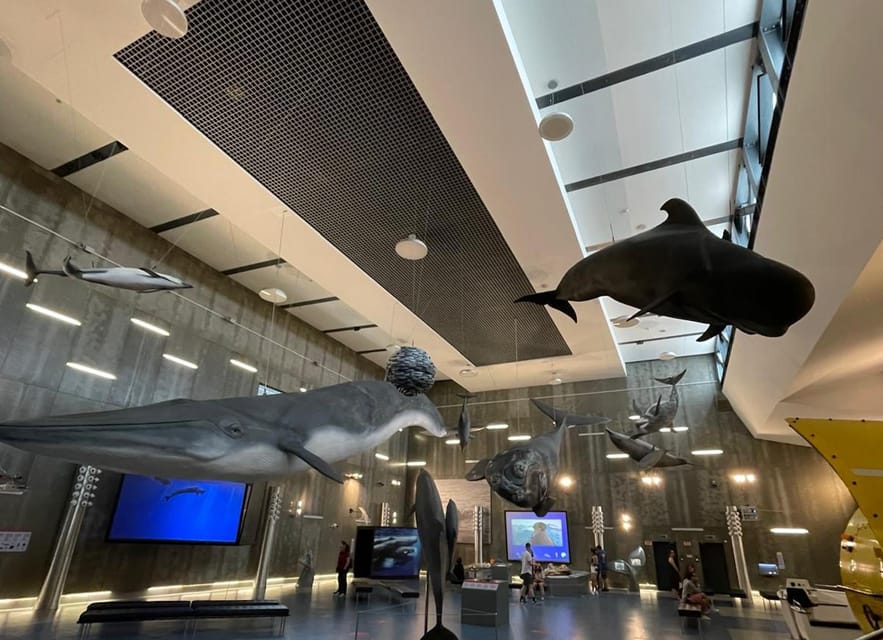
- Life-size whale and dolphin models make the museum’s subject immediate and easy to understand.
- Stereoscopic 3D films add a strong visual element to the visit.
- Madeira’s 20th-century whaling story is told through tools, records, personal recollections, and other ethnographic material.
- Scientific research and conservation work give the museum a purpose beyond preserving the past.
- Five-language audio guides are included in English, French, German, Portuguese, and Spanish.
- The $11 admission covers one day of entry, the audio guide, and the temporary exhibition.
Why Caniçal is the right place for this museum
Caniçal is a fishing town in the municipality of Machico, on Madeira’s eastern side. That setting matters. The museum is not placed in an abstract gallery district, but in a community tied to the sea and to the island’s working maritime culture.
Madeira’s relationship with the ocean is not only about scenic boat trips and holiday beaches. Fishing, seafaring, whaling, and marine study have all shaped life here. The museum helps you see that wider story. You get a better sense of how the sea affected local work and identity during the 20th century.
I would pair this visit with time in Caniçal rather than treating it as a quick indoor stop between unrelated sights. The supplied information does not specify a walking route, nearby attractions, or transport arrangements, so you should plan your own way to the town. What the museum does offer is a focused look at a part of Madeira that can be easy to miss if you only follow the island’s better-known viewpoints.
More Museum Visits in Madeira:
- Reykjavik: Whales of Iceland Museum Entrance Ticket
★ 4.4 · 493 reviews
Entering the museum and getting oriented
The Madeira Whale Museum opened in 1990 and moved into its current purpose-built facility in September 2011. That newer home helps explain why the museum combines traditional objects with large models, film technology, and research displays.
You can use the museum’s audio guide in English, French, German, Portuguese, or Spanish. This is useful because the subject includes local history, technical material, and conservation work that may not be obvious from a quick look at an object. You are free to set your own pace instead of relying on a scheduled spoken tour.
The ticket is valid for one day. The activity information refers you to availability for starting times, so check the booking calendar before setting your schedule. No fixed visit length is given. In practical terms, you should allow enough time to watch the films, listen to the audio material, read the displays, and stop at the temporary exhibition rather than rushing through in a few minutes.
The museum is wheelchair accessible, which makes this a practical choice for visitors who need step-free access. Specific details about every gallery, restroom, or seating area are not provided, so contact the museum directly if you need a precise accessibility arrangement.
Seeing whales and dolphins at full size
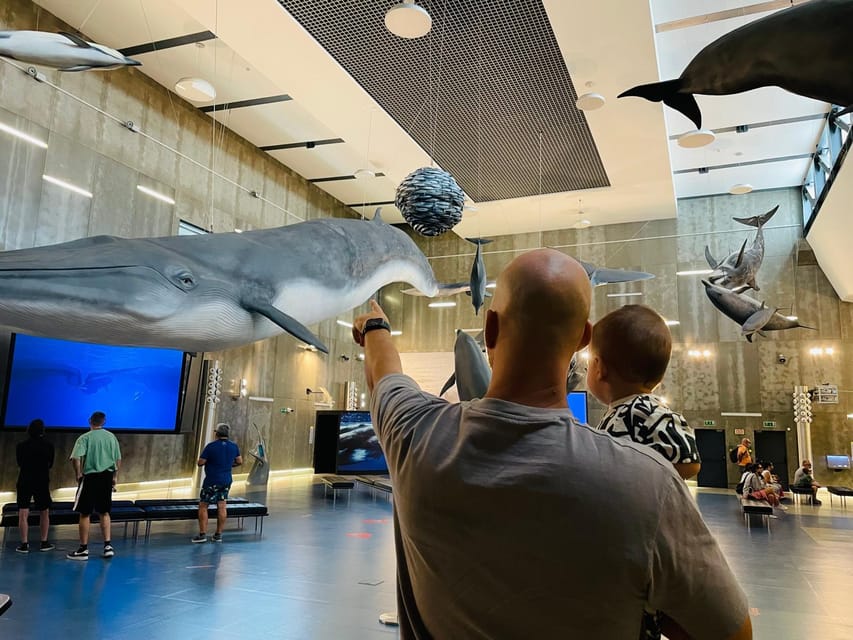
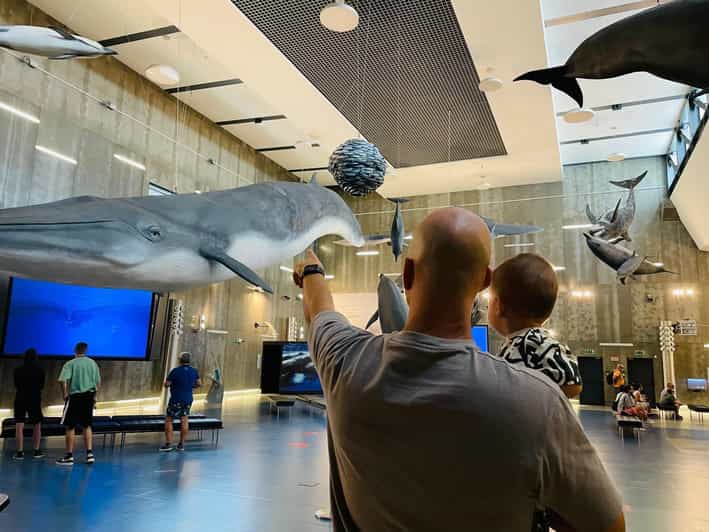
The life-size models are the museum’s most memorable physical feature. A photograph can show shape and color, but a full-scale model gives you a more useful sense of proportion. You can look up at a whale and understand why these animals have held such a powerful place in maritime culture.
The models also help younger visitors connect the displays. Instead of treating the museum as a long sequence of labels, you can use the animals as reference points and then move into the related material about Madeira’s waters, whaling, and research.
The museum includes both whales and dolphins. That matters because the collection is not limited to the animals once hunted. It also presents Madeira’s wider marine environment and the need to protect it.
You should expect the models to be educational displays, not moving attractions or animal encounters. If your main goal is to see whales in the wild, book a sea excursion separately. If you want context before or after a boat trip, the museum is a useful complement.
The 3D films bring the subject closer
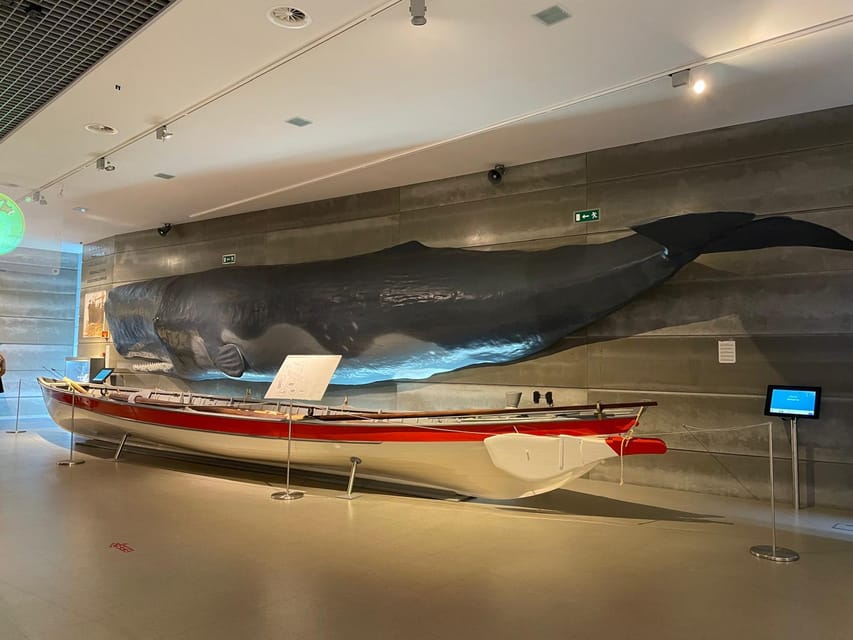
The stereoscopic 3D films are another major part of the visit. They give the museum a sense of movement and help show marine life in its natural element. The models tell you about size, while the films can help you picture behavior and the wider underwater world.
The word stereoscopic is worth noting. This is not simply a standard documentary playing on a flat screen. The effect is designed to create depth, making the presentation more engaging than a conventional wall display.
The supplied information does not give film titles, running times, or a schedule. That means you should not plan your entire visit around one particular screening. Treat the films as part of the museum route, and use the audio guide and object displays to fill out the story.
For families, this may be one of the easiest parts of the museum to enjoy together. For adults, the films give a break from reading and make the conservation message more immediate. The possible drawback is that visitors who prefer quiet, text-heavy museums may find the visual presentation less central to their interests.
More Entry Tickets in Madeira:
- Aquarium of Genoa Ticket and Whale Watching Cruise
★ 4.2 · 170 reviews
Madeira’s whaling past, told through objects
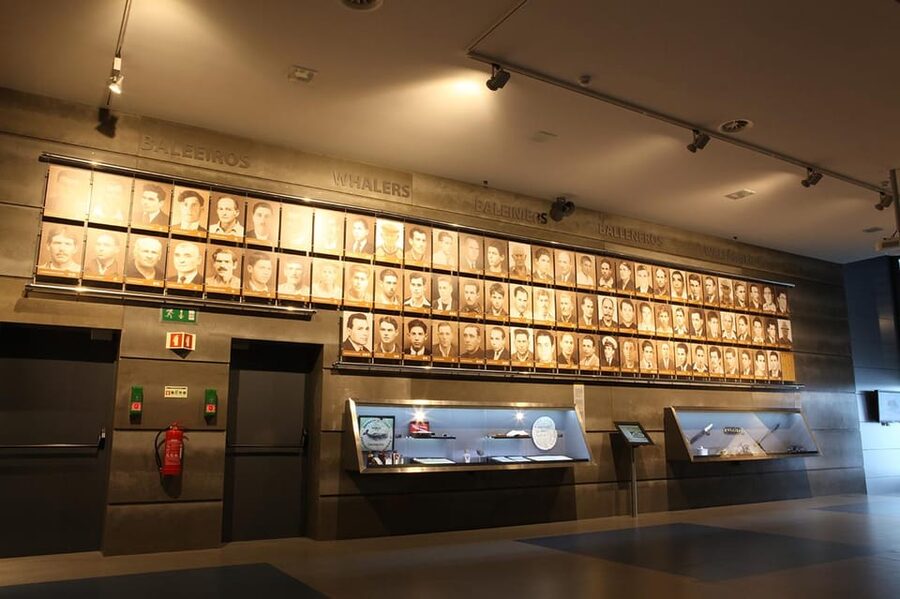
The museum’s ethnographic collection forms the historical core of the visit. It includes traditional tools, personal recollections, and detailed records connected with whaling in Madeira during the 20th century.
These objects are important because they show whaling as a working activity carried out by local people, not just as a distant industry. Tools and records can reveal practical details about how the work was organized. Personal recollections add the human side, showing how the activity fitted into community life.
At the same time, the museum gives you a chance to consider the difficult shift from cultural heritage to conservation. Madeira’s whaling story is part of its past, but the museum’s present work places strong attention on marine protection. That balance is one of the visit’s strengths. You are not asked to ignore the past, but you are also not encouraged to treat whaling as a simple romantic tale.
The display may appeal most to you if you enjoy museums that explain how people lived and worked. If you only want a quick photo opportunity with a whale model, you will miss the point of the collection. The tools and records reward a slower visit.
From historic whaling to marine conservation
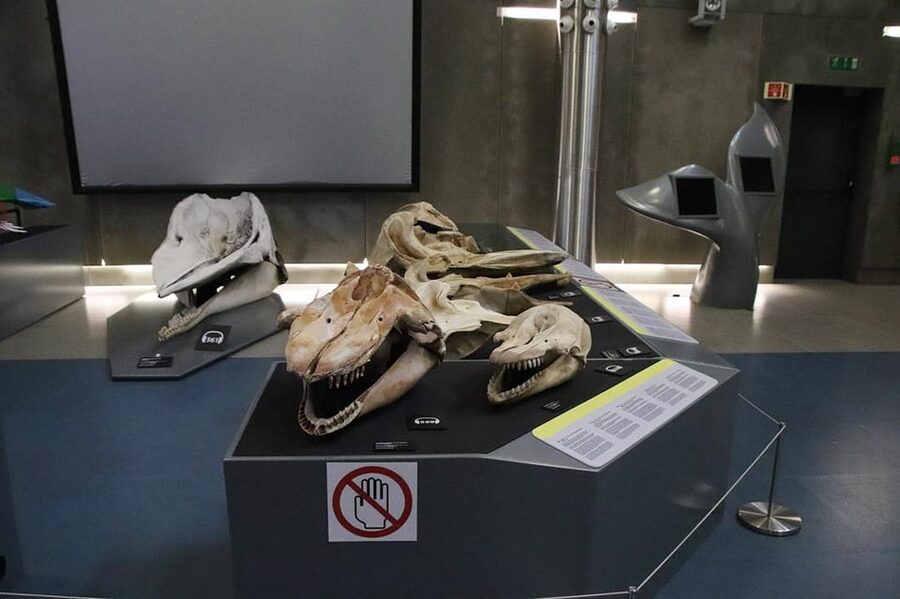
The museum is active in scientific research and conservation projects. This gives the visit more weight than a collection devoted only to old equipment.
You can connect the historical displays with the museum’s current work. The same waters that supported Madeira’s maritime economy are also home to marine life that needs careful study and protection. Research helps explain what lives around the island, while conservation work focuses attention on how that heritage can continue.
The exact research projects, species, and current findings are not specified in the activity details, so I would not arrive expecting a particular scientific presentation. Instead, look at the museum as a place where history and present-day marine concerns meet.
This is also why the museum works well early in a Madeira holiday. It can give you a stronger sense of the island’s ocean setting before you encounter other coastal sites. After the visit, you may look at the sea with more than scenery in mind.
What the $11 ticket includes
At $11 per person, the admission is fairly easy to justify if you plan to use the full museum visit. The price includes entry, an individual audio guide, and the temporary exhibition. You are not paying extra for the main visual features or for the language support.
The value depends on how much time you give it. If you rush in, take a few pictures, and leave, the ticket will feel less worthwhile. If you listen to the audio guide, watch the 3D films, study the objects, and visit the temporary display, you are getting a broader cultural and educational stop for a modest cost.
Children aged 7 to 12 and seniors over 65 can access reduced prices directly on the spot. The information does not state the reduced fare, so check at the museum rather than assuming a particular amount.
The ticket is valid for one day, not for repeated admission across several days. Check the available starting times when you book. You can also reserve now and pay later, which may help if your Madeira schedule is still changing. Cancellation is free up to 24 hours in advance for a full refund.
Who will get the most from this visit
I would recommend the museum to you if you want more than scenic viewpoints and outdoor activities. It suits anyone interested in local work, maritime culture, marine animals, conservation, or the way a community’s relationship with the sea has changed.
Families may appreciate the life-size models and 3D films, especially because those displays make the subject easy to grasp. The audio guide also lets adults and older children move at different speeds.
It is a good rainy-day option, though no weather policy or specific indoor timing is provided. Visitors who use wheelchairs can consider it because the museum is wheelchair accessible.
You may want to skip it if your priority is a live whale encounter, a boat ride, or a large museum complex with many unrelated galleries. This is a focused experience about Madeira, whaling, whales and dolphins, and marine conservation. Its narrow subject is part of its appeal, but it will not suit every itinerary.
Practical planning for a smooth visit
Check the available starting times before you go, even though the admission is valid for one day. The activity does not provide a fixed duration, so leave room for a self-paced visit rather than scheduling another tight appointment immediately afterward.
Bring enough attention for the audio guide. Five language choices are available, but the audio device is part of the visit rather than a minor extra. English, French, German, Portuguese, and Spanish are covered.
If you qualify for a reduced price as a student aged 7 to 12 or as a senior over 65, buy that fare on the spot. The supplied details specifically direct these visitors to book directly at the museum.
Think of the visit as a cultural stop in Caniçal, not as a substitute for a marine excursion. The museum explains the ocean and Madeira’s past relationship with it. A boat trip, if you choose to take one separately, would serve a different purpose.
Should you book the Madeira Whale Museum?
I would book this for $11 if you are spending time near Caniçal, want a clear introduction to Madeira’s maritime past, or prefer an educational attraction with strong visual displays. The life-size models, 3D films, audio guide, and temporary exhibition give the visit enough variety to work for adults and families.
I would not book it expecting live whales, a guided boat trip, or a full day of activities. Its value comes from the story it tells: Madeira’s whaling past, the people connected with it, and the museum’s current effort to study and protect marine life. Give it proper time, and it offers a thoughtful change from the island’s outdoor sights.
FAQ
Where is the Madeira Whale Museum?
The museum is in Caniçal, a fishing town in the municipality of Machico on Madeira, Portugal.
How much does admission cost?
The listed price is $11 per person.
How long is the ticket valid?
The entry ticket is valid for one day.
Does the ticket include an audio guide?
Yes. An individual audio guide is included.
Which languages are available for the audio guide?
The audio guide is available in English, French, German, Portuguese, and Spanish.
What does the museum display?
The museum presents Madeira’s 20th-century whaling history through traditional tools, personal recollections, detailed records, life-size whale and dolphin models, and film presentations.
Does the museum have a temporary exhibition?
Yes. A temporary exhibition is included with admission.
Is the museum wheelchair accessible?
Yes. The Madeira Whale Museum is wheelchair accessible.
Are reduced prices available for children and seniors?
Young students between 7 and 12 years old and seniors over 65 can access reduced prices by booking directly at the museum.
New whale trips around Madeira
- Calheta: Whale & dolphin watching small groups designer tour★ 5.0 · 4 reviews
- Madeira: Whale Watching Excursion in a Traditional Vessel★ 4.7 · 273 reviews
- Funchal: RIB Whale Watching Cruise and Optional Dolphin Swim★ 4.6 · 273 reviews
- From Calheta: Whale and Dolphin Watching RIB Boat Tour★ 4.9 · 298 reviews
- Whale and Dolphin Watching Tour from Funchal★ 4.5 · 317 reviews
- Madeira Dolphin & Whale Watching Tour★ 4.5 · 461 reviews
- Funchal: Whale and Dolphin Watching Speed Boat Tour★ 4.6 · 526 reviews
- Dolphin and Whale Watching Catamaran Cruise from Funchal★ 4.5 · 645 reviews
Madeira Whale Watching Tours, compared.
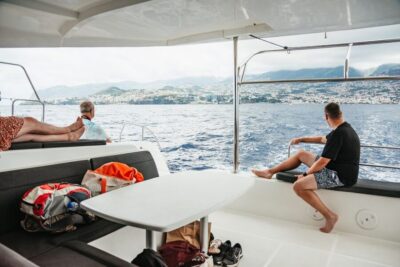
Funchal Bay: Dolphin & Whale Watch Luxury Catamaran Cruise
Read our review →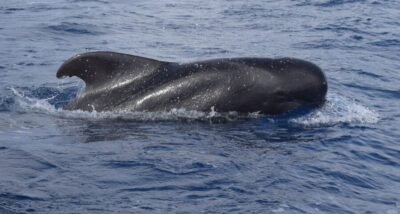
All Inclusive Whale and Dolphin Watching Luxury Tour
Read our review →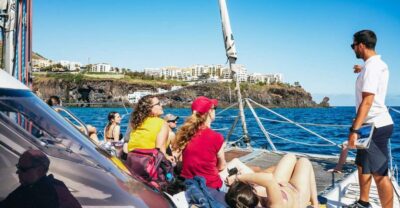
Dolphin and Whale Watching by Luxury Catamaran
Read our review →
Dolphin and Whale Watching Sunset Sailing Tour
Read our review →
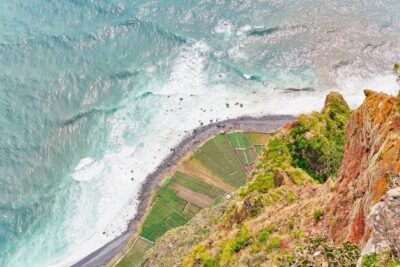
Browse the lists this tour appears in