
Review · HUMPBACK WHALE TOURS
Whale watching DE Humpback West Coast of Tahiti
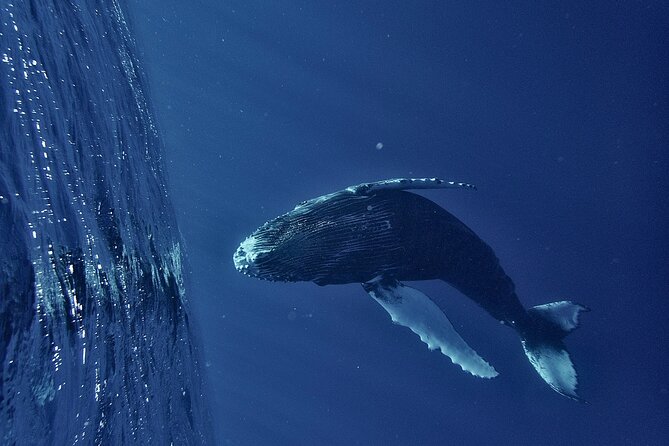
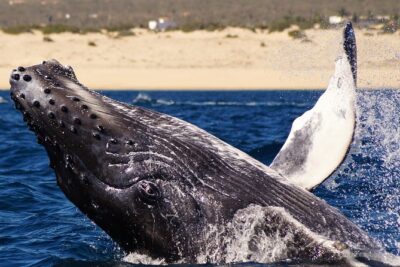
Tahiti’s humpback whales arrive in warm Polynesian waters to breed, give birth, and raise their young. This four-hour morning trip from Puna’auia gives you a serious chance to see them in open water, with a small crew rather than a crowded boat.
I like the maximum group of eight, which keeps the outing personal, and I like that swimming with the whales is optional. The crew, including Jordan and Romuald, handles the safety briefing, explanations, and equipment while you decide how active you want to be.
The main catch is simple: whales are wild, and sightings are not guaranteed. The permitted season runs from July 20 through November 20, subject to local approval, and ocean conditions can cancel the trip or prevent anyone from entering the water.
Key points to know before booking
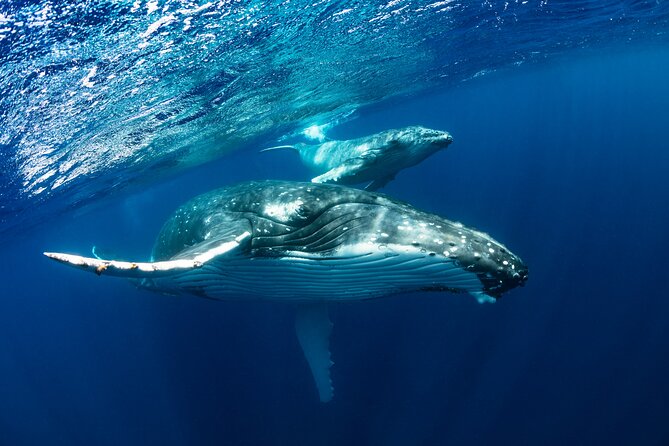
- Whales arrive for the southern winter: Humpbacks come from Antarctic waters to breed, give birth, and care for their young before returning south.
- Small boat, small group: The maximum is eight people, with no more than six swimmers and one guide in the water at a time.
- Swimming is optional: You may remain aboard and watch. Entering the water is not automatic and depends on whale behavior, conditions, and the crew.
- Strong swimming ability is required: You must be able to swim at least 200 meters without help and feel calm in the open ocean.
- A 7:30 am start matters: The four-hour outing begins at Pontoon 3, Taapuna, in Puna’auia, and returns to the same meeting point.
- The price covers useful basics: At $167.34 per person, you get a guide, safety gear, snorkeling equipment, water, coffee or tea, and snacks.
Meeting the boat at Taapuna at 7:30 am
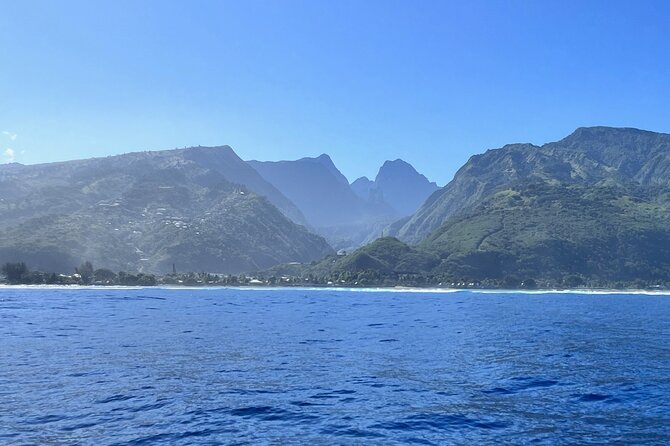
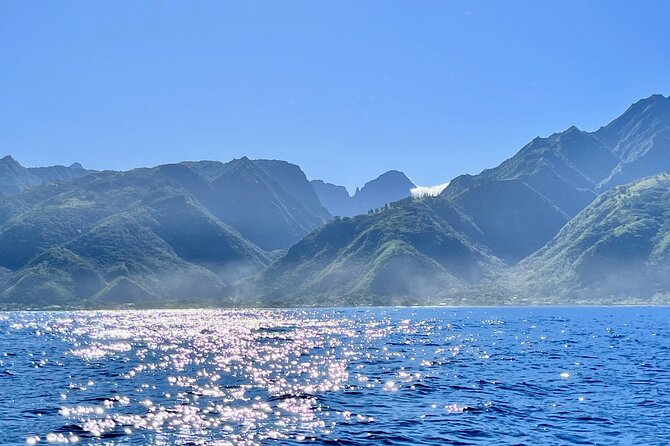
Your morning begins at Pontoon 3 at Taapuna in Puna’auia, on Tahiti’s west coast. The activity ends back at the same point, and hotel pickup is not included, though it may be possible to arrange on request.
That early departure is worth noting when you plan your day. You need to arrive ready for a boat trip, not wander in at the last minute with breakfast still on your mind. The outing lasts about three to four hours, so you should be back around late morning if the schedule runs normally.
The meeting point is practical for anyone staying on Tahiti’s west side. If you are based elsewhere on the island, ask about pickup before paying, since transport is not part of the standard package. You will also want to allow time to find Pontoon 3 and get settled before the boat leaves.
The boat is locally built and adapted for marine excursions. The group limit of eight is a real advantage here. On a whale trip, a smaller number of people means less crowding around the viewing area and fewer competing voices when the guide is explaining a sighting.
This is not a large sightseeing cruise with a fixed route and guaranteed entertainment. It is a search for animals that choose their own direction and pace. That distinction shapes the entire morning.
More Humpback Whale Tours in French Polynesia
- Swim with humpback whales
★ 5.0 · 224 reviews - Humpback whale watching and marine life in Moorea
★ 5.0 · 199 reviews - Private tour observing and swimming with humpback whales in Moorea
★ 5.0 · 126 reviews
Searching the west coast for humpbacks
Once underway, the crew searches for humpback whales in the waters off Tahiti’s west coast. The guide and captain watch for activity, explain the species, and share information about whale behavior and their life cycle.
Humpbacks make this migration every year. They leave the cold waters around Antarctica and move into the warmer southern Pacific to breed, give birth, and raise their young. By October, they are gathering before the long return migration that begins toward the end of November.
That timing gives you a useful reason to choose your dates carefully. Whale watching is allowed from July 20 through November 20, subject to approval from DIREN, the relevant French Polynesian environmental authority. The season is not a promise that whales will appear at a particular spot, but it is the period when this activity is permitted.
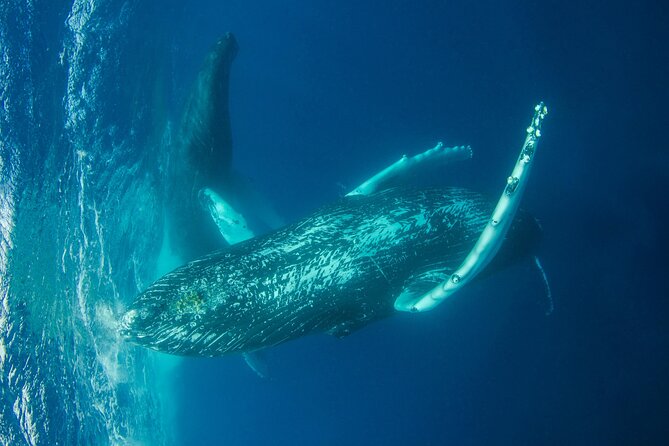
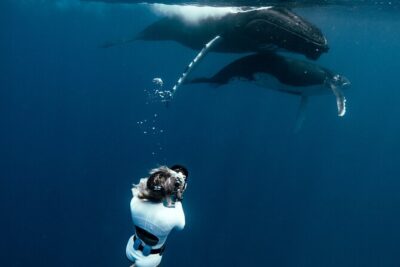
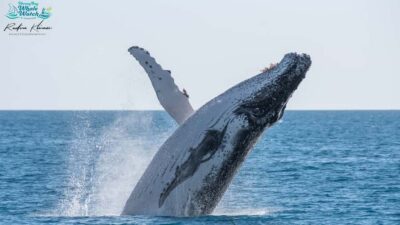
The strongest possible outing can include several groups of whales. Sightings have included a male whale and a young male heard singing, as well as a whale with its calf. Those details matter because they show the range of encounters possible, from watching animals travel together to seeing a mother and young animal close to one another.
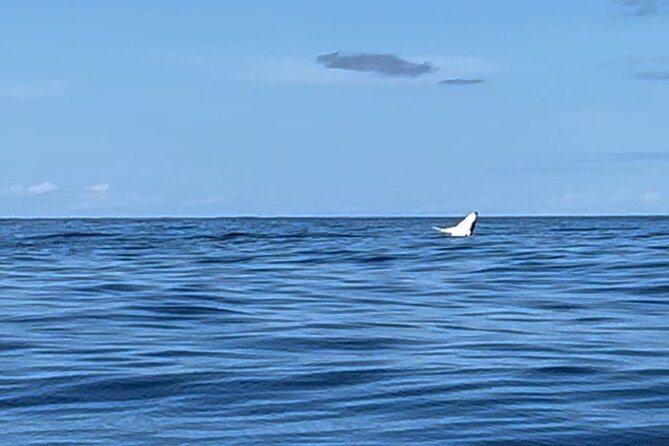
Still, keep your expectations steady. You may see whales from the boat without getting close enough to enter the water. You may also spend time searching. The captain cannot order a whale to surface, and the crew must follow approach rules designed to protect both people and animals.
I like this honest setup. The experience is more meaningful when you understand that the crew is observing wildlife, not staging a performance.
What happens if the crew finds whales
The boat does not simply race toward the first whale and unload swimmers. French Polynesian rules define how boats approach marine mammals and how long people may observe them. The crew decides when an approach is appropriate and when it is better to keep distance.
If conditions are right, the crew may offer the chance to enter the water. This is optional, not standard procedure. A whale sighting does not automatically become a swimming encounter, and the launch may not happen at all.
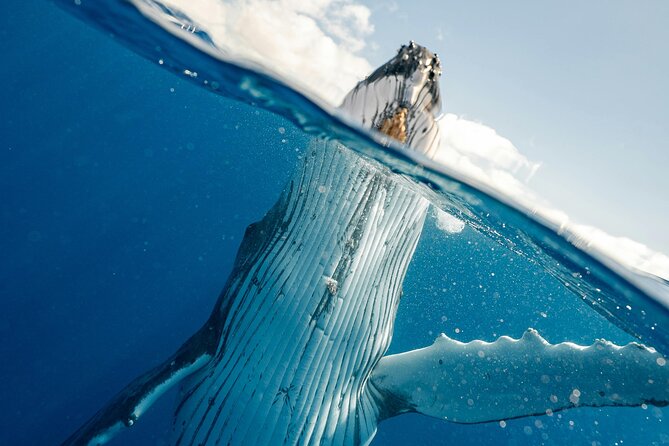
That protects the animals and makes the decision safer for you. Humpback whales can weigh between one and 30 tonnes, so this is not a casual snorkeling stop. Even a calm animal is a very large wild mammal in open water.
The maximum permitted group in the water is six swimmers plus one guide. With a total boat capacity of eight, the number of people involved is tightly controlled. That is helpful for supervision, though it also means the whole group must be ready to follow the crew’s instructions.
You may be asked to stay calm, keep a suitable distance, and enter or remain aboard according to the guide’s judgment. The crew is free to act in the best interests of everyone on board. If a whale moves away, conditions change, or the situation feels unsafe, the launch can be stopped.
This is one of the tour’s most important features. You are not buying a guaranteed swim. You are paying for access to a carefully managed chance to observe humpbacks in their natural setting.
Swimming requirements are stricter than ordinary snorkeling
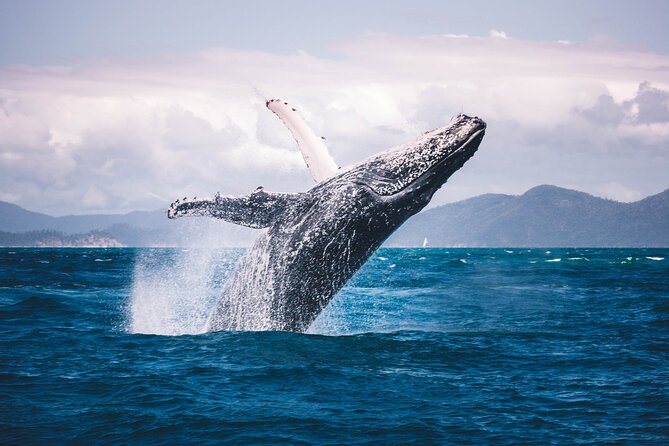
You need to be able to swim at least 200 meters without assistance to enter the water with the whales. You must also be comfortable in the open ocean, including dealing with waves or a boat ladder, and you must not panic around large marine animals.
That requirement is not a formality. A whale encounter takes place away from a sheltered beach, and the crew needs people who can manage themselves in the water. If you are unsure of your ability, the sensible choice is to remain aboard and watch.
Children under 12 cannot enter the water with the whales. Children aged 12 to under 18 need parental authorization. A child may still join as an observer from the boat, provided the crew considers the arrangement suitable.
Non-swimmers and adults who prefer not to enter the water can also participate as observers. This makes the trip more flexible than a swim-only outing. A family can share the boat experience even if only some members meet the swimming requirements.
The supplied snorkeling equipment is included, along with safety equipment. That keeps you from having to bring a full set of gear, though you should still be ready for a physical morning on a boat. The stated fitness level is moderate.
If you have reduced mobility, an injury, temporary discomfort, or another specific need, contact the operator in advance. The crew will try to adapt the welcome and arrangements where possible, but the open-ocean setting naturally limits what can be changed.
Same sea, a different boat:
- Swimming with Whales in Moorea (Half Day tour)
★ 4.5 · 264 reviews - Whale Tour – Observe and swim with whales
★ 5.0 · 257 reviews - Whale Watching Tours in Bora Bora
★ 4.5 · 250 reviews - Half day whale tour 4h00
★ 4.5 · 181 reviews
What is included for the $167.34 price
The cost is $167.34 per person. For a four-hour whale trip in a maximum group of eight, that is a fair price if you value personal attention and the possibility of a carefully managed water encounter.
The package includes:
- A professional guide and captain
- Safety equipment
- Snorkeling equipment
- Bottled water
- Coffee or tea
- Snacks
These inclusions make the price easier to judge. You are not paying only for a boat ride. You are also getting equipment, crew supervision, refreshments, and interpretation of the animals you see.
The value depends heavily on what you want. If you need a guaranteed attraction, this is poor value because sightings and water entry are not guaranteed. If you understand that whale watching is a wildlife search, the small group and included gear make the price more reasonable.
Hotel pickup is not included, so add your own transport costs if needed. Pickup may be available on request, but you should arrange that before the activity date rather than assume it is part of the booking.
Coffee, tea, snacks, and bottled water are modest additions, but they are useful on a morning that may involve several hours on the water. You will not need to organize a separate snack stop during the trip.
The crew and the feel of the outing
Jordan and Romuald are named members of the crew, and their role goes beyond steering the boat. The team welcomes you, explains the species and its behavior, manages safety equipment, and decides if a launch is appropriate.
The strongest reported encounters involve both the animal sighting and the way the crew handled it. One outing included several groups of whales, followed by a swim not far from a whale and its young. Another involved a young male singing early in the season. These are unusually specific moments, but they should be treated as possibilities rather than promises.
The experience is likely to suit you if you enjoy a guide who explains what is happening instead of simply pointing at a fin. It is also a good match if you want a small-group outing where the crew can respond to changing conditions.
I would not choose it if you dislike uncertainty, get very uncomfortable on open water, or expect every whale sighting to lead to a swim. The crew may make a cautious call, and that is the correct call even if it leaves you wishing for more action.
Weather, cancellation, and the best way to plan
This activity requires good weather. If poor conditions force a cancellation, you are offered another date or a full refund. The same applies if the minimum number of participants is not reached.
You may cancel for a full refund up to 24 hours before the local start time. Within 24 hours, the payment is not refunded, and changes are not accepted. This makes it wise to book early enough to fit the outing into your Tahiti schedule, but not so early that you forget the weather and your own plans.
The activity is commonly booked around 18 days ahead, so it is sensible to reserve before your arrival if whale watching is a priority. Confirmation is normally provided at booking. If you book within one day of departure, confirmation comes as soon as possible and depends on space.
Because weather can affect the trip, I would place it near the beginning or middle of your Tahiti stay rather than on your final morning. That gives you some room to move the date if conditions are poor.
Who will enjoy this whale watching trip
This experience is best for confident swimmers, wildlife fans, couples, and families with older children who can follow strict instructions. It also works well for mixed groups, since some people can enter the water while others remain on the boat.
You should choose it if:
- You want a small-group whale outing rather than a large cruise
- You are comfortable with a 7:30 am start
- You can manage a moderate level of physical activity
- You accept that sightings and swimming are not guaranteed
- You are calm in the open ocean
- You want a chance to see whales with their young or hear a singing male
You may want another activity if you need wheelchair-accessible arrangements without advance discussion, cannot swim 200 meters, or want a protected-water snorkeling trip. You can still join as an observer, but the boat remains the main setting.
Should you book this Tahiti whale tour?
Book it if your idea of a good morning is searching open water with a small crew, learning about humpbacks, and accepting that the animals make the rules. The chance to see several groups, a calf, or a singing young male gives the outing real appeal, and the optional water entry lets you choose your comfort level.
Do not book it expecting a guaranteed swim or a fixed show. The best reason to go is the chance to witness humpbacks respectfully in their seasonal home, with Jordan, Romuald, and a compact group handling the practical side.
At $167.34, I see solid value for a four-hour excursion with equipment, refreshments, and a maximum of eight people. Just choose a permitted date, arrive at Pontoon 3 on time, and treat the swimming opportunity as a bonus rather than the product itself.
FAQ
Where does the whale watching tour begin?
The tour begins at Pontoon 3, Taapuna, in Puna’auia, French Polynesia.
What time does the activity start?
The scheduled start time is 7:30 am.
How long does the whale watching experience last?
The activity lasts approximately four hours. The expected visit duration is generally three to four hours.
When is humpback whale watching allowed?
Observation is allowed from July 20 through November 20, subject to approval from DIREN.
Are whale sightings guaranteed?
No. Whales are wild animals, so observations are not guaranteed.
Is swimming with the whales required?
No. Entering the water is optional and is not systematic. You may observe from the boat.
How well must I swim to enter the water?
You must be able to swim at least 200 meters without assistance and feel comfortable in a natural ocean environment.
Can children swim with the whales?
Children under 12 may not enter the water with the whales. Participants aged 12 to under 18 need parental authorization.
What happens if the weather cancels the tour?
You will be offered a different date or a full refund if poor weather causes the activity to be canceled.
New whale trips around French Polynesia
- Whale Watching Activity★ 5.0 · 8 reviews
- Observe and Swim with Whales in Tahiti★ 4.5 · 14 reviews
- Tahiti, land of whales: a unique experience!★ 5.0 · 11 reviews
- Whale watching in the calm of the peninsula with Tātahi tours★ 5.0 · 6 reviews
- Whale watching DE Tahiti Peninsula★ 5.0 · 12 reviews
- Half Day Whale Watching in a Small Shared Group★ 5.0 · 33 reviews
- 4 Hours of Humpback Whale Watching in Tahiti★ 5.0 · 36 reviews
- WHALE TOUR – Watching and Swimming with Whales★ 5.0 · 52 reviews
Humpback Whale Tours, compared.
Humpback whale watching and marine life in Moorea
Read our review →
Noosa Whale Watching Cruise – Humpback Whale Adventure
Read our review →
Private tour observing and swimming with humpback whales in Moorea
Read our review →
Browse the lists this tour appears in