
Review · MUSEUMS
Munba National interactive Whale Museum
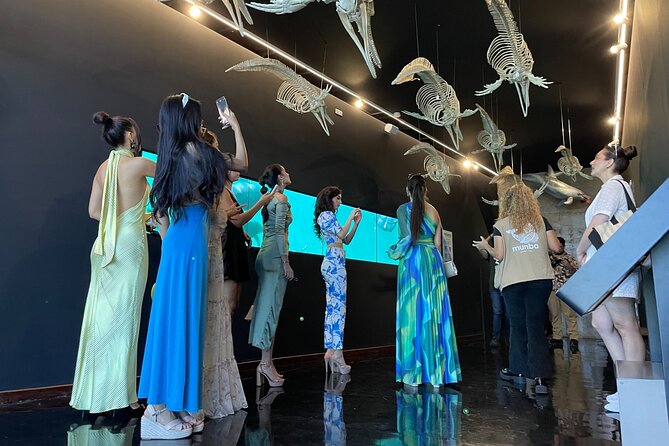
Mazatlán’s MUNBA puts you close to marine life without putting you on a boat. Its most memorable feature is the Latin America’s second-largest osteological collection, including the world’s only sperm whale calf skeleton. I like the mix of real specimens and technology, especially the dolphin anatomy virtual reality display and whale-song recordings. I also like that the museum gives children their own activity area rather than expecting them to quietly trail behind adults.
The main drawback is size. You should plan on about two to three hours, but this is not an all-day museum. The exhibits offer a moderate amount to see, so visitors looking for a huge aquarium or a full-day attraction may find the visit brief.
Key points to know before you go
- The skeleton collection is the star: See whale, dolphin, and orca bones, including a one-of-a-kind sperm whale calf skeleton.
- Technology adds movement: Virtual reality, whale songs, and underwater ecosystem displays make the subject easier to understand.
- Talassa guides the story: Follow a whale’s journey through exhibits about marine life and the pressures it faces.
- Families get useful breathing room: The supervised Children’s Zone offers creative and educational activities while adults explore.
- The price fits a short cultural stop: At $17.30 per person, admission is reasonable for a two to three-hour visit.
- Plan around the opening days: MUNBA is open Tuesday through Sunday, from 10:00 a.m. to 5:00 p.m.
Why MUNBA is more than a room full of bones
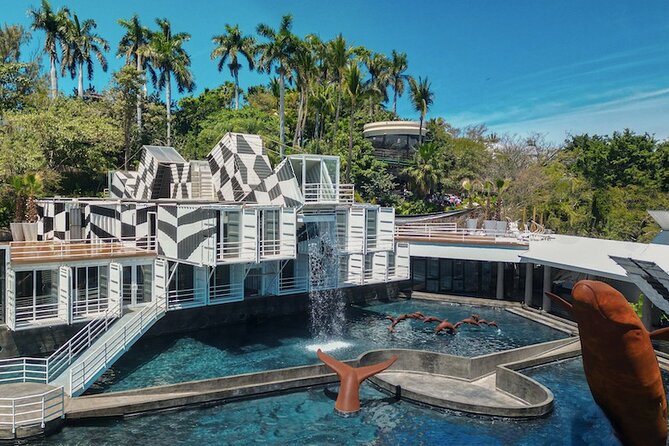
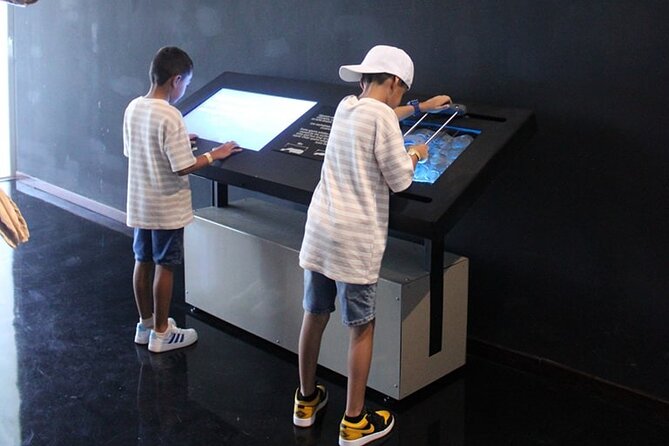
The easiest way to think about MUNBA is as a marine science museum with a strong visual center. You are not simply reading labels about whales. You are moving between large skeletons, digital displays, recorded sounds, and hands-on activities that show how marine animals live and what threatens them.
That mix matters. A whale skeleton gives you scale. A virtual reality display helps explain anatomy. Whale songs add sound to an animal you usually know only through photographs. Together, these elements make the subject easier to grasp, especially for children and adults who do not usually spend time in science museums.
I also appreciate the museum’s conservation message. The visit ends at a café, and the experience is designed to support marine conservation. That does not turn your admission into a major environmental donation, but it gives the visit a useful purpose beyond entertainment.
The museum’s overall rating is 4.7 from three published ratings, a positive result but a small sample. I would treat that as a helpful signal rather than final proof of the experience. The clearest practical point is that MUNBA offers a good few-hour activity, not a giant attraction that fills an entire day.
More Museum Visits in Mexico:
- Reykjavik: Whales of Iceland Museum Entrance Ticket
★ 4.4 · 493 reviews - Reykjavik: Whale Watching Tour, Whales of Iceland Exhibition
★ 4.4 · 187 reviews - Reykjavik: Whale Watching Excursion & Whale Exhibition
★ 4.5 · 42 reviews
Entering the MUNBA whale collection
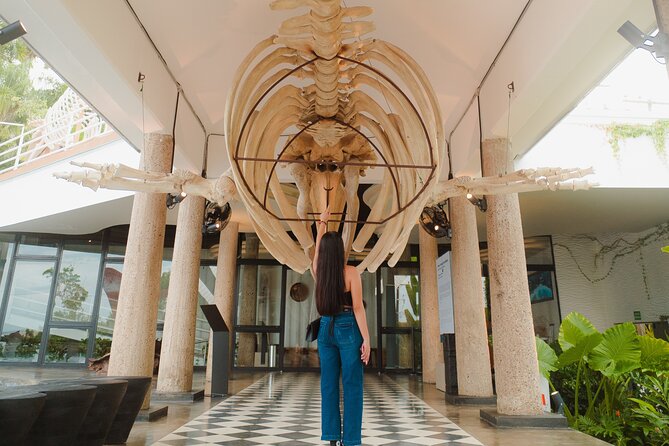
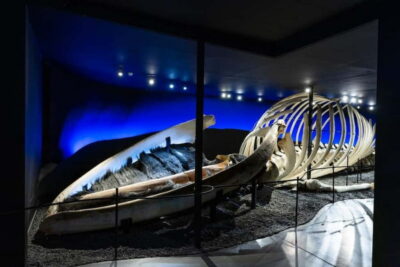
The museum’s strongest physical feature is its skeleton display. You can expect to see the bones of whales, dolphins, and orcas, with the collection forming the backbone of the visit.
Skeletons are especially effective in a museum setting because they make animal size and structure visible in a way that photographs cannot. A whale’s body can seem abstract when you see it only from a distance at sea. A skeleton shows the shape of the skull, the spine, and the supporting bones in direct, solid form.
The sperm whale calf skeleton is the rare piece to look for. MUNBA presents it as the only one of its kind in the world. That gives the visit a distinctive feature you are unlikely to find in an ordinary marine exhibit.
The collection is not described as enormous, so keep your expectations in check. You will get a strong central display rather than endless galleries. For most people, that is enough to anchor a two-hour visit, especially when combined with the digital exhibits.
I would take time to look at the differences between the whale, dolphin, and orca skeletons rather than rushing past them. The collection is most useful when you compare the animals, not when you treat each display as an isolated object.
Virtual reality and the anatomy of a dolphin
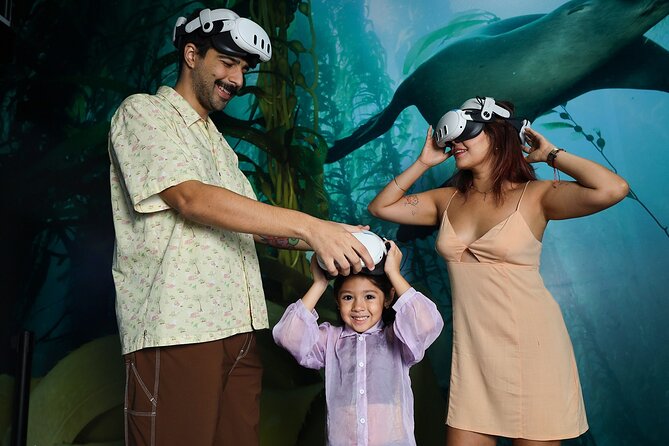
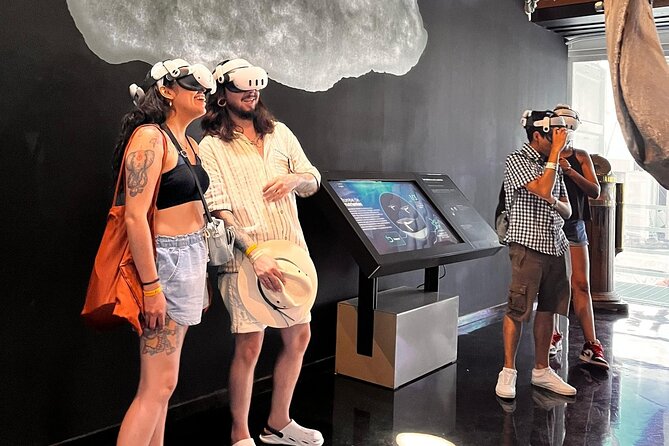
MUNBA uses virtual reality to show the anatomy of a dolphin. This is one of the museum’s best tools because anatomy can be difficult to understand from a flat diagram.
The format gives you a way to look inside the animal and connect its outer shape with its internal structure. That makes the subject more accessible for children, and it gives adults a clearer sense of how a marine mammal is built.
The available information does not specify the length of the virtual reality session or how many stations are operating. You should therefore expect it to be one part of the museum rather than the entire visit. If the museum is busy, you may need to allow time for access to the station.
I like this kind of exhibit because it adds something the skeletons cannot provide. The bones show structure from the outside. Virtual reality helps you understand the living animal. Neither replaces the other.
Whale songs and underwater ecosystems
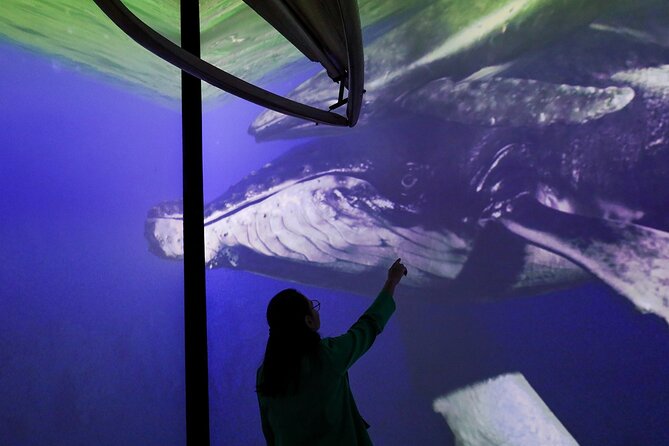
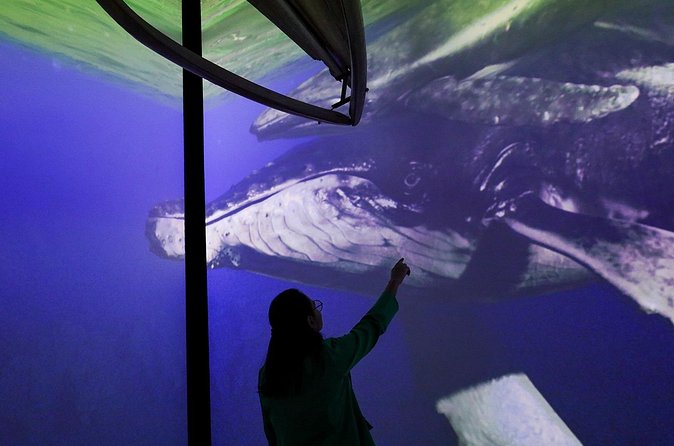
Sound plays an important role here. MUNBA includes whale songs, giving you a sense of how these animals communicate across the sea.
This is a small but valuable touch. Whales are often presented as giant creatures seen from above the water. Hearing their calls makes them feel like animals with social lives and recognizable behavior, not just large bodies.
The museum also presents underwater ecosystems. That broadens the focus beyond individual whales and dolphins. You can connect marine mammals with the larger environment they depend on, including the pressures that affect marine species.
The displays address challenges faced by marine life. The supplied information does not list each threat in detail, so I would not arrive expecting a specialized lecture on one particular issue. Instead, think of the museum as an introduction to marine conservation, suitable for a general audience.
For you, the value is in the sequence: see the animal, learn about its body, hear its communication, and then consider the ecosystem around it. That progression gives the visit more purpose than a basic collection of specimens.
More whale watching around Mexico worth comparing
- Luxury Catamaran Whale Watching Cabo San Lucas
★ 5.0 · 2,107 reviews - Whale Watching Cabo-Women crew-Sightings Guaranteed & Free Photos
★ 5.0 · 1,743 reviews - SMALL GROUP Whale Watch | Cabo San Lucas | Biologist | FREE Pics
★ 5.0 · 1,106 reviews - Humpback Whales in Cabo San Lucas
★ 5.0 · 1,005 reviews
Following Talassa on a whale’s journey
Talassa the whale serves as a guide through one part of the museum. Her journey gives the exhibits a simple story line, which can help younger visitors stay interested.
A named character also makes the conservation message less abstract. Rather than reading only about general threats, children can follow one whale through different stages of a journey and connect the exhibits to a single animal.
The available details do not identify a live guide or educator named Talassa. She is part of the museum presentation. No personal guide names are provided, so you should expect a self-guided museum visit rather than a tour led by a named expert.
That is both a strength and a limitation. You can move at your own pace, stop at displays that interest you, and spend less time on sections that do not. On the other hand, you should not expect a scheduled talk or a personal explanation at each exhibit unless the museum provides one during your visit.
The Children’s Zone for families
Families should pay close attention to the Children’s Zone. It offers creative and educational activities under supervision, giving children a place to work while parents explore other parts of the museum.
This is a practical feature, not just a marketing label. Young children often enjoy museums in short bursts. A dedicated area gives them something active to do and may make the visit easier for parents.
The available information does not state the ages served, the exact activities, or how long children may stay there. It also does not say whether every child must be accompanied by an adult. If this matters to your plans, confirm the arrangements when you arrive.
Even with those limits, the Children’s Zone makes MUNBA a better choice for a family than a museum made entirely of glass cases and text panels. Adults can spend more time with the skeletons and conservation displays while children have a more hands-on option.
Is $17.30 a fair price?
Admission costs $17.30 per person. For a two to three-hour visit with access to the full museum, that is a reasonable price, particularly if you value science exhibits and are looking for an activity during the hotter part of the day.
The price works best when you use the museum as a focused half-day stop. You are paying for the collection, interactive displays, virtual reality, whale sounds, underwater ecosystem content, and the Children’s Zone. You are not paying for transportation, a boat trip, or a full-day guided excursion.
I would consider the admission good value for families, museum fans, and anyone curious about whales and dolphins. A family can also benefit from the supervised children’s activities, although the total cost rises with each person who needs a ticket.
For a quick look around, the price may feel less attractive. If you plan to stay only 45 minutes, you may not get enough from the visit. Set aside two hours at minimum if you want to see the collection and try the interactive displays without rushing.
Timing your visit in Mazatlán
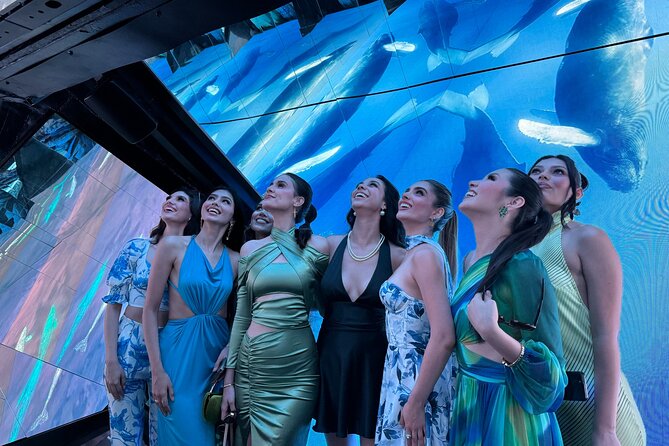
MUNBA is open Tuesday through Sunday from 10:00 a.m. to 5:00 p.m. It is closed on Mondays according to the listed schedule.
The opening hours make it easy to place the museum into a morning or afternoon plan. A 10:00 a.m. arrival gives you the first part of the day for the exhibits, while an early afternoon visit can fill a gap between other plans.
Do not arrive close to closing time if you want the full experience. A two to three-hour visit would take you beyond the end of the 5:00 p.m. schedule if you enter too late.
The museum is near public transportation, which helps if you are building your day without a private vehicle. The details do not specify a particular bus route, stop, or transfer point, so you will need to check your route separately.
A mobile ticket is provided, and confirmation is received at booking. Service animals are allowed, and most people can participate. No special fitness requirement is listed.
Who will enjoy MUNBA most?
I would recommend MUNBA to families with children, couples looking for an indoor activity, and anyone with a real interest in marine animals. The museum also fits well into a broader Mazatlán day because the visit lasts two to three hours rather than demanding a full day.
It is a particularly good choice if you want something educational without signing up for a long guided tour. You can control your pace and give more time to the skeletons, virtual reality, whale songs, or conservation displays that interest you most.
You may want to skip it if you are seeking a live-animal encounter, a boat excursion, or a very large aquarium. The museum focuses on specimens, technology, and education. Its exhibits cannot recreate the experience of seeing a whale at sea.
I would also be cautious if you dislike compact museums. One published assessment describes the collection as a moderate amount of material rather than a huge attraction. That is not a serious flaw, but it is an important expectation to set before you pay.
Booking, cancellation, and practical details
The experience is offered in English, and you receive a mobile ticket. Confirmation arrives at the time of booking, which makes the process straightforward.
You can cancel for a full refund up to 24 hours before the scheduled start time. Cancellations made less than 24 hours before the start time are not refunded, and changes inside that period are not accepted. The cut-off follows Mazatlán local time.
The listed experience provider is Shekinah Beach Club. No guide name or group size is provided, so do not assume that an employee will lead you through the museum or that you will join a small guided group.
Should you book the MUNBA whale museum?
Book it if you want a reasonably priced, two to three-hour museum visit with real whale and dolphin skeletons, simple technology, and useful family facilities. The sperm whale calf skeleton, dolphin anatomy display, whale songs, and Children’s Zone give the museum enough variety to justify the stop.
Skip it if you want a massive aquarium or a full-day attraction. MUNBA is best understood as a focused marine museum. At $17.30, it offers solid value when you take your time and use the interactive sections rather than racing through the collection.
FAQ
Where is the MUNBA whale museum located?
MUNBA Museo Nacional de la Ballena is located in Mazatlán, Mexico.
How much does admission cost?
Admission costs $17.30 per person.
How long does a visit take?
You should allow approximately two to three hours for the experience.
What are the museum’s opening hours?
MUNBA is open Tuesday through Sunday from 10:00 a.m. to 5:00 p.m.
Is the museum open on Mondays?
The listed schedule shows the museum open Tuesday through Sunday, so Monday is not included as an opening day.
Is admission included with the experience?
Yes. The admission ticket is included.
What can you see at MUNBA?
You can see whale, dolphin, and orca skeletons, including the world’s only sperm whale calf skeleton. The museum also has virtual reality, whale songs, underwater ecosystem displays, and conservation exhibits.
Is there anything for children?
Yes. The Children’s Zone offers creative and educational activities under supervision.
Is the experience available in English?
Yes. The experience is offered in English.
Can I cancel for a full refund?
Yes. You can receive a full refund if you cancel at least 24 hours before the experience start time. Cancellations within 24 hours are not refunded.
Is MUNBA accessible by public transportation?
The museum is near public transportation. Specific routes and stops are not provided.
Are service animals allowed?
Yes. Service animals are allowed.
New whale trips around Mexico
- Whale Watching in La Paz – Gray Whale Encounter★ 4.4 · 4 reviews
- Whale Watching in San Jose del Cabo★ 5.0 · 3 reviews
- Whale Watching Guaranteed Experience in Puerto Vallarta★ 5.0 · 7 reviews
- Cabo San Lucas: Whale Watching Experience on Catamaran★ 4.3 · 5 reviews
- Whale Watch Cabo: Group Whale Watching Tour – FREE photos★ 5.0 · 3 reviews
- Whale Watch Cabo: Zodiac Whale Adventure – FREE Photos★ 4.8 · 4 reviews
- Whale Watching★ 4.0 · 10 reviews
- Private Whale Watching in San Jose Del Cabo snack,drinks,Warranty★ 5.0 · 2 reviews
Museums, compared.
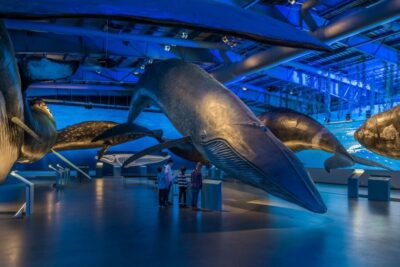
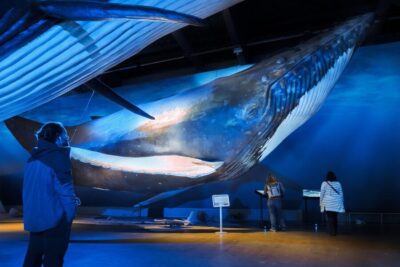
Whale Watching Tour, Whales of Iceland Exhibition
Read our review →
Deluxe Whale Watching and Whales of Iceland Exhibition Combo from Reykjavik
Read our review →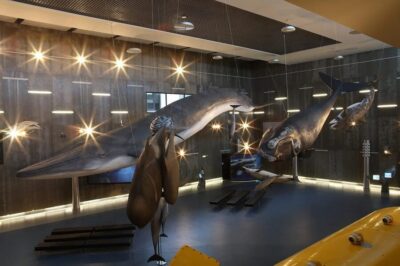
Browse the lists this tour appears in