
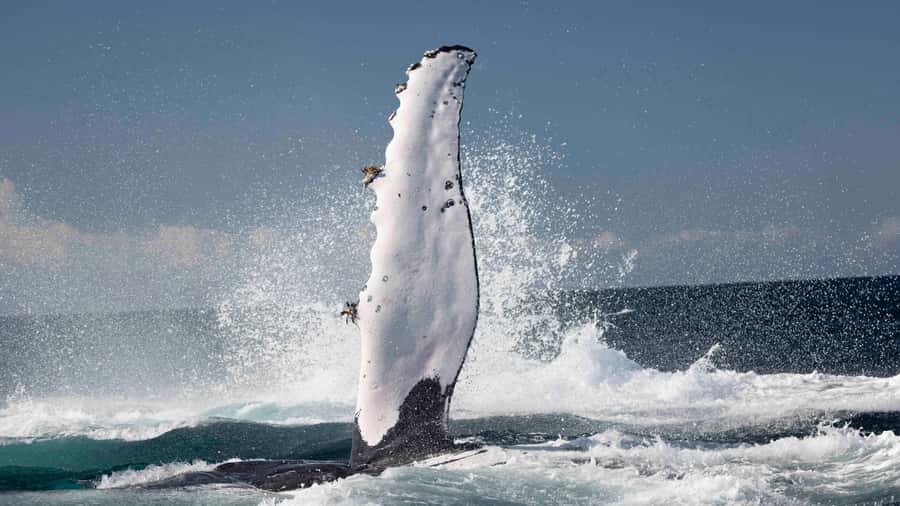
Review · WHALE WATCHING WITH A MARINE BIOLOGIST
Byron Bay Whale Watching with Marine Biologist
Seeing a humpback whale surface just a few metres from a small boat is the main draw here. Blue Seafaris takes you from Brunswick Heads toward Byron Bay aboard Wardjam, a fast rigid inflatable boat with suspension seating and room for only 12 people. I like the close-up format and the chance to hear whale song through an onboard hydrophone. I also like having a marine biologist on hand, rather than relying on a skipper to point out a fin and move on.
The main consideration is the ride itself. A small RIB can move quickly and gives you a lively trip over open water, but it is not the best choice if you are prone to seasickness. Seating may also suit taller people better than shorter people, as one person found that their feet did not reach the floor during rougher movement.
Key points at a glance
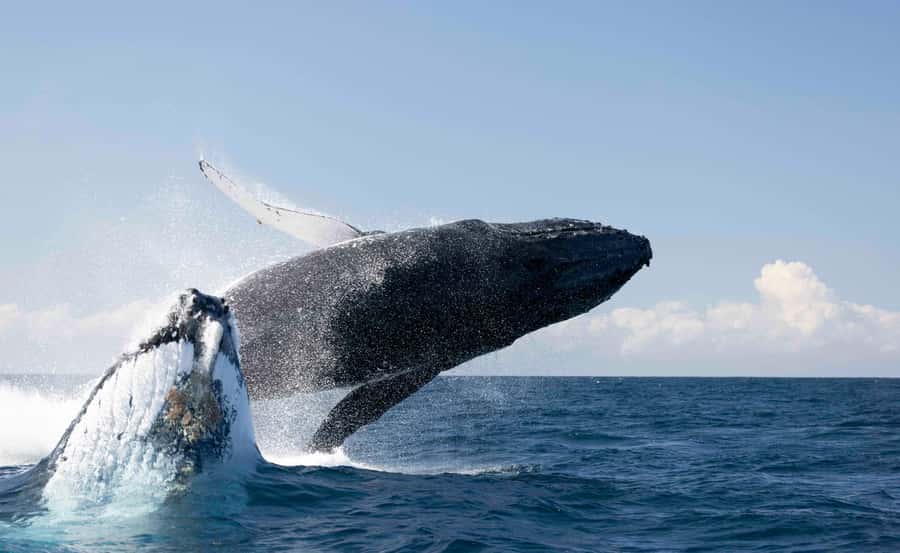
- Whales near Byron Bay: Humpbacks are often seen close to shore during their seasonal migration toward warmer waters.
- A 12-person boat: Wardjam gives you a much smaller group than a large sightseeing vessel.
- Whale song onboard: The hydrophone lets you listen to sounds beneath the surface, not just watch for blows and tails.
- Marine biology on the water: Your guide explains whale behavior, different kinds of whales, and the wider marine life around Byron Bay.
- More than whales: Keep watch for dolphins, turtles, migratory birds, and other whale species.
- A lively two-and-a-half-hour ride: The fast RIB covers water quickly, but the open-sea motion is worth considering before you book.
A close look at Byron Bay’s humpbacks
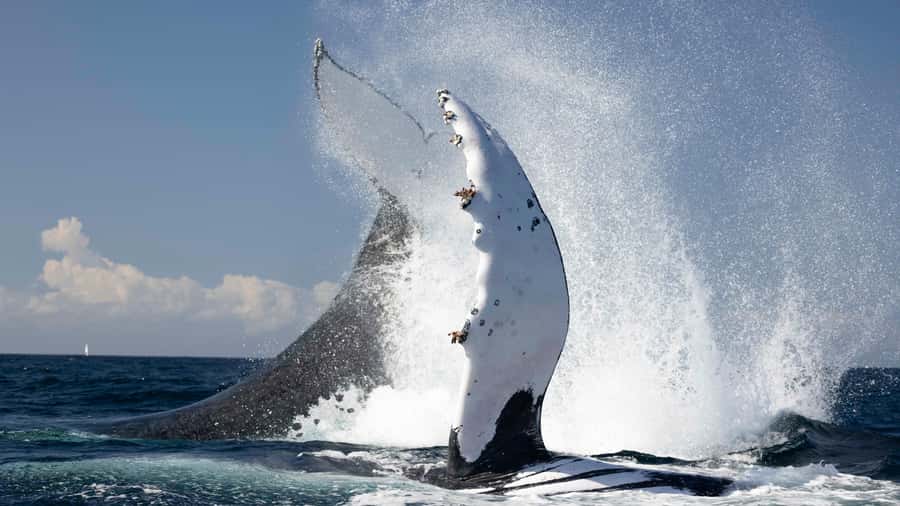
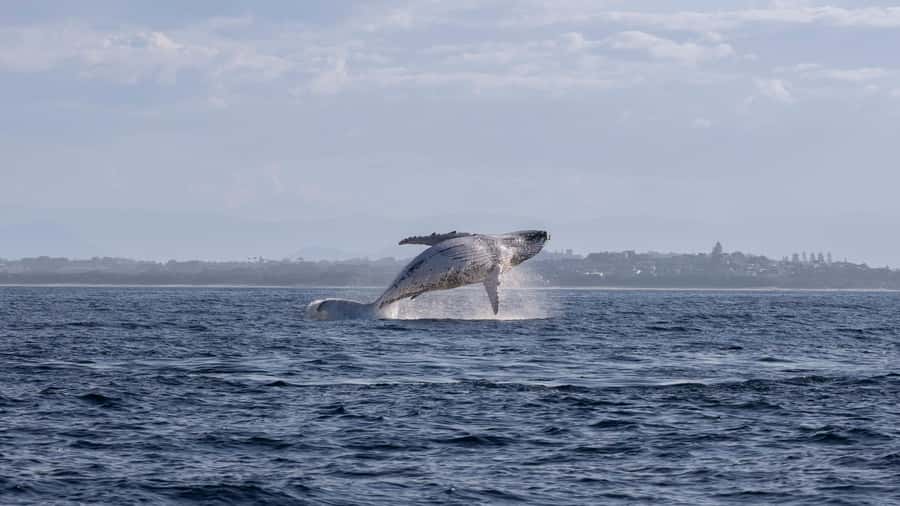
This trip is built around the annual movement of humpback whales along the New South Wales coast. From Brunswick Heads, the boat heads toward Byron Bay, where whales can pass surprisingly close to shore as they make their way to warmer waters.
That near-shore setting matters. You are not simply taking a long boat ride and hoping something appears on the horizon. The route places you in an area where humpbacks may be visible from a relatively short distance, although no whale tour can promise a particular number of sightings or a specific behavior.
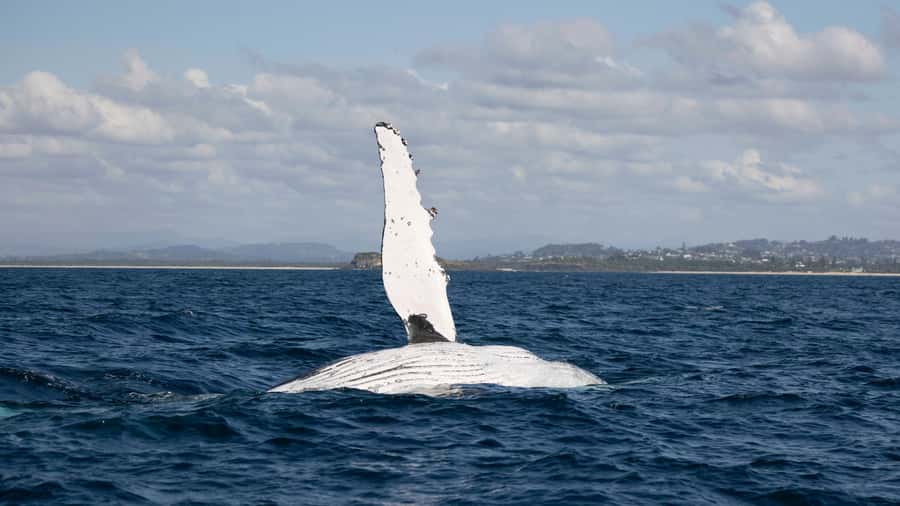
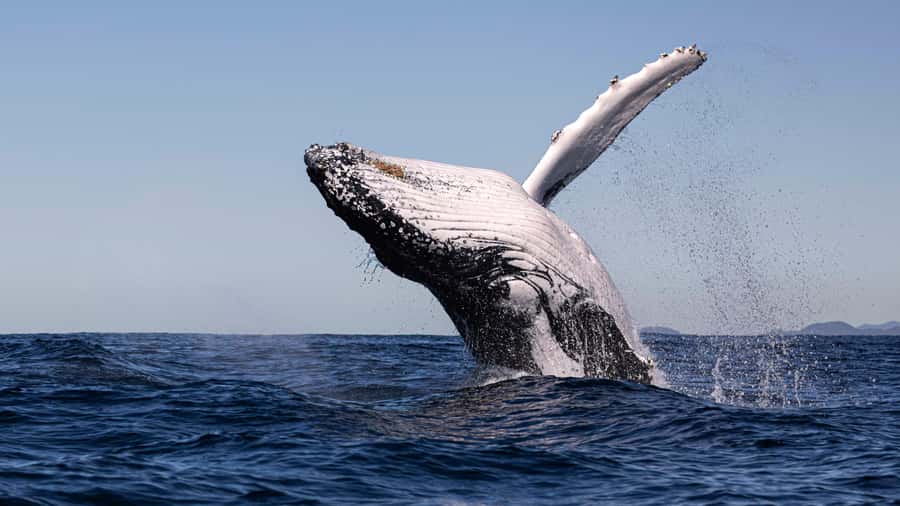
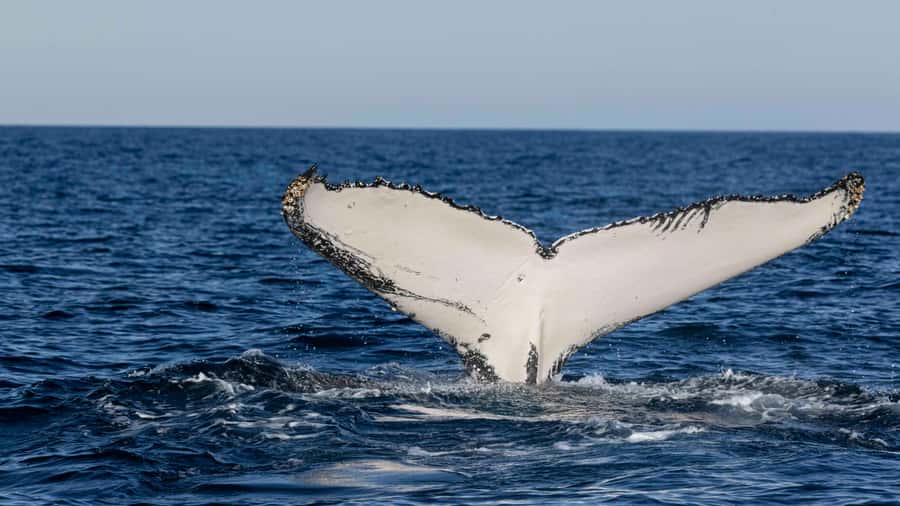
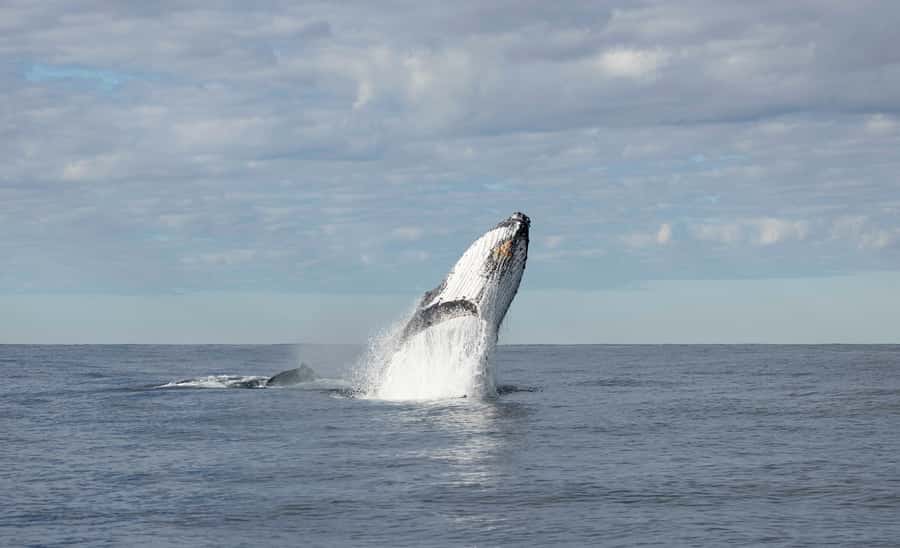
You might see a blow first, followed by a dark back cutting through the water. A closer encounter could reveal a tail, a fin, or a whale surfacing beside the boat. Several recent trips had multiple whale sightings, including a baby, and one afternoon outing produced whales close enough for plenty of photographs.
The best part is the scale of the encounter. From a 12-person RIB, a whale does not feel like a tiny mark far away. You have a better chance of watching the animal’s movement and giving your camera a useful angle. Still, the boat must operate responsibly, and the whales decide how close they come. Expect wildlife watching, not a staged performance.
More Whale Watching with a Marine Biologist in Australia:
- Byron Bay: Whale Watching Cruise with a Marine Biologist
★ 4.8 · 261 reviews - Azores: Whale Watching & Islet Boat Tour w/ Marine Biologist
★ 4.7 · 2,945 reviews - São Miguel: Whale-Watching Cruise with Marine Biologist
★ 4.6 · 1,311 reviews
Starting at Brunswick Heads boat harbor
You meet at the Brunswick Heads boat harbor, where you drive straight into the harbor area and look for the Blue Seafaris flag. Several car parks are available, so allow enough time to find a space and get ready before departure.
The setting is simple and practical rather than polished. You are at a working harbor, not a formal visitor center, and the boat becomes the main focus as soon as you arrive. Blue Seafaris provides a waterproof poncho, but you should still bring warm clothing. Wind and spray can make the trip feel cooler than the temperature on land.
Bring water, sunscreen, and a camera. Food and drinks are not included, so eat beforehand or make your own plans around the departure time. You will want both hands free when the boat is moving, and a camera with a secure grip is sensible in a wet, windy setting.
The exact start time depends on availability. Some departures may offer changing light, and a late afternoon trip can be especially attractive. One afternoon outing produced several whales and a baby, though the person on that trip felt the 3 p.m. timing was quieter because the whales seemed to be settling down. That is a useful reminder: sunset light can be lovely, but whale activity cannot be scheduled like a restaurant reservation.
A fast ride aboard Wardjam
Wardjam is a rigid inflatable boat, often called a RIB. It is designed to be fast and stable, with suspension seating that helps soften the movement over the water. With space for just 12 people, the boat gives you a more personal outing than a large vessel with several dozen seats.
I like the small size for two reasons. First, the guide can speak to the whole group without a loudspeaker feeling between you and the explanation. Second, everyone has a reasonable chance of seeing the action instead of competing with a crowd gathered along one rail.
The trade-off is comfort. A smaller boat responds to waves more directly. One person reported that their shorter companion had difficulty keeping both feet planted when the boat bounced in larger waves. That does not make the seating unsuitable, but it is worth thinking about if you are short, have balance concerns, or dislike a lively ride.
The activity is not suitable for children under seven, pregnant women, people prone to seasickness, or people over 70. Those limits are important, not minor fine print. The tour takes place on open water in a quick boat, so physical comfort and confidence matter.
Listening to whale song with a marine biologist
The hydrophone adds something many basic whale trips lack. Instead of only watching the water, you can listen below the surface for the sounds made by whales. Humpback song gives the trip another sense of place, and it helps you understand that the animals are communicating even when you cannot see them.
Your marine biologist guide also puts the sightings into context. You can learn about humpback behavior, the migration, and the differences between types of whales. On one trip, the guide took time to explain the various whales being seen while helping people watch for them. That combination is valuable: you are not left guessing whether a distant splash was a whale, a wave, or something else.
Scott is named by one person as part of the Blue Seafaris team, along with praise for the crew’s friendly approach and the number of whales seen. The supplied information does not identify every guide by name, so you should not expect a particular person on every departure.
The guide’s role is especially useful during quiet spells. Wildlife trips naturally include pauses when everyone scans the water. A marine biologist can turn that waiting time into useful learning instead of dead time. You come away with more than photographs, even if the whales remain below the surface for a while.
More whale watching around Australia worth comparing
- Sydney: Whale Watching Adventure Cruise
★ 4.2 · 1,790 reviews - Brisbane Whale Watching Cruise from Redcliffe or Sunshine Coast
★ 5.0 · 997 reviews - Freedom 3/4 Day Hervey Bay Premium Whale Watching Cruise
★ 5.0 · 919 reviews - Whale Watching Tour with Spirit of Gold Coast
★ 4.5 · 884 reviews
The 150-minute route toward Byron Bay
The planned experience lasts 150 minutes, or two and a half hours. You leave Blue Seafaris in Brunswick Heads, travel along the coast toward Byron Bay, spend time watching for wildlife, and return to the same harbor.
Leaving Brunswick Heads
The first section gets you out of the harbor and onto the coastal water. The RIB’s speed helps the group cover ground quickly, which is useful when searching a wide area for whale activity. The ride itself is part of the fun, but it is also when you will first notice how the open water feels.
Keep your clothing close and your sunscreen handy. Even with a poncho, spray and wind can reach you. The boat’s compact layout means you are close to the water, which adds to the sense of being in the action but leaves less shelter than a larger covered vessel.
Searching off Byron Bay
Once the boat reaches the whale-watching area, the pace becomes more watchful. The skipper and guide scan for blows, backs, fins, and movement. You may see a humpback surface, travel past the boat, or remain underwater long enough to make the next sighting uncertain.
Recent outings produced multiple whales, close encounters, and dolphins. One person saw a baby whale, while another reported both whales and dolphins during the same trip. These sightings show the range of the experience, but they should not be treated as a guarantee for every departure.
This is where the small boat pays off. You can follow the guide’s direction quickly and keep a clear view. When a whale appears within metres, you may have time to photograph it and watch it travel before it disappears again.
Returning to Brunswick Heads
The return trip completes the loop at Blue Seafaris. Keep watching until you are back in the harbor, since dolphins, turtles, and birds can appear during any part of the route.
One person reported being on the water for about three hours rather than the advertised two and a half. That may happen on some outings, but I would plan around the stated 150-minute duration and treat extra time as a bonus, not part of the promise.
Dolphins, turtles, birds, and other surprises
Whales are the reason to book, but the wider wildlife list makes the outing more interesting. Dolphins may travel near the boat, turtles can appear at the surface, and migratory birds add movement above the water.
You might also spot other whales besides humpbacks. The marine biologist can help identify what you are seeing, which is much more useful than trying to work it out from a blurry photograph later.
The trip rewards patience. Some people want a whale to breach beside the boat, but most sightings are more subtle. A blow in the distance, a back rolling through the water, or a tail disappearing below the surface can still be a strong encounter. If you enjoy watching animal behavior rather than collecting a single dramatic photograph, you are more likely to appreciate the rhythm of the trip.
Is $91 good value?
At $91 per person, this sits in the reasonable range for a 150-minute wildlife outing, especially because the price includes the boat tour, skipper, marine biologist guide, and waterproof poncho. The group size is the strongest value point. You are paying for access to a small, focused boat rather than just transport along the coast.
The hydrophone also adds real value. It gives the guide another way to explain the whales and makes the experience feel more complete during periods when the animals are underwater.
The price is less attractive if you mainly want a guaranteed photograph or a calm cruise. Wildlife remains unpredictable, and the RIB can be bumpy. Food and drinks are not included, so budget for those separately.
The high rating of 4.9 from 66 ratings fits the strongest parts of the experience: frequent whale sightings, friendly staff, useful explanations, and an enjoyable boat. The most repeated praise centers on seeing several whales, sometimes very close, plus dolphins on some trips. Those are meaningful strengths, but the weather and sea conditions still control what happens on the day.
Timing, weather, and what to wear
The tour runs only when weather, tide, and sea conditions are suitable. If conditions change, Blue Seafaris sends an update by email and SMS, so enter the correct mobile number and check your messages before heading to the harbor.
If a trip is canceled because conditions are unsuitable, you can join a later tour, accept a voucher for another date, or receive a full refund. You can also cancel up to 24 hours before departure for a full refund, and the reserve-now, pay-later option lets you keep your plans flexible.
Wear warm layers even on a mild day. Add sunscreen and bring water. The waterproof poncho helps with spray, but it does not replace proper clothing for a windy ride.
If you are prone to seasickness, I would choose a different activity. The tour provider specifically lists seasickness as a reason not to book, and the RIB’s movement can make the problem worse. If you are comfortable on fast boats, the same motion is likely to feel exciting rather than unpleasant.
Who will enjoy this boat trip most?
I would recommend it to adults and older children who want a close, active wildlife experience rather than a quiet cruise. The small group suits anyone who values direct contact with the guide and a clearer view when whales surface.
It also suits people who enjoy learning. The marine biologist, whale song, and discussion of behavior give the trip more substance than a simple sightseeing run. Photographers should find the close encounters useful, although changing light, spray, and moving animals make sharp images a matter of timing.
I would be cautious if you have mobility concerns, dislike exposed seating, or need a very stable ride. The boat is described as fast and stable, but it is still a small vessel on open water. Shorter people may find the suspension seats less comfortable during rough patches.
Should you book Blue Seafaris?
Book this tour if you want a small-group whale search with real interpretation, a fast ride, and a good chance of seeing humpbacks near Byron Bay. The strongest reasons are the 12-person boat, the hydrophone, and the marine biologist who helps you understand what you are watching.
Skip it if you need guaranteed whale activity, a smooth cruise, or shelter from the sea. For most people who accept the uncertainty of wildlife watching, $91 is fair value, and the combination of close sightings, dolphins, and whale song makes this more memorable than a basic coastal boat ride.
FAQ
Where does the Byron Bay whale-watching tour start?
It starts at the Blue Seafaris meeting point in the Brunswick Heads boat harbor. Drive straight into the harbor, look for the Blue Seafaris flag, and choose one of the available car parks.
How long does the whale-watching trip last?
The scheduled duration is 150 minutes, or two and a half hours. One outing ran for about three hours, but you should plan around the stated 150-minute duration.
How many people can ride on Wardjam?
Wardjam has seating for 12 people, creating a small-group boat experience.
What animals might I see?
The main target is the humpback whale. You might also see dolphins, turtles, migratory birds, and other whales.
What is included in the price?
The $91 price includes the whale-watching boat tour, an experienced skipper, a marine biologist guide, and a waterproof poncho. Food and drinks are not included.
What happens if the tour is canceled because of weather?
The tour operates only in suitable weather, tide, and sea conditions. If conditions are unsuitable, you can join a later tour, receive a voucher to rebook, or request a full refund.
New whale trips around Australia
- Coral Bay: 3-Hour Whale Watching Experience★ 4.9 · 25 reviews
- Byron Bay: Whale Watching Tour★ 5.0 · 3 reviews
- Broome: Whale Watching & Sunset Cruise★ 4.9 · 41 reviews
- Bundaberg: Whale Watching Sightseeing Cruise with Lunch★ 4.9 · 24 reviews
- Broome Sunset & Whale Watching Cruise★ 5.0 · 2 reviews
- Bremer Bay: Bremer Canyon Killer Whale Expedition★ 4.9 · 114 reviews
- Bremer Canyon Orca Experience from Bremer Bay★ 4.6 · 35 reviews
- Augusta: Whale Watching Tour★ 4.5 · 9 reviews
Whale Watching with a Marine Biologist, compared.
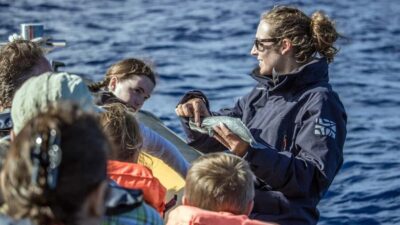
Whale Watching & Islet Boat Tour w/ Marine Biologist
Read our review →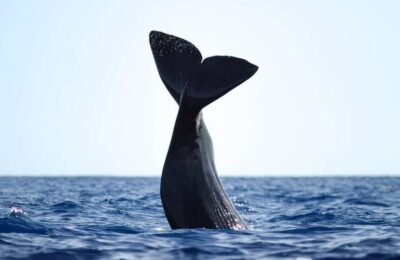
São Miguel: Whale-Watching Cruise with Marine Biologist
Read our review →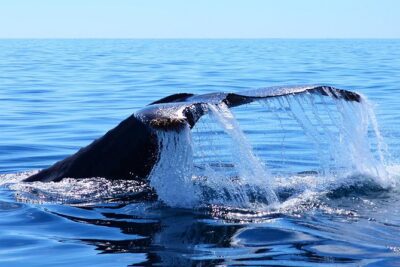
SMALL GROUP Whale Watch | Cabo San Lucas | Biologist | FREE Pics
Read our review →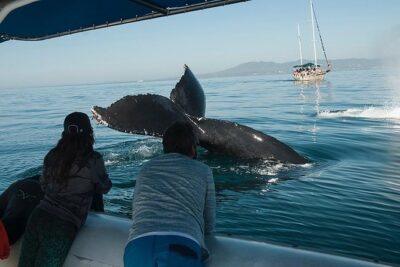
Whale and Dolphin Watching with a Biologist in Puerto Vallarta
Read our review →
ZODIAC Whale Watch Tour | Cabo San Lucas | Biologist | FREE Pics
Read our review →
Arrábida Dolphin and Whale Watching with Biologist
Read our review →
Byron Bay: Whale Watching Cruise with a Marine Biologist
Read our review →
PRIVATE Whale Watch Tour | Cabo San Lucas | Biologist | FREE Pics
Read our review →Browse the lists this tour appears in