
Review · WHALE WATCHING CRUISES
Auckland Dolphin and Whale Watching Eco-Safari Cruise
The best part of this Auckland cruise is that it is more than a quick wildlife outing. You spend about 4.5 hours on the Hauraki Gulf, with marine research scientists explaining what you see and how the safari supports conservation. Dolphins often provide the main event, while whales, penguins, seals, and seabirds add pleasant surprises.
I like two things in particular: the research connection, which gives the trip a real purpose, and the views of Rangitoto, Motutapu, Motuihe, and Auckland’s harbor from the water. You also get a stable 65-foot catamaran with indoor and outdoor viewing areas. The main drawback is simple: wild animals follow their own timetable, and some departures see dolphins but no whales, or very little wildlife at all.
Key points before you book
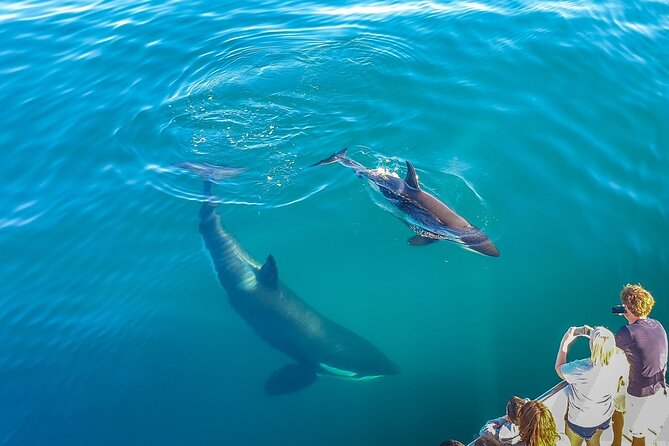
- Dolphins are often the most reliable sighting, with pods sometimes swimming and playing beside the boat for long stretches.
- Whale sightings are possible but not promised, and the crew offers a free return trip if no marine mammals are seen.
- Marine research scientists provide the commentary, linking the cruise to ongoing conservation work.
- The 65-foot catamaran can carry up to 99 people, so busy summer departures may feel crowded around the rails.
- The trip covers Auckland’s harbor and island waters, including Rangitoto, Motutapu, Motuihe, and the Hauraki Gulf Marine Park.
- Bring warm, weatherproof layers, sunscreen, and a hat with a chin strap, since wind and sun can change quickly on the water.
Setting out from Viaduct Harbour
You meet the crew near the New Zealand Maritime Museum at Eastern Viaduct in Auckland Central. This is an easy downtown departure point, close to public transport and the restaurants and hotels around the Viaduct.
Check-in closes 15 minutes before departure. Take that seriously. The boat leaves on time, and late arrivals risk losing their assigned seats.
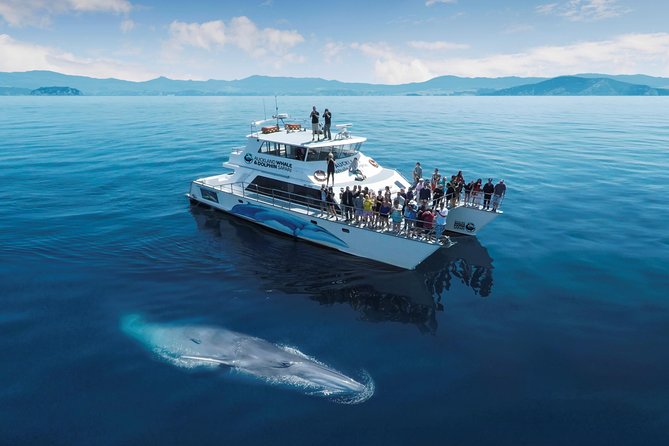
The vessel is a custom-built 65-foot, or 20-meter, catamaran. That design gives you a fairly stable ride and several ways to watch the sea. You can sit inside, find shelter, or move outside when something appears on the horizon. The tradeoff is capacity: up to 99 people can be aboard, and a full sailing may feel tight when everyone gathers along the rails for a dolphin pod.
I would arrive early enough to settle in and choose a sensible viewing position. The front deck offers exciting close views when dolphins approach, but it also receives the full force of wind and spray. The back of the boat can be a calmer place to sit, though your view may be less direct when the action is at the bow.
More Whale and Dolphin Watching Tours in the world:
- Tenerife: Eco-Yacht Whale and Dolphin Watching and Swimming
★ 4.7 · 15,619 reviews - Los Cristianos Respectful No-Chase Whale and Dolphin Safari
★ 4.6 · 12,782 reviews - From Funchal: Ecological Catamaran Dolphin Whale Watching
★ 4.5 · 8,204 reviews
Auckland Harbour Bridge and Waitemata Harbour
The first part of the trip gives you a different view of Auckland. After leaving Viaduct Harbour, the catamaran passes beneath or near the Auckland Harbour Bridge and moves through Waitemata Harbour.
This opening stretch helps you get used to the boat before the search for wildlife begins. The city recedes, islands come into view, and the commentary starts to explain the waters ahead. The harbor itself can be a pleasant part of the experience, especially if you enjoy seeing Auckland from a low viewpoint rather than from a lookout or city street.
The boat is not simply racing to one fixed whale-watching spot. The crew adjusts the route according to conditions and reports from the water. That flexibility matters because whales and dolphins can cover a wide area, and no exact route can guarantee a sighting.
Rangitoto, Motuihe, and Motutapu
Rangitoto Island is one of the most recognizable sights in Auckland’s gulf. Its volcanic form gives the cruise a strong visual marker as the boat moves farther from the city.
You also pass Motuihe and Motutapu islands. These islands add variety to the scenery and help show why the Hauraki Gulf is valued as more than open ocean. The water is dotted with islands, coves, and protected areas, and the changing views keep the ride interesting even during quiet wildlife periods.
Motutapu is especially useful as a reminder that the cruise is taking place in a marine park with both natural and conservation importance. You are not only looking for animals. You are seeing the setting in which they feed, travel, and raise young.
The crew explains the Hauraki Gulf Marine Park and its five marine preserves. The area is home to about 23 marine species, so the trip can remain worthwhile even when the largest animals stay out of sight. I would treat the island scenery and naturalist commentary as part of the main experience, not merely as something to fill time between whale sightings.
Searching the Hauraki Gulf Marine Park
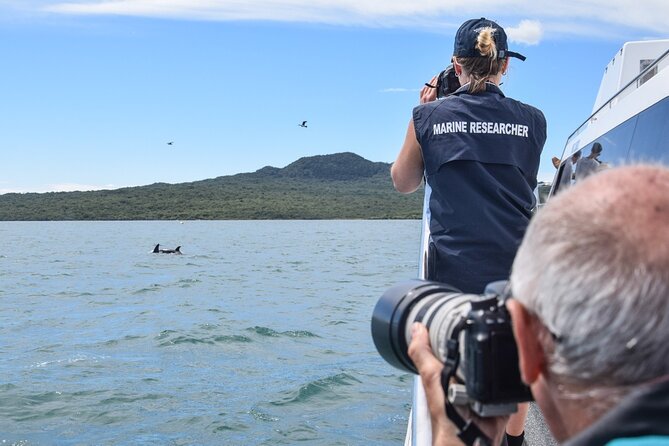
Once the boat reaches wider gulf waters, the pace becomes less predictable. You may spend time scanning the surface, watching for a blow, a fin, a dark shape, or a sudden group of birds gathered over feeding fish.
The crew tracks several whale species, including Bryde’s whales, which are native to New Zealand waters. Up to six types of whales may be seen in the wider area, but that number describes the range of possible species, not a promise for one four-and-a-half-hour departure.
This is where expectations matter most. Some trips produce two whale sightings and several dolphin pods. Others find a strong group of dolphins, a seal, penguins, and birds but no whales. A few departures may see only a small number of dolphins, or no marine mammals at all.
The company provides a complimentary return trip if no marine mammals are seen. That is a fair policy for local visitors who can use it, but it has less practical value if you are flying home soon. If you are visiting Auckland for only a few days, book with the understanding that the voucher may not fit your schedule.
More Whale Watching Cruises in the world:
- Reykjavík: Whale Watching and Marine Life Cruise
★ 4.6 · 9,838 reviews - Funchal: Dolphin and Whale Watching Catamaran Cruise
★ 4.5 · 5,697 reviews - Costa Adeje: Whale & Dolphin Eco-Cruise with Snacks & Drinks
★ 4.6 · 5,096 reviews - Boston: City Cruises Whale Watching Cruise
★ 4.5 · 4,710 reviews
Dolphins, whales, seals, and blue penguins

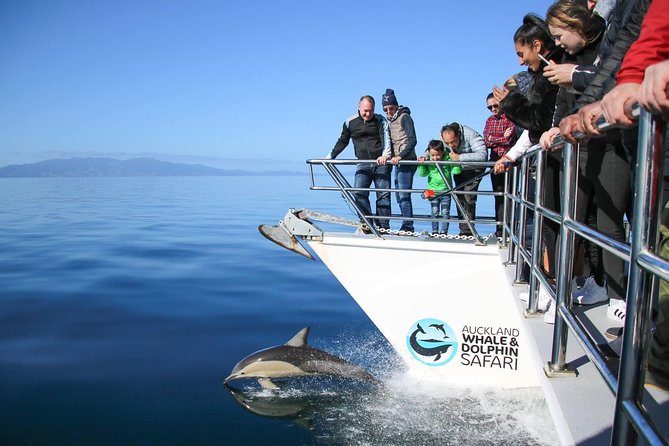
Dolphins are often the highlight. Bottlenose dolphins are frequently spotted in pods, and they may swim near the bow, cross in front of the boat, or remain in the area for many minutes. Some sightings include adults with young, which can be especially memorable.
The crew makes an effort to give the animals space and let them choose how close to come. That is important. A good wildlife cruise is not about forcing an encounter for a photograph. It is about watching natural behavior without adding unnecessary pressure.
Whales can appear as brief blows, backs, or tails. If you see one, the encounter may be short, so keep your camera ready but do not spend the entire trip looking through a screen. The most rewarding moments can be the ones you see directly, especially when several people must share the rail.
Seals and blue penguins are possible but less predictable. Blue penguins are small, so binoculars can help. You may also see a seal resting or moving through the water, adding another species to the day’s count.
Seabirds and the value of the research work
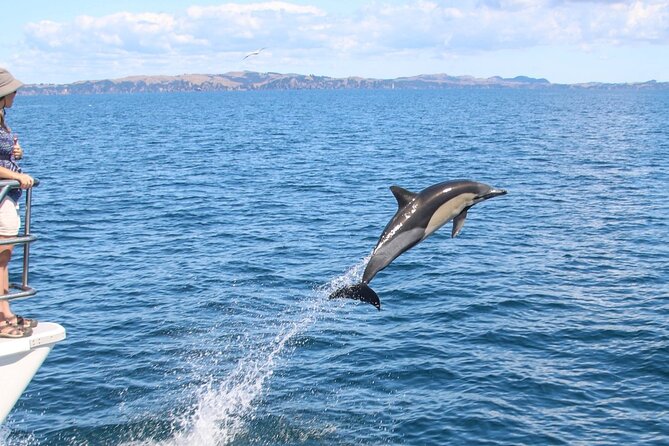
Look upward as well as outward. Australasian gannets, petrels, shearwaters, and white-fronted terns may fly over the water or plunge toward feeding areas.
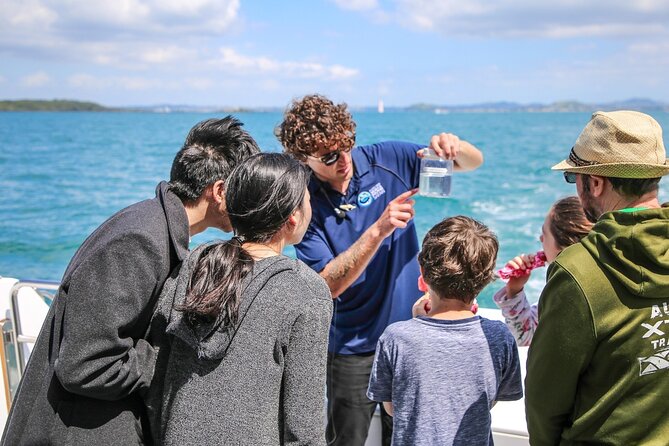
The birds are not just background decoration. Their movement can help indicate where fish are active, and the crew uses the wider picture of the marine environment when searching for animals. The commentary connects what you see with the work being done alongside local marine scientists.
Every ticket contributes directly to marine mammal conservation. You also hear about the animals being tracked and the research partnerships linked to the operation. That gives the trip more weight than a standard sightseeing cruise. You are paying for a guided day on the water, but part of the price also supports the protection and study of the creatures you came to see.
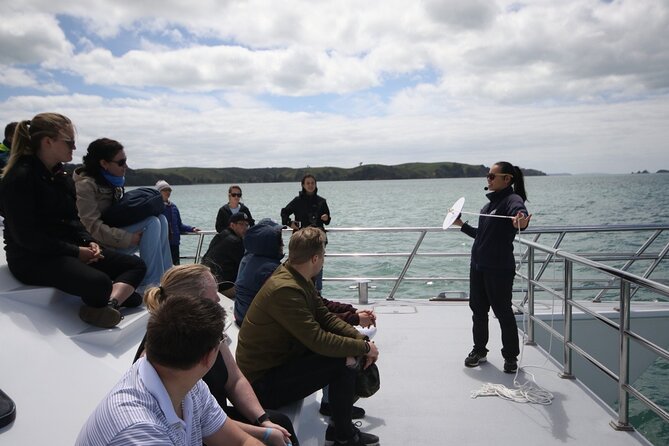
This element will appeal most if you want your wildlife outing to have an educational purpose. The commentary is a major part of the value, so sit where you can hear it. One practical weakness is that commentary can be difficult to catch from every position when the boat is full or the wind is strong. If learning is a priority, move closer to the speaker when possible.
What the boat ride feels like
The catamaran is described as stable and comfortable, but the gulf can still be rough. One departure had choppy water, and the boat ride itself became a major part of the day. If you are prone to motion sickness, prepare accordingly, although no specific medication or onboard treatment is included in the tour details.
Weather can also change the experience quickly. A calm morning may provide an easy ride and clear viewing, while rain and wind can send many people into the covered areas at once. On a full departure, that can make seating awkward. If you leave your place to get a drink or move inside, someone else may take the open seat.
Wear flat-soled shoes for safety and bring warm layers plus weatherproof clothing. A sun hat with a chin strap is more useful than a loose hat, and sunscreen remains important even on a cool day. Sunglasses, binoculars, and a camera are also worth packing.
Food and drinks are not included, but they are available to purchase onboard. Toilets are available as well. You should still bring water and a snack if you prefer to avoid relying on the onboard selection.
How the $135.91 price compares with the experience
At $135.91 per person, this is not a cheap harbor cruise. The price makes more sense if you value the full four-and-a-half-hour outing, the marine research commentary, and the chance to see several kinds of wildlife in a protected gulf setting.
You are also paying for a large, purpose-built boat, a local guide, and a crew that actively searches rather than following a short sightseeing loop. The conservation contribution adds another worthwhile element.
The value drops if you view the trip only as a guaranteed whale sighting. No operator can control where wild whales go, and a four-and-a-half-hour search can end with limited sightings. For that reason, I would book this as a marine safari with whale potential, not as a whale show.
The strongest value comes when you have enough time in Auckland to use the return-trip offer if needed. If you have only one open morning before a flight, consider the wildlife guarantee carefully and accept that the scenery and education may be the main rewards.
Who should book this Auckland safari
I would recommend it to families, photographers, bird-watchers, first-time visitors to Auckland, and anyone who enjoys being on the water for several hours. Children may find dolphins and penguins exciting, while adults often appreciate the conservation work and island views.
It also suits people who prefer a guided experience with substance. The scientists’ commentary gives you more to think about than a simple list of species.
You should think twice if you dislike rough water, need guaranteed sightings, or have a tight schedule. A full boat can limit your ability to move around, and a quiet wildlife day is always possible.
Free cancellation is available up to 24 hours before departure. If poor weather cancels the cruise, you can choose another date or receive a full refund. The same general choice applies if the minimum number of participants is not reached.
My verdict on the Auckland Dolphin and Whale Watching Eco-Safari
I like this cruise because it treats wildlife watching as both an outing and a learning experience. The best days can be remarkable, with dolphins close to the boat, whales in the distance, blue penguins, seals, sharks, and seabirds all appearing in one trip.
But you should not buy it on the promise of a whale. Buy it for the full package: a long catamaran ride, Auckland’s island scenery, marine science, conservation support, and a reasonable chance of seeing dolphins.
Book it if you can accept uncertainty and have time to use a return voucher. If your schedule is tight or you need a guaranteed animal encounter, choose a different activity. For most visitors who want to understand the Hauraki Gulf while seeing its wildlife, this is a strong use of half a day.
FAQ
How long is the Auckland Dolphin and Whale Watching Eco-Safari?
The cruise lasts approximately 4 hours and 30 minutes, including the departure from and return to Viaduct Harbour.
Where does the cruise depart?
You meet the crew at Eastern Viaduct near the New Zealand Maritime Museum in Auckland Central. The cruise ends back at the same meeting point.
Are whales and dolphins guaranteed?
No. Wildlife sightings cannot be guaranteed. If you do not see any marine mammals, you can take another trip on a different day at no extra charge.
What is included in the ticket?
The ticket includes a local guide, expert commentary and interaction with onboard marine research scientists, and a direct contribution to marine mammal conservation.
What should I bring?
Bring warm layers, weatherproof clothing, a sun hat with a chin strap, sunscreen, sunglasses, a camera, binoculars, and flat-soled shoes. Food and drinks are available to buy onboard but are not included.
Can I cancel the cruise?
You can cancel up to 24 hours before the experience for a full refund. If poor weather cancels the cruise, you can choose another date or receive a full refund.
More Safaris in the world
- Tromsø Whale Safari with MS Gabriele
★ 4.3 · 1,937 reviews - From Tromsø: All-Inclusive Whale & Orca Safari
★ 4.5 · 1,221 reviews - Húsavík: Original Big Whale Safari & Puffins by Speedboat
★ 4.7 · 1,221 reviews - Original Big Whale Safari & Puffins Speedboat Tour from Húsavík
★ 5.0 · 417 reviews
New whale trips around the world
- Costa Adeje: Whale and Dolphin-Watching Boat Excursion★ 4.7 · 157 reviews
- Costa Adeje: Whale Watching Eco Experience with Hydrophone.★ 5.0 · 11 reviews
- Puerto Colon: Dolphin and Whale Watching Speedboat Tour★ 5.0 · 92 reviews
- Costa Adeje: Whale & Dolphin Watching Cruise with Swim★ 4.7 · 154 reviews
- Nanaimo: Whale Watching Semi-Covered Boat Tour★ 4.9 · 48 reviews
- Cape Town: Hermanus Whale Watching Tour★ 3.2 · 5 reviews
- Coral Bay: 3-Hour Whale Watching Experience★ 4.9 · 25 reviews
- Cape Town: Hermanus Whale Watching Shared Boat & Penguins★ 3.3 · 6 reviews
Whale Watching Cruises, compared.
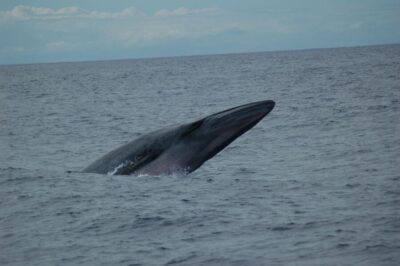

Whale & Dolphin Eco-Cruise with Snacks & Drinks
Read our review →
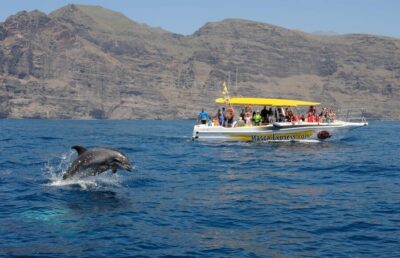
Dolphin & Whale Watching Cruise with Swim Stop
Read our review →
Morro Jable: Dolphin & Whale Watching Cruise, Drinks & Swim
Read our review →
Whale & Dolphin Watching Cruise with Swim Stop
Read our review →
Browse the lists this tour appears in