
Review · WHALE WATCHING CRUISES
Auckland: Whale and Dolphin Watching Half-Day Eco Cruise
The best part of this Auckland cruise is that the wildlife search begins almost at the city’s doorstep. From the 65-foot Dolphin Explorer, you pass North Head, Devonport, and Rangitoto Island before heading into the Hauraki Gulf Marine Park, where dolphins, whales, orcas, penguins, gannets, and shearwaters may appear.
I like the marine-science focus, which gives the trip more purpose than a simple sightseeing ride. I also like the free second cruise if no marine mammals are seen. The main drawback is simple: nature sets the schedule. You may see more than 100 dolphins and several whales, or no mammals at all.
The tour runs for 4.5 hours, and the Gulf can be windy or rough. Warm layers, a showerproof jacket, sunscreen, and seasickness medicine taken before boarding will make a big difference.
Key points to know before you book
- Wildlife begins near Auckland: The route passes North Head, Devonport, and Rangitoto Island before reaching wider feeding areas.
- Research is part of the trip: Marine scientists may collect samples and explain work on plankton and marine mammals.
- Dolphins are the most dependable sighting: Pods are often seen close to the boat, while whales and orcas are less predictable.
- The boat is comfortable but exposed: The catamaran has seating and viewing spots, but wind and spray are part of being at sea.
- A no-sighting guarantee helps: If no marine mammals appear, you receive another cruise at no cost.
- Every ticket supports conservation: One dollar from each ticket goes to the Hauraki Gulf Guardians fund.
Setting out from Auckland’s Viaduct Harbour
Your meeting point is Berth 9 at Eastern Viaduct Marina, opposite the Maritime Museum. The boat is at the end of Quay Street, heading west, and you should arrive 30 minutes before departure. Check-in closes 15 minutes before the trip, so do not cut it close.
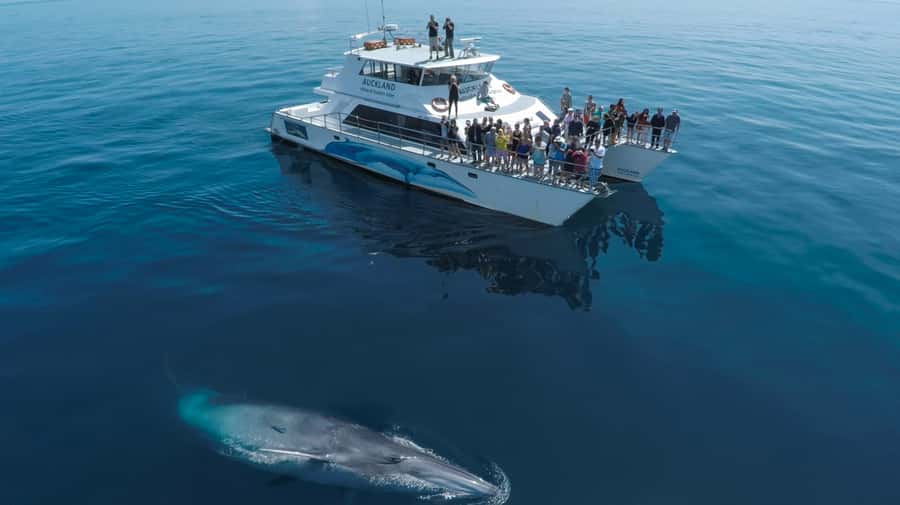
The Dolphin Explorer is a 65-foot luxury catamaran. That size gives you a useful middle ground. It is large enough to feel steady and provide several places to sit or stand, but not so large that you feel far removed from the water.
The vessel is not wheelchair accessible because of stairs and narrow doorways. Unaccompanied minors are not allowed. Children under five can join only with close supervision from a parent or guardian, and the activity is not suitable for heavily pregnant women.
There is a small selection of snacks, hot food, and drinks for purchase, including beer and wine. I would still eat something beforehand, especially if you are prone to seasickness. A long boat trip on an empty stomach is rarely a smart gamble.
More Whale and Dolphin Watching Tours in the world:
- Tenerife: Eco-Yacht Whale and Dolphin Watching and Swimming
★ 4.7 · 15,619 reviews - Los Cristianos Respectful No-Chase Whale and Dolphin Safari
★ 4.6 · 12,782 reviews - From Funchal: Ecological Catamaran Dolphin Whale Watching
★ 4.5 · 8,204 reviews
The first views: North Head, Devonport, and Rangitoto
The opening section is more than a ride out of the harbour. You get a quick water-level look at Auckland’s waterfront, North Head, Devonport, and Rangitoto Island, an important volcanic landmark in the Hauraki Gulf.
This early stretch helps you settle into the boat and gives you a feel for the day’s conditions. On a calm morning, the views are broad and clear. On a windy day, you will notice the swell before the boat reaches the open Gulf.
Keep your camera ready, but do not spend the whole trip looking through a screen. Wildlife can surface suddenly, and the best view is often the one you catch with your own eyes. Binoculars are useful, though the crew will also help direct your attention when something appears.
The route is not a fixed parade of animal sightings. The crew must respond to conditions, reports, and signs of feeding activity. That flexibility is important because marine mammals do not follow a timetable designed for sightseeing.
Searching the Hauraki Gulf Marine Park
Once the boat reaches the wider Gulf, the focus turns to marine life. The crew watches the water for dolphins, whales, orcas, and seabirds, while also explaining the surrounding marine environment.
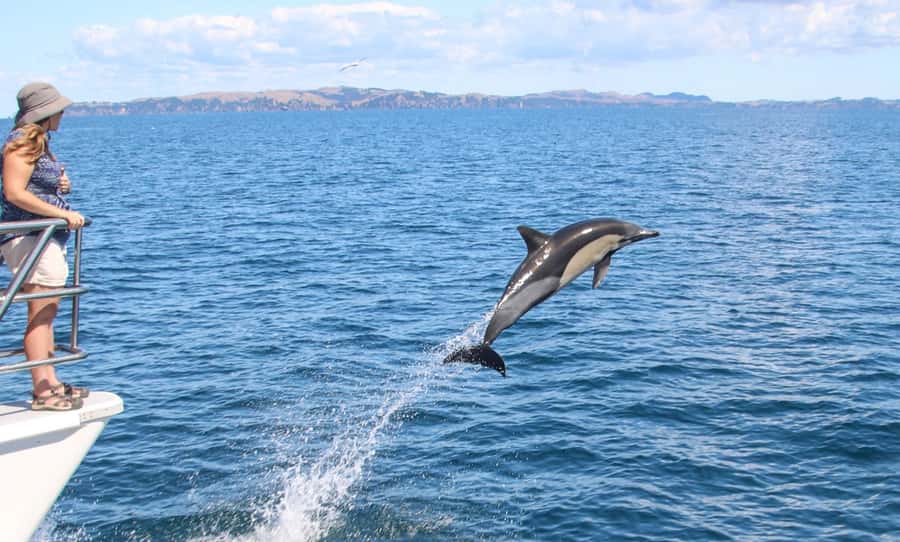
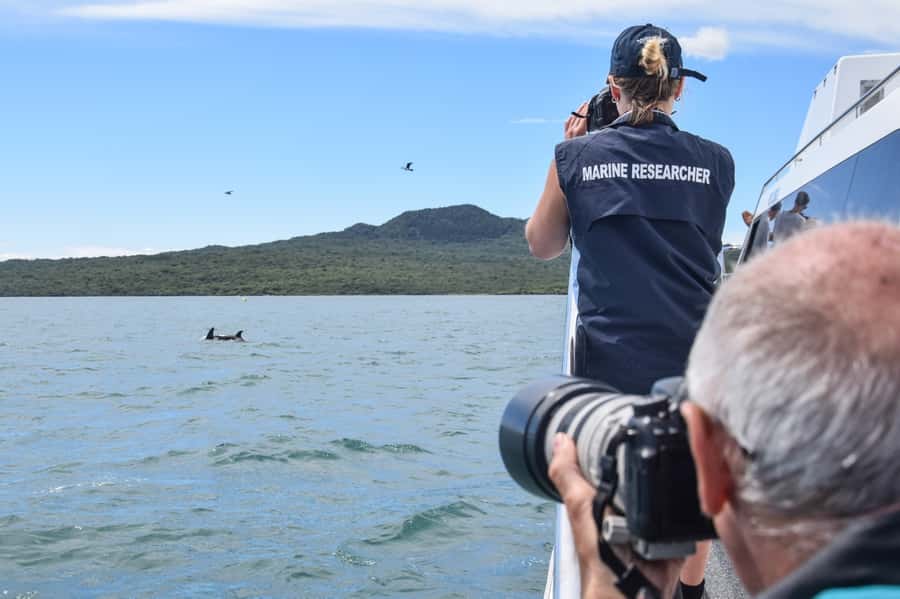
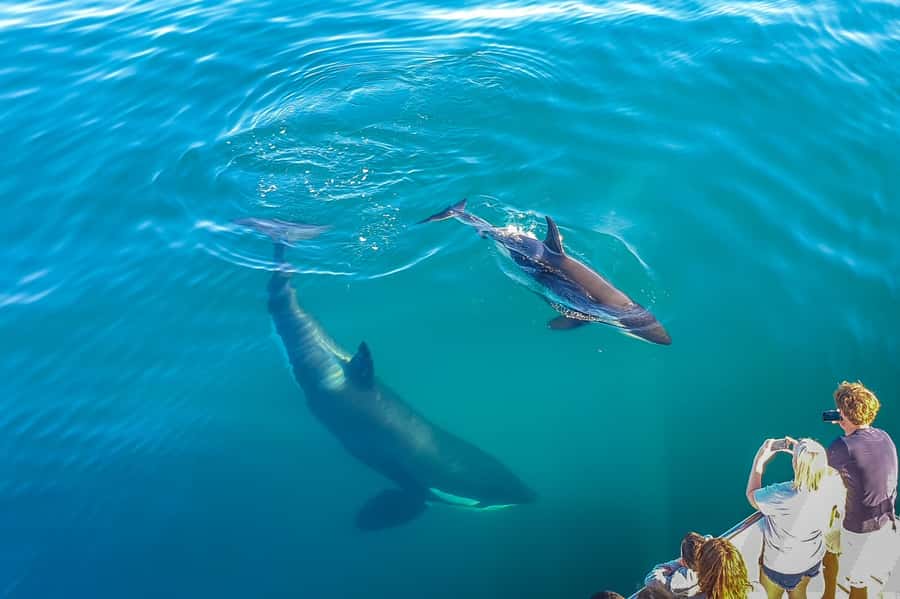
Common dolphins are often the star of the outing. They may travel in large pods and swim near the catamaran, sometimes close enough to see them beneath the boat. One trip produced a pod of more than 100 dolphins, while another included several groups with young dolphins.
That is the kind of encounter that makes the trip work even when whales stay away. Watching dolphins move together gives you a sense of speed, coordination, and play that is hard to get from shore.
Bottlenose dolphins are also possible, along with orcas. The Gulf is a large area, though, and no responsible operator can promise a particular species. Orcas may visit waters close to Auckland, but a sighting depends on the day.
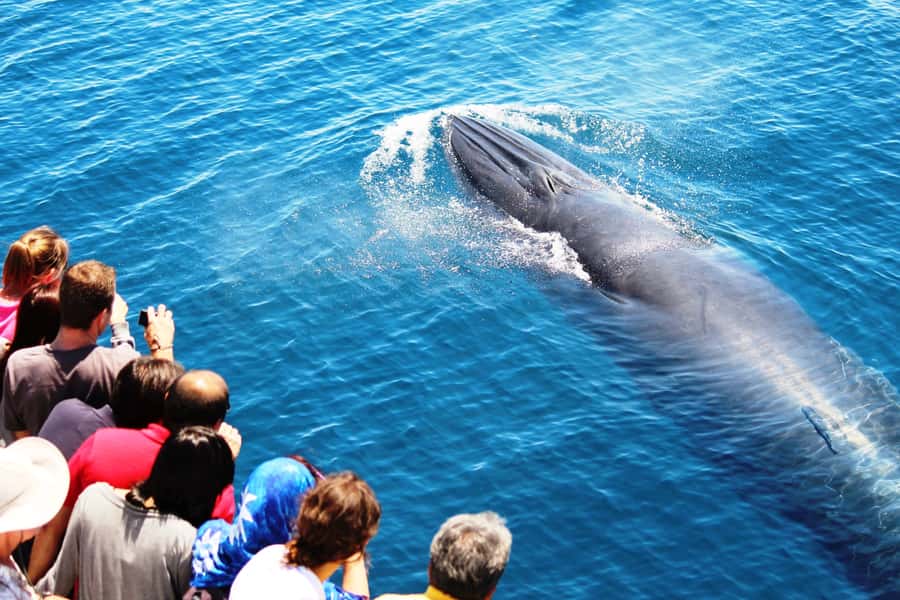
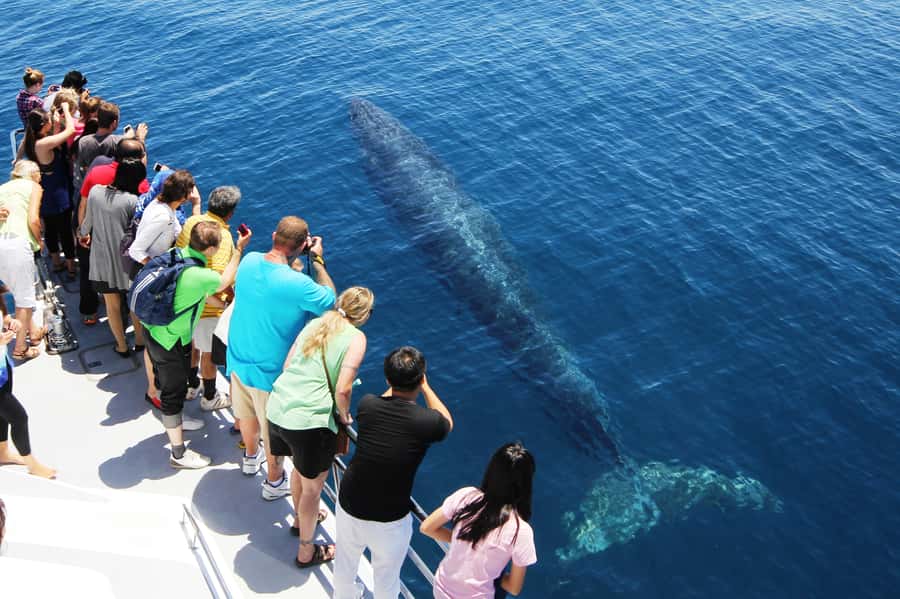
Whales are even less certain. Bryde’s whales have appeared, sometimes more than one, and several trips have produced whales at a distance. You could see a whale close to the boat, or you might get only a brief surfacing far off. It is worth keeping your expectations realistic.
Seabirds, sharks, penguins, and the smaller story
A good outing does not end if the first search for whales comes up empty. The Gulf has plenty of other life, and the crew uses the whole journey to explain what you are seeing.
Australasian gannets are a regular highlight. Their fast plunges into the water are dramatic, especially when several birds gather over a feeding area. You may also see shearwaters, blue penguins, and other seabirds.
Sharks have appeared too, including blue sharks and a hammerhead shark. These sightings are not guaranteed, but they show why it pays to watch the entire surface rather than focus only on the animals named in the title.
The crew may also stop to collect a plankton sample or carry out other research work. This is one of the most interesting parts of the trip for anyone who wants more than a photo opportunity. You get a look at how marine scientists study the Gulf, from tiny organisms upward through the food chain.
That wider view also helps explain the feeding activity around the boat. Seabirds, dolphins, and whales are often connected by the same food sources. A swarm of birds can be a useful clue that something larger may be nearby.
More Whale Watching Cruises in the world:
- Reykjavík: Whale Watching and Marine Life Cruise
★ 4.6 · 9,838 reviews - Funchal: Dolphin and Whale Watching Catamaran Cruise
★ 4.5 · 5,697 reviews - Costa Adeje: Whale & Dolphin Eco-Cruise with Snacks & Drinks
★ 4.6 · 5,096 reviews - Boston: City Cruises Whale Watching Cruise
★ 4.5 · 4,710 reviews
A crew that adds real value
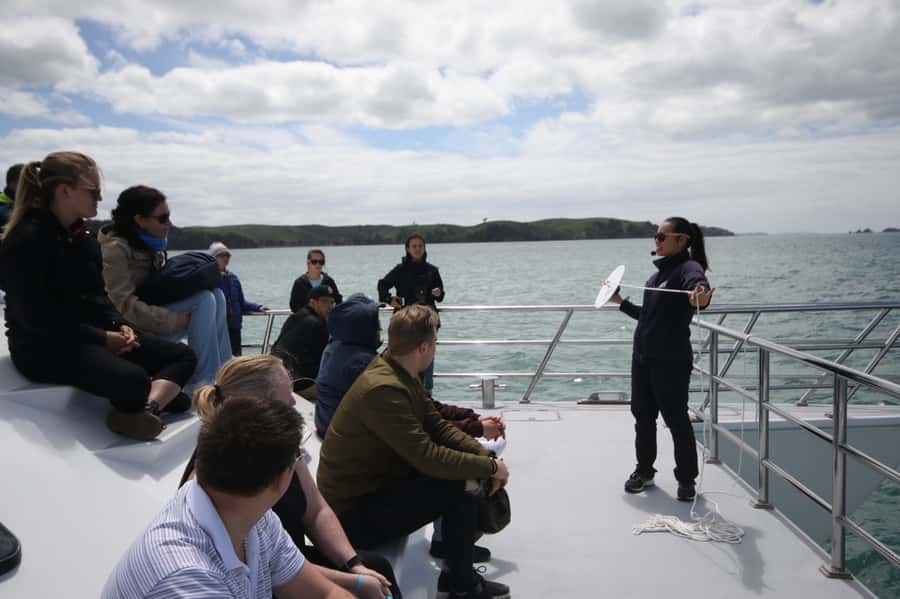
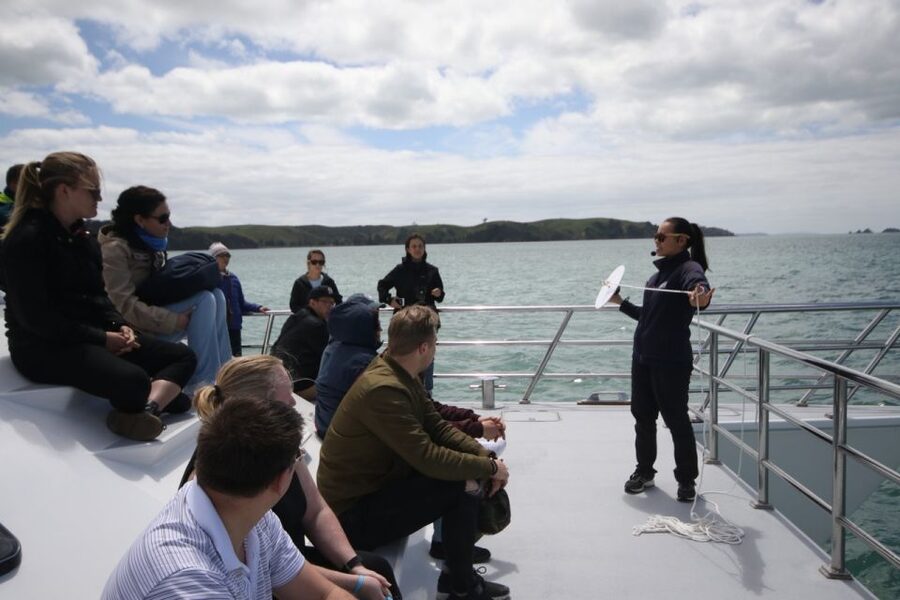
The quality of the commentary matters on a trip like this, because a quiet patch of ocean can otherwise feel like dead time. The skippers and marine scientists explain animal behavior, local geography, seabirds, plankton, and the research taking place on board.
Recent crews have included Emily, Sanaa, John, Joseph, Toni, George, Brittany, Jo, and others. The exact team will vary, but the strongest part of the operation is the mix of practical seamanship and marine science.
John has been praised for keeping the mood light while still explaining sightings clearly. Other crew members have made a point of ensuring people around the boat can see the animals, rather than leaving the best view to whoever happens to be standing in the right spot.
I also like that the guides explain how they track marine mammals by watching feeding activity, especially groups of gannets. This turns the search into a lesson in reading the sea. You are not simply waiting for a fin to appear. You are learning why the crew heads toward one patch of water instead of another.
The scientific work gives the experience a welcome sense of purpose. One dollar from each ticket goes to the Hauraki Gulf Guardians fund, and the vessel also supports research. That does not guarantee a perfect day, but it means your money contributes to the place you are visiting.
What the 4.5 hours feel like
The full trip lasts 270 minutes, which is long enough to reach productive waters and spend proper time with an animal group. It is not a quick harbour cruise with a short wildlife stop.
The tradeoff is that four and a half hours can feel long if conditions are rough or sightings are limited. You should be comfortable spending much of the day outdoors on a moving boat. Even on a sunny Auckland day, the wind can make the ride feel cool.
When the crew finds dolphins, you may stay with them for a good stretch rather than rushing away after one glimpse. This gives everyone time to move around the boat, take photos, and watch the animals’ behavior.
Trips have also run longer in special circumstances. When whales were unusually active, the crew stayed out beyond the normal pattern to make the most of the encounter. That depends on conditions and the crew’s judgment, so you should not plan a tight appointment immediately afterward.
If no marine mammals appear, the company provides another cruise for free. This is a strong safeguard, though it is only useful if you have enough time in Auckland to return. If your schedule allows just one possible sailing, remember that the guarantee may not help in practical terms.
Price and value at $130
At $130 per person, this is not the cheapest way to spend a half-day in Auckland. The value depends on what you want from the outing.
You are paying for a 4.5-hour trip, a comfortable catamaran, an English-speaking guide, marine-science commentary, and the chance to watch wildlife in its natural setting. You also get the no-mammal return cruise and a conservation contribution built into the fare.
For someone who only wants a quick boat ride, the price may feel high. One person found it a little expensive even after enjoying the dolphins. But if you care about research, ethical viewing, and time on the water, the cost is easier to justify.
The vessel keeps a respectful distance from animals, and the crew gives them time without trying to crowd them. That matters to me. The experience is better when the animals’ behavior sets the pace.
The return-cruise policy also reduces the risk. You are not guaranteed a whale, but you are not left with nothing if the Gulf stays quiet. Just remember that the offer is for a second cruise, not a cash refund after an unsuccessful outing.
Weather, comfort, and what to bring
Auckland weather can change quickly, and the Hauraki Gulf is exposed. The operator may cancel because of wind, weather, or sea conditions. In that case, you may be offered a refund or a chance to rebook.
Wear warm clothes even in summer. Add a showerproof jacket, sun hat, sunscreen, and sturdy personal layers. The combination of sun, wind, and spray can catch you off guard.
Bring your camera and binoculars if you have them. Also bring any personal medication you need. Seasickness medicine should be taken before the trip, not after symptoms begin.
The boat has seating options, but you will want the freedom to move when animals appear. If the sea is rough, staying lower and more central may feel steadier. If conditions are calm, you can spend more time at the outer viewing areas.
Food and drinks are available to buy, but options are limited. Carrying a small snack may be sensible, especially for children or anyone who gets hungry during long outings.
Who will enjoy this most
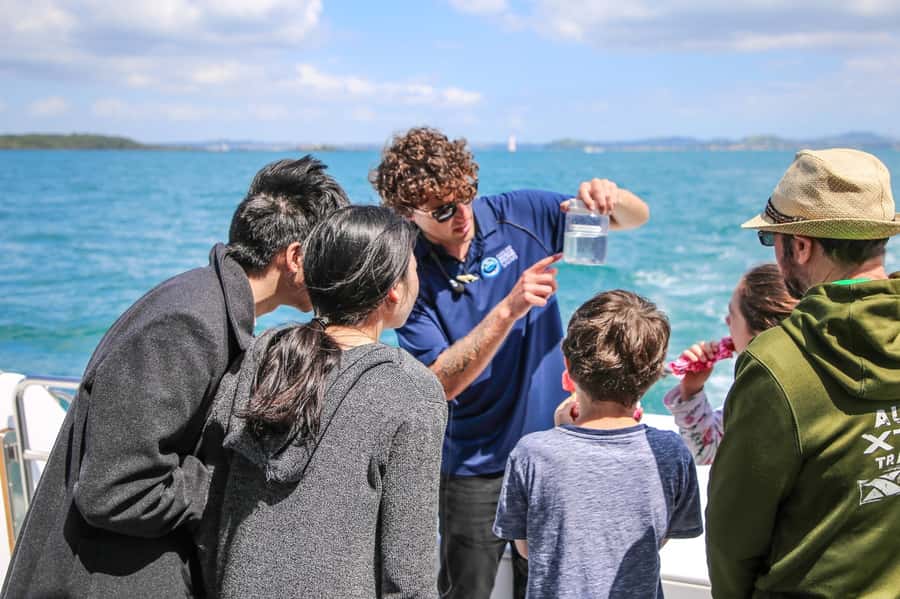
I would choose this cruise if you want wildlife, science, and scenery in one outing. It suits couples, families with supervised children, solo visitors, and anyone who likes learning while looking for animals.
It is especially good for people who accept that nature is unpredictable. You may see dolphins, whales, penguins, gannets, shearwaters, and sharks in one trip. You may also see only birds and open water, though the commentary and research work still give the day structure.
You should think twice if you dislike wind, boat movement, or long periods of searching. The trip is not a guaranteed whale encounter, and even excellent crews cannot change that.
Photographers will enjoy the chance to see dolphins close to the boat, but the conditions are not controlled. Expect moving subjects, changing light, and occasional distance. Bring patience along with your camera.
Should you book the Auckland Whale and Dolphin Safari?
I would book it if you have half a day in Auckland and want a genuine marine experience rather than an aquarium visit. The strongest reasons are the time on the water, the close dolphin encounters, the chance of Bryde’s whales or orcas, and the crew’s connection to marine research.
Book with realistic expectations. Choose a day when you can stay flexible, arrive early, and accept a second sailing if the Gulf is quiet. If you need a guaranteed whale sighting, no boat trip can offer that.
For the best chance of enjoying it, dress for a cool, exposed boat ride and keep your schedule open afterward. At $130, it is a considered purchase, but the combination of wildlife, expert explanation, conservation support, and a free return cruise makes it good value for the right kind of visitor.
FAQ
Where does the cruise depart from?
The boat departs from Berth 9 at Eastern Viaduct Marina, at the end of Quay Street heading west. The berth is opposite the Maritime Museum.
How early should I arrive?
You should arrive 30 minutes before departure to check in with the crew. Check-in closes 15 minutes before the trip time.
How long does the cruise last?
The eco-cruise lasts 4.5 hours, or 270 minutes.
What animals might I see?
Possible sightings include orcas, bottlenose dolphins, common dolphins, whales, gannets, shearwaters, blue penguins, sharks, and other seabirds.
Is a whale sighting guaranteed?
No. Marine mammal sightings depend on nature and sea conditions. You may see dolphins and other wildlife without seeing a whale.
What happens if no marine mammals are seen?
You can take the cruise again for free if no marine mammals are seen.
Is food available on the boat?
Yes. A small range of snacks, hot food, and drinks is available to purchase, including beer and wine.
What should I wear?
Wear warm clothes and bring a showerproof jacket, sun hat, sunscreen, a camera, binoculars if you have them, and any personal medication. Seasickness medicine should be taken before the trip.
Can children join the cruise?
Children under five are permitted only when closely supervised by a parent or guardian. Unaccompanied minors are not allowed.
Is the boat wheelchair accessible?
No. The vessel has stairs and narrow doorways, so it is not wheelchair accessible.
More Half-Day Trips in the world
- Vancouver Half-Day Whale Watching Adventure with Free Photos
★ 5.0 · 5,000 reviews - Victoria Half-Day Whale Watching Adventure with Free Photos
★ 5.0 · 2,259 reviews - Seattle: Half-Day Wildlife and Whale Watching Cruise
★ 4.3 · 378 reviews - Small-Group Half-Day Whale-Watching Tour in Puerto Vallarta
★ 5.0 · 334 reviews
New whale trips around the world
- Broome Sunset & Whale Watching Cruise★ 5.0 · 2 reviews
- Bremer Bay: Bremer Canyon Killer Whale Expedition★ 4.9 · 114 reviews
- Boavista: Whale Watching half day trip★ 4.4 · 15 reviews
- Bremer Canyon Orca Experience from Bremer Bay★ 4.6 · 35 reviews
- Mauritius Eco Whales Quest, 3-4 hours Expedition★ 3.7 · 23 reviews
- Boa Vista: Whale Watching Trip with Motoryacht★ 4.3 · 115 reviews
- Beluga Whale Sanctuary – Admissions★ 3.5 · 8 reviews
- Augusta: Whale Watching Tour★ 4.5 · 9 reviews
Whale Watching Cruises, compared.

Whale & Dolphin Eco-Cruise with Snacks & Drinks
Read our review →
Dolphin & Whale Watching Cruise with Swim Stop
Read our review →
Morro Jable: Dolphin & Whale Watching Cruise, Drinks & Swim
Read our review →
Whale & Dolphin Watching Cruise with Swim Stop
Read our review →
Browse the lists this tour appears in