
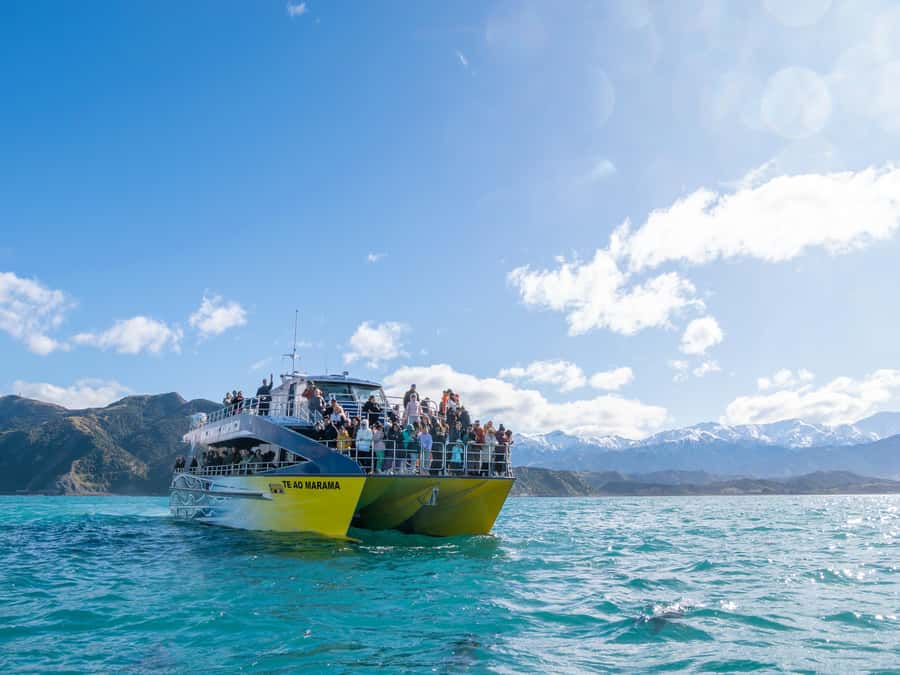
Review · WHALE WATCHING CRUISES
Kaikoura: Whale Watching Cruise
Kaikoura’s whale cruise puts you in the right place for a remarkable sight: the giant sperm whale, the world’s largest toothed predator, resting and feeding off the South Island coast. A typical outing also brings dolphins, fur seals, seabirds, and the occasional surprise such as an orca or blue whale.
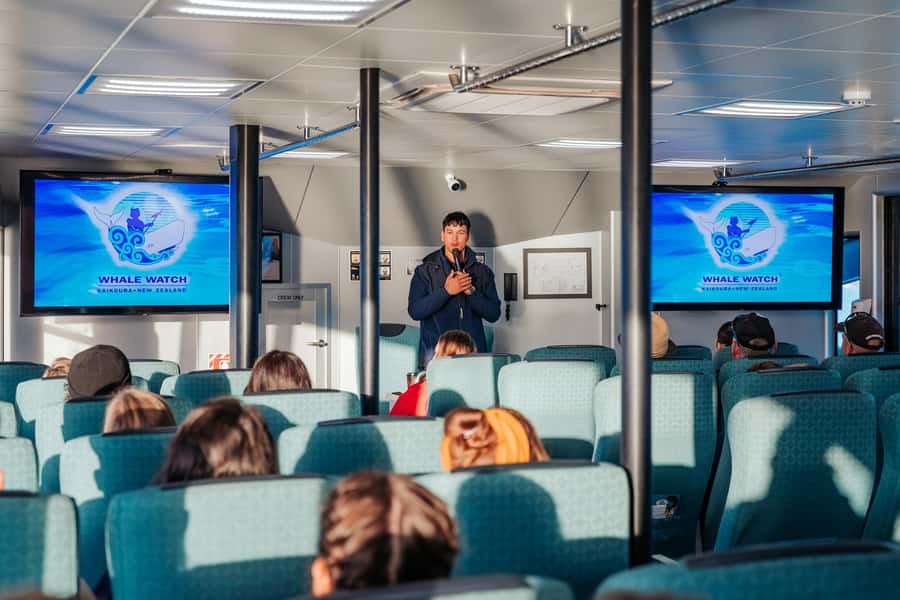
I like two things here. First, the crew does more than point at a whale. They explain its behavior, use underwater sound to help track it, and sometimes let you hear whale clicks through a hydrophone. Second, the catamaran gives you a choice of large outdoor decks or a comfortable air-conditioned cabin with marine animations.
The main caution is the sea. Motion sickness can be serious, especially on a rough day, and some passengers may spend more time with a sick bag than a camera. Take precautions before arrival, and remember that wildlife is never guaranteed.
Key points to know before booking
- Sperm whales are the main event: Kaikoura’s offshore waters offer a strong chance to see these huge animals in their natural setting.
- The boat is built for viewing: Use the outdoor decks for fresh air and photos, or retreat inside to air-conditioned seating and screens.
- Wildlife can exceed expectations: Dolphins, fur seals, wandering albatross, and other seabirds are common possibilities, with orcas, humpbacks, pilot whales, and blue whales appearing on some trips.
- The outing takes 210 minutes overall: Allow time for check-in, the safety briefing, bus transfers, and just over two hours at sea.
- The crew adds real substance: Guides including Caolan, Mikayla, Captain Jack, and others have been praised for clear commentary, whale spotting, and good humor.
- Weather controls the schedule: The operator may move your departure time or reschedule the cruise if conditions are poor.
Why Kaikoura is such a good place to watch whales
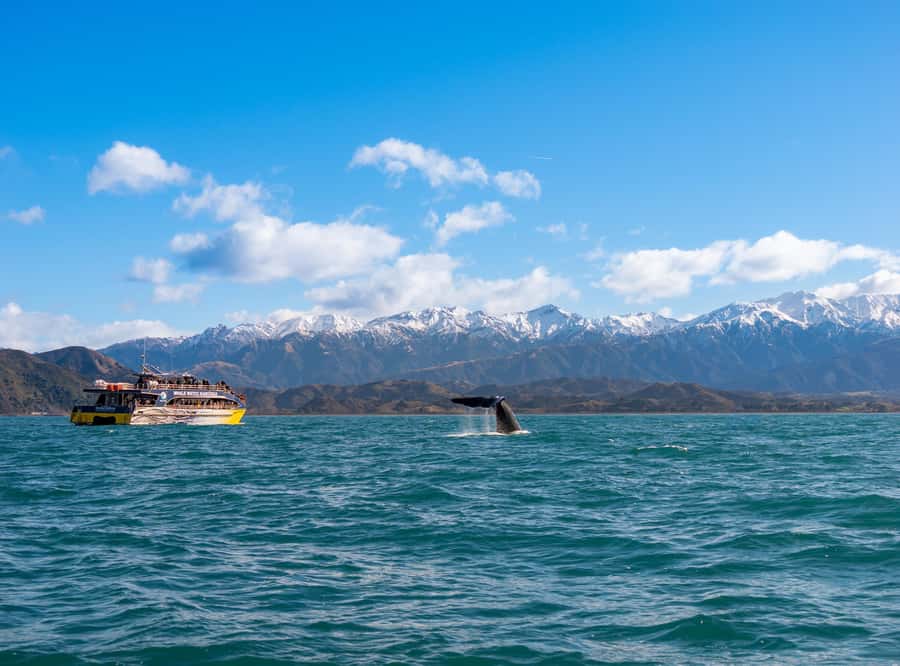
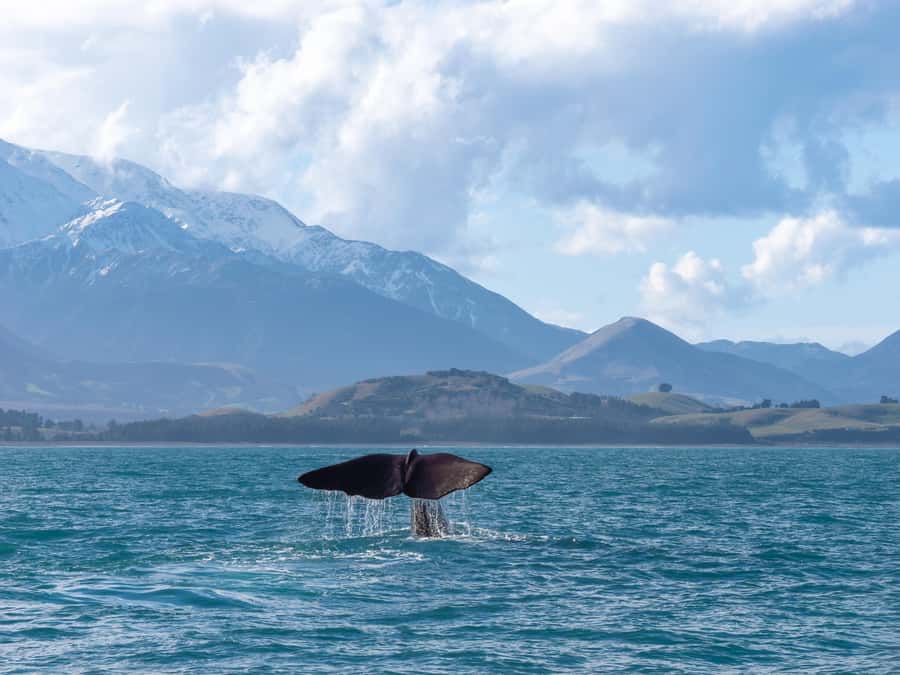
Kaikoura gives this cruise a dramatic setting. The boat heads out from the South Island coast with mountains rising behind you, then moves into waters where sperm whales can be found close enough for a practical whale-watching outing.
That does not mean the whales perform on demand. A sperm whale may surface, breathe for several minutes, then slip below for a long period. The crew uses experience, marine information, and underwater sound to work out where the animals are. You may wait between sightings, but that waiting is part of the real experience rather than dead time.
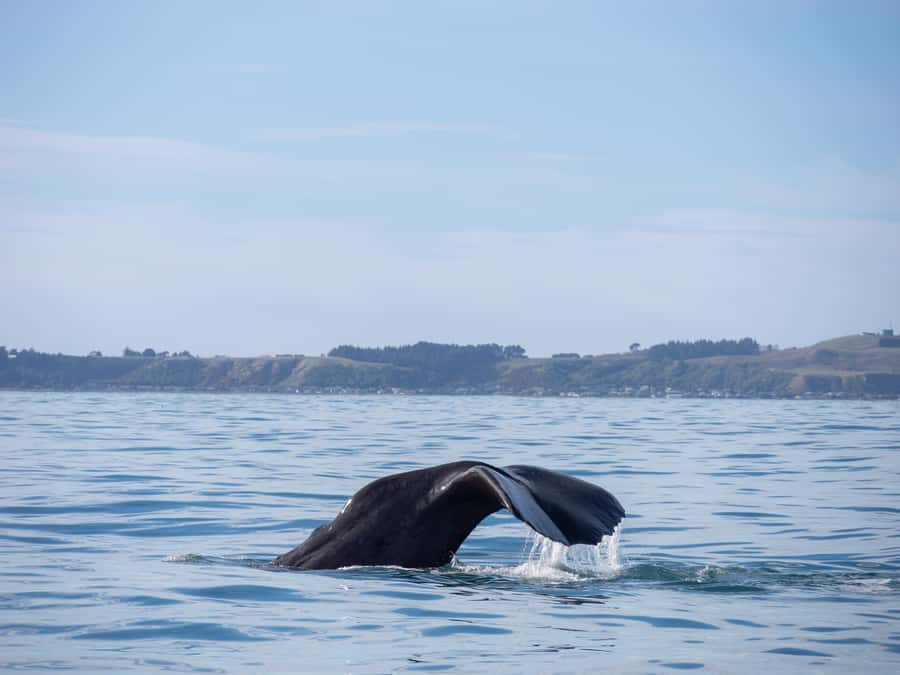
The main target is the sperm whale. It is enormous, dark, and easy to recognize once it surfaces. The best moment often comes at the end of the encounter, when the whale raises its tail before heading underwater. You need to be ready, since the tail may appear only briefly.
The setting also helps keep the trip interesting between whales. Mountain views frame the coast, while open water brings the chance of fur seals, dolphins, albatross, petrels, and other seabirds. Several outings have included large pods of dusky dolphins, sometimes numbering in the hundreds, with energetic leaps beside the boat.
More Whale Watching Cruises in the world:
- Reykjavík: Whale Watching and Marine Life Cruise
★ 4.6 · 9,838 reviews - Funchal: Dolphin and Whale Watching Catamaran Cruise
★ 4.5 · 5,697 reviews - Costa Adeje: Whale & Dolphin Eco-Cruise with Snacks & Drinks
★ 4.6 · 5,096 reviews
Check-in, transfer, and the first minutes aboard
You begin at the Whale Watch Kaikoura office, the local partner’s meeting point. Allow the full 210 minutes rather than treating the advertised two-hour cruise as the entire outing. Check-in, the safety briefing, and bus transfers add roughly an hour and fifteen minutes.
The short transfer from the office to the boat keeps the process tidy. You do not need to arrange your own transport to the harbor, and clear directions make the start easier when you are fitting the cruise into a busy South Island driving route.
Once aboard, you receive safety information and an introduction to the marine life of the area. The boat has comfortable indoor seating, air conditioning, plasma screens with award-winning marine animations, and outdoor decks for viewing.
I would not stay inside for the whole trip. The cabin is useful when the wind picks up or you need a break from the sun, but the open decks give you the best chance to see wildlife and take in the coastline. At the same time, a crowded viewing rail can make photography awkward, so it is sensible to move around rather than guard one position.
Passenger numbers are kept below the vessel’s full capacity. That does not mean you will have the boat to yourself, but the extra room matters when several people need to move quickly toward a sighting.
Out on the water, with sperm whales as the goal
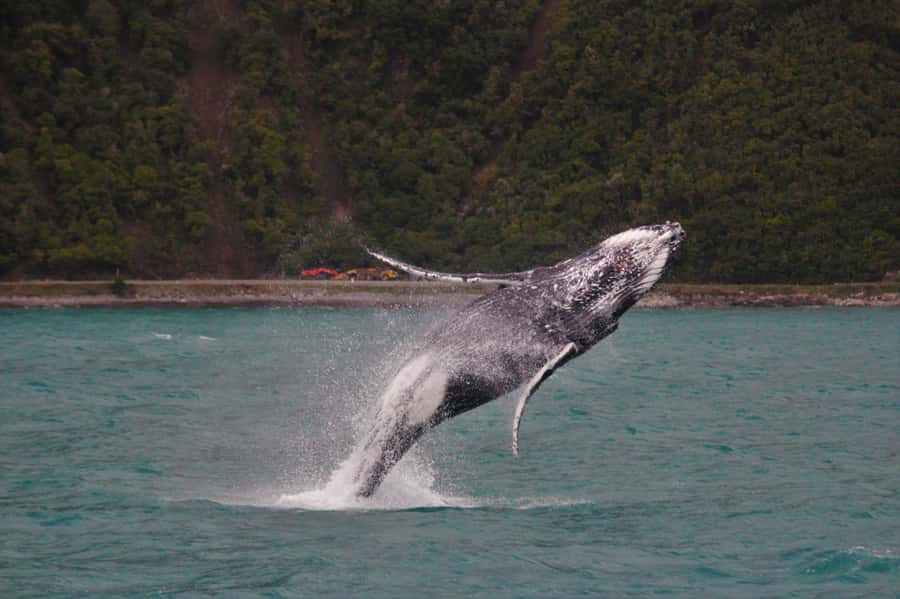
The catamaran is modern, spacious, and powered by engines designed to reduce underwater noise. It also has nonpolluting toilets, a small but useful feature on a long outing at sea.
The ride to the whale-watching area can be brisk. The boat has been described as powerful in wind and waves, which helps it cover ground and return on schedule. It does not remove the effects of rough water, though. You can still experience a lively ride, and that is where the trip’s biggest drawback appears.
If you are prone to seasickness, take precautions before reaching the office. Motion sickness tablets are available there, but taking care of the problem before boarding is wiser. On choppy days, the crew helps sick passengers, yet severe nausea can prevent you from enjoying the wildlife or even looking outside.
The guides provide running commentary as the boat moves between possible sightings. The strongest part of this narration is its mix of natural science and local Māori knowledge. The operation is owned by the Ngāi Tahu iwi, and the connection to the sea and whales forms part of the way the animals are presented.
The crew may also use a hydrophone to listen for whale clicks. That turns the search into something more than scanning the horizon. You get a sense that the animal is present below the surface, even before it appears.
The whale encounter and the art of waiting
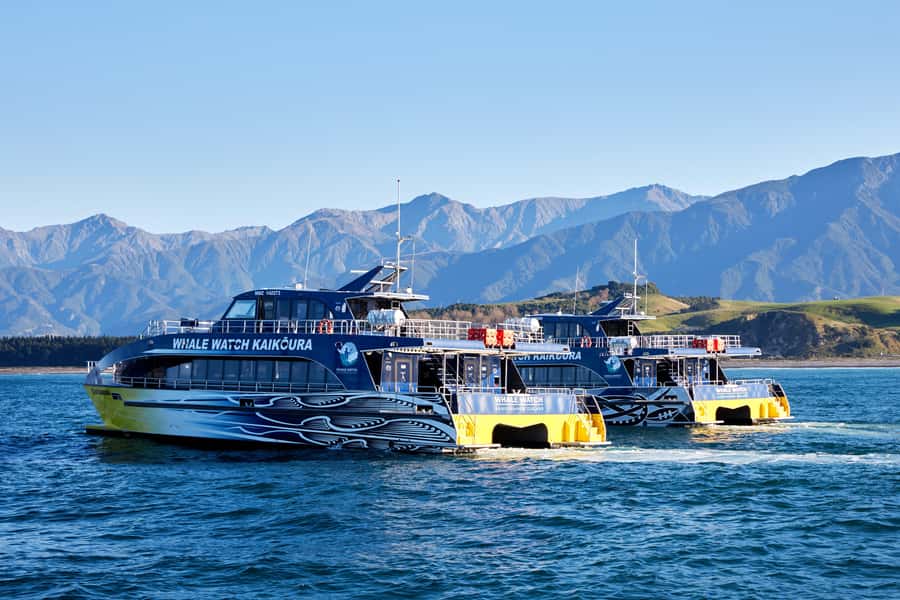
When the crew locates a sperm whale, everyone is called outside or directed toward the best viewing area. Guides such as Caolan, Mikayla, and Captain Jack have received particular praise for explaining what is happening and warning passengers when a whale is about to go underwater.
That warning matters. You may see a broad back, a blow, and several minutes of breathing. Then the body changes position and the tail rises. If you are trying to film the moment, you need to stop fiddling with your phone and watch the water.
Sightings vary widely. Some outings have produced one whale, while others have found two, three, or even more. A few trips have included whales at a distance, so you should not assume every encounter will be close enough for a perfect photograph.
The crew’s effort is one of the reasons the trip can still feel worthwhile when the first search comes up empty. The captain may follow underwater sounds, move between locations, and keep looking rather than settle for a quick pass through the area.
Wildlife remains unpredictable. One outing may produce two sperm whales and a large dolphin pod. Another may bring a single whale and several albatross. One particularly fortunate trip included sperm whales, orcas, dusky dolphins, and humpbacks. You should book for the chance to see wildlife, not a fixed checklist.
More whale watching around the world worth comparing
- Tenerife: Eco-Yacht Whale and Dolphin Watching and Swimming
★ 4.7 · 15,619 reviews - Los Cristianos Respectful No-Chase Whale and Dolphin Safari
★ 4.6 · 12,782 reviews - From Funchal: Ecological Catamaran Dolphin Whale Watching
★ 4.5 · 8,204 reviews - Juneau Wildlife Whale Watching
★ 5.0 · 7,379 reviews
Dolphins, seals, albatross, and the welcome surprises
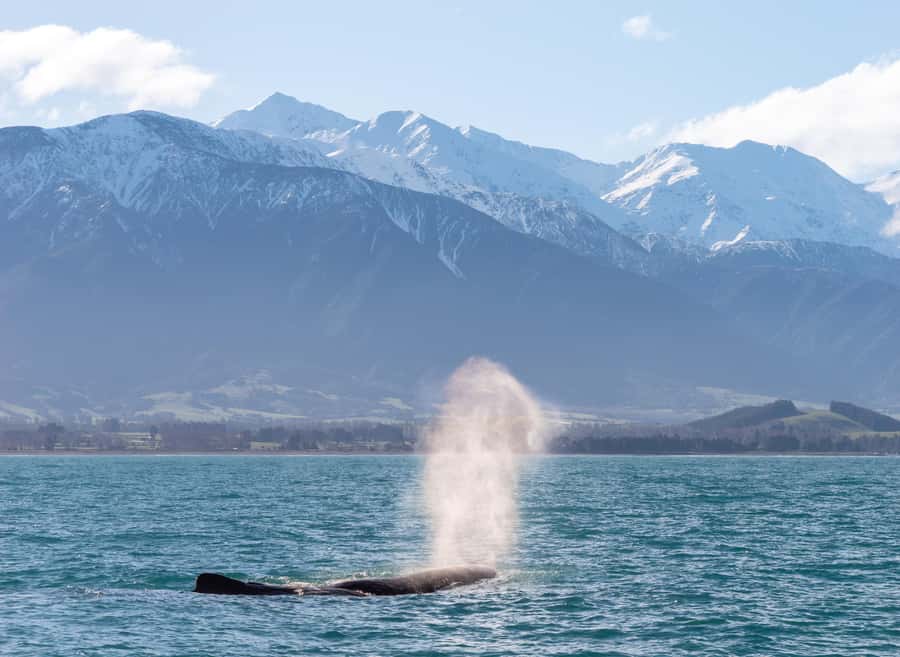
Dolphins are often the most playful part of the trip. Dusky dolphins may race alongside the catamaran, leap from the water, and gather in large groups. A pod of roughly 300 dolphins has been seen on one outing, and several other trips have featured groups of around 100.
The dolphins can be easier to watch than the whale because they move constantly. They also give you something to enjoy while the crew searches for a sperm whale. If your whale sighting is brief, an active dolphin pod may become the visual highlight.
Fur seals are another likely possibility. The boat can offer close views of these animals, and one outing included seals near the vessel along with blue penguins. The cruise also reaches productive bird habitat, where wandering albatross and other albatross species may appear.
Keep your eyes open for Cape petrels and other seabirds. The bird life gives the guides another way to explain the food chain and the conditions offshore. You may not recognize every species, but the commentary helps you notice more than just the largest animal in the water.
The unusual sightings are a bonus, not a promise. Orcas, pilot whales, humpback whales, blue whales, and sharks have all been recorded on outings described by passengers, but the advertised focus remains the sperm whale.
What the crew adds to the trip
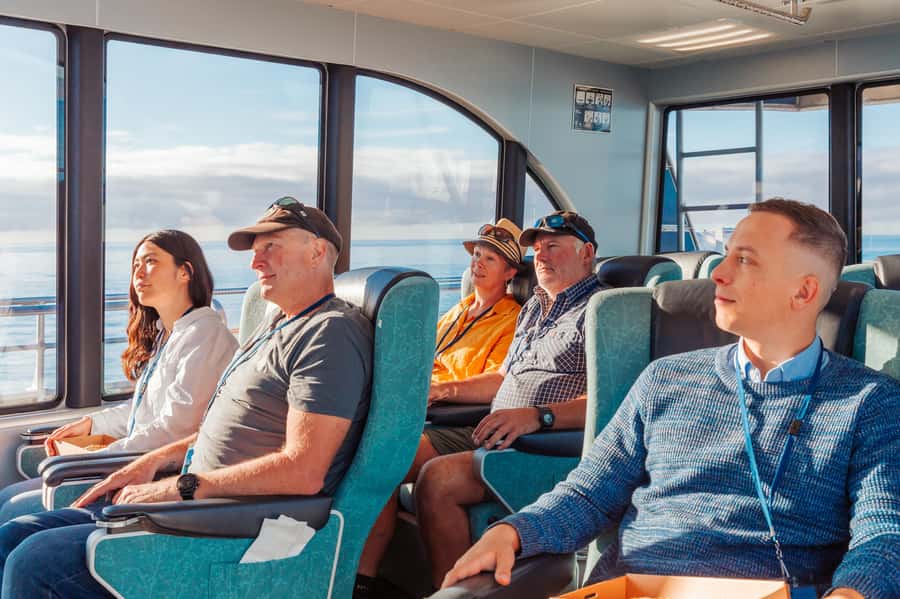
The guides are central to the experience. You are not simply placed on a fast boat and pointed toward the horizon. The crew explains whale behavior, identifies seabirds, describes the habitat, and helps passengers understand why the boat is moving or waiting.
The best commentary is clear without becoming a lecture. It also includes a little humor, which helps during quiet stretches. Several guides have been singled out for their warmth and ability to locate wildlife, including Mikayla, Caolan, Captain Jack, and Billy.
A useful detail is the trip tracker and sonar-based whale announcements mentioned by passengers. These tools make the search easier to follow. You can see why the boat changes course and understand that the crew is responding to information rather than wandering at random.
The crew also keeps animal welfare in view. The boat is designed to reduce underwater noise, and the guides explain the wildlife without treating it like a staged show. That matters in a place where the animals should remain the main priority.
Boat comfort, viewing space, and accessibility
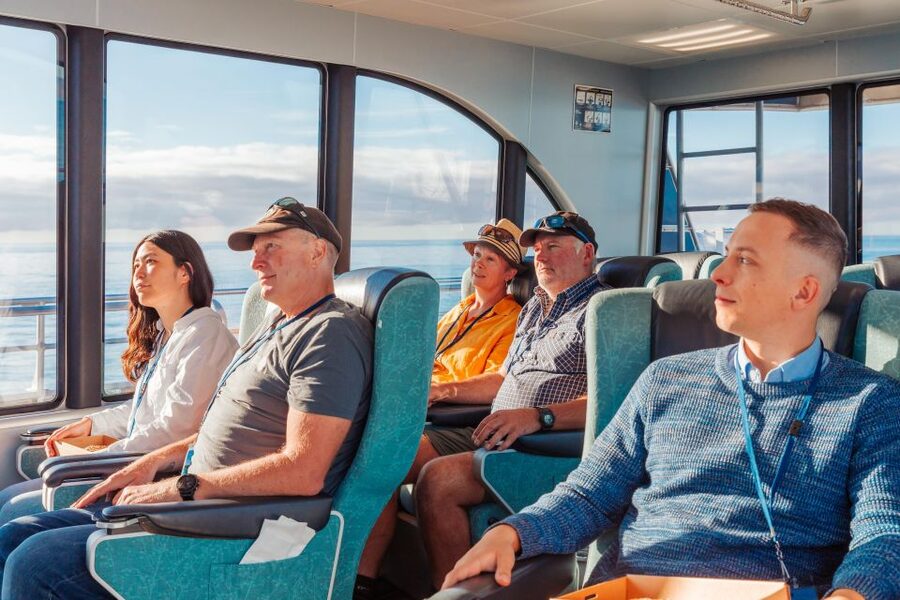
The catamaran works well for a long spell at sea. You have outdoor viewing areas, indoor seating, air conditioning, toilets, and screens showing marine animations. The vessel is wheelchair accessible, which makes this a more practical option for many people than a small open boat.
The large decks help with viewing, especially when a whale appears on one side and dolphins turn up on the other. You may still need to shift position, but the boat does not force everyone into one narrow rail.
The indoor area is especially useful if conditions become cold, windy, or wet. It also gives you somewhere to sit during the ride between sightings. Food and drinks are not included, so plan accordingly, though no onboard catering details are provided.
Smoking is not allowed. Children must be at least three years old, and the operator may apply a higher age limit at check-in if the sea and weather are difficult.
Price, timing, and cancellation flexibility
At $104 per person, this is not a budget boat ride, but the price covers a substantial operation. You are paying for a modern catamaran, crew narration, transfers, marine presentation, whale-finding equipment, and more than two hours on the water.
I see the value most clearly if you care about the full setting and interpretation, not just a photograph of a whale. The trip combines marine life, Māori perspective, mountain views, and a serious attempt to find animals in open water.
The wildlife guarantee is the weak point of any whale cruise. If the crew cannot find a whale, there is no way to manufacture one. One passenger received an 80 percent refund after an unsuccessful outing, but you should not assume that result applies to every situation unless the operator confirms it.
You can cancel up to 24 hours ahead for a full refund, and reserve now while paying later. Weather can change the exact departure time, so do not schedule an important same-day connection immediately after the cruise. The operator confirms the final time by email, and the time you request may be changed because of availability or conditions.
Who should book this Kaikoura cruise
I would choose this outing if you want a strong chance of seeing sperm whales from a well-equipped vessel and you appreciate explanation as much as spectacle. It suits adults, families with children aged three and up, photographers, birdwatchers, and anyone interested in the marine life of the South Island.
It is also a good match if you value responsible wildlife watching and a connection to Māori knowledge. The crew’s use of science, local understanding, and underwater sound gives the trip more meaning than a simple sightseeing run.
I would think twice if you suffer badly from motion sickness, have a tight schedule, or need guaranteed close-up photographs. Rough seas can be unpleasant, and even a well-run cruise cannot control where a whale surfaces or how long it stays up.
Should you book Whale Watch Kaikoura?
Yes, if you can accept the uncertainty of nature and prepare for the sea. The strongest reasons are the capable crew, spacious catamaran, useful commentary, and real chance of seeing sperm whales along with dolphins, seals, and albatross.
Take motion sickness precautions, keep your schedule flexible, and dress for changing conditions. Then give yourself permission to put the camera away when the whale raises its tail. That brief moment is usually better remembered than filmed.
FAQ
How long does the Kaikoura whale-watching experience take?
The full experience lasts 210 minutes, or about three hours and fifteen minutes. This includes check-in, the safety briefing, bus transfers, and just over two hours on the water.
How long is the cruise itself?
The cruise lasts just over two hours. The listed inclusions describe it as a two-hour cruise.
What animals might I see?
The main target is the giant sperm whale. You might also see fur seals, dolphins, wandering albatross, other seabirds, and occasionally orcas, humpback whales, pilot whales, blue whales, sharks, or blue penguins.
Is a whale sighting guaranteed?
No. The cruise is subject to nature and weather conditions, so whale sightings cannot be guaranteed.
What is the minimum age?
Children must be at least three years old. The minimum age may be adjusted at check-in depending on sea and weather conditions.
Is the boat wheelchair accessible?
Yes, the experience is listed as wheelchair accessible.
Is food included?
No. Food and drinks are not included.
What happens if the weather is poor?
The cruise operates only in favorable weather conditions. The operator may reschedule your trip and will confirm the exact time by email after booking.
Can I cancel the booking?
Yes. You can cancel up to 24 hours in advance for a full refund.
Is smoking allowed?
No. Smoking is not allowed.
What should I do if I get motion sick?
Take precautions before arriving at the office. Motion sickness tablets are available for purchase there, but rough water can still make the outing difficult.
New whale trips around the world
- Costa Adeje: Whale and Dolphin-Watching Boat Excursion★ 4.7 · 157 reviews
- Costa Adeje: Whale Watching Eco Experience with Hydrophone.★ 5.0 · 11 reviews
- Puerto Colon: Dolphin and Whale Watching Speedboat Tour★ 5.0 · 92 reviews
- Costa Adeje: Whale & Dolphin Watching Cruise with Swim★ 4.7 · 154 reviews
- Nanaimo: Whale Watching Semi-Covered Boat Tour★ 4.9 · 48 reviews
- Cape Town: Hermanus Whale Watching Tour★ 3.2 · 5 reviews
- Coral Bay: 3-Hour Whale Watching Experience★ 4.9 · 25 reviews
- Cape Town: Hermanus Whale Watching Shared Boat & Penguins★ 3.3 · 6 reviews
Whale Watching Cruises, compared.

Whale & Dolphin Eco-Cruise with Snacks & Drinks
Read our review →
Dolphin & Whale Watching Cruise with Swim Stop
Read our review →
Morro Jable: Dolphin & Whale Watching Cruise, Drinks & Swim
Read our review →
Whale & Dolphin Watching Cruise with Swim Stop
Read our review →
Browse the lists this tour appears in