
Review · MEXICO WHALE WATCHING TOURS
Mazatlán: Whale-Watching Boat Tour with Marine Experts
Mazatlán’s winter whale season gives you a chance to watch humpback whales where they come to mate and give birth, while your outing also helps fund marine research and rescue work. The strongest part is the combination of expert naturalist guides and hands-on science: you may photograph a whale’s tail, record sightings, and listen for whale songs rather than simply point a camera at the sea.
I like the conservation purpose, which sends part of your $102 fee to MUNBA, whale rescues, beach cleanups, and environmental education. I also like the practical three-hour length, hotel pickup, bilingual support, snacks, and family-friendly format. The main drawback is the high-speed boat: radar, sonar, and a semi-rigid hull help with safety and sightings, but the ride may feel noisy and brisk rather than quiet and gentle.
Key points to know before you book
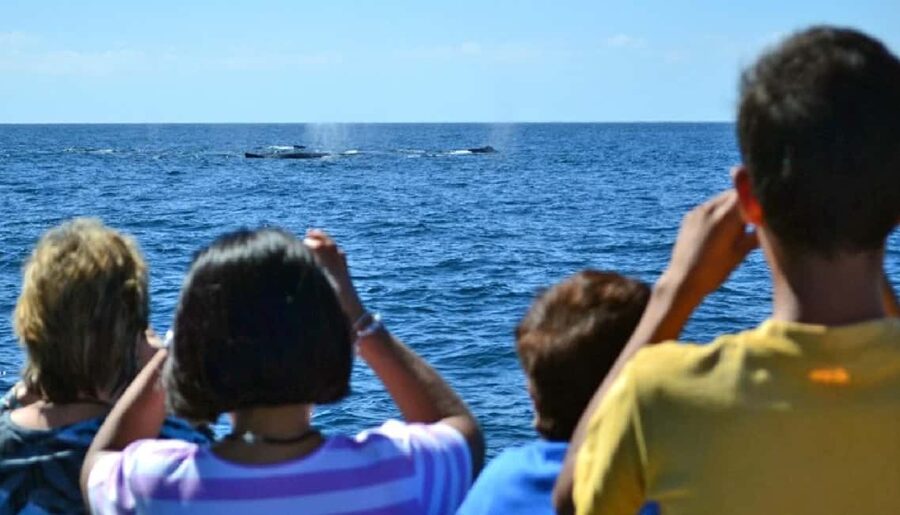
- Winter humpback habitat: Mazatlán’s warm Pacific waters serve as a breeding and calving area for thousands of migrating whales.
- Science on the water: You can help document whales through tail photographs, behavior notes, population data, and song observations.
- Certified high-speed boat: The internationally certified semi-rigid vessel is built for safe coastal wildlife outings, though it may not suit people prone to seasickness.
- A real conservation contribution: Part of your payment supports MUNBA, whale rescue work, beach cleanups, and marine education.
- Useful for cruise schedules: The three-hour format can fit a short Mazatlán stop, provided your timing allows for pickup and return.
- Pickup has limits: Transportation covers hotels between Cerritos and Olas Altas, but not Isla de la Piedra, Estrella del Mar, Dreams, or other lodging outside the tourist zone.
Why this Mazatlán whale trip feels different
Many whale-watching outings are built around one goal: find a whale and take a picture. This one adds a second purpose. You are joining a whale ecology project connected with the National Whale Museum, known as MUNBA, and the trip is designed to gather useful field information while you watch.
That changes the way you look at the animals. A humpback is not just a large shape rising from the water. Its tail pattern can help researchers identify an individual. Its behavior can be recorded. Its songs offer another way to understand what is happening offshore.
The guides lead the educational side in English or Spanish. They explain whale and dolphin ecology in Mexico, point out marine behavior, and show you how your observations can support monitoring. The supplied information does not name individual guides, but it does specify bilingual naturalist guides with marine research experience.
I especially like this setup for families. Children can take part in something concrete, such as watching for a tail, helping with a photograph, or listening for a song. Adults get more than a quick wildlife sighting, and nature lovers can see how tourism can help pay for conservation.
More whale watching around Mexico worth comparing
- Luxury Catamaran Whale Watching Cabo San Lucas
★ 5.0 · 2,107 reviews - Whale Watching Cabo-Women crew-Sightings Guaranteed & Free Photos
★ 5.0 · 1,743 reviews - SMALL GROUP Whale Watch | Cabo San Lucas | Biologist | FREE Pics
★ 5.0 · 1,106 reviews
The winter whales of Mazatlán
Humpback whales arrive in the warm waters of the Mexican Pacific every winter. They come to mate and give birth, making the coast near Mazatlán an important seasonal setting for whale activity.
That timing matters when you plan. This is not a year-round promise of the same wildlife conditions. The experience is tied to the winter migration, and sightings are never fully under your control. Even with radar, sonar, and experienced guides, the ocean decides what appears and when.
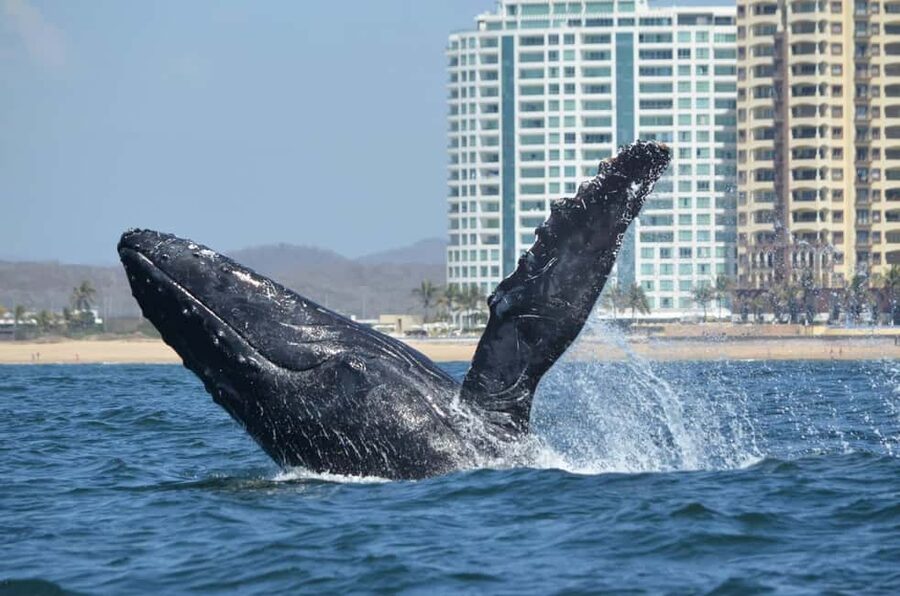
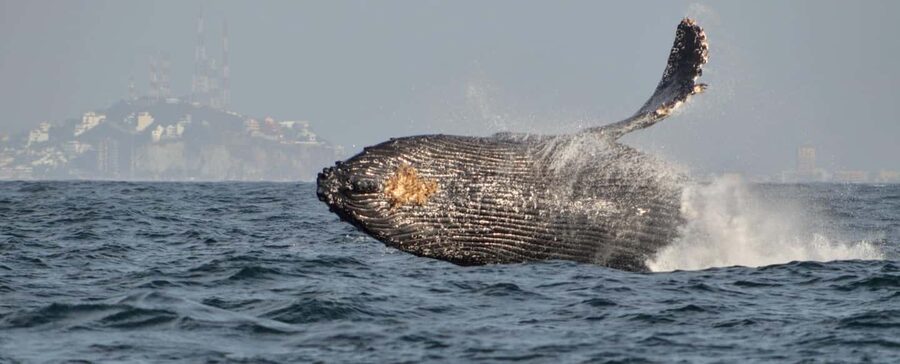
The chance of seeing a mother and calf is one of the most appealing parts of the season. A February outing produced exactly that kind of encounter, with a mother and calf playing and several breaches. You should treat this as a possible reward, not a guarantee, but the seasonal setting gives the trip a strong purpose.
The open water also means you need to dress for motion and sun. Wear comfortable clothes and shoes suitable for a boat ride. Bring a hat, sunscreen, water, and a camera. The operator provides a snack and beverages, but water is still specifically recommended for staying hydrated.
What happens during the three-hour outing
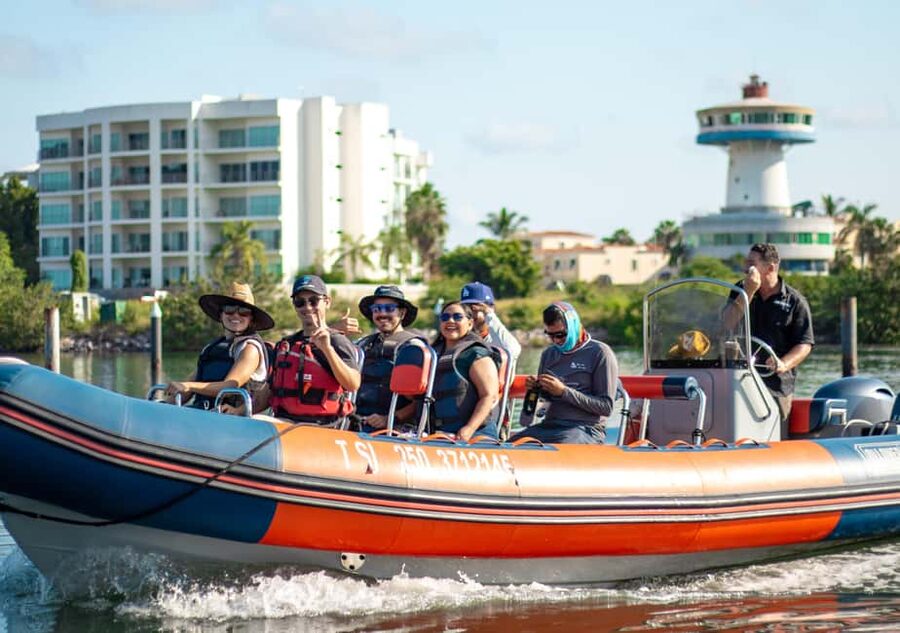
The experience begins with transportation from an eligible Mazatlán hotel to the marina. The official MUNBA Expeditions vehicle has a visible Pick-Up sign, and you should wait in your hotel’s motor lobby at least 10 minutes before the scheduled time.
The included pickup area runs from Cerritos to Olas Altas. It does not cover hotels outside Mazatlán, Dreams, Estrella del Mar, or the Isla de la Piedra area. If you are staying outside that zone, contact the operator for directions to the closest meeting point rather than assuming a taxi or shuttle is included.
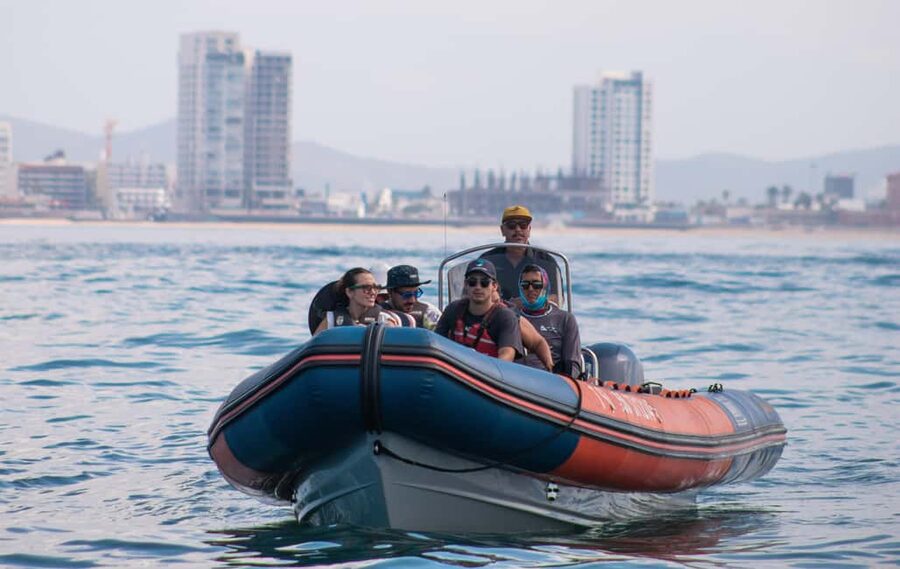
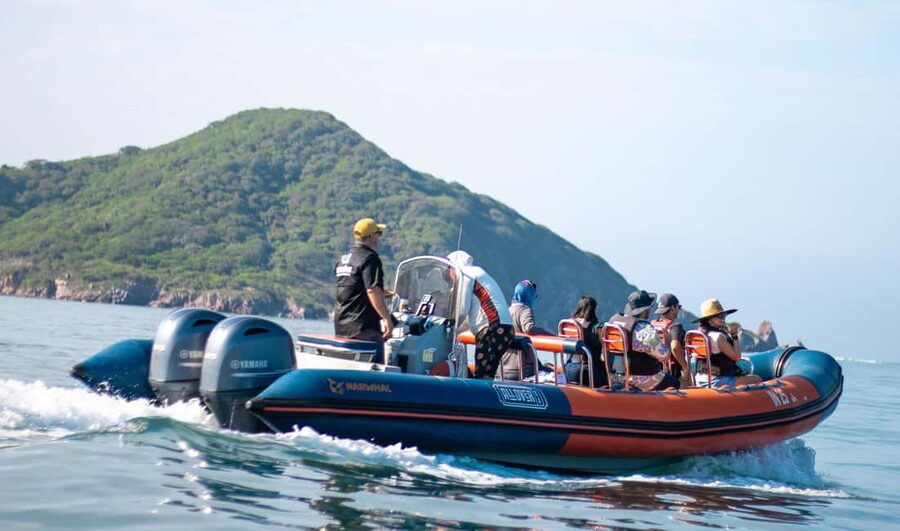
At the marina, you board the high-speed semi-rigid boat. These vessels are internationally certified and are described as the only boats of their kind in Mazatlán. The design offers a stable, purpose-built platform for reaching whale areas quickly, but the boat is still exposed to movement, spray, wind, and engine noise.
Once offshore, the guides search for humpback whales and other marine life. Radar and sonar help the crew operate with awareness in the marine environment, while the naturalist team watches the water and explains what you are seeing.
The exact order of activities depends on conditions and animal behavior. You might watch a whale surface, see a breach, photograph a tail, hear a song, or observe behavior between a mother and calf. You may also record information as part of the scientific monitoring project.
The close encounters are the emotional center of the trip, but responsible viewing remains important. You are not allowed to touch marine life. That rule protects both you and the animals, and it keeps the experience focused on observation rather than interference.
After the whale search, the outing returns to the marina and your hotel transportation. The three-hour duration keeps the schedule manageable, especially if you are fitting the trip into a cruise stop. Still, you need to leave room for hotel pickup, the boat transfer, and return travel before any fixed departure time.
The boat ride: fast, capable, and not especially quiet
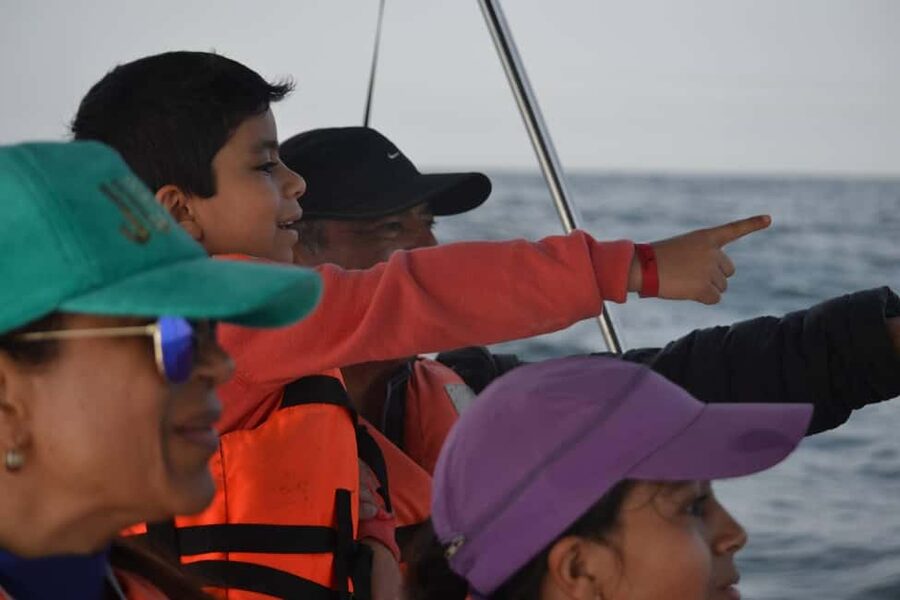
The boat is a major part of the experience. Its semi-rigid construction and high speed allow the crew to cover water efficiently, which is useful when whales surface over a broad area. The certified vessels also give families some reassurance that the operator is using equipment intended for this type of coastal trip.
The tradeoff is comfort. A fast boat with radar and sonar is more operational than peaceful. You may prefer this if you want to reach wildlife areas quickly and do not mind engine noise or a lively ride. If you picture a silent drift across flat water, this may not match that image.
People prone to seasickness should think carefully before booking. The activity specifically warns about possible seasickness and is not suitable for people prone to it. Pregnant women and people with back problems are also advised not to take part.
I would bring only what you can secure and handle easily. A camera is worthwhile, but whale photography rewards patience more than fancy equipment. Keep sunscreen and your hat ready, and expect bright exposure on the water.
Same sea, a different boat:
- Humpback Whales in Cabo San Lucas
★ 5.0 · 1,005 reviews - Whale Watching, The Famous Arch and Fast Boat Tour in Los Cabos
★ 5.0 · 693 reviews - Whale and Dolphin Watching with a Biologist in Puerto Vallarta
★ 5.0 · 666 reviews - Sunsets and Whales Mega Yachts ALL INCLUSIVE: Puerto Vallarta
★ 5.0 · 509 reviews
The science you can help with
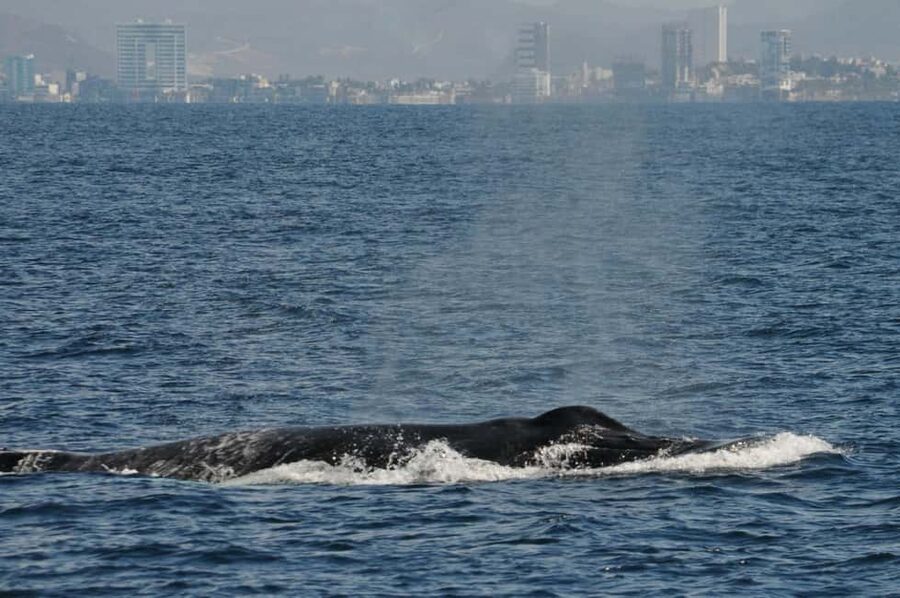
The monitoring element gives the outing its strongest educational value. You can assist with documenting whale populations and identifying individual humpbacks through tail photographs. Since each tail has a distinctive pattern, a clear image can be more useful than a dozen blurry shots of a breach.
The guides may also draw your attention to behavior. Breaching, playing, surfacing, and movement around a calf can all add context to a sighting. Your role is not to conduct research alone, but to help the expert team notice and record what happens.
Listening for whale songs adds another layer. Humpback songs are part of the experience, and the guides can connect what you hear with the wider study of these animals. This makes the boat ride feel more like a field session than a simple sightseeing loop.
The project is linked to MUNBA and its conservation partners. Support goes toward whale rescue work through the Entangled Whale Rescue Network, marine protection with Legado Azul México and Swells Conservation Initiatives, environmental education, and beach cleanups across the Gulf of California and Mexican Pacific.
That is a meaningful use of the fee. You are not just paying for fuel, staff, and equipment. You are also helping maintain a local institution and the work that continues after your three hours on the water.
How much value do you get for $102?
At $102 per person, this is not Mazatlán’s cheapest water outing. The price makes more sense when you add up what is included: hotel to marina transportation and return, a high-speed boat, bilingual marine guides, snacks, beverages, an educational talk, scientific monitoring, a conservation contribution, and independent admission to the National Whale Museum.
The museum ticket is worth noting because transportation to MUNBA is not included. The activity includes independent access, but you must arrange your own way there if you want to visit. Do not confuse museum admission with a museum shuttle.
The conservation payment also changes the value calculation. If you want a wildlife trip with a clear environmental purpose, the fee supports work beyond your own outing. If your only goal is the lowest possible price for a boat ride, you may find other options more appealing.
For a cruise passenger, the short duration can add value. Three hours is long enough for a serious wildlife search but short enough to fit into a port day, assuming your pickup and return schedule work. I would not book it tightly against the ship’s departure without a generous buffer.
Who will enjoy this most?
I would choose this for families with older children who can follow boat safety rules and stay engaged during periods when whales are not visible. The science angle gives children something to do besides wait for a breach.
It also suits adults who care about marine conservation and want guides who can explain whale ecology. You will get more from the trip if you enjoy asking questions, studying animal behavior, and learning why tail photographs matter.
Cruise passengers can benefit from the compact schedule, but they need to confirm timing carefully. Hotel pickup is included only within the stated Mazatlán tourist area, so a cruise passenger should verify the meeting arrangement rather than assume port pickup.
I would hesitate if you have back problems, are pregnant, or are prone to seasickness. The high-speed ride may be uncomfortable, and the operator itself identifies those concerns. This is also not the best choice if you want a slow, silent boat experience.
Practical details that make the day easier
Book flexible plans if your schedule may change. You can cancel up to 24 hours ahead for a full refund, and the reserve-now, pay-later option lets you hold a place without paying immediately.
Check the available starting times before booking because the exact departure schedule is not fixed in the information provided. The three-hour duration refers to the activity, and hotel transport forms part of the practical timing around it.
Bring comfortable clothes, suitable shoes, sunscreen, a hat, water, and a camera. Keep your expectations realistic: whale watching is wildlife observation, not a guaranteed performance. The strongest sightings may include a mother and calf, playful behavior, or several breaches, but the sea remains unpredictable.
Use the guide’s instructions around wildlife. Touching marine life is not allowed. That rule is simple, and following it helps protect the animals that make the trip worthwhile.
Should you book this whale-watching trip?
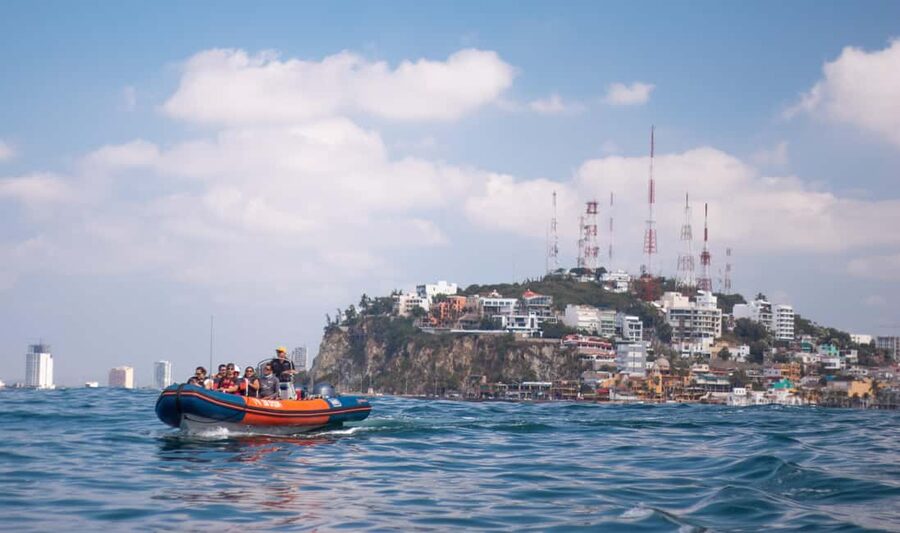
I would book it if you want more than a quick whale sighting. The combination of marine experts, scientific monitoring, conservation funding, bilingual instruction, and a short three-hour schedule gives the experience real substance.
I would skip it if seasickness, back discomfort, or a fast boat ride is likely to spoil your day. You should also confirm your hotel location and allow plenty of time if you are visiting during a cruise stop.
For most nature lovers who can handle the boat, the $102 price is defensible. A mother and calf, a breach, or a whale’s tail filling your camera frame could become the day’s best memory, while your payment helps fund the work that protects these animals after you leave Mazatlán.
FAQ
How long is the Mazatlán whale-watching tour?
The activity lasts three hours. Starting times vary, so check availability when you reserve.
Is hotel pickup included?
Yes, transportation between your hotel and the marina is included for hotels in Mazatlán’s tourist area between Cerritos and Olas Altas. Pickup is not included for Dreams, Estrella del Mar, Isla de la Piedra, or lodging outside that area.
What languages are available?
The live guides speak English and Spanish.
What does the tour include besides whale watching?
The price includes the high-speed semi-rigid boat ride, bilingual marine guides, an educational talk about whales and dolphins in Mexico, snacks, beverages, conservation support, participation in scientific monitoring, hotel transportation in the covered area, and independent admission to MUNBA National Whale Museum.
Is transportation to the National Whale Museum included?
No. Independent admission to MUNBA is included, but transportation to the museum is not.
Who should not take this boat tour?
The activity is not suitable for pregnant women, people with back problems, or people prone to seasickness. The operator also advises you to prepare for possible seasickness during the ride.
New whale trips around Mexico
- Whale Watching in La Paz – Gray Whale Encounter★ 4.4 · 4 reviews
- Whale Watching in San Jose del Cabo★ 5.0 · 3 reviews
- Whale Watching Guaranteed Experience in Puerto Vallarta★ 5.0 · 7 reviews
- Cabo San Lucas: Whale Watching Experience on Catamaran★ 4.3 · 5 reviews
- Whale Watch Cabo: Group Whale Watching Tour – FREE photos★ 5.0 · 3 reviews
- Whale Watch Cabo: Zodiac Whale Adventure – FREE Photos★ 4.8 · 4 reviews
- Whale Watching★ 4.0 · 10 reviews
- Whale Watching in San Jose del Cabo★ 5.0 · 31 reviews
Mexico Whale Watching Tours, compared.
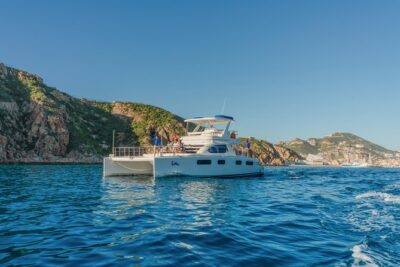
Luxury Catamaran Whale Watching Cabo San Lucas
Read our review →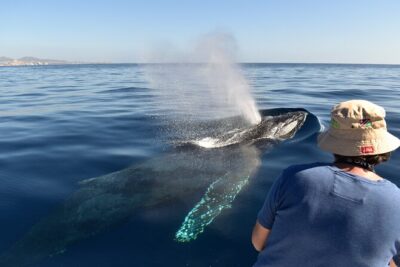
Whale Watching Cabo-Women crew-Sightings Guaranteed & Free Photos
Read our review →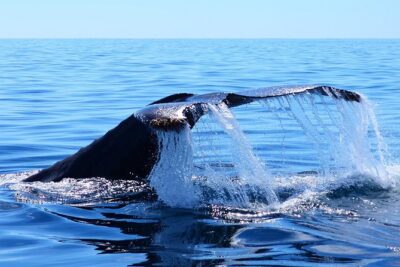
SMALL GROUP Whale Watch | Cabo San Lucas | Biologist | FREE Pics
Read our review →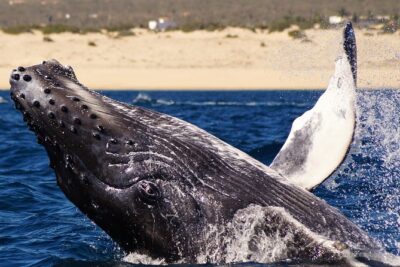
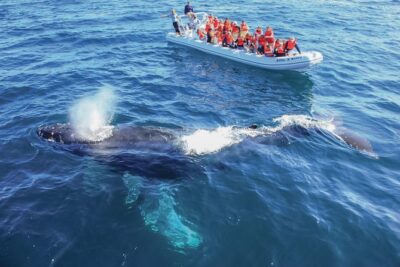
Whale Watching, The Famous Arch and Fast Boat Tour in Los Cabos
Read our review →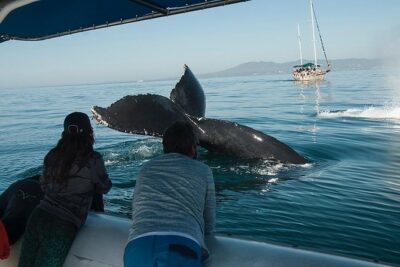
Whale and Dolphin Watching with a Biologist in Puerto Vallarta
Read our review →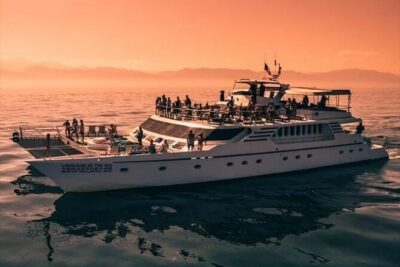
Sunsets and Whales Mega Yachts ALL INCLUSIVE: Puerto Vallarta
Read our review →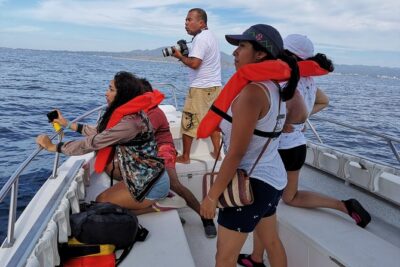
Browse the lists this tour appears in