
Review · WHALE AND DOLPHIN WATCHING TOURS
Hermanus: Whale and Dolphin Watching Boat Trip
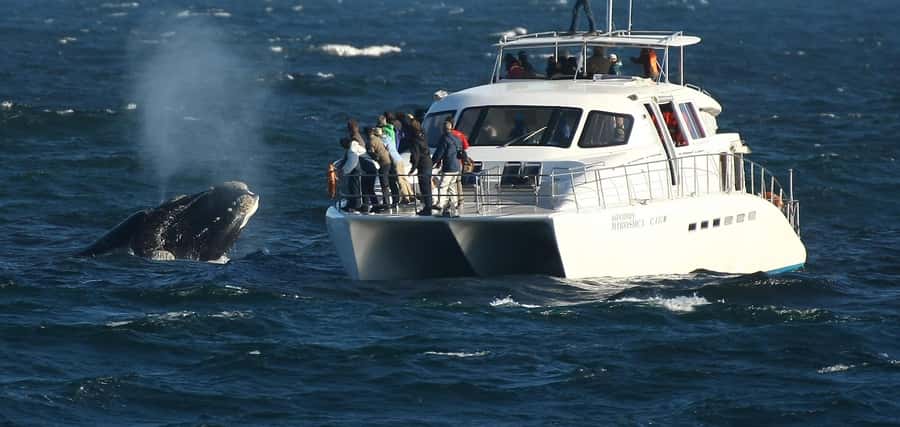
Hermanus is famous for whale watching, and this two-hour cruise gives you a chance to see the action from water level. Southern right whales may swim beside the catamaran, while dolphins, seals, humpback whales, and Bryde’s whales can add to the show. The boat is built for viewing, with open areas where you can move around and watch from different angles.
I like two things in particular: the whale specialist on board, who explains behavior as it happens, and the friendly crew, who help with photos, safety, and spotting animals. Tea, coffee, cupcakes, soft drinks, and crisps make the wait at the harbor and the cruise more comfortable. The catch is simple: wild animals set the schedule, and some late-season trips have produced dolphins and seals but no whales.
Key points to know
- Whale season runs roughly from June through December, with the strongest southern right whale sightings often reported in the middle of the season.
- The purpose-built catamaran gives you room to spread out, although the front viewing area can fill quickly.
- Guides such as Ken, Jacques, David, and Josh have been praised for clear explanations and sharp spotting skills.
- You may see more than whales, including large dolphin pods, seals, humpback whales, and year-round Bryde’s whales.
- Sea conditions can change quickly, so take motion sickness medicine in advance if you need it.
- The boat is not wheelchair accessible, and children under 12 must wear life jackets for the full trip.
Setting out from Hermanus, South Africa’s whale-watching center
The trip begins at Southern Right Charters’ welcome center, known as the Whale Shack, on the lower level of Hermanus New Harbour. You need to check in 30 minutes before departure, and there is a small harbor entrance fee of R5 payable when you enter.
That early arrival matters. The staff use the time to get everyone organized, explain the outing, and provide basic information before boarding. Tea, coffee, and sometimes cupcakes are available before departure, which is a pleasant touch if you choose an early morning sailing.
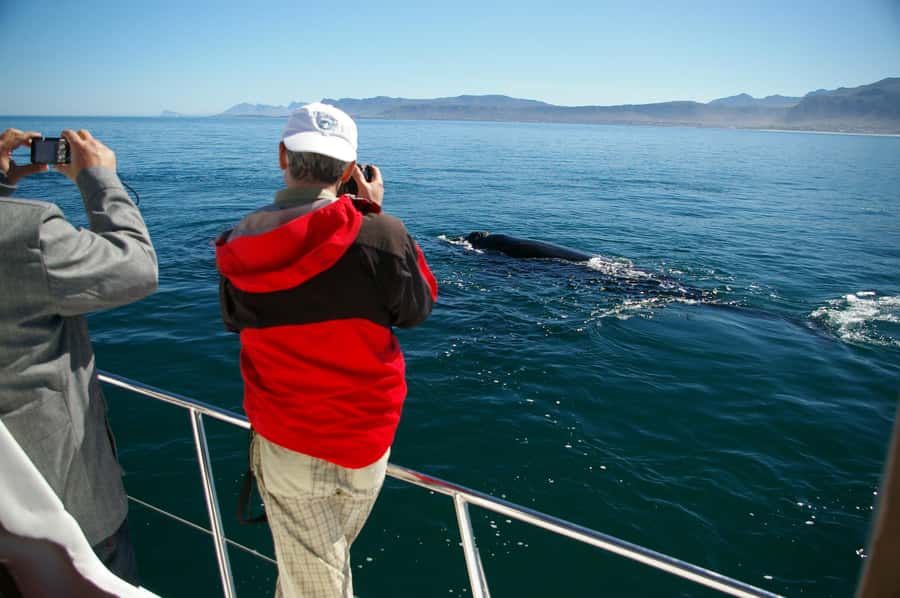
Hermanus sits beside Walker Bay, a broad stretch of coast known for seasonal southern right whale visits. From land, you may see whales from the shoreline and cliffs, but the boat gives you a different view. You are no longer watching a distant back or blow through binoculars. You are at sea level, where a whale can pass beside the hull or surface beneath the viewing area.
The harbor is also a practical starting point. You do not need a long transfer once you arrive in Hermanus, and the meeting point is clearly defined. If you are driving from Cape Town, allow plenty of time. One customer reported driving nearly 200 kilometers each way, only to have a disappointing day when no whales appeared. That is a useful reminder to treat the boat as one part of a coastal visit, not the sole reason for a very long same-day drive.
More Whale and Dolphin Watching Tours in South Africa:
- Whale, Dolphin & Penguin Island Cruise
★ 5.0 · 687 reviews - Tenerife: Eco-Yacht Whale and Dolphin Watching and Swimming
★ 4.7 · 15,619 reviews - Los Cristianos Respectful No-Chase Whale and Dolphin Safari
★ 4.6 · 12,782 reviews
What happens during the two-hour cruise
Once aboard, the catamaran heads into Walker Bay and the crew begins scanning for marine life. The route is not a fixed sightseeing circuit with scheduled stops. It changes according to sea conditions, recent sightings, and where the animals are moving.
The guide interprets what you see rather than simply pointing at a fin. You may hear about whale behavior, the difference between species, and why certain animals spend time in the bay. Guides named in customer accounts include Ken, Jacques, David, and Josh, all noted for clear explanations and enthusiasm. The exact guide depends on the departure, but the trip includes a live English-speaking guide.
The crew also keeps watch from several positions on the boat. That is important because whales can surface anywhere around you. A guide with good spotting skills can catch the first blow or the brief rise of a back before the rest of the group sees it.
You may spend part of the outing cruising through open water with nothing dramatic in sight. That is normal for a wildlife trip. Then the mood can change quickly. A pod of dolphins may appear, or a whale may surface close to the boat. Several outings have included hundreds of dolphins, sometimes swimming toward or alongside southern right whales.
The experience lasts about two hours, though one late-season trip was extended by roughly 30 minutes so the group could watch a whale. Do not assume every departure will run longer. Still, the example shows that the crew may use extra time when conditions and wildlife allow.
Southern right whales, dolphins, seals, and more
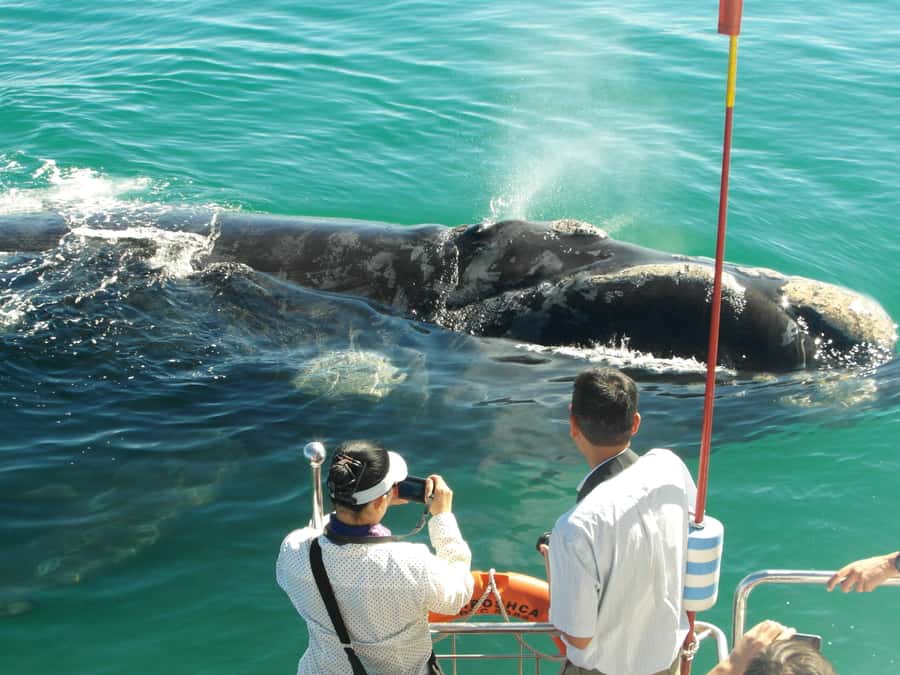
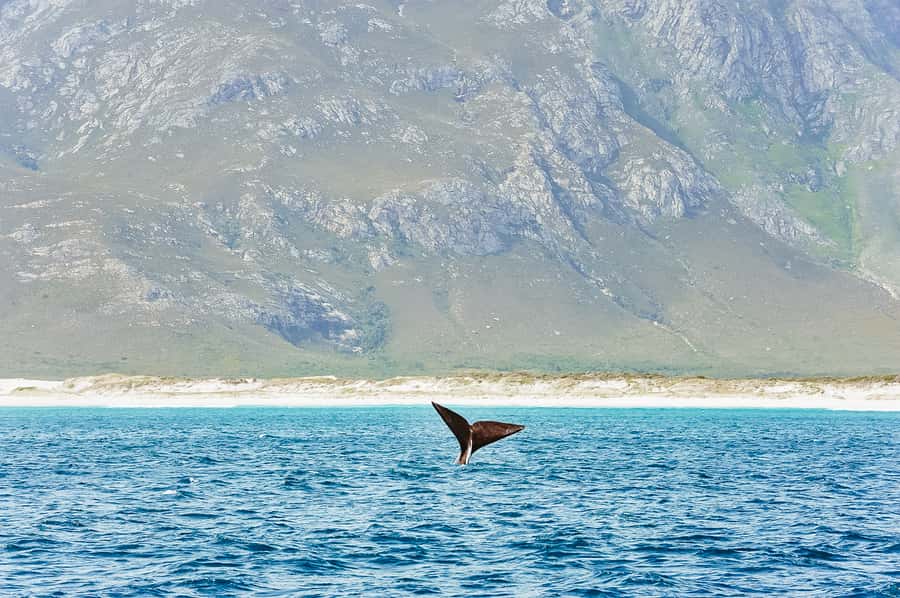
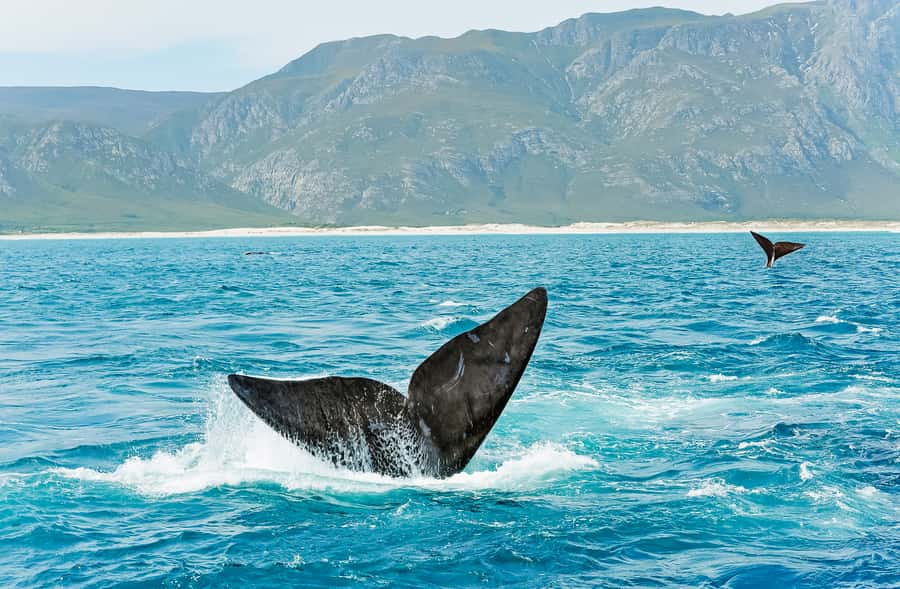
Southern right whales are the main attraction, especially from June to December. During the best part of the season, you may see mothers with calves, several whales together, or animals moving through the shallows. Reports include four whales in one outing, a mother and calf beside the boat, and whales breaching repeatedly.
The close encounters are the memorable part. A southern right whale can appear almost still at the surface, then roll, lift its tail, or disappear beneath the catamaran. Because these whales often move slowly, you may have time to watch their behavior rather than catching only a quick glimpse.
Late in the season, sightings can become less dependable. One November outing produced no whale at all, while other November trips included a whale, dolphins, and seals. That does not make the tour poor, but it does affect how you should plan. If seeing a southern right whale is the central goal, choose a date in the middle of the June to December period when possible, and keep your expectations realistic.
Dolphins are a valuable part of the experience. Large pods have been recorded on several departures, including one estimated at around 300 animals. They may move quickly, spread across the water, or travel toward a whale. Watching a pod change direction together can be just as exciting as waiting for a whale to surface.
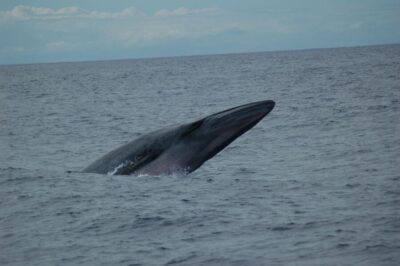
Bryde’s whales are possible throughout the year, while humpback whales make seasonal visits. Seals may also appear. One outing included three different types of whale, dolphins, and seals, but that is a particularly fortunate combination, not a promise for every trip.
The operator’s crew is described as giving animals space rather than chasing them. That matters to me. A good wildlife cruise should help you see natural behavior without turning the encounter into a noisy pursuit. One customer did suggest that the boat could be quieter around the whales, so you should not expect a silent wilderness experience. There is a group on board, and excitement carries.
A catamaran made for viewing, with a few crowding issues
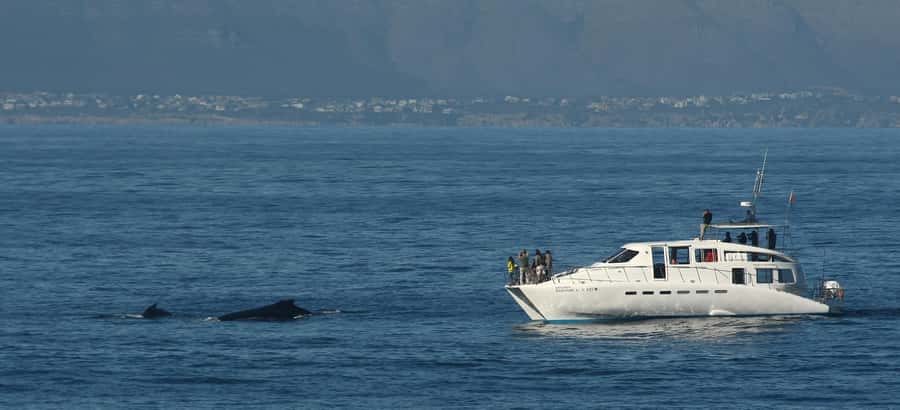
The purpose-built catamaran is one of the strongest practical features. It offers several places to stand and watch, so you are not confined to a single row of seats. The larger platform also helps the boat feel less cramped, even when the group is sizeable.
The open layout is useful for photography. You can shift position as a whale surfaces on one side, then move to another area when dolphins appear ahead. The crew may help you find a better angle or point out where to look.
There is one catch. The front deck can become crowded, and some people may hold their position there for much of the trip. You do not need to stand at the very front to enjoy the outing, but arriving early and moving around when the boat is underway can improve your chances of finding a clear view.
The boat is not wheelchair accessible. Non-folding and electric wheelchairs are not allowed, and strollers cannot come aboard. Children of all ages are welcome, but every child under 12, including infants, must wear a life jacket for the full trip and remain under adult supervision. For children under two, the required life jacket may be uncomfortable, and the operator strongly advises motion sickness syrup for infants.
More whale watching around South Africa worth comparing
- Hermanus: Boat Based Whale Watching Experience
★ 4.4 · 1,180 reviews - From Cape Town: Hermanus Whale Watching Boat Trip
★ 4.4 · 378 reviews - Plettenberg Bay: Whale Watching Boat Cruise
★ 4.4 · 362 reviews - Whale Watching from Gansbaai
★ 5.0 · 327 reviews
Guides, safety, and the value of interpretation
The guide adds real value here. Without an explanation, whale watching can become a long wait followed by a few seconds of confusion. With a guide, you learn what to watch for, why a whale might raise its tail, and how to distinguish a whale sighting from a seal or dolphin.
The best guides combine information with alertness. David was praised for spotting every movement around the boat, while Ken was singled out for his introduction to Hermanus whales. Jacques was also mentioned for explaining what was happening during the trip. These names reflect the sort of guiding you can expect from the operator, though the crew on your sailing may be different.
Safety is treated seriously. The crew gives instructions, supervises children, and helps passengers who have difficulty standing or seeing from the main deck. One person who struggled to remain upright was taken to an area with a better view. The staff have also helped passengers dealing with seasickness.
You should still take responsibility for your comfort. The boat can be bouncy, especially on the return journey, and several accounts point to seasickness. Take tablets before boarding, following the instructions on the packet. A windbreaker is useful even on a sunny day, and flat, sensible shoes are recommended.
Bring a camera, but leave the tripod and binoculars behind. The boat’s movement makes tripods awkward, while the crew’s spotting and explanations are more useful than trying to scan the bay through binoculars.
Refreshments, photographs, and the optional video
Light refreshments are included. The exact service can vary, but tea, coffee, cupcakes, soft drinks, and crisps have been provided across different departures. These are small additions, yet they matter on an early morning trip or a windy ride back to the harbor.
An onboard videographer and drone may capture footage of the boat and wildlife. A short film and tour movie are available to purchase separately. The aerial view can be unusual because it shows the catamaran, the surrounding water, and the whales from above.
The extra cost is worth considering before you board. One customer described the drone video as special but felt the R440 price was high compared with the tour itself. I would treat it as an optional souvenir, not part of the value calculation. You can take your own photographs, and the best moments may happen too quickly for a perfect shot.
The crew is usually helpful with photography, but wildlife does not pose. Keep your camera ready, use a fast shutter if possible, and watch with your own eyes instead of viewing the entire trip through a screen.
Is $98 a fair price for two hours?
At $98 per person, this is not a bargain boat ride. You are paying for a licensed whale-watching operator, a purpose-built catamaran, a specialist guide, crew support, refreshments, and access to a coastline where marine wildlife is often close to shore.
The price makes more sense if you value the interpretation and the boat design. You are not simply being transported around the bay. The guide helps you understand what you are seeing, and the crew keeps scanning while also managing safety and passenger comfort.
Value depends heavily on sightings. On a successful trip with whales close to the boat, dolphins, and seals, the cost can feel justified. On a quiet late-season departure, it may feel expensive, even with a partial refund offered in at least one no-sighting case. The company does not control the animals, so no responsible operator can promise a whale.
For the best value, build the cruise into a wider Hermanus day rather than driving a great distance only for this two-hour outing. That way, the harbor, coast, and town still make the day worthwhile if the sea is quiet.
Choosing the right time and preparing well
The tour runs at different times, depending on availability. Early departures have received strong praise, and sunrise on calm mornings can give the bay a special quality. An early trip may also suit you if you want the rest of the day free, but the first sailing is not automatically the best for whale sightings.
The season is the bigger factor. June through December is the stated whale-watching period. July, September, and October departures have produced many southern right whales, including mothers and calves. November can still be rewarding, especially for dolphins, but whale sightings may be less consistent as the season winds down.
Wear layers. A windbreaker is more useful than a heavy coat because conditions can change between the sheltered harbor and open water. Choose shoes that grip the deck and avoid anything unstable.
Do not bring a drone. Drones are not allowed, and neither are tripods or strollers. If you are traveling with young children, plan for the life jacket requirement and adult supervision for the whole trip.
Cancellation is flexible: you can cancel up to 24 hours before departure for a full refund, and reserve now while paying later. Weather can also affect the schedule. One departure was canceled for poor conditions and rearranged with clear communication. That flexibility is useful because a rough sea is unpleasant and can make wildlife watching less safe.
Who will enjoy this cruise most?
I would choose this trip if you want a structured wildlife experience with a guide, a larger stable viewing platform, and a good chance of seeing more than one marine species. It suits families with older children, couples, photographers, and anyone who wants context rather than a silent boat ride.
It is also a good fit if you care about animal welfare. The crew is described as giving whales room and contributing sightings data to international agencies. You still need to accept that the boat is a group experience and that the crew cannot summon wildlife on demand.
I would think twice if you are very prone to seasickness, need step-free access, or expect guaranteed whales. The boat can bounce, the front viewing area can fill up, and a late-season trip may produce dolphins and seals instead of whales.
Should you book Southern Right Charters?
Book it if you are visiting Hermanus during the whale season and want a well-run way to see Walker Bay from the water. The strongest reasons are the specialist guide, helpful crew, roomy catamaran, and repeated reports of close encounters with southern right whales, dolphins, and calves.
For the best chance of a classic whale sighting, aim for the middle of the June to December season and allow time for weather changes. If your schedule only permits late November or December, go for the full marine experience rather than a guaranteed whale. You may still see a large dolphin pod, seals, or Bryde’s whales, but nature decides the headline.
FAQ
How long is the Hermanus whale-watching trip?
The cruise lasts two hours. On one departure, the outing continued for about 30 minutes longer so the group could watch a whale, but you should plan around the stated two-hour duration.
Where do I meet the boat?
Meet at Southern Right Charters’ Whale Shack welcome center on the lower level of Hermanus New Harbour. Check in 30 minutes before departure, and pay the R5 harbor entrance fee when you enter.
What animals might I see?
Seasonal sightings include southern right and humpback whales. Bryde’s whales and dolphins may be seen throughout the year, and seals are also possible. The exact sightings depend on wildlife and sea conditions.
Are refreshments included?
Yes. Light refreshments and crisps are included. Depending on the departure, this may include tea, coffee, cupcakes, and soft drinks.
What should I wear and bring?
Wear weather-appropriate clothing, a windbreaker, and sensible flat shoes. Bring a camera. Take seasickness tablets in advance if needed, following the packet instructions. Tripods and binoculars are not advised.
Can wheelchair users, infants, and children join?
All ages are welcome, but the vessel is not wheelchair accessible. Strollers, non-folding wheelchairs, electric wheelchairs, and drones are not allowed. Children under 12 must wear life jackets for the entire trip and remain under adult supervision.
New whale trips around South Africa
- Cape Town: Hermanus Whale Watching Tour★ 3.2 · 5 reviews
- Cape Town: Hermanus Whale Watching Shared Boat & Penguins★ 3.3 · 6 reviews
- Cape Agulhas, Hermanus whales & Wine Tasting Day Trip★ 4.9 · 6 reviews
- Whale Watching Walking Tours (Land-Based) – from JUNE 2025★ 5.0 · 88 reviews
- Boat Based Whale Watching from Hermanus★ 4.5 · 205 reviews
- From Cape Town: Full Day Guided Hermanus and Whale Tour★ 5.0 · 155 reviews
- Hermanus Whale Watching Shared Boat Trip and Private Wine Tour from Cape Town★ 4.5 · 38 reviews
- From Cape Town: Whale Watching Tour in Hermanus and Gansbaai★ 4.6 · 110 reviews
Whale and Dolphin Watching Tours, compared.
Eco-Yacht Whale and Dolphin Watching and Swimming
Read our review →
Los Cristianos Respectful No-Chase Whale and Dolphin Safari
Read our review →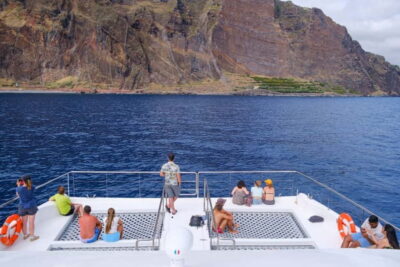

Whale & Dolphin Eco-Cruise with Snacks & Drinks
Read our review →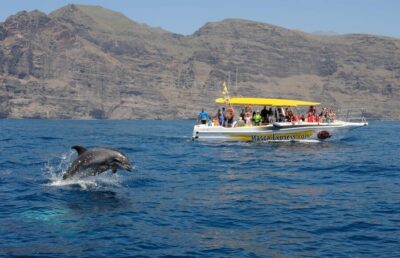
Dolphin & Whale Watching Cruise with Swim Stop
Read our review →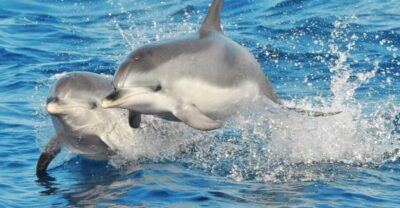
Morro Jable: Dolphin & Whale Watching Cruise, Drinks & Swim
Read our review →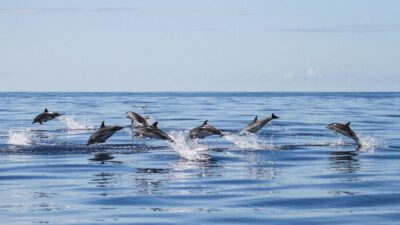
Browse the lists this tour appears in