
Review · WHALE WATCHING CRUISES
Whale, Dolphin & Penguin Island Cruise
Algoa Bay is one of South Africa’s best places to watch marine life from the water, and this small-group cruise keeps the focus on animals rather than speed. From the catamaran, you may see dolphins riding the bow waves, humpback whales moving along the coast, and African penguins gathered around St. Croix Island.
I like the slower pace and the crew’s clear concern for the bay. I also like the chance to learn about conservation while you watch, including the pressure on penguin numbers and the campaign to plant trees to offset the cruise’s carbon footprint. The main catch is simple: wildlife is wild, and a four-hour trip cannot promise every animal on the list.
The best reasons to choose this cruise
- Small boat, maximum 20 people: You get more room to look, photograph, and ask questions than on a large sightseeing vessel.
- Dolphins are possible year-round: Indo-Pacific bottlenose dolphins often approach the boat, while common dolphins may appear in huge offshore groups.
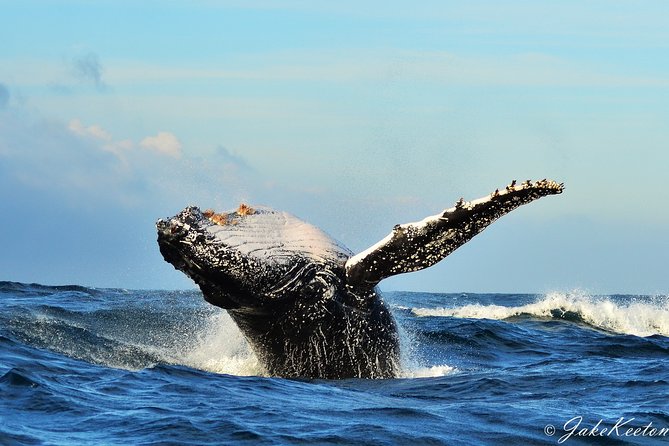
- Whale season runs from June to early December: Humpbacks pass through the bay, with southern right whales usually seen closer to shore from July to September.
- St. Croix Island brings penguins into view: The island is an important African penguin breeding site, though numbers have suffered badly in recent years.
- A conservation-minded crew: The guides and skippers explain animal behavior and the bay’s wider ecosystem, not just point out fins and feathers.
- The trip runs once daily at 8am: That makes the schedule easy to understand, but gives you little flexibility if the sea or weather is poor.
Leaving Port Elizabeth for Algoa Bay
You meet at 8am at the Nelson Mandela Bay Yacht Club, beside Dom Pedro Jetty in Port Elizabeth Harbour, now also called Gqeberha. The meeting point is in the central harbor area and close to public transportation. After a short safety briefing, you board a twin-engine catamaran for roughly four hours on the bay.
A maximum of 20 people keeps the outing personal without making it feel like a private charter. That matters on a wildlife trip. When a whale surfaces or a pod of dolphins appears, you want a fair chance to see the action, not a wall of people competing for one view.
The catamaran is also a useful choice for a bay cruise because it gives the boat a broad, stable platform. Still, this is a sea outing, not a glass-calm harbor ride. One report describes the crew handling choppy conditions well, while another says the trip remained enjoyable through heavy rain. Pack for changing weather and accept that comfort depends partly on the day.
The crew includes experienced skippers and conservation-focused guides. Jake is named in the feedback, and his explanations about local marine life helped turn the ride into more than a search for fins. The crew’s job is not only to locate animals, but also to position the boat carefully so people can see without turning the encounter into a chase.
More Whale and Dolphin Watching Tours in South Africa:
- Hermanus: Whale and Dolphin Watching Boat Trip
★ 4.6 · 807 reviews - Tenerife: Eco-Yacht Whale and Dolphin Watching and Swimming
★ 4.7 · 15,619 reviews - Los Cristianos Respectful No-Chase Whale and Dolphin Safari
★ 4.6 · 12,782 reviews
Whale watching from June through early December
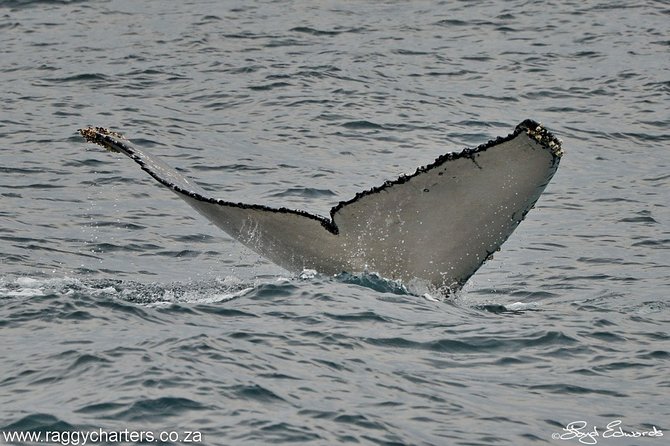
Whales are the headline attraction, but the season matters. Humpback whales can be seen in Algoa Bay from June into early December as they travel along the South African coast toward breeding areas. From October, they begin the return journey, and females may be accompanied by calves.
Southern right whales are generally seen close to shore from July through September. That gives you two useful planning windows: June to early December for humpbacks, and July to September for southern right whales. Other species, including Bryde’s and minke whales, may also appear, but they are possibilities rather than guarantees.
A whale encounter can be brief. You may see a back, blow, or tail before the animal disappears. On a lucky morning, the boat may find a mother and young whale close together, an especially memorable sight because it lets you watch behavior rather than just identify a species.
The crew’s calm approach is important here. A good marine wildlife trip does not promise a performance. It gives you a better chance of finding animals while keeping a respectful distance. If you need guaranteed close-up whale photographs, no open-water excursion can honestly offer that. If you enjoy the suspense of scanning the bay and learning what you see, the uncertainty is part of the appeal.
Dolphins that come to meet the boat
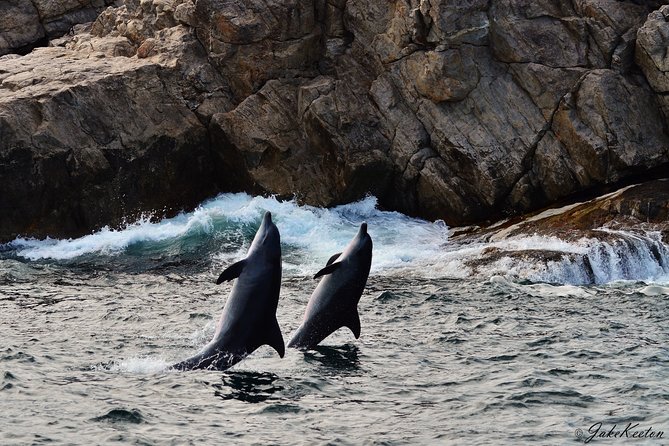
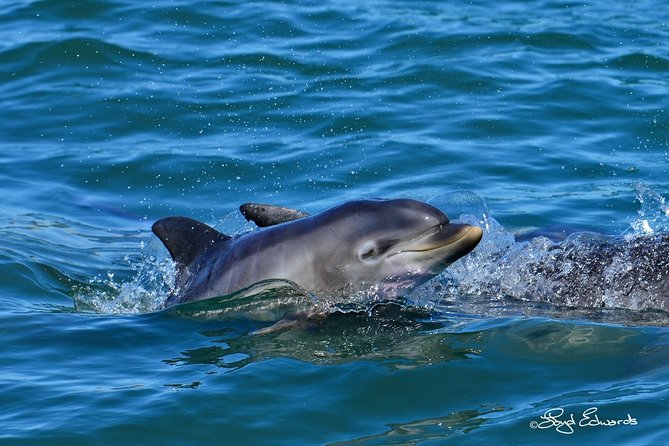
Dolphins are the most dependable part of the wildlife list. Indo-Pacific bottlenose dolphins can be found throughout the year, often in groups ranging from 10 to 400. They favor shallow water near beaches and around St. Croix Island, and they may swim directly toward the catamaran to ride its bow waves.
That behavior gives you a chance to watch dolphins for more than a single surface break. You might see them pacing the boat, turning on their sides, or moving in and out of the wake. Keep your camera ready, but do not spend the entire encounter looking at a screen. The animals can vanish as quickly as they arrive.
Common dolphins are another possibility. These are often seen farther offshore in much larger groups, sometimes numbering 1,000 to 2,000. They follow baitfish, so sightings can involve a fast-moving mass of animals rather than the close boat interaction associated with bottlenose dolphins.
Algoa Bay is also home to humpback dolphins. They are less predictable, and the available information does not promise a sighting, but their presence adds another layer to the bay’s marine life. The crew can help you notice differences in size, behavior, and group movement.
For many people, dolphins are the most rewarding part of the cruise because they bring energy to the trip. Whales can leave you waiting between appearances. Dolphins often keep the boat busy.
St. Croix Island and the African penguins
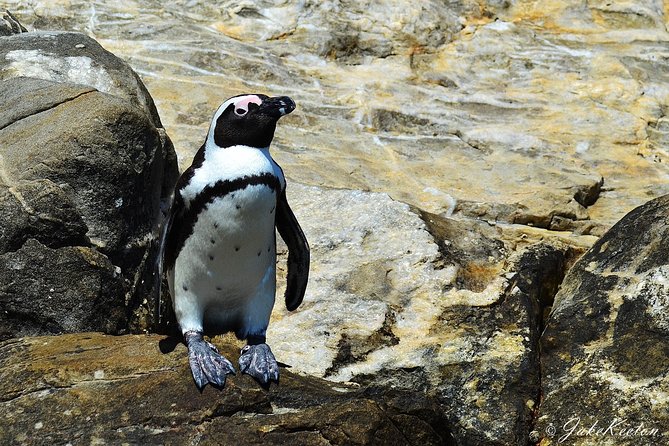
The cruise heads toward St. Croix Island, an important breeding site for African penguins. The island group is part of Addo Elephant National Park, which allows rangers to patrol the area. From the water, you may get a close look at penguins on the island, along with birds in the surrounding sea.
African penguins are especially active around their breeding season, which reaches its peak from March through May. That is when you might see chicks from the boat. The island has been described as supporting about 12,000 endangered African penguins, but the population has lost 70 percent in a decade. Another important point is that current sightings may involve fewer penguins than the headline number suggests.
The decline is linked in part to food pressure and overfishing. That changes the mood of this stop. You are not simply looking at cute birds on rocks. You are seeing a species under strain, and the crew can explain how fishing, food supply, breeding, and protection are connected.
Do not expect to walk ashore. This is a boat-based encounter, with the catamaran providing the viewing platform. Penguin activity can also vary. Some may sit on the island, while others may be in the water hunting. If you hope to see chicks, aim for March through May, but remember that nature does not follow a tour timetable.
St. Croix and nearby Brenton Island also support African black oystercatchers, white-breasted cormorants, and Cape cormorants. Watching the island as a whole gives you a better sense of a working seabird colony, even if penguins are the main reason you came.
More Whale Watching Cruises in South Africa:
- Plettenberg Bay: Whale Watching Boat Cruise
★ 4.4 · 362 reviews - Reykjavík: Whale Watching and Marine Life Cruise
★ 4.6 · 9,838 reviews - Funchal: Dolphin and Whale Watching Catamaran Cruise
★ 4.5 · 5,697 reviews - Costa Adeje: Whale & Dolphin Eco-Cruise with Snacks & Drinks
★ 4.6 · 5,096 reviews
Seals, seabirds, and the wider bay
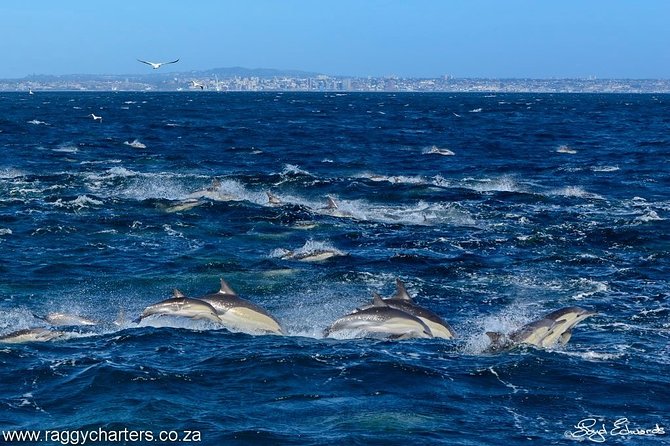
The wildlife list extends well beyond whales, dolphins, and penguins. You may see Cape fur seals resting or swimming, several shark species, Cape gannets, and pelagic birds such as terns, petrels, skuas, shearwaters, and albatrosses.
These sightings depend on season, food, wind, and the route chosen that morning. A bird that seems ordinary from shore can look very different when you see it far from land, working the air above open water. The crew’s explanations help connect each animal to the bay’s food chain.
A report of a hammerhead shark shows the range of possible sightings, but you should treat that as a fortunate extra, not a promise. The same applies to large dolphin groups, seals, and rare whale species. The core value of the cruise is access to a productive marine area and a crew that knows how to read it.
The slower approach makes this part better. A rushed boat might pass a bird or seal before you understand what you are seeing. Here, the guide can pause, explain behavior, and give you time to take a photograph.
Why the conservation focus adds real value
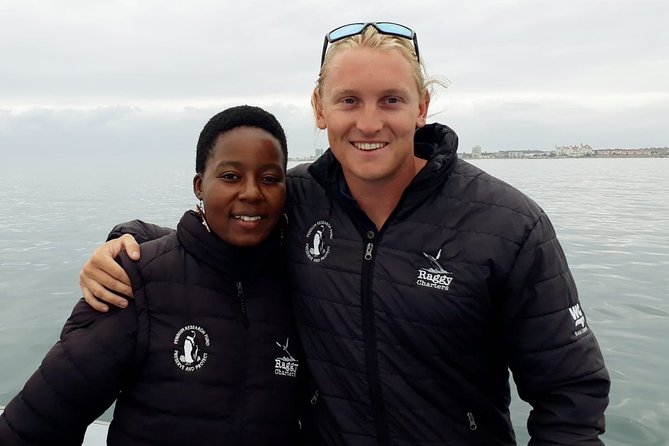
The cruise supports a tree-planting campaign intended to balance its carbon footprint. That does not make a boat trip impact-free, but it shows that the operator is addressing the cost of taking people onto the water.
The guides also connect the animals to practical conservation problems. Penguin numbers, baitfish, overfishing, protected islands, and changing migration patterns are not separate subjects. They affect one another, and learning that while looking at the animals gives the trip more weight.
I especially like this approach for families and visitors who want more than a checklist. You can ask why dolphins gather near a particular island, why penguins leave to hunt, or why whales appear in certain months. The small group makes those questions possible. You are not reduced to listening to a speech through a loudspeaker.
The conservation message should not be mistaken for a guarantee of a perfect outing. The campaign is one positive feature, not a reason to ignore weather, fuel use, or the uncertainty of wildlife tourism. Still, it adds meaning and helps you understand what you are seeing.
Is $185.19 a fair price?
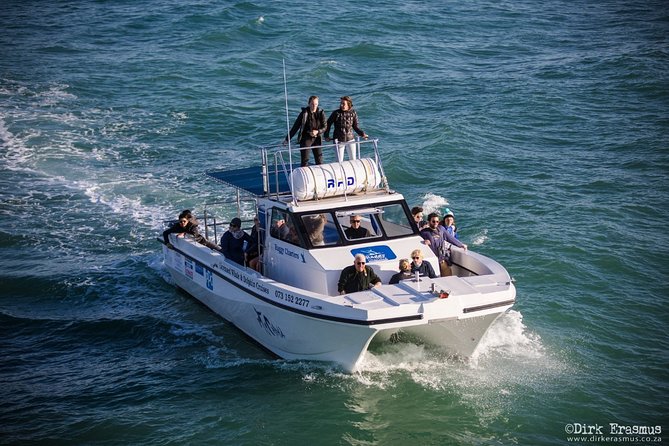
At $185.19 per person, this is not a cheap way to spend a morning. The value depends on what you want from a marine trip.
You are paying for about four hours on the bay, a small group capped at 20, a twin-engine catamaran, a trained crew, and access to several wildlife areas in one outing. You are also paying for a slower format rather than a quick, crowded run to one island.
That can be good value if you care about the quality of the time on the water. A close dolphin encounter, a whale sighting, and penguins around St. Croix Island could make the cost feel justified. The crew’s attention to safety and their willingness to explain animal behavior add value that does not show up in the basic itinerary.
The price is harder to justify if you mainly want a guaranteed penguin visit or a short harbor cruise. The trip cannot control the weather or animal movements, and some of the rarer sightings may not happen. You should book with the goal of spending a thoughtful morning in Algoa Bay, not buying a guaranteed list of species.
There is also a useful comparison for cruise-ship passengers. One person who booked directly found the same boats being used for a cruise excursion and saved a considerable amount. If you are arriving by ship, check the direct price and timing before automatically choosing the ship’s excursion.
Who will enjoy this four-hour outing?
I would recommend this cruise to anyone who values a small boat, patient wildlife watching, and strong interpretation. It suits photographers who want room to work, families who can manage a four-hour sea trip, and nature-minded visitors who want to understand conservation issues as they watch.
It is also a good fit for people with flexible expectations. You may see a mother and calf, hundreds of dolphins, penguins hunting, seals, and a shark. You may also spend time scanning empty water before the next sighting. Both are normal parts of marine wildlife watching.
The activity has no age restriction, and life jackets are available for all ages. People who can board with help from family and crew are welcome, though you should judge your own health and fitness before booking. The operator does not describe this as a fully step-free activity, so ask for practical boarding details if assistance is important.
The 8am start is fixed, and the cruise runs once a day. Plan your morning around it rather than treating it as a casual add-on. The boat returns to the same Nelson Mandela Bay Yacht Club meeting point after the trip.
Practical tips for a better morning
Wear layers and bring protection from sun and rain. Conditions can change quickly on the water, and a wet day can still produce good dolphin and penguin sightings.
Keep your camera accessible, but watch with your eyes first. Dolphins can appear at the bow without warning, and whales may surface away from the side where you are standing.
If whales are your priority, consider June through early December for humpbacks, or July through September for southern right whales. For the best chance of seeing penguin chicks, March through May is the key breeding period.
Allow extra room in your schedule in case poor weather affects the departure. If the operator cancels for weather or because the minimum number is not reached, you can choose another date or receive a full refund. You can also cancel for a full refund up to 24 hours before the start time. Changes or cancellations inside that window are not refunded.
Should you book the Raggy Charters cruise?
Book it if you want a careful, small-group wildlife cruise with a crew that explains the bay and treats sightings as wild encounters, not staged attractions. The strongest reasons are the maximum group size of 20, the chance to see dolphins year-round, the seasonal whale opportunities, and the conservation focus around St. Croix Island.
Think twice if your budget is tight or if you need a guaranteed whale, penguin, or shark sighting. No responsible operator can promise that. But if you can accept some waiting and changing conditions, this is a well-rounded way to spend a morning in Algoa Bay, with a real chance of seeing several of South Africa’s most memorable marine animals.
FAQ
Where does the cruise start?
The cruise starts at the Nelson Mandela Bay Yacht Club, Dom Pedro Jetty, Port Elizabeth Harbour, Gqeberha Central, Gqeberha, 6001, South Africa.
What time does the cruise leave?
The start time is 8am. The cruise lasts approximately four hours and returns to the same meeting point.
How many people can join the boat?
The activity has a maximum of 20 people.
When is the best time to see whales?
Humpback whales can be seen in Algoa Bay from June to early December. Southern right whales are usually seen close to shore from July through September.
Can I see penguin chicks?
You might see African penguin chicks from the boat during the main breeding period, which reaches its peak from March through May.
What happens if the weather cancels the cruise?
If poor weather causes a cancellation, you can choose another date or receive a full refund. The same options apply if the minimum number of participants is not reached.
New whale trips around South Africa
- Cape Town: Hermanus Whale Watching Tour★ 3.2 · 5 reviews
- Cape Town: Hermanus Whale Watching Shared Boat & Penguins★ 3.3 · 6 reviews
- Cape Agulhas, Hermanus whales & Wine Tasting Day Trip★ 4.9 · 6 reviews
- Whale Watching Walking Tours (Land-Based) – from JUNE 2025★ 5.0 · 88 reviews
- Boat Based Whale Watching from Hermanus★ 4.5 · 205 reviews
- From Cape Town: Full Day Guided Hermanus and Whale Tour★ 5.0 · 155 reviews
- Hermanus Whale Watching Shared Boat Trip and Private Wine Tour from Cape Town★ 4.5 · 38 reviews
- From Cape Town: Whale Watching Tour in Hermanus and Gansbaai★ 4.6 · 110 reviews
Whale Watching Cruises, compared.

Whale & Dolphin Eco-Cruise with Snacks & Drinks
Read our review →
Dolphin & Whale Watching Cruise with Swim Stop
Read our review →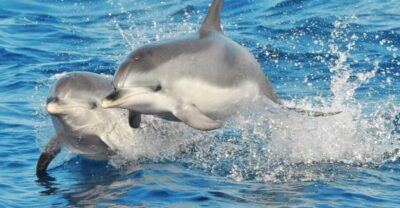
Morro Jable: Dolphin & Whale Watching Cruise, Drinks & Swim
Read our review →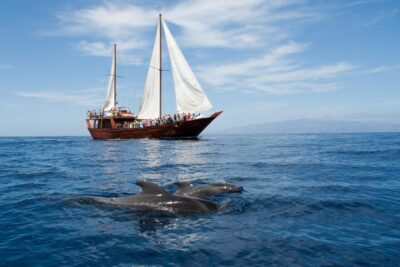
Whale & Dolphin Watching Cruise with Swim Stop
Read our review →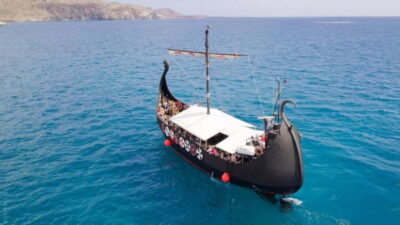
Browse the lists this tour appears in