
Review · HUMPBACK WHALE TOURS
Swim with humpback whales
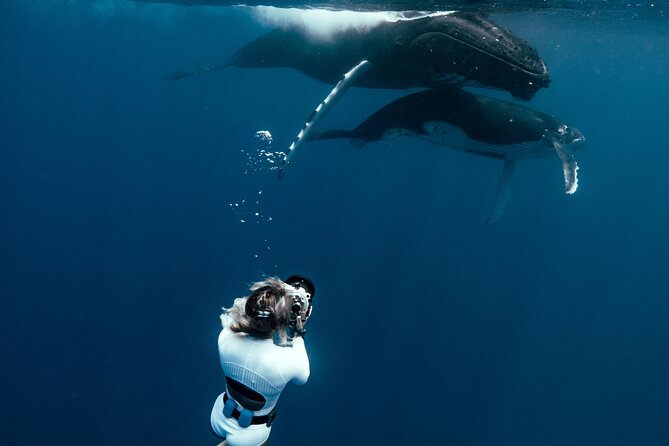
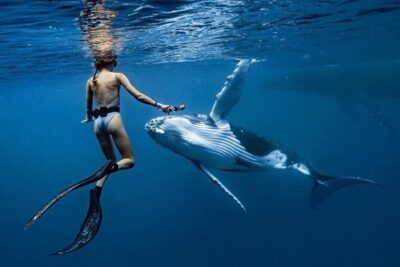
Seeing a humpback whale’s eye from the water is the sort of travel moment you remember for years. On this Moorea outing, you cruise offshore, watch for whales, and may enter the sea for a quiet swim near them. I especially like the small-group format and the chance to meet rays and black-tip sharks in a shallow lagoon afterward.
I also like that English- and French-speaking guides, including Francesca and Tamahere on some departures, put real attention on safety and animal behavior. The catch is simple: this is a wild-animal encounter, not a guaranteed performance. You may spend a long time swimming in rough water while whales keep moving out of reach.
Key points before you book
- Best season: Plan for July through early November, with August and September often offering a strong chance of seeing mothers and calves.
- Open-water effort: You need a good level of fitness and may swim for 30 minutes to an hour when whales are moving.
- Group size: Up to 12 people can be on the boat, but newer rules may limit the water group to six swimmers at a time.
- Two very different settings: The whale search takes place in open ocean, while the later ray and shark stop is in calmer, shallower lagoon water.
- Included gear: Snorkeling equipment and bottled water are provided, so you do not need to rent fins and a mask separately.
- Morning start: Meet at Corallina Tours in Maharepa at 8:30 a.m., with pickup available.
Why swimming beside a humpback is so special
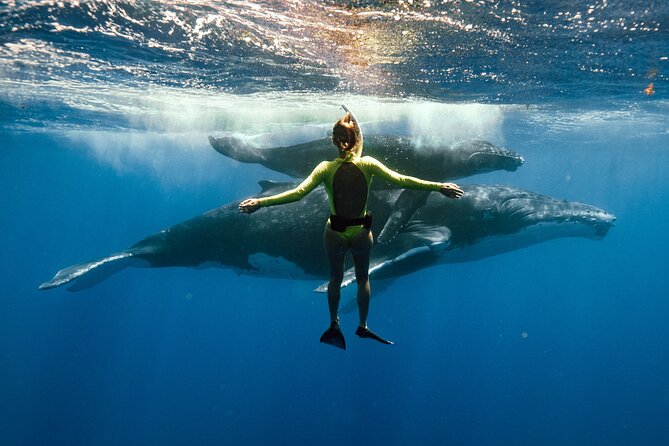
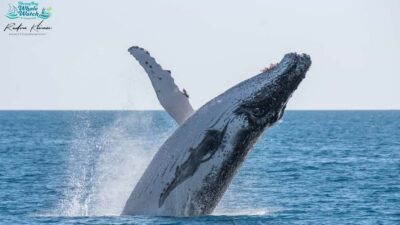
Moorea is part of the seasonal range used by humpback whales during the Southern Hemisphere winter. From July into early November, these huge animals pass through the waters around French Polynesia, and the chance to see them from a boat is already memorable. Entering the water, when conditions and whale behavior allow it, takes the experience to another level.
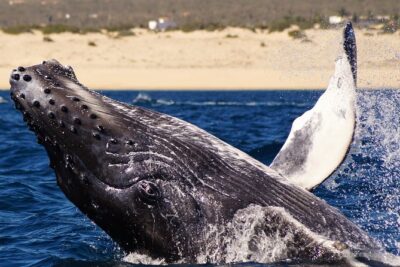
The best encounters described from this tour involve a mother, calf, and escort whale. That combination is especially moving, but it also explains why the guides must act with care. A calf may stay close to its mother, whales may change direction quickly, and a pod can disappear before everyone is ready.
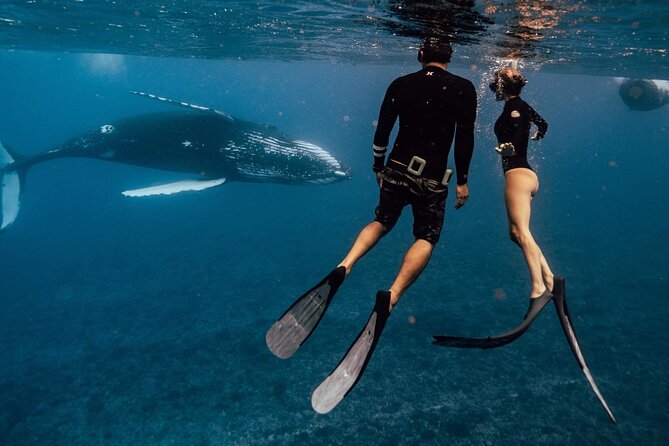
You should think of the swim as a carefully managed opportunity, not a close-contact animal attraction. The crew watches the whales, chooses the right moment, and asks you to move quietly. Splashing, shouting, or hard kicking can send the animals away. Your job is to follow instructions, control your breathing, and accept that the whale decides how close you get.
More Humpback Whale Tours in French Polynesia
- Humpback whale watching and marine life in Moorea
★ 5.0 · 199 reviews - Private tour observing and swimming with humpback whales in Moorea
★ 5.0 · 126 reviews - Swim in Moorea with Humpback Whales and More
★ 5.0 · 42 reviews
What happens from the 8:30 a.m. meeting point
The outing begins at Corallina Tours excursion baleine snorkeling Moorea Polynesie in Maharepa. The listed start time is 8:30 a.m., and round-trip transportation is included. If you arrange pickup, confirm the exact location and timing when you book, since the meeting point and hotel pickup are not necessarily the same place.
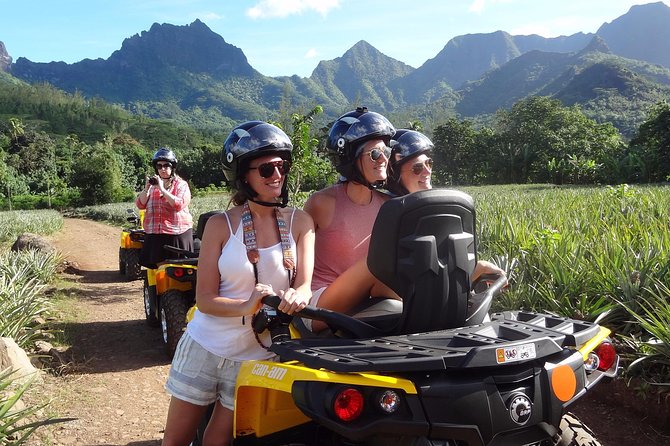
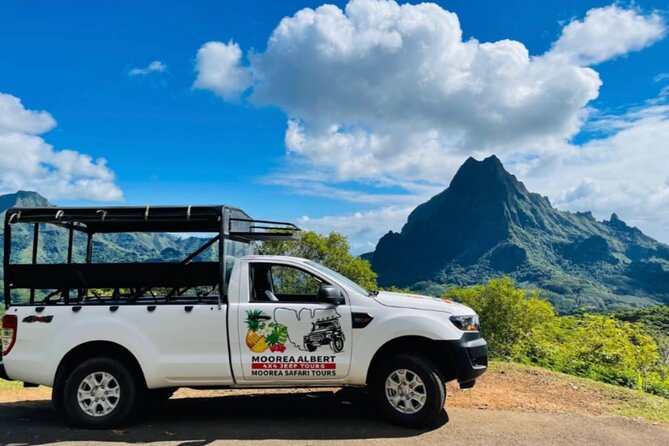
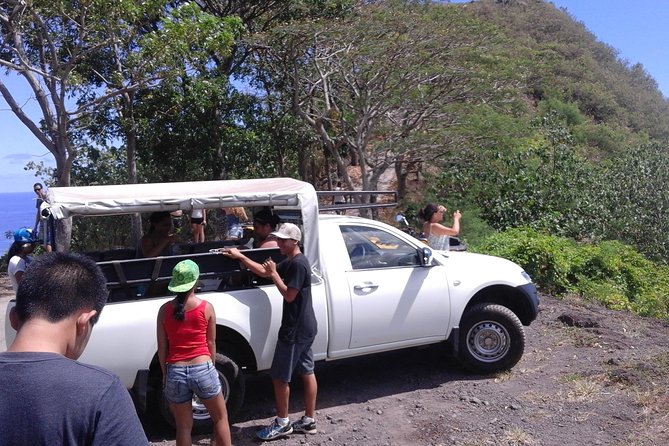
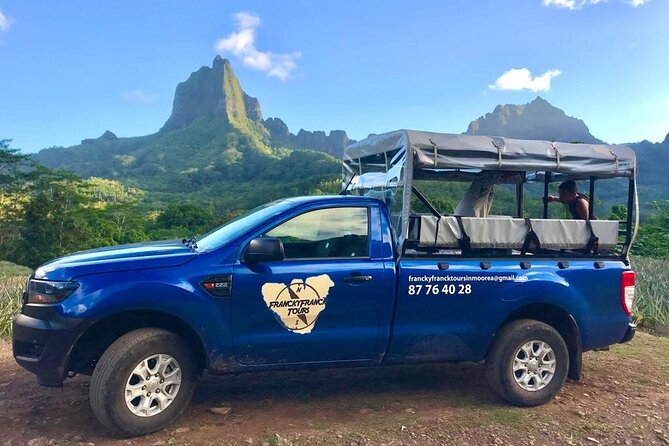
The total outing takes about three to four hours, with the water program itself listed at roughly three hours. The boat takes you across Moorea’s lagoon and out toward open ocean, where the crew searches for whale activity. Some departures have used an open-air vehicle for resort pickup, giving you a quick look at Moorea along the way, but the dependable feature is the included round-trip transport, not a particular vehicle type.
There is no restroom on board. That is a minor detail until you are several miles from shore, so use facilities before departure. You should also bring anything you need for the morning beyond the supplied gear and water. A towel is not listed among the inclusions.
Searching for whales in open ocean
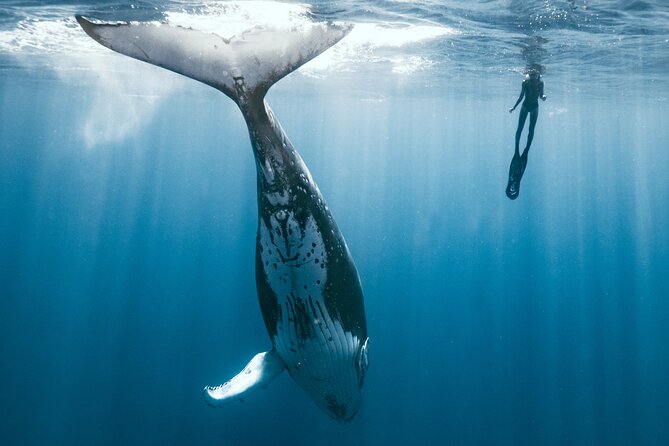
The whale portion is the heart of the tour, and it is also the least predictable part. You may watch whales surface from the boat before getting into the water, or you may have several attempts to move toward animals that keep traveling. Some people have had two close encounters, while others have seen whales but could not swim alongside them.
This kind of swimming takes more work than a calm reef stop. Reports from the trip describe 30 minutes to an hour of swimming in open water, sometimes with rough conditions and poor visibility. The water temperature may be comfortable in a swimsuit, but comfort does not remove the need for stamina. You need to swim with fins, keep pace with the group, and climb back onto the boat when instructed.
If you are nervous, the supplied information notes that the guide can supervise you in waist-height water. That may help at a lagoon stop, but you should not mistake it for the whale session. The whale encounters happen in open ocean, and the crew expects a strong physical fitness level.
I would not choose this activity if you dislike swimming away from shore or feel uneasy in choppy water. You can still enjoy watching whales from the boat, but the main promise of the outing is the chance to enter the sea. A basic ability to snorkel is useful, and comfort with fins matters more than speed.
How the crew handles close encounters
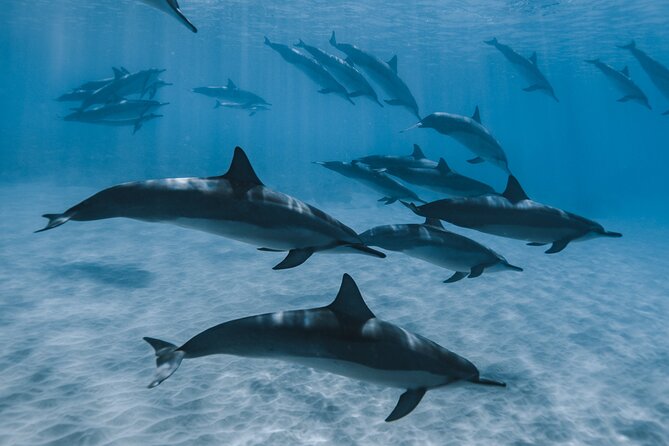
The crew’s role is not just to find whales. Guides explain what the animals are doing, judge when an approach is suitable, and help you stay calm in the water. English and French are spoken, which is useful when safety directions need to be clear and quick.
Several guides have been singled out for their calm manner, including Francesca, Tamahere, and Maui. Names and crew assignments can change, so do not book based on one particular guide being guaranteed. The consistent point is that the team places strong attention on instruction, animal distance, and making people feel secure.
You may be split into smaller water groups. The boat can hold as many as 12 people, but regulations introduced for 2025 limit the number of swimmers in the water at one time to six. This is good for managing the animals and the swimmers, but it affects the pace of the morning. You may wait on board while another group has its turn.
That arrangement is worth understanding before you pay. A capped boat group does not mean all 12 people will swim at once. If you have only one day available and the whale swim is your main reason for booking, ask how the group rotation works on your departure.
The guides also need cooperation from everyone on board. A single person kicking hard or making noise can spoil an approach for the whole group. Move slowly, keep your face in the water when instructed, and let the crew position you. The quieter and more patient you are, the better your chance of seeing natural behavior.
Same sea, a different boat:
- Swimming with Whales in Moorea (Half Day tour)
★ 4.5 · 264 reviews - Whale Tour – Observe and swim with whales
★ 5.0 · 257 reviews - Whale Watching Tours in Bora Bora
★ 4.5 · 250 reviews - Respectful whale excursion to Tahiti in 4h30
★ 4.5 · 123 reviews
The lagoon stop with rays and black-tip sharks
After the offshore whale search, the trip shifts to a local lagoon. This stop is a helpful contrast: the water is calmer, the animals are easier to spot, and you can often see rays and black-tip sharks near the surface. You may not need to swim far to notice them, and the guide can help you feel comfortable in the water.
Black-tip reef sharks can look dramatic, especially when you first see them glide nearby. The encounter is designed as an observation and swimming stop, not a feeding show. Rays are also part of the scene, adding a second type of marine life after the larger whales.
For many people, this lagoon stop makes the trip feel worthwhile even if the whales stay distant. It is not a replacement for swimming with a humpback, but it gives you a second chance to spend time in the water rather than ending the outing after a difficult offshore search.
The lagoon may also suit less confident swimmers better than the whale portion. Still, you should listen closely to the guide and remember that you are sharing natural water with animals. The crew’s supervision matters here, too.
What the $264.13 price really buys you
At $264.13 per person, this is not a cheap morning boat ride. The price makes more sense if you value the specialist nature of the outing: a small capped group, whale-searching time, a guide in the water, snorkeling equipment, bottled water, transport, and a second marine-life stop.
You are paying for effort and judgment as much as for a sighting. The crew may spend the morning tracking whales that do not cooperate, adjusting the route, and deciding when it is respectful and safe to enter the water. None of that guarantees a swim, but it is part of what a responsible wildlife outing costs.
The value is strongest for someone who considers a close whale encounter a major trip goal. Seeing a mother and calf from the water can justify the price for that person. The value is weaker if you mainly want an easy snorkel in calm water, since the open-ocean swimming can be tiring and the whale result is uncertain.
You also avoid hiring snorkeling equipment separately. That is convenient, though the included gear does not change the need to bring your own comfort with the sea. If your budget is tight, compare the cost with a standard lagoon snorkel. If the whale opportunity is the reason you came to Moorea, the extra cost may be sensible.
The season, weather, and wildlife gamble
Book between July and early November if humpbacks are your priority. August and September are often suggested as especially good months, and late-season trips can still find a mother and calf, but the animals do not follow a schedule written for tourists.
Weather is just as important. The tour requires suitable conditions, and poor weather can lead to a different date or a full refund. That protection helps, but the stated cancellation policy is strict in ordinary circumstances: the booking is non-refundable and cannot be changed for personal reasons.
I would avoid placing this tour on the morning before a flight or a tightly timed connection. The program is usually three to four hours, but wildlife and sea conditions are not precise clockwork. You also want enough time afterward to rest if the swim leaves you tired.
Who will enjoy this most
This outing suits you if you:
- Have a strong swimming base and feel comfortable in open water.
- Want a serious wildlife encounter rather than a short photo stop.
- Can stay quiet and patient around animals.
- Are visiting Moorea during the humpback season.
- Like having rays and black-tip sharks added to the same morning.
- Are comfortable with the possibility that the whales will be visible but not swimmable.
I would think twice if you have limited swimming ability, are prone to seasickness, or want a guaranteed close encounter. Children are allowed, but the physical demands and open ocean make this a better fit for capable swimmers than for young children who tire quickly.
The small group helps, but it does not turn the trip into a private charter. With up to 12 people aboard and six swimmers at a time under the newer rules, you may need to wait your turn. If you want complete control over timing and group behavior, ask about a private option before booking, though no private charter is included with this experience.
Practical tips for a better morning
Arrive ready to swim. Wear a secure swimsuit, use reef-safe sunscreen, and reapply it after time in the water. One person on the trip learned the hard way that a long morning on the sea can bring a serious sunburn.
Bring a towel unless your accommodation or transport arrangements provide one. A towel is not listed as included, and the boat has no restroom. It is also wise to use the facilities before meeting the crew.
Listen to the safety talk even if you already snorkel. The most important instructions concern quiet movement, spacing, and when to enter or leave the water. The whales can move fast, so conserving energy at the start may help you stay with the group later.
Keep your expectations flexible. You might see several whales, make a close approach, and swim near a mother and calf. You might also watch whales from the boat, try an approach that fails, and spend more time with rays and sharks. Both outcomes are part of a wild encounter, but only one delivers the full bucket-list moment.
Should you book this Moorea whale swim?
Book it if you are visiting during the July to early November season, swim well, and would regret leaving Moorea without trying to see humpbacks from the water. The crew’s calm guidance, bilingual support, included equipment, and second lagoon stop give the morning real substance.
Skip it if you need a guaranteed result, prefer easy snorkeling, or cannot handle an hour of effort in open water. At $264.13, the cost is fair for a serious whale-searching trip, but it is not fair if you view the whale swim as a guaranteed product.
My practical advice is to book early for August or September, keep the rest of your day open, and treat the rays and sharks as part of the value rather than a consolation prize. You may get the rare moment of floating near a humpback. You also need to be ready for nature to set the terms.
FAQ
Where does the tour start?
It starts at Corallina Tours excursion baleine snorkeling Moorea Polynesie in Maharepa, Moorea. The listed start time is 8:30 a.m.
Is hotel pickup available?
Yes. Pickup is offered, and round-trip transportation is included. Confirm the exact pickup details when booking.
How long does the experience take?
The activity lasts approximately three to four hours. The listed program time is about three hours.
When is the best time of year to go?
The activity is intended for visits between July and early November, when humpback whales use Moorea as a seasonal home. August and September may improve your chances.
How many people can join?
The maximum group size is 12 people. Due to 2025 regulations, no more than six swimmers may be in the water at one time.
Is snorkeling equipment provided?
Yes. Snorkeling equipment and bottled water are included.
Do I need to be a strong swimmer?
Yes. A strong physical fitness level is required, and you may need to swim for 30 minutes to an hour in open water. Fins are used during the swim.
What happens if bad weather cancels the tour?
If poor weather causes the cancellation, you can choose another date or receive a full refund. The booking is otherwise non-refundable and cannot be changed for personal reasons.
More Swim-with-Whales Trips in French Polynesia
- Whale Dream ltd – Whales watching and swim with dolphins
★ 5.0 · 308 reviews
New whale trips around French Polynesia
- Tahiti island: Whale watching Experience★ 4.2 · 79 reviews
- Guided Small Group Whale Watching and Swim Tour Tahiti★ 5.0 · 57 reviews
- Respectful whale excursion to Tahiti in 4h30★ 4.5 · 123 reviews
- Whale watching on the preserved and quiet coast of Paea (Pk26)★ 5.0 · 40 reviews
- Half Day Private Whale Watching in Moorea★ 5.0 · 10 reviews
- Private Half Day Whale Watching Tour★ 5.0 · 18 reviews
- Private Whale Watching Adventure in Mo’orea★ 5.0 · 32 reviews
- Private tour observing and swimming with humpback whales in Moorea★ 5.0 · 126 reviews
Humpback Whale Tours, compared.
Humpback whale watching and marine life in Moorea
Read our review →
Noosa Whale Watching Cruise – Humpback Whale Adventure
Read our review →
Private tour observing and swimming with humpback whales in Moorea
Read our review →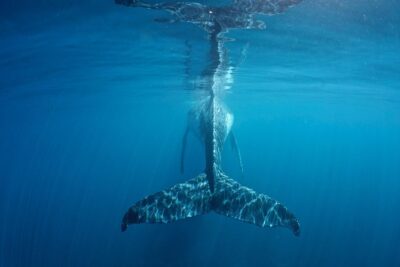
Browse the lists this tour appears in