
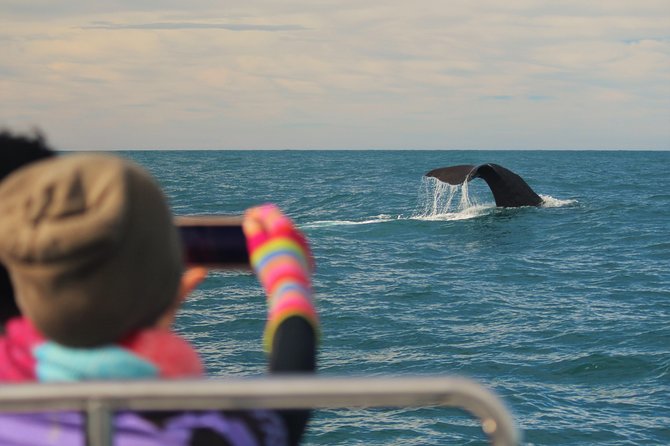
Review · NEW ZEALAND WHALE WATCHING TOURS
Whale Watching in Kaikoura by Boat
Kaikoura’s whale watching works because the sea floor drops sharply close to shore, bringing sperm whales within reach of a fast catamaran. You can watch a whale rest at the surface, hear it breathe, and perhaps catch the slow lift of its tail before it disappears into the Pacific. The 95% reported sighting rate and 80% refund if no whale appears make this a fairly reassuring wildlife trip.
I like the clear running commentary, which explains whale behavior, the Kaikoura canyon system, and the animals around you instead of leaving you to guess at every dark shape. I also like the choice of vessel: you get a stable indoor cabin for the ride out, plus outside decks when conditions allow. The catch is simple: the sea can be rough, and some passengers become very sick even on a day that looks calm from shore.
Key things to know before boarding
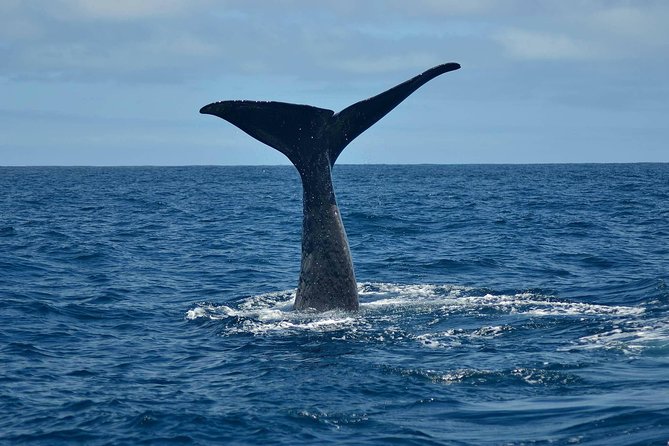
- Sperm whales are the main event: They often rest at the surface before raising their tails and heading down for food.
- The wildlife list can grow quickly: Depending on the day, you might see dusky dolphins, pilot whales, humpbacks, orcas, fur seals, albatross, petrels, and other seabirds.
- The total outing takes about 3.5 hours: Actual time on the water is up to 2.5 hours, with check-in, a safety talk, and a bus ride to the marina.
- The crew tracks conditions closely: Departures can be altered or canceled for safety, and children or passengers with medical problems may face extra restrictions.
- Take seasickness seriously: Medication is available at the retail shop, but taking it before departure is the better plan.
- The price buys more than a boat ride: At $111.39 per person, you are paying for the vessel, transport, wildlife tracking, interpretation, and the no-whale refund protection.
Why Kaikoura is such a strong whale-watching base
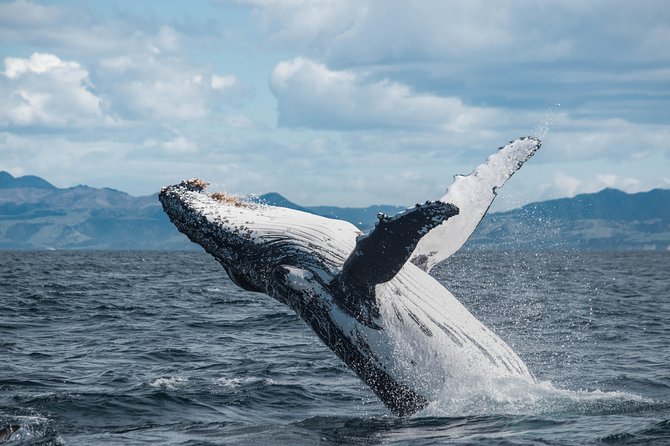
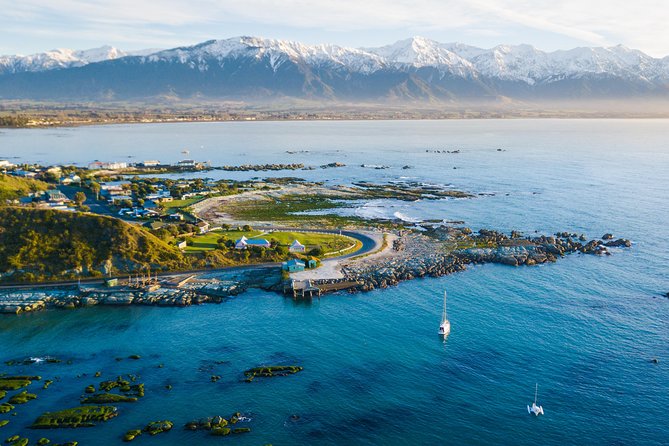
Kaikoura sits on New Zealand’s South Island east coast, where steep mountains meet the sea and underwater canyons bring unusually productive waters close to land. That setting helps explain why a whale trip here can produce more than one kind of sighting.
The star is the giant sperm whale. These animals spend long periods resting at the surface, then head down to feed in the dark water below. You will not see a full whale cruising beside the boat like a film set piece every time. More often, you see a back, a blow, a head, or the tail as the animal leaves. That can sound modest, but the tail lift is a memorable payoff because it tells you the whale is heading into its next long feeding session.
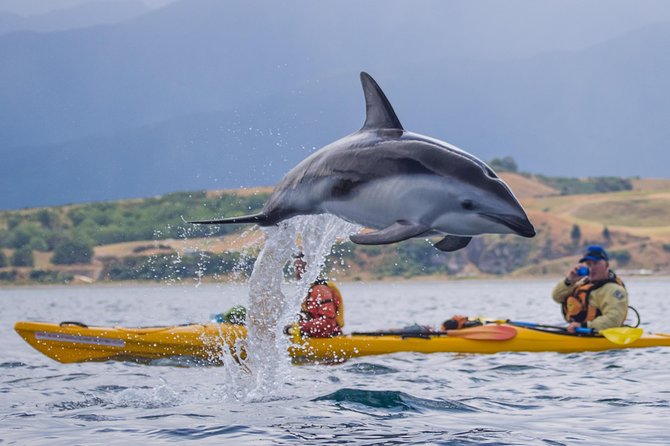
The area also attracts dusky dolphins, fur seals, albatross, petrels, and other seabirds. On particularly fortunate trips, people have seen humpback whales, pilot whales, and orcas. One outing produced sperm and humpback whales, a large dolphin pod, albatross, and seals. Another included an orca among several other species.
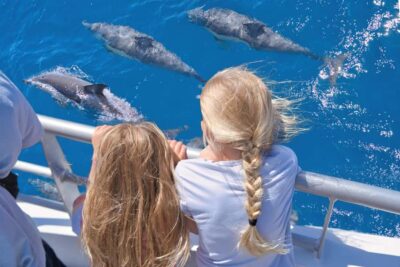
That variety matters. If the whales are quiet, the trip does not necessarily become empty water. A pod of dusky dolphins racing around the boat can provide the most energetic part of the day, while albatross give you something to watch between whale sightings.
More whale watching around the world worth comparing
- Tenerife: Eco-Yacht Whale and Dolphin Watching and Swimming
★ 4.7 · 15,619 reviews - Los Cristianos Respectful No-Chase Whale and Dolphin Safari
★ 4.6 · 12,782 reviews - Reykjavík: Whale Watching and Marine Life Cruise
★ 4.6 · 9,838 reviews
From Whaleway Station to the marina
You start at Whaleway Station Road in Kaikoura. Allow the full 3.5 hours, not only the time listed for the boat ride. The check-in time includes the safety briefing and the bus transfer to and from the marina.
The operation uses modern, purpose-built catamarans. You can remain indoors during the faster parts of the ride, which is useful when the sea is cold or choppy. Outside decks provide better views once the boat reaches a wildlife area, but you should bring warm layers and light waterproof clothing if you plan to spend time outside.
Flat shoes are advised. That is sensible on a moving boat, especially when you shift between the cabin and outdoor viewing spaces. Food and drinks are not included, so handle those needs before boarding or at the station.
The published check-in times are 7:15 a.m., 10:00 a.m., 12:45 p.m., and 3:30 p.m. from November through March. These are check-in times, not invitations to arrive early and wait around the station. The early trip can be appealing if you want more room on board, though conditions and wildlife change from one departure to the next.
What the 2.5 hours at sea feel like
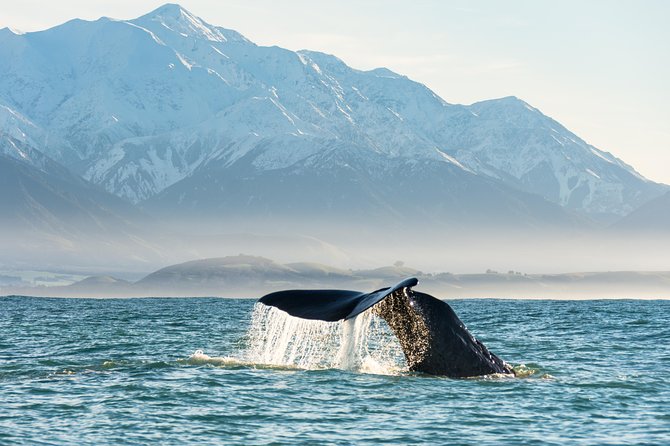
The catamaran heads quickly away from shore, with commentary continuing during the ride. Expect information about whales, the Kaikoura bays and canyons, and the way marine animals live and feed in this area.
A marine biologist may provide more detailed interpretation, supported by onboard animations and video. This is one of the strongest parts of the experience for me. You learn what you are watching, why sperm whales spend time at the surface, and how the local sea supports such a large range of life.
The ride out can take roughly 40 minutes, depending on conditions and where the animals are found. That makes the sea journey part of the experience, not just a transfer. It also means you should not expect constant action from the moment the boat leaves the dock.
Once the crew locates a whale, the captain positions the catamaran nearby and waits. You may watch the animal breathe several times before it arches and raises its tail. A sighting can last only a few minutes, or the boat may remain with a whale for around ten minutes while it rests.
The crew may adjust the route as new reports come in. This flexible approach can produce surprises, such as a sudden switch from searching for a rare sighting to following a sperm whale, then heading toward dolphins on the return trip.
The main encounter: sperm whales at the surface
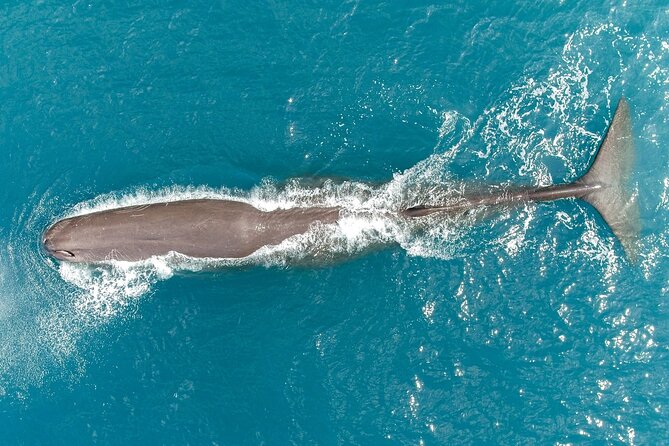
Sperm whales are not usually performing animals. They are wild, large, and focused on their own routine. The best encounter is often quiet: a whale floats at the surface, exhales a strong spout, and gives everyone time to watch before its next movement.
You may get a tail flick as the whale leaves. You may see only the back and blow. Both are normal, and you should set your expectations accordingly. This is not a guaranteed parade of close-up whale breaches.
The vessel can become crowded around a sighting. One passenger specifically found the viewing area too busy when whales appeared. That is the tradeoff of a larger catamaran carrying up to 116 people: it offers capacity, indoor shelter, and a solid platform, but you will not have a private view.
If you want photographs, keep your camera ready before the whale surfaces. A tail appears for only a moment, and the best image may come from watching through the open deck rather than trying to frame every second. Still, do not let the camera take over. The whale’s full sequence, from spout to tail, is easier to appreciate with your eyes.
Same sea, a different boat:
- From Funchal: Ecological Catamaran Dolphin Whale Watching
★ 4.5 · 8,204 reviews - Juneau Wildlife Whale Watching
★ 5.0 · 7,379 reviews - Juneau Wildlife Whale Watching & Mendenhall Glacier
★ 5.0 · 6,236 reviews - Funchal: Dolphin and Whale Watching Catamaran Cruise
★ 4.5 · 5,697 reviews
Dolphins, seals, birds, and the unexpected
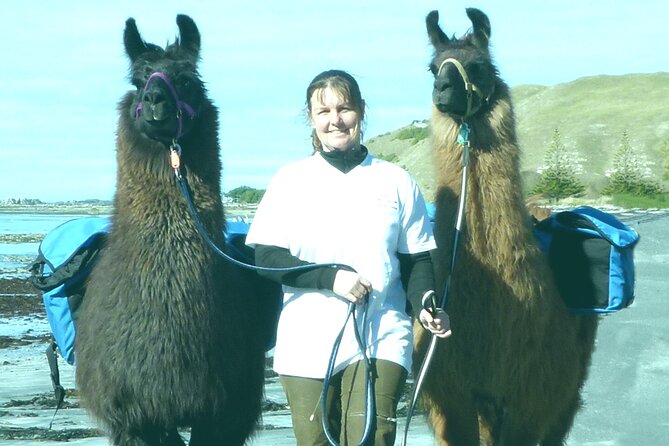
The return journey can bring some of the best wildlife. Dusky dolphins are known for their playful movement around boats, and sightings have included large pods with animals leaping, flipping, and racing alongside the catamaran.
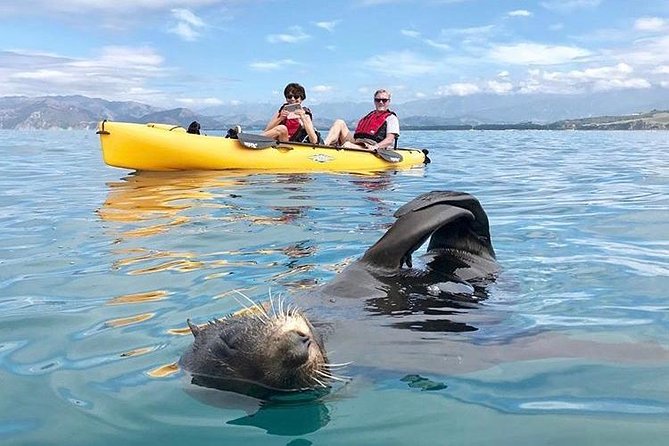
Fur seals may swim near the vessel and pop up beside it. Seabirds can be just as interesting as the mammals. Albatross, petrels, and other birds use these productive waters, and an albatross gliding close to the boat gives you a good sense of its size and control.
Do not plan the trip around a particular bonus species. Orcas, humpback whales, pilot whales, and unusual sightings can happen, but they are not the basic promise of the outing. The sensible expectation is one or more sperm whale sightings, with other wildlife adding to the day.
The crew’s running commentary helps here. Instead of waiting in silence between sightings, you receive explanations about what is in the water and why the area supports it. That turns the journey into a short marine lesson, not simply a search for a large animal.
Seasickness is the real practical issue
Kaikoura’s sea conditions deserve respect. Several departures have been described as rough, with many people feeling ill. The boat may be indoors and the crew may give clear warnings, but neither fact prevents motion sickness.
If you are prone to queasiness, buy motion sickness tablets at the retail shop before boarding and take them according to the product instructions. Do not wait until you feel ill. Once sickness starts, it can be difficult to recover while the boat continues moving.
Wear warm clothes, use flat shoes, and bring light waterproof gear for the outdoor decks. The crew monitors weather and sea conditions throughout the operation. Safety rules can change at check-in, including restrictions affecting young children or people with medical concerns.
Children must be at least three years old, although the operator can raise the minimum age when conditions are poor. Most people can take part, but this is not an ideal outing for anyone who knows that choppy water causes serious problems.
Is $111.39 good value?
At $111.39 per person, this is not a cheap add-on. It is also not just a short cruise. The price includes the catamaran, bus transfers, safety briefing, up to 2.5 hours on the water, live interpretation, onboard visual material, and the work of a crew that tracks wildlife and sea conditions.
The 80% refund if you do not see a whale makes the price easier to accept. It does not remove the risk of a disappointing day, since you still spend several hours at sea and may feel unwell. But it shows that the operator recognizes the central promise of the trip.
The value is strongest if you care about the full setting: whale behavior, dolphins, seabirds, local geography, and a properly run wildlife operation. If you only want a guaranteed close-up photograph, no boat trip can honestly promise that.
The maximum group size of 116 is worth noting. A larger boat can be reassuring in rough water and gives you indoor space, but it can feel crowded when everyone moves toward one side for a whale. If personal space and quiet viewing matter most, this setup may not suit you.
Timing, weather, and cancellation
The tours operate all year, though the listed summer schedule has four check-in times. You should call the freephone number on the day for a sea conditions update if you are traveling to Kaikoura for the tour.
Poor weather can lead to a cancellation, an alternative date, or a full refund. You can also cancel for a full refund if you do so at least 24 hours before the start time. Changes or cancellations inside that 24-hour window are not accepted for a refund.
Build some flexibility into your Kaikoura plans. A wildlife trip can be canceled for good reasons, and trying to force a departure in poor conditions helps nobody. If you have only one free morning in town, the weather risk matters more than it would on a longer South Island itinerary.
Who will enjoy this trip most
I would choose this tour if you want a well-organized way to see Kaikoura’s marine life without arranging your own boat, transport, or wildlife briefing. It suits first-time whale watchers, families with children old enough for the conditions, photographers who can accept unpredictable sightings, and anyone interested in marine ecology.
It also suits you if you enjoy several kinds of wildlife rather than whales alone. A sperm whale may be the main reason you book, but dolphins, seals, albatross, and other birds can fill the gaps.
I would think twice if you dislike boats, are highly prone to seasickness, or need a quiet, uncrowded viewing experience. The large catamaran has real advantages, but it cannot give everyone a private spot when a whale surfaces.
Should you book Whale Watching in Kaikoura by Boat?
Yes, if seeing a wild sperm whale is high on your New Zealand list and you can handle several hours on open water. The crew, marine commentary, purpose-built boat, high sighting rate, and no-whale refund provide a strong package at $111.39.
Book with realistic expectations. You may see a back, a spout, and a tail rather than a full breach. Take seasickness medication before departure, wear warm clothes, and leave room in your schedule in case weather changes the plan.
For me, the best reason to book is the combination of whale watching and a broader look at Kaikoura’s sea life. You are not simply chasing one photograph. You are watching a working marine environment, with a crew that explains what is happening and adjusts its route when the ocean offers something unexpected.
FAQ
Where does the whale-watching tour start?
The tour starts at Whaleway Station Road, Kaikoura 7300, New Zealand, and ends back at the same meeting point.
How long does the experience last?
You should allow about 3.5 hours in total. The actual time on the water is up to 2.5 hours, with check-in, a safety briefing, and bus transfers included in the overall timing.
What animals might I see?
The main target is the sperm whale. You might also see dusky dolphins, fur seals, albatross, petrels, and other seabirds. Some trips have also seen humpback whales, pilot whales, and orcas.
What happens if no whale is seen?
The tour offers an 80% refund if no whale is seen during your trip.
Does the tour operate all year?
Yes. Tours operate throughout the year, subject to suitable weather and sea conditions.
What should I wear?
Dress warmly and wear flat shoes. Light waterproof clothing is useful if you plan to spend time on the outside decks.
Is motion sickness a concern?
Yes. The sea can be rough, and motion sickness medication is available from the retail shop before departure. Taking medication before the boat leaves is the safer approach if you are prone to sickness.
Can children join the tour?
Children must be at least three years old. The operator can raise the age limit at check-in depending on sea and weather conditions.
What happens if bad weather cancels the tour?
You will be offered an alternative date or a full refund. The tour requires suitable weather and sea conditions for safe operation.
New whale trips around the world
- Broome Sunset & Whale Watching Cruise★ 5.0 · 2 reviews
- Boavista: Whale Watching half day trip★ 4.4 · 15 reviews
- Bremer Canyon Orca Experience from Bremer Bay★ 4.6 · 35 reviews
- Bremer Bay: Bremer Canyon Killer Whale Expedition★ 4.9 · 114 reviews
- Beluga Whale Sanctuary – Admissions★ 3.5 · 8 reviews
- Mauritius Eco Whales Quest, 3-4 hours Expedition★ 3.7 · 23 reviews
- Boa Vista: Whale Watching Trip with Motoryacht★ 4.3 · 115 reviews
- Augusta: Whale Watching Tour★ 4.5 · 9 reviews
New Zealand Whale Watching Tours, compared.
Auckland Dolphin and Whale Watching Eco-Safari Cruise
Read our review →
Whale and Dolphin Watching Half-Day Eco Cruise
Read our review →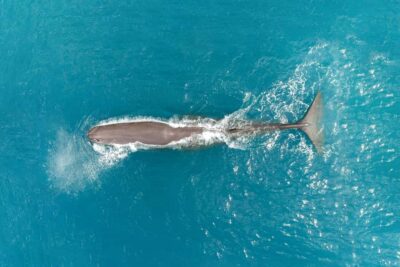
Tikapa Moana Whales, Dolphins and Islands Cruise
Read our review →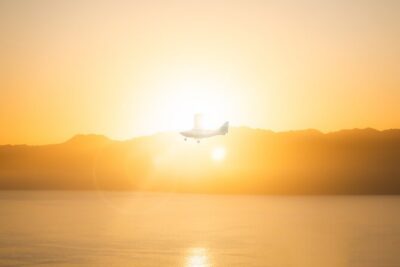
Kaikōura Whale Watching Scenic Flight (40 Minutes)
Read our review →Browse the lists this tour appears in