
Review · MONTEREY WHALE WATCHING TOURS
4 Hour Whale Watching Tour From Monterey
Monterey Bay can deliver the kind of wildlife morning you remember for years: humpbacks feeding near the boat, dolphins racing alongside, orcas appearing without warning, and sea lions packed around a bait ball. The best part is the live naturalist commentary, which puts the animals and Monterey’s ocean environment into context as you watch.
I like the small maximum group of 30 and the crew’s practical help with spotting and photography. I also like that the guides collect sighting data for scientific research, so the trip has a purpose beyond entertainment. The main drawback is rough water. Some departures are smooth, while others leave even seasoned riders feeling queasy.
Key points
- Whale encounters can be remarkably varied: Humpbacks are common, but gray whales, blue whales, orcas, dolphins, sea lions, sea otters, sharks, sunfish, and seabirds have all appeared on recent trips.
- The 9 a.m. departure returns around 12:30 to 1 p.m.: Plan on about three and a half hours on the water, with check-in 30 to 45 minutes before the boat leaves.
- Marine biologists and naturalists do more than point at whales: You’ll hear about Monterey Bay’s geography, conservation, animal behavior, and the best way to spot a blow or fin.
- The ocean can be choppy beyond the bay: Take motion sickness precautions before arriving if you are prone to seasickness, and avoid the forward part of the boat if that is where you usually feel worst.
- The $85 price is fair for a focused wildlife outing: It includes the boat trip, naturalist, deckhand, and coffee or tea, but not food, soda, water, or hotel transportation.
- Come dressed for a cold morning: Warm layers, sun protection, water, snacks, binoculars, and a camera will make the trip more comfortable.
Leaving Monterey Fisherman’s Wharf at 9 a.m.
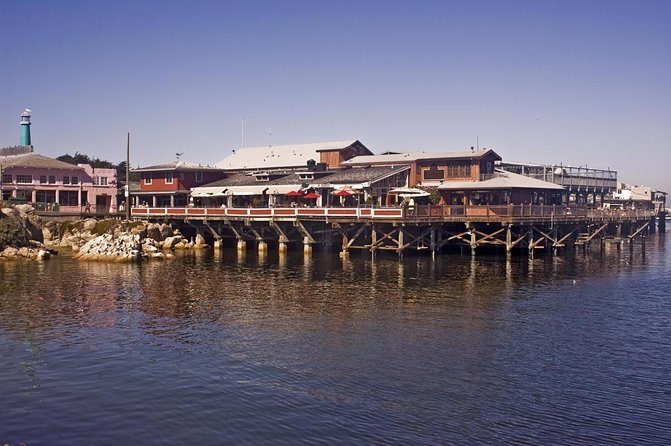
Your morning begins at 66 Fishermans Wharf in Monterey, where the boat departs at 9 a.m. The listed time is the departure time, not the time to arrive. I would plan to check in 30 to 45 minutes early so you are not rushing through the waterfront with a coffee in one hand and your phone in the other.
The wharf is an easy starting point for a Monterey day. It is near public transportation, and the tour returns to the same place, which keeps the morning simple. There is no hotel pickup, so you need to arrange your own way to Fisherman’s Wharf.
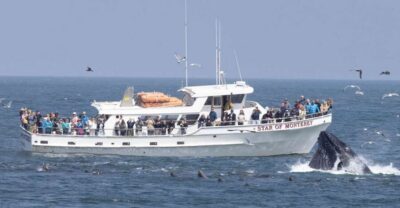
The boat carries no more than 30 people. That matters on a whale trip. A smaller group gives you a better chance of hearing the naturalist and moving around to find a good viewing angle. It does not mean you will have an empty deck, but it feels more personal than a large sightseeing boat.
Coffee and tea are included. Chips, candy, soda, water, and other food are available to purchase, though you can also bring your own snacks and water. Alcoholic drinks are not included and can be bought separately. Children must have an adult with them, and the minimum drinking age is 21.
More whale watching around the USA worth comparing
- Juneau Wildlife Whale Watching
★ 5.0 · 7,379 reviews - Juneau Wildlife Whale Watching & Mendenhall Glacier
★ 5.0 · 6,236 reviews - Boston: City Cruises Whale Watching Cruise
★ 4.5 · 4,710 reviews
Monterey Bay is the real star
The boat heads out from Monterey Bay, one of California’s best-known places to search for marine life throughout the year. The bay’s waters can attract several kinds of whales at different times, so this is not a one-animal outing.
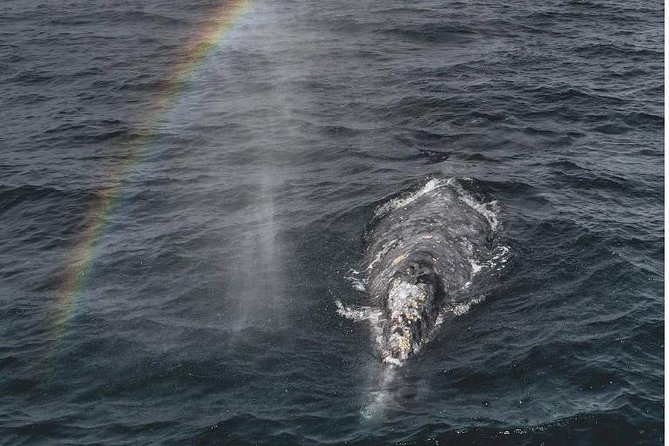
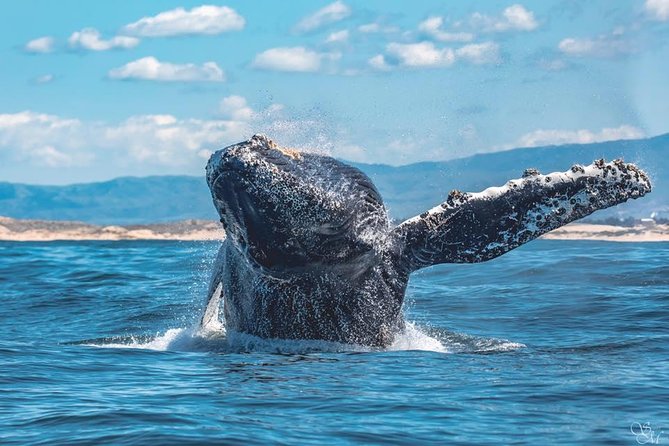
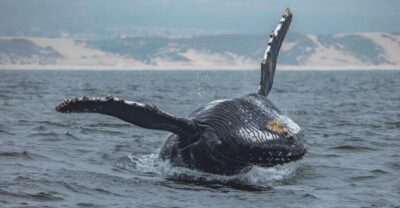
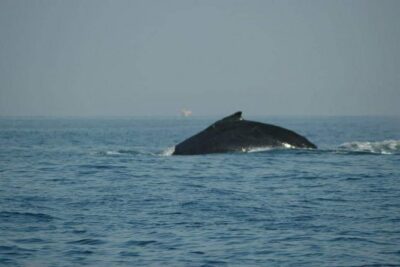
Gray whales are listed as the most common target, while humpback and blue whales are also possible. Humpbacks often create the most dramatic moments because they may surface repeatedly in a feeding area, show a broad back, or lift their tail. Blue whales are much larger but may be harder to spot if they surface briefly or remain at a distance.
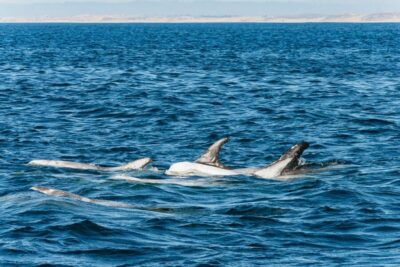
The animal list goes well beyond whales. You may see dolphins, sea lions, seabirds, and other marine life. Past outings have also included sea otters, sharks, sunfish, Pacific white-sided dolphins, seals, and Baird’s beaked whales. Orcas are not the standard expectation, but they have appeared, including pods seen alongside humpbacks.
That variety is part of the appeal. Even if the whales are quiet, the morning can still become a lively wildlife search. One trip may bring a few distant blows. Another may involve dozens of humpbacks feeding among hundreds of sea lions and large numbers of birds.
How the whale search works
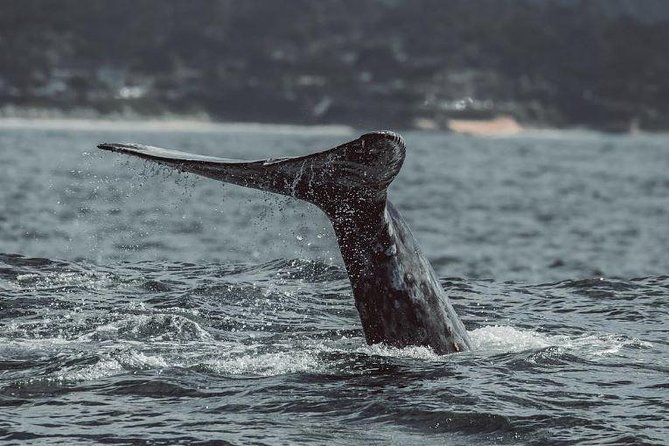
This is not a scripted ride with a guaranteed show at a fixed location. The crew searches the bay and offshore waters, watches for blows and fins, and adjusts the route when wildlife is found. That makes the experience feel more like a real wildlife expedition, with the normal uncertainty that comes with wild animals.
A marine biologist or naturalist narrates the trip. Guides have included Isaiah, Cory, Colby, Maddie, Ivy, Ryan, Sophie, and others. Their work includes explaining how to identify whales and dolphins, describing the local geography, and discussing conservation.
The crew also collects sighting data for scientific research. That small detail gives the outing more weight. You are not simply riding around hoping for a photograph. Your sightings become part of a wider record of marine wildlife in the area.
The guide will point out where to watch and what to look for. A whale’s blow may appear before the body. A group of dolphins can be easy to miss if you stare only at the horizon. The crew can also help you position yourself for photos, and some departures have included free photos.
Humpbacks, feeding zones, and lucky surprises
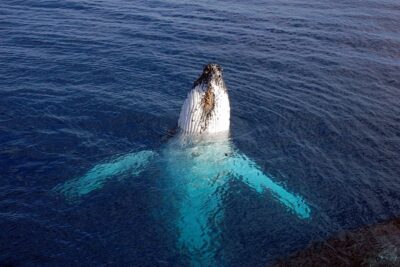
Humpback whales are the most likely source of a big moment. On a strong morning, you might watch them feed for a long stretch rather than see one quick surfacing and head back to shore. Past trips have included mother and calf pairs, playful young whales, and humpbacks remaining near the boat for around 30 minutes.
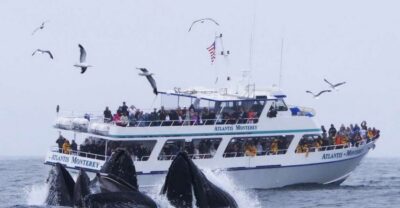
Feeding activity can bring many animals together. One especially productive area included more than a dozen humpbacks, hundreds of sea lions, and many birds feeding on anchovies. That sort of scene explains why the crew may stay in one area for a while instead of constantly moving.
You should keep your expectations flexible. One outing produced many humpbacks, dolphins, a blue whale, otters, and seals. Another produced mostly dolphins and fewer whales. A few people have seen whales from more than 100 meters away, which can feel underwhelming if you expected a close pass.
The crew must keep a safe distance from whales. That is good for the animals and the boat, even when it means your photograph is not perfect. The best approach is to bring a camera for memories, not to measure the trip by how close the whale gets.
Orcas are a rare bonus rather than a promise. Sightings have included orcas with humpbacks, and those unexpected encounters can transform an already good morning. You should book for a chance to observe wild marine life, not for one specific species.
Same sea, a different boat:
- Whale Watching Tour in Gloucester
★ 5.0 · 4,460 reviews - City Cruises Boston Whale Watching Cruise by High-Speed Boat
★ 4.5 · 3,115 reviews - Maui Eco-Raft Tour: Eye-Level Whale or Dolphin Watching – Lahaina
★ 5.0 · 2,482 reviews - San Diego Whale Watching Cruise
★ 5.0 · 2,317 reviews
Why the naturalist makes a difference
The commentary gives the trip its shape. Without it, whale watching can become three hours of scanning empty water and asking other passengers what they saw. With a good guide, you learn where to look, why the animals are present, and what the bay means to the species passing through it.
The naturalists explain local natural history as well as animal behavior. They also talk about conservation, which helps you understand the limits placed on the boat and the importance of keeping wildlife safe.
Guides such as Isaiah and Cory have been singled out for making the morning feel personal and helping people stay comfortable. Colby has been praised for clear explanations, while Maddie, Ivy, Ryan, and Sophie have helped with animal identification, photographs, and general care aboard the boat.
Sound quality may not be perfect. One departure had trouble with the speaker volume, so you may not catch every sentence if you are far from the guide or the boat is noisy. I would move closer when the naturalist begins an explanation, then return to the rail when the next sighting is called.
The boat ride and seasickness question
The biggest practical issue is motion sickness. Monterey Bay can be calm near shore and rougher once the boat reaches open water. Several trips have had choppy conditions, and some people became sick even after taking medication.
If you are prone to seasickness, take precautions before you reach the dock. The operator sells motion sickness remedies at the shop, but it is better not to wait until you already feel ill. Ginger and water may help, though they are not a substitute for your normal medication.
The forward part of the boat can be especially uncomfortable for some people. One useful suggestion is to stay away from the bow if that is where you tend to feel motion most strongly. You may find a more comfortable position toward the middle or rear, depending on the day and the boat’s movement.
Wear warm layers even if Monterey looks sunny from shore. The wind and spray can make the ocean feel cold, and one person who dressed for mild weather wished for something to place over their lap. A dry-fit shirt, warm jacket, leggings or trousers, and an extra layer are sensible choices.
Bring sunscreen, a hat if it can be secured, water, snacks, binoculars, and a camera. A phone stabilizer can help if you want usable video from a moving deck. Keep your equipment protected from spray and hold on when the boat turns.
The return to the wharf around 12:30 p.m.
The boat returns to the original meeting point between 12:30 and 1 p.m. That timing works well with a Monterey afternoon. You can have lunch near the wharf, visit another part of town, or continue toward Carmel without sacrificing the whole day.
The return time can shift with conditions and wildlife activity, so I would avoid booking a tightly timed activity immediately afterward. The tour is described as about three and a half hours, despite the four-hour wording sometimes used for this type of outing. Treat the late morning return as an estimate rather than a hard appointment.
Because the tour ends where it starts, there is no complicated transfer at the end. You simply step back onto Fisherman’s Wharf and continue your day.
Is $85 a fair price?
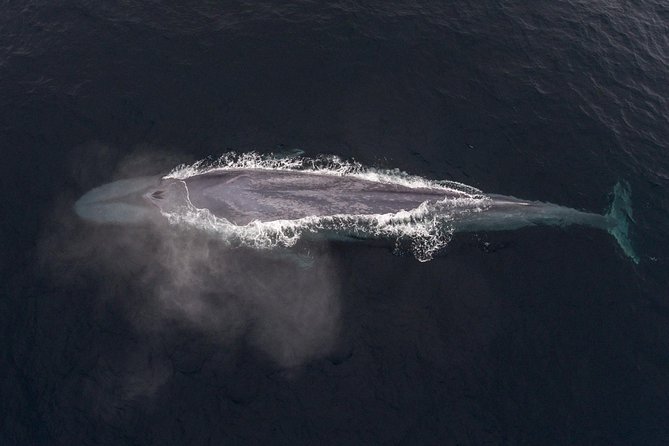
At $85 per person, this is a reasonable price for a small-group, marine wildlife trip lasting roughly three and a half hours. The fee covers the boat, a marine biologist or naturalist, a deckhand, and coffee or tea.
You are paying for time on the water and for a crew that knows how to search, interpret sightings, and collect useful data. The value rises sharply when you see extended humpback activity, dolphins, or a mixed feeding scene. It feels less satisfying if rough seas make you ill or if whales remain distant.
The price does not include hotel pickup, a full meal, bottled water, or other snacks. Those costs are easy to manage, but you should plan for them. I would bring water and a small snack rather than rely on buying everything at the wharf.
The 97 percent recommendation rate and 4.8 rating from 1,045 reviews suggest a strong overall record, but the uneven ocean conditions matter more than any number. A great captain and enthusiastic guide cannot control wind, swell, or whale behavior.
Who will enjoy this morning most?
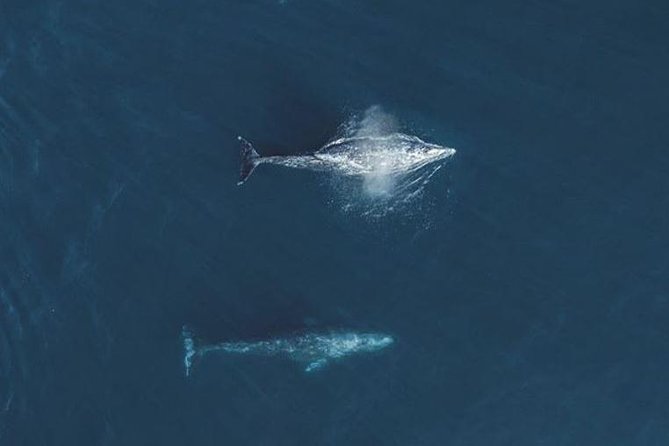
This tour is a strong fit for nature lovers, families with older children, couples, photographers, and anyone who wants a serious wildlife outing rather than a short harbor cruise. Teenagers often have enough patience for the search, especially when dolphins or whales appear.
It also suits visitors who want expert context. You will learn about the bay, animal behavior, and conservation while watching for wildlife. The research component adds a useful purpose to the trip.
I would think twice if you are very sensitive to motion, have limited physical fitness, or need a perfectly predictable schedule. The listed guidance calls for a moderate level of physical fitness, and the boat can move sharply in rough conditions.
Children are welcome with an adult, but you should consider their tolerance for cold, wind, waiting, and boat motion. The smaller vessel can feel less forgiving than a large ferry if the sea turns rough.
Booking at least several weeks ahead is sensible. This experience averages about 34 days of advance booking, which signals that popular dates can fill well before your Monterey visit.
Cancellation and weather details
You can cancel up to 24 hours before the start time for a full refund. Changes or cancellations made less than 24 hours before departure are not accepted and are not refunded.
The trip requires suitable weather and a minimum number of participants. If poor weather or low enrollment causes a cancellation, you will be offered another date or experience, or a full refund. Those terms make early booking less risky, but you should still keep some flexibility in your schedule.
Should you book this whale watch?
I would book it if you want a well-supported chance to see wild whales in Monterey Bay and are willing to accept that nature sets the schedule. The combination of a small group, marine naturalist, research data collection, and a three-and-a-half-hour outing gives you good value for $85.
Book with warm clothes and a seasickness plan, not just a camera. If your morning brings feeding humpbacks, dolphins, sea lions, or an unexpected orca, you may get a memorable wildlife scene. If the whales stay far off, the naturalist and the wider mix of marine life still give the trip a purpose.
The best choice is to reserve this tour when you can keep the rest of your day loose. That way, you can enjoy the search instead of watching the clock.
FAQ
Where does the whale watching tour begin?
The tour begins at 66 Fishermans Wharf in Monterey, California. It ends back at the same meeting point.
What time should I arrive?
The boat leaves at 9 a.m. You should check in 30 to 45 minutes before departure.
How long does the tour last?
The cruise lasts approximately three and a half hours. The planned return is between 12:30 and 1 p.m.
What animals might I see?
Possible sightings include gray, humpback, and blue whales, as well as dolphins, sea lions, birds, seals, sea otters, sharks, sunfish, Pacific white-sided dolphins, Baird’s beaked whales, and occasionally orcas.
Is food included?
Coffee and tea are included. Chips, candy, soda, water, and other food and drinks are not included, though they are available to purchase. Alcoholic drinks cost extra.
What happens if the tour is canceled?
If poor weather or an insufficient number of participants causes cancellation, you can choose another date or experience, or receive a full refund. You can also cancel for a full refund if you do so at least 24 hours before the start time.
New whale trips around the USA
- Anacortes: Orca Whales Guaranteed Boat Tour near Seattle★ 4.7 · 33 reviews
- Anacortes: Whale Watching Adventure Tour Near Seattle★ 4.8 · 45 reviews
- Anacortes: Full Day Whale/Wildlife Tour; Friday Harbor Stop★ 5.0 · 5 reviews
- Juneau: 3.5-Hour Small Group Whale Watching Tour★ 5.0 · 2 reviews
- Whale Watching & Late Breakfast Cruise in Honolulu★ 4.0 · 161 reviews
- Honolulu, Oahu: Waikiki Whale Watching Cruise★ 3.5 · 166 reviews
- Kaanapali: Whale Watching Cruise with Open Bar★ 4.9 · 83 reviews
- Ultimate 3.5 hour Whale Watch & Snorkel★ 5.0 · 87 reviews
Monterey Whale Watching Tours, compared.
Monterey Bay Dolphin and Whale Watching Boat Tour
Read our review →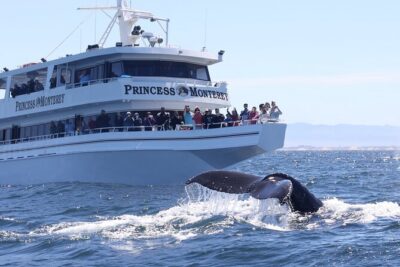
Browse the lists this tour appears in