Review · WHALE WATCHING AND WILDLIFE CRUISES
Sydney: Whale Watching & Wildlife Cruise
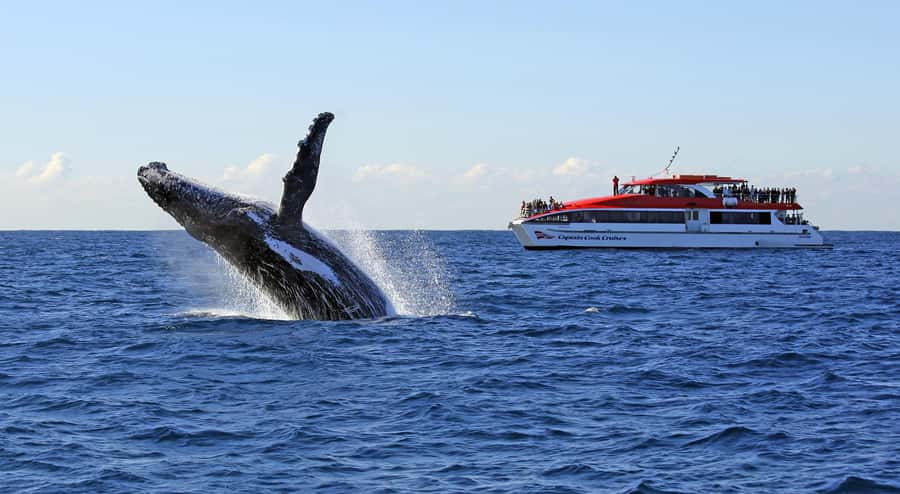
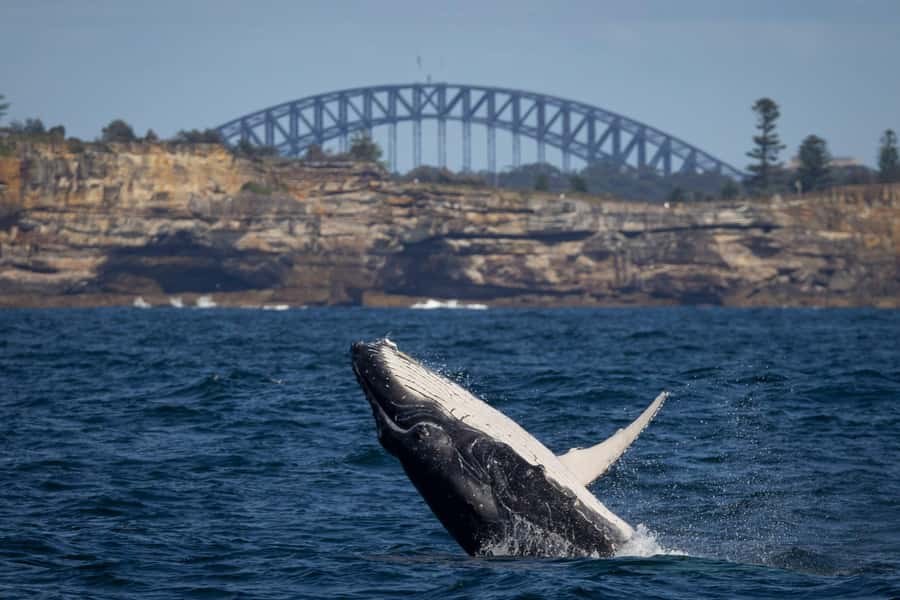
Sydney’s humpback migration turns the Pacific just beyond the harbour entrance into a moving wildlife show. From May through November, as many as 15,000 whales pass the coast, and this 150-minute cruise gives you a real chance to see them breach, surface, and travel in groups.
I like two things right away: the opening views of the Opera House and Harbour Bridge, and the crew’s effort to follow whales without crowding them. The 95% sighting guarantee also adds useful peace of mind, especially when you are fitting the cruise into a short Sydney visit.
The catch is the sea itself. This is an open-water trip, not a calm harbour ride, and strong waves can make some passengers queasy. Bring warm layers, eat lightly, and take motion-sickness medicine before boarding if you need it.
Key points to know before you book
- Whales pass Sydney from May to November: Humpbacks are the main attraction, with possible southern right whales, minke whales, orcas, dolphins, seals, fairy penguins, and albatross.
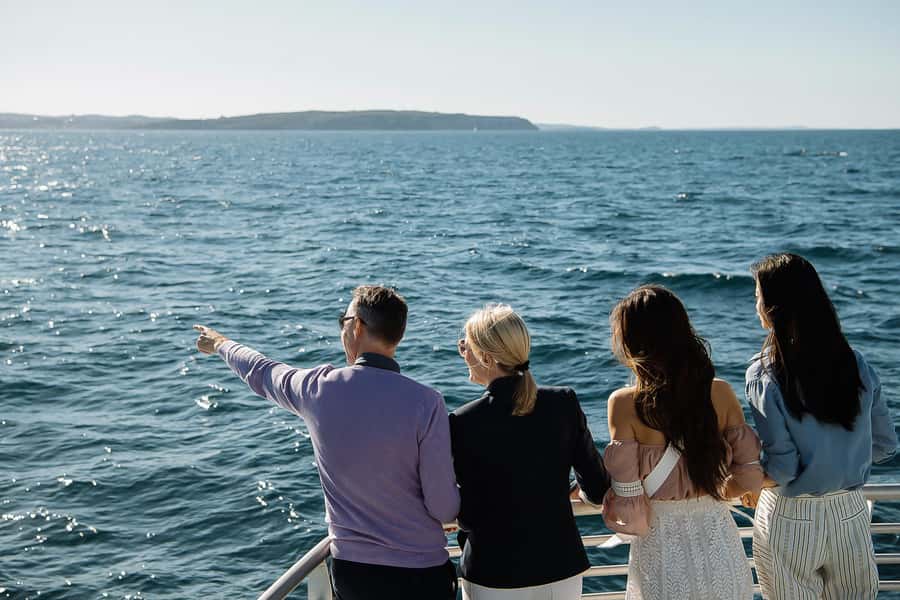
- The best views begin before the whale search: You leave Circular Quay with excellent sightlines to the Opera House, Harbour Bridge, and Sydney coastline.
- Paul and the crew add real value: Paul has been praised for lively whale facts and engaging commentary, while the captain and crew help direct attention when whales surface.
- The boat has indoor and outdoor areas: You can watch from outside for the clearest views or retreat to the all-weather lounge when wind and cold set in.
- Expect genuine ocean movement: The boat can roll hard in rough conditions, so this trip is not ideal for anyone prone to seasickness.
- A second cruise is available if needed: If no whale appears, you can return during the same season on standby, with confirmation 24 hours ahead and subject to space.
Leaving Circular Quay with Sydney at your back
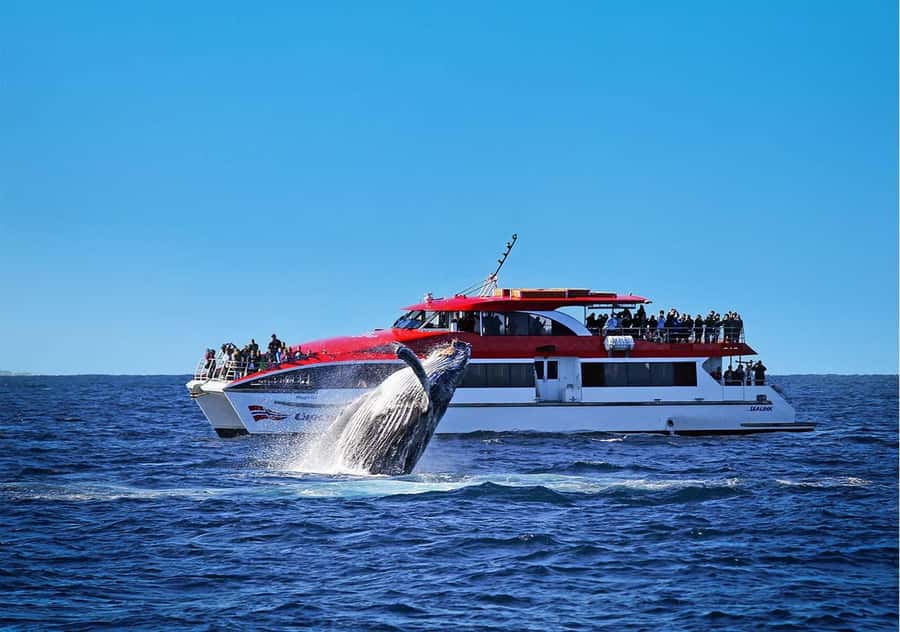
Check in at the Captain Cook Cruises ticket office at Circular Quay Wharf 6 at least 30 minutes before departure. That extra time matters. Circular Quay can be busy, and you do not want to be searching for the wharf while the crew is preparing to leave.
The cruise begins with a fine orientation to Sydney. As the boat moves away from Circular Quay, you get a water-level view of the Opera House and Harbour Bridge. This is not just a quick photo opportunity. The harbour gives you a chance to settle in, learn how the boat is arranged, and listen for the first instructions before the sea becomes more active.
The route then heads toward the entrance of Sydney Harbour and into open water. The change can be noticeable. Inside the harbour, the ride may feel fairly easy. Once the boat reaches the Pacific, wind and swell can increase quickly.
I like this opening because it gives you something worthwhile even before the wildlife search begins. If the whales stay elusive, you still get a clear coastal view from a position most land-based sightseeing trips cannot match.
More Whale Watching Cruises in Australia
- Sydney: Whale Watching Adventure Cruise
★ 4.2 · 1,790 reviews - Brisbane Whale Watching Cruise from Redcliffe or Sunshine Coast
★ 5.0 · 997 reviews - Freedom 3/4 Day Hervey Bay Premium Whale Watching Cruise
★ 5.0 · 919 reviews
The whale search from May through November
Humpbacks are the main reason to book this cruise. They pass Sydney during their winter migration, generally between May and November, and the water near the harbour entrance is a prime place to look for them.
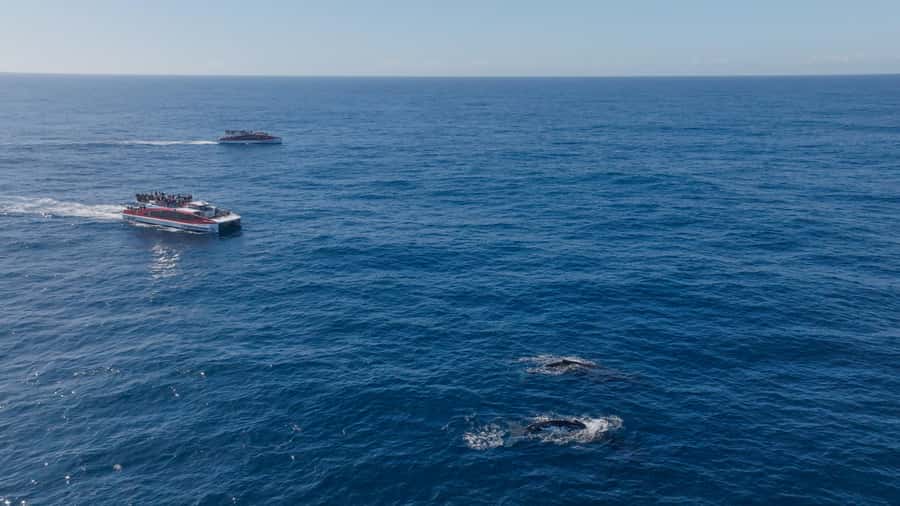
Whale watching requires patience. You may see a whale almost as soon as the trip begins, or you may spend much of the outing scanning the horizon before a distant blow appears. The crew works to find active pods and can follow whales for a period, but these are wild animals moving on their own schedule.
That uncertainty is part of the value and part of the risk. A whale may surface close to the boat, show its back several times, or disappear just as you raise your camera. A full breach is possible, but it is never something the crew can promise on a particular trip.
The most exciting sightings described from this cruise include repeated appearances by several whales, close passes, and breaches. You might also see a whale lifting its head or turning toward the boat. A so-called close-up wink is rare, but the possibility of seeing an animal behaving naturally is what makes this different from a staged attraction.
The crew does not simply point the boat toward the nearest animal and rush in. The stated approach is to follow pods without getting too close. That matters to me. You get better viewing when the whale remains calm, and responsible distance keeps the focus on wildlife rather than spectacle.
Commentary that helps you spot more than a blow
The live commentary is in English and forms an important part of the trip. Paul has received particular praise for mixing whale facts with humor and keeping the information easy to follow. The captain also plays a key role, since spotting a whale often depends on a trained eye catching a blow or movement before most people see it.
Good commentary makes a difference on the open sea. Instead of staring at a blank horizon, you learn where to look and what signs to watch for. The guide can direct attention to the correct side of the boat, explain what the whale is doing, and help you understand why the vessel slows or changes direction.
The crew has also been careful to help both sides of the boat get a chance at the action. When a whale appears on one side, people may gather quickly, so watch for crew guidance and be ready to shift position.
There is one practical weakness. One passenger found the speaker system difficult to hear from the lower outside level when the boat was moving. If commentary matters to you, stay near the guide or in a place where the speakers are clear. When the boat is underway, wind and engine noise can compete with even a strong presenter.
The talk is focused mainly on whales, though you can also learn about other animals in the area. Keep your eyes open for albatross, other seabirds, dolphins, seals, fairy penguins, southern right whales, minke whales, and, less commonly, orcas.
Indoor comfort and outdoor whale watching
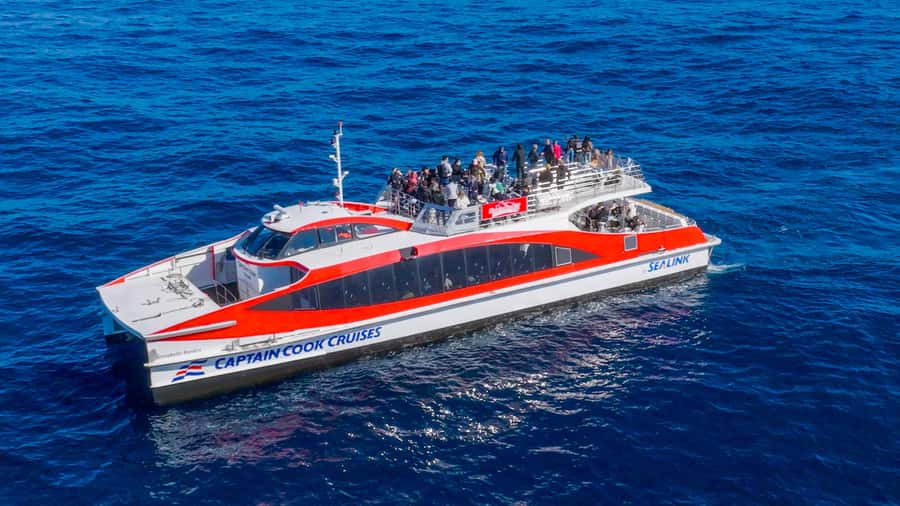
The boat provides an all-weather lounge along with outdoor viewing areas. That combination is useful because conditions can change during the 150 minutes.
Outside is usually the best place for a clear sightline and fresh air. It also helps if you feel queasy, since looking toward the horizon and breathing steadily can ease nausea. The tradeoff is exposure. At sea, it often feels colder than it does on the Circular Quay promenade, even on a mild Sydney day.
Inside, you get shelter from wind and cold. You may find the view less direct, and windows can make photography more difficult, but the lounge gives you a place to warm up between sightings. I would wear several layers rather than relying on one heavy jacket. A scarf and a hat are sensible additions during the cooler months.
The boat has toilets, which is a small but meaningful comfort on a trip lasting two and a half hours. Snacks and drinks are available to purchase on board, but they are not included. Since a heavy meal can worsen motion sickness, keep breakfast or lunch light before departure.
Smoking is not permitted on board.
More Whale Watching and Wildlife Cruises in Australia:
- Brisbane to North Stradbroke Island Day: Wildlife & Beaches
★ 4.9 · 391 reviews - Stradbroke Island Eco Day Trip from Brisbane – Wildlife & Beaches
★ 5.0 · 86 reviews - Juneau Wildlife Whale Watching
★ 5.0 · 7,379 reviews - Juneau Wildlife Whale Watching & Mendenhall Glacier
★ 5.0 · 6,236 reviews
What rough water can mean for your day
The most important warning is easy to underestimate: this is an open-water cruise. Strong waves can make the ride very rocky, especially once the boat leaves the protected harbour.
If you know you are prone to seasickness, plan ahead. Motion-sickness tablets generally work best when taken before the cruise, not after nausea has already started. Eat lightly, stay outside if fresh air helps, focus on the horizon, and keep your movement slow.
The crew supplies bags and gives instructions in case someone becomes ill. That is practical and reassuring, but it does not make rough water comfortable. If you have a serious concern about boat motion, check the weather forecast and ask whether the sailing is operating before heading to Circular Quay.
The cruise runs subject to weather and other operational requirements. A cancellation for conditions is possible, and the open-water setting means the boat cannot offer the smooth ride of a purely harbour sightseeing trip.
Children aged three and younger are not recommended for this activity. Older children who enjoy wildlife may find the trip exciting, but parents should think carefully about cold, waiting between sightings, and sea motion.
The 95% sighting promise and what it really means
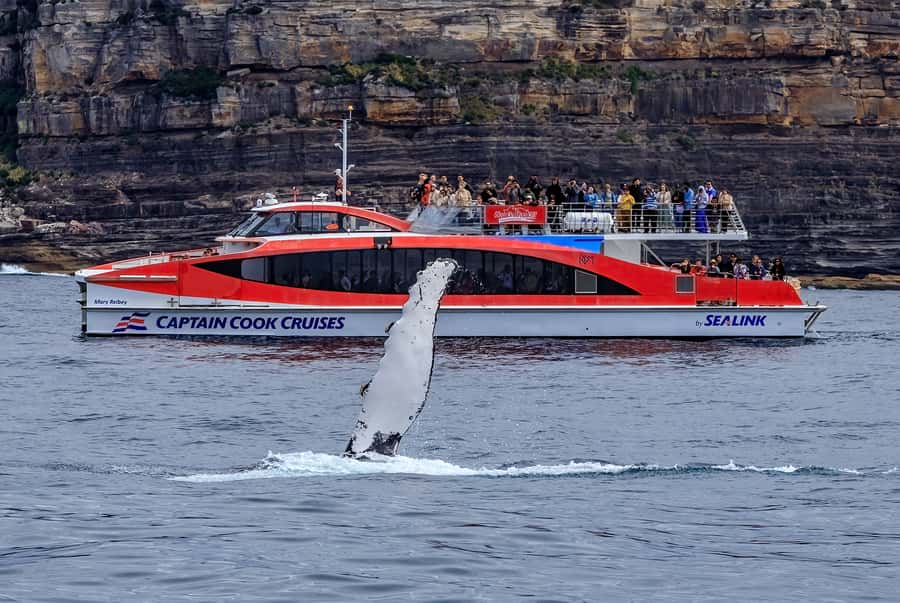
The whale sighting policy is a useful safeguard, but read it accurately. Whale sightings are advertised as 95% guaranteed, while the practical conditions also explain that wild animals cannot be guaranteed on every individual departure.
If you do not see a whale, you can take a second cruise in the same season for free. The return trip is on a standby basis, must be confirmed 24 hours in advance, and depends on available space.
This helps most if you have flexibility in Sydney. It is less useful if your schedule allows only one fixed afternoon. I would not book the cruise on the assumption that a second sailing will fit neatly into your plans.
The policy also highlights the nature of whale watching. The crew can search good habitat, follow sightings, and use experience to improve your chances. It cannot control the animals. A trip with one distant whale is still a wildlife outing, not a failed theme-park show.
Is $67 good value for 150 minutes?
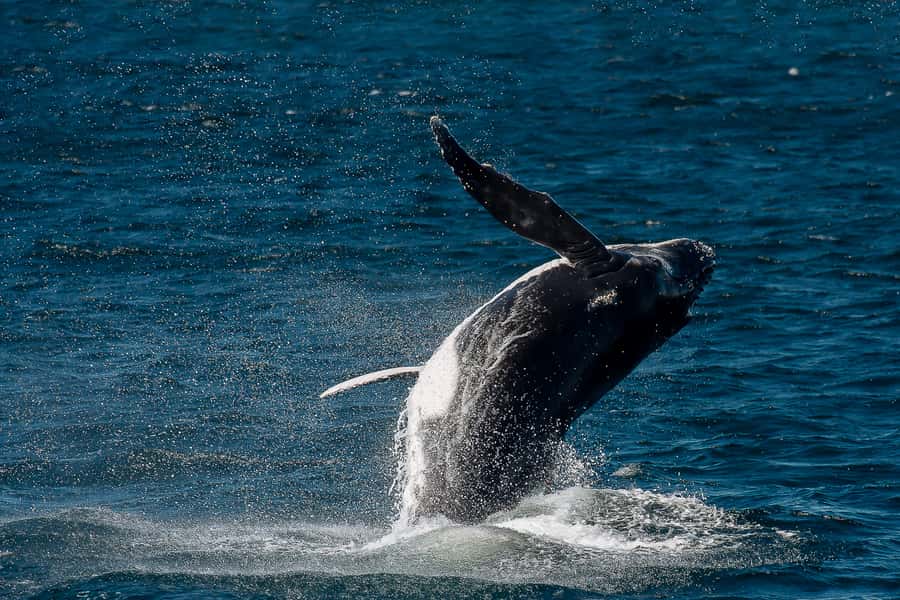
At $67 per person, the cruise is fairly priced for a two-and-a-half-hour wildlife outing from central Sydney, particularly when you count the live commentary, harbour views, indoor lounge, outdoor deck, and sighting policy.
The price becomes stronger when you see several whales or stay with a pod for a while. Some outings have produced repeated sightings, dolphins, seals, or breaching whales. On quieter days, the value depends more on your interest in the ocean, the quality of the guide, and your enjoyment of the coastal views.
You are not paying only for a boat ride. You are paying for a crew that searches, identifies movement, directs your attention, and handles the practical work of following wildlife. That said, the result is never fully predictable.
For a short Sydney visit, I think the price makes sense if whale watching is high on your list. If you want a guaranteed sequence of close animal encounters, this is not the right kind of attraction. Nature sets the timetable.
Who will enjoy this cruise most
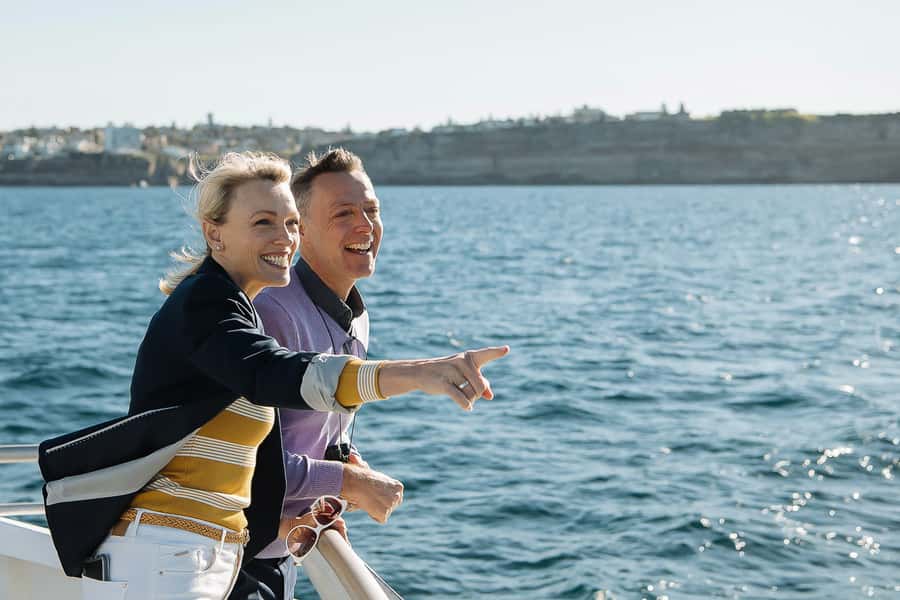
I would choose this outing if you like wildlife, boats, and the possibility of a memorable sighting rather than a fixed performance. It suits visitors who want to combine Sydney landmarks with a genuine ocean excursion.
It is also a good fit for photographers, though you should be ready for fast action and changing light. A whale can surface on the opposite side of the boat, and a breach may last only seconds. Keep watching instead of looking through your camera the entire time.
Families with older children may enjoy the excitement, especially if they prepare for cold and movement. Young children and anyone uncomfortable at sea may find the trip tiring.
The cruise works best when you leave space in your schedule. Arriving early is required, and a second sailing may be possible if the first produces no whale, but neither the search nor the return option can be treated like a tightly timed transfer.
Practical tips for getting the most from the trip
- Arrive at Circular Quay Wharf 6 at least 30 minutes before departure.
- Eat lightly before boarding.
- Take motion-sickness medicine before the cruise if you normally need it.
- Wear warm layers, including a jacket and something for your neck.
- Keep your eyes on both the water and the guide, since a sighting can happen quickly.
- Stay near a speaker if you want to hear every part of the commentary.
- Use the outdoor area when you need a clear view or fresh air.
- Carry a flexible schedule if you may need the standby return cruise.
- Check availability and departure times when booking.
- Remember that snacks and drinks cost extra.
Should you book the Sydney whale cruise?
Yes, if you want a strong chance of seeing humpbacks and like the idea of meeting Sydney’s coastline from the water. The best features are the experienced whale spotting, the lively commentary from guides such as Paul, the excellent harbour departure, and the option of a second cruise if the animals do not appear.
Book with realistic expectations. The ocean can be rough, the boat can feel cold, and no wild whale sighting is fully certain. If you prepare for those limits, $67 buys a worthwhile half-day outing with the chance of something far better than a standard harbour view: a whale breaching in the Pacific just beyond Sydney.
FAQ
Where does the whale watching cruise depart?
The cruise departs from Circular Quay Wharf 6 in Sydney. Check in at the ticket office and arrive at least 30 minutes before departure.
How long does the cruise last?
The cruise lasts 150 minutes, or two and a half hours.
When is whale watching season near Sydney?
Humpback whales pass the waters near Sydney mainly from May through November during their winter migration.
Are whale sightings guaranteed?
The cruise offers a 95% whale sighting guarantee. If you do not see any whales, you can take another cruise during the same season for free on standby, with confirmation 24 hours ahead and subject to availability. Since whales are wild animals, sightings cannot be guaranteed on every individual trip.
What animals might I see besides humpback whales?
Possible sightings include southern right whales, orcas, minke whales, dolphins, seals, fairy penguins, albatross, and other seabirds.
Can I stay inside if the weather is cold?
Yes. The boat has an all-weather indoor lounge as well as outdoor viewing areas. It can still feel colder at sea, so dress warmly.
Is the cruise suitable for people prone to seasickness?
The cruise takes place in open water and can be rocky. Eat lightly, consider taking motion-sickness medicine before departure, and dress for the weather. The activity is not recommended for children aged three and younger.
New whale trips around Australia
- Broome Sunset & Whale Watching Cruise★ 5.0 · 2 reviews
- Bremer Canyon Orca Experience from Bremer Bay★ 4.6 · 35 reviews
- Bremer Bay: Bremer Canyon Killer Whale Expedition★ 4.9 · 114 reviews
- Augusta: Whale Watching Tour★ 4.5 · 9 reviews
- Albany’s Whale Story★ 5.0 · 4 reviews
- Philip Island: Dolphin and Whale Cruise★ 4.4 · 48 reviews
- Moreton Island: Tangalooma Whale Watching & Dolphin Feeding★ 4.7 · 57 reviews
- Port Stephens 3 Hour Whale and Dolphin Watch Cruise★ 5.0 · 53 reviews
Whale Watching and Wildlife Cruises, compared.

Juneau Wildlife Whale Watching & Mendenhall Glacier
Read our review →
Original Big Whale Safari & Puffins by Speedboat
Read our review →
Wildlife Viewing, Sightseeing and Whale Watching Quest
Read our review →