
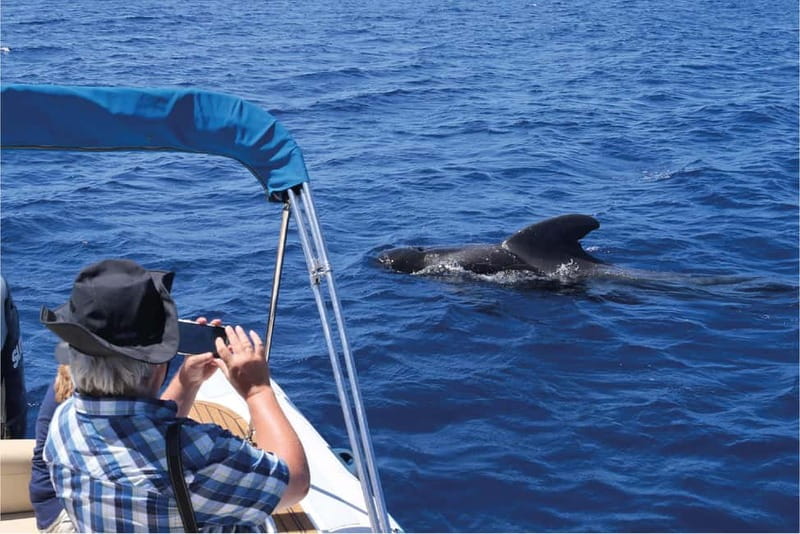
Review · TENERIFE WHALE WATCHING TOURS
Costa Adeje: Whale Watching Eco Experience with Hydrophone.
The most special part of this Costa Adeje trip is the hydrophone, which lets you hear whales and dolphins communicate or hunt below the surface. The boat’s engines are switched off during sightings, giving you a quieter, more respectful way to watch wildlife.
I like the small group of 10 and the biologist-led explanations. I also like the clear conservation work, including rescue efforts for injured animals and participation in a pilot-whale photo-identification project. The main consideration is simple: wild animals set the schedule, so no sighting can be promised, and the sea may feel rough to some passengers.
Key points at a glance
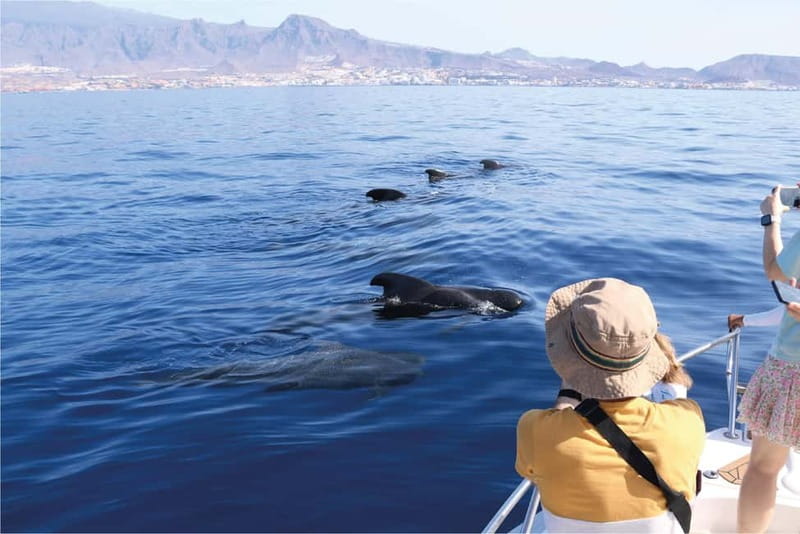
- Listen beneath the boat: A hydrophone picks up cetacean sounds during quiet observation.
- Ride Papacho 2: The boat carries no more than 10 passengers, allowing close attention from the two-person crew.
- Watch without chasing: The crew keeps a safe distance and avoids interfering with natural behavior.
- Meet Tenerife’s regular sea life: The trip may include pilot whales, dolphins, turtles, and seabirds.
- Learn from a biologist: You receive an explanation of the animals you may see and the reasons behind their protection.
- Support active conservation: Atlantic Eco Experience helps with marine-animal rescues and scientific photo-identification work.
Costa Adeje’s whale sanctuary by small boat
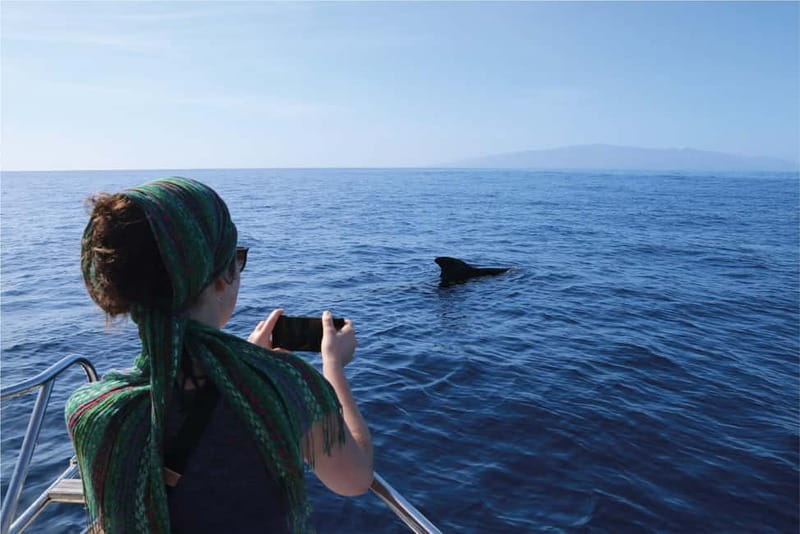
This 2.5-hour experience runs along the south coast of Tenerife, in an area described as Europe’s only whale sanctuary. That setting matters because you are not heading out simply to look for a lucky passing animal. You are visiting a protected marine area where cetaceans form part of the local natural scene.
The tour begins at the meeting point, where you gather before boarding Papacho 2 at the agreed time. With space for a maximum of 10 passengers, the boat offers a more personal setting than a large sightseeing vessel. You should have a better chance of hearing the guide clearly, asking questions, and seeing what the crew is pointing out.
The group size also affects the mood. A small boat can feel more focused, with less time spent organizing people once wildlife appears. It does not guarantee better sightings, but it does make the experience more attentive and less crowded.
The crew includes two trained team members, with a biologist on board to explain the animals and the conservation issues connected with them. The available information does not provide the guide’s name, but it does make clear that the scientific side of the trip is part of the experience, not an afterthought.
More whale watching around Tenerife worth comparing
- Tenerife: Eco-Yacht Whale and Dolphin Watching and Swimming
★ 4.7 · 15,619 reviews - Los Cristianos Respectful No-Chase Whale and Dolphin Safari
★ 4.6 · 12,782 reviews - Costa Adeje: Whale & Dolphin Eco-Cruise with Snacks & Drinks
★ 4.6 · 5,096 reviews
Why the hydrophone changes the experience
Most whale-watching trips are built around what you can see. Here, the hydrophone adds a second way to notice wildlife. Once the boat is near cetaceans, the crew can lower the listening device into the water so you can hear sounds used for communication or hunting.
That can make a sighting more involving, even when an animal is below the surface or only briefly visible. You are not relying only on a fin, back, or splash. You can also pay attention to the sounds coming through the equipment and connect them with the behavior being explained by the biologist.
The engines are completely turned off during the sighting. This is important for two reasons. First, it reduces disturbance to the animals. Second, it creates a calmer listening environment, allowing the hydrophone to do its job without the boat’s motor dominating the sound.
There is a practical trade-off. With the engines off, the boat is not moving quickly from one group to another. That is part of the responsible approach, but it means the outing is less about constant action and more about waiting, watching, and interpreting what happens around you.
Watching pilot whales, dolphins, turtles, and seabirds
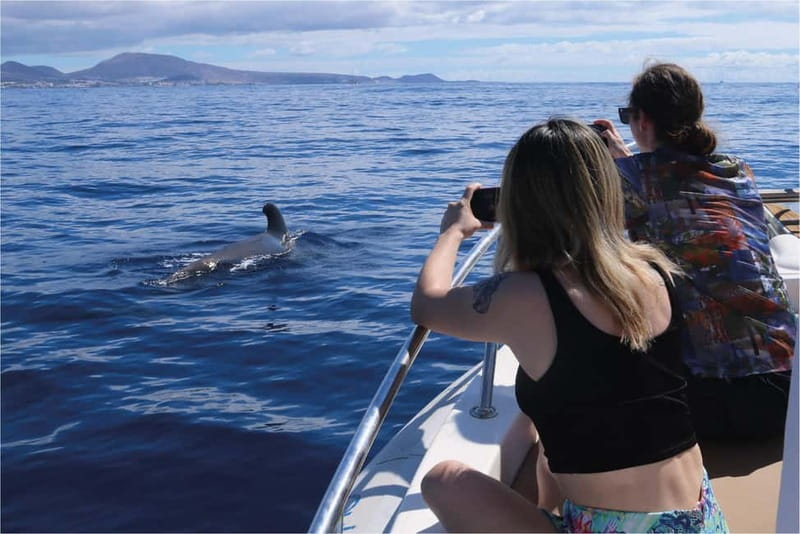
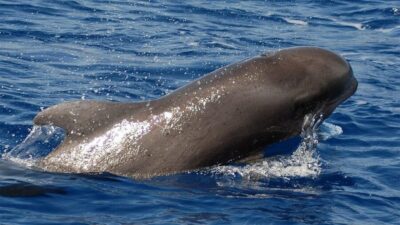
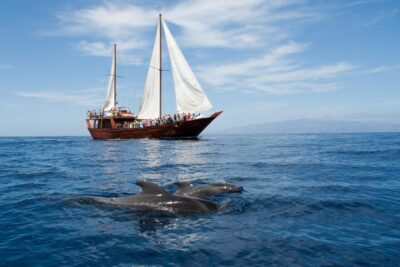
Pilot whales are a key part of the experience. The available information specifically highlights sightings of several pilot whales close to the boat, and the operator contributes to a photo-identification catalog of pilot whales in the Canary Islands. That means individual animals can be recognized through photographs of their fins and markings, helping researchers learn more about the population.
You may also approach groups of dolphins, turtles, and seabirds. Each brings a different kind of observation. Dolphins can be fast and active, while turtles may be much quieter and harder to spot. Seabirds give you another clue about what is happening on the water, especially when the crew is interpreting animal behavior rather than simply pointing out species.
The word may matters here. These are wild animals in their natural habitat, not trained performers following a feeding routine. The crew can search within the sanctuary and make careful approaches, but the final sightings depend on the animals’ movements and the conditions at sea.
That uncertainty is worth accepting before you book. If you need a guaranteed close-up encounter, this is not the right kind of activity. If you like the idea of watching animals without feeding, touching, or directing them, the format makes much more sense.
A responsible approach to marine life
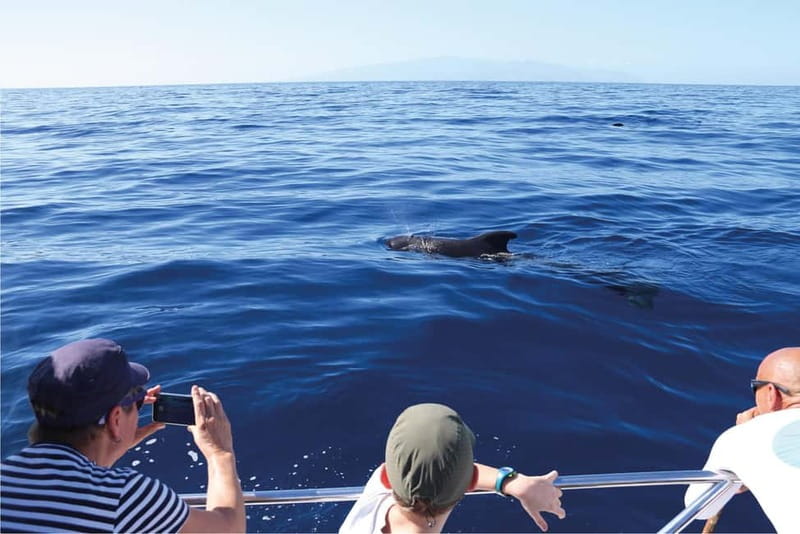
The strongest part of Atlantic Eco Experience is the way its environmental message is tied to the actual procedure. The crew keeps a safe distance, avoids changing the animals’ behavior, and switches off the engines during sightings. These are not just statements about sustainability. They shape what the boat does on the water.
The operator is also a member of ACEST, the Association of Companies for the Sustainability of Tourism. It takes part in rescue and rehabilitation work for injured marine animals, with the aim of helping them recover and return to the ecosystem.
You should keep the scale of that promise in perspective. A 2.5-hour excursion will not turn you into a marine biologist, and the crew cannot control every environmental issue affecting the sea. Still, the rescue work and scientific collaboration give the trip a purpose beyond taking photographs.
The photo-identification project is particularly useful for visitors who want to understand how a short boat ride can contribute to longer-term research. Your visit is not presented as a research expedition, but the sightings can support a wider record of pilot whales in the Canary Islands.
Same sea, a different boat:
- Los Gigantes: Dolphin & Whale Watching Cruise with Swim Stop
★ 4.7 · 4,539 reviews - Costa Adeje: Whale Watching Catamaran Tour with Drinks
★ 4.7 · 3,653 reviews - Tenerife: Whale & Dolphin Watching Cruise with Swim Stop
★ 4.7 · 3,227 reviews - Los Cristianos: Viking Cruise Whales & Dolphins Watching
★ 4.6 · 3,132 reviews
What the 2.5-hour schedule feels like
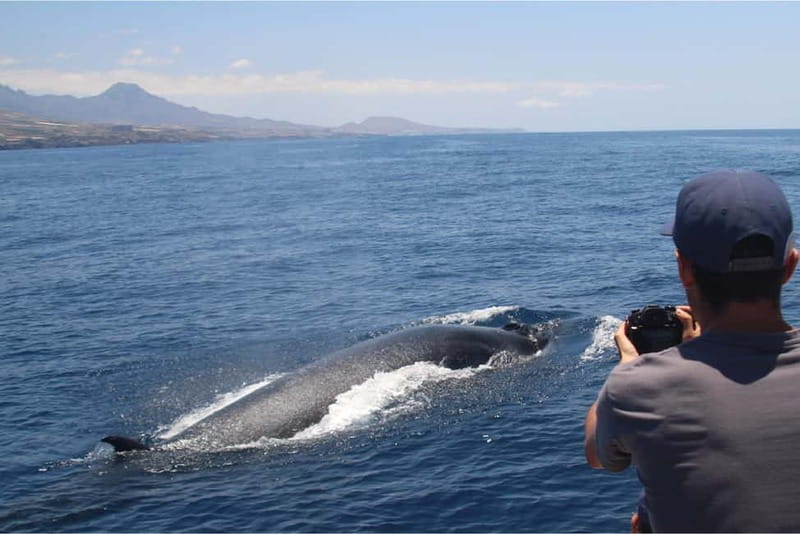
The outing is long enough to allow time for searching, stopping, listening, and explaining, but short enough to fit comfortably into a day in Costa Adeje. Starting times vary, so you need to check availability when choosing your date.
After meeting the crew, you board Papacho 2 and receive an introduction to the marine life you may encounter. The biologist also explains conservation, giving you useful context before the first sighting rather than leaving every question until the end.
The boat then moves through the sanctuary in search of cetaceans and other wildlife. When the crew finds a group, the approach is made with care. The engines are turned off, the hydrophone is placed in the water, and everyone has a chance to watch and listen.
The exact number of stops is not fixed. The trip is guided by where animals are found, so the sequence may change from one outing to the next. That makes the experience less predictable, but it also keeps it tied to real conditions rather than a fixed show.
Drinks are provided on board. Bring your own sunglasses, sun hat, and sunscreen, since the supplied information specifically recommends all three. These are basic items, but open water gives you little shade, and the sun can feel strong even when the air is comfortable.
Small-group comfort and family appeal
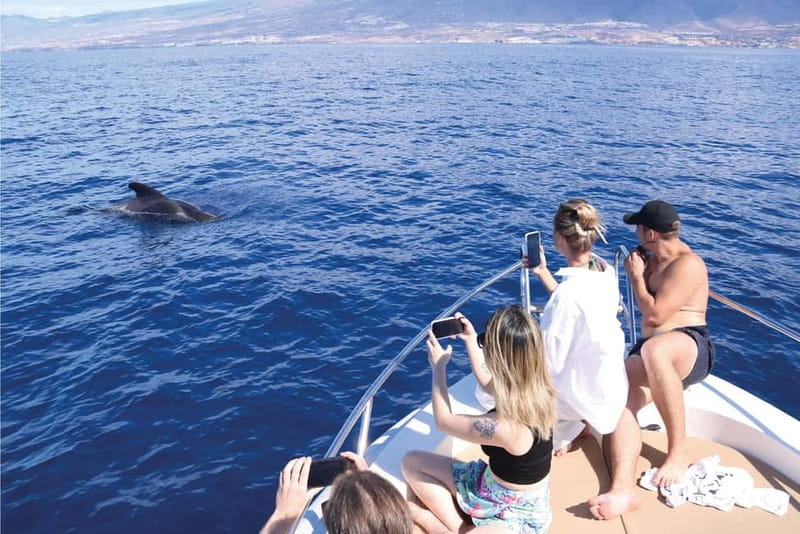
A maximum of 10 passengers is a real advantage for this kind of activity. Wildlife watching depends on sight lines, quiet, and quick communication. A smaller group gives you more room to follow the animals and makes it easier to hear the biologist’s explanation.
The experience can also suit families with small children. The shorter 2.5-hour duration is more manageable than a full-day boat outing, and the mix of whales, dolphins, turtles, and seabirds gives children several things to watch for.
Still, you should think about how your child handles boats and waiting. The trip includes quiet periods while the crew searches or listens, and animal sightings are not guaranteed. Children who like nature and asking questions may get more from it than children expecting nonstop speed and action.
The live tour is offered in English and Spanish. If language matters to your group, choose the option that lets you follow the biologist’s explanations comfortably. Much of the pleasure comes from understanding what you are seeing, not just spotting a shape in the water.
How the value compares with a standard boat ride
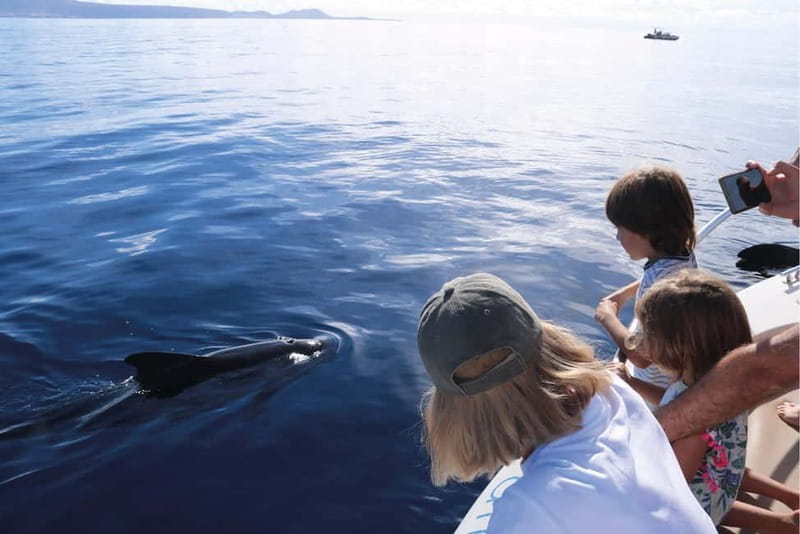
No price is provided here, so I cannot judge the exact cost against other Costa Adeje excursions. I can judge what you receive for the fare: 2.5 hours on the water, a boat limited to 10 passengers, a biologist’s interpretation, drinks, and the hydrophone experience.
The value is strongest if you care about how wildlife is watched, not just whether you get a photograph. Switching off the engines, keeping a safe distance, and avoiding interference may mean a quieter and slower outing, but those choices support a better relationship with the animals.
The conservation work adds another layer. Rescue and rehabilitation efforts, plus the pilot-whale catalog, make the operator’s approach more meaningful than a simple sightseeing cruise. You are still paying for a recreational activity, but the format supports education and observation rather than close pursuit.
If another excursion is cheaper but carries many more people, you need to decide what matters most. A low price may be fine if you mainly want time on the sea. The smaller capacity and hydrophone are the reasons to choose this outing when the price difference is reasonable.
What you should know before booking
This is a wildlife trip, so conditions are outside the crew’s control. The supplied information does not promise a particular number of animals, a guaranteed species, or a specific route. You should book it because you want a respectful chance to see marine life, not because you require a certain photograph.
The trip also involves being on a boat for 2.5 hours. The available details do not specify accessibility arrangements, transfer service, or sea conditions, so ask the operator directly if you have mobility needs or concerns about boat travel.
Bring sun protection. Sunglasses, a hat, and sunscreen are listed as recommended items, and there is no reason to leave them behind. Drinks are supplied, but no meal is mentioned, so plan your day accordingly rather than expecting food on board.
Cancellation is flexible up to 24 hours before departure for a full refund. You can also reserve and pay later, which helps if your Tenerife schedule is still changing. These policies do not make the wildlife predictable, but they reduce the risk of committing too early.
Who should choose Atlantic Eco Experience
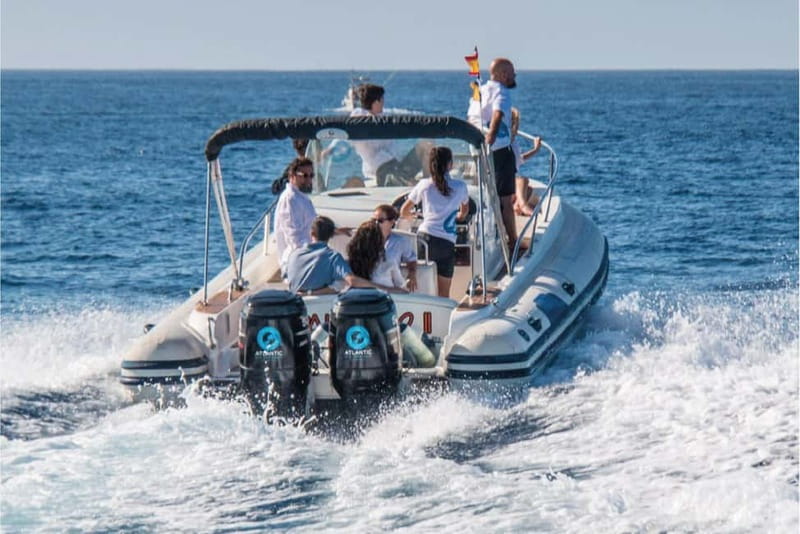
I would choose this trip if you want a quiet, conservation-focused whale watch with a small group and a clear educational side. It suits people who enjoy natural behavior, patient observation, and the chance to hear animals as well as see them.
Families can find it a good fit, especially if children are interested in animals and can manage a boat ride with some waiting. Couples and solo visitors may also appreciate the more personal setting and the chance to ask questions without being lost in a large crowd.
I would be less likely to recommend it to someone who wants a fast, action-heavy cruise, a guaranteed close approach, or a fixed list of animals. The crew’s method is deliberately restrained. That is the point, but it also sets the pace.
Should you book this whale-watching trip?
Book it if the hydrophone, small boat, biologist, and conservation work matter to you. The combination gives you more than a quick look at a fin: you can learn how the animals behave, listen to their underwater sounds, and watch them without the engines running.
Skip it if you need certainty about sightings or prefer a large boat with more facilities. For most nature-minded visitors staying in Costa Adeje, though, Atlantic Eco Experience offers a thoughtful way to spend 2.5 hours at sea, with pilot whales and other marine life as the focus rather than the backdrop.
FAQ
Where does this whale-watching experience take place?
It takes place off the south coast of Tenerife, in Costa Adeje, within the only whale sanctuary in Europe.
How long is the tour?
The experience lasts 2.5 hours. Starting times vary, so check availability for the date you want.
How many people can join the boat trip?
The boat Papacho 2 has a maximum capacity of 10 passengers.
What languages are available?
The live tour guide service is available in English and Spanish.
Is a biologist present on the boat?
Yes. A biologist explains the marine life you may see and discusses conservation.
What is the hydrophone used for?
The hydrophone lets you listen to sounds made by cetaceans, including sounds used for communication or hunting.
Which animals might I see?
The trip may include whales, dolphins, turtles, and seabirds. Pilot whales are specifically part of the local sightings described for the experience.
Are drinks included?
Yes. Drinks are provided on board.
What should I bring?
Bring sunglasses, a sun hat, and sunscreen.
Can I cancel the booking?
You can cancel up to 24 hours in advance for a full refund. A reserve-now-and-pay-later option is also available.
New whale trips around Tenerife
- Costa Adeje: Whale and Dolphin-Watching Boat Excursion★ 4.7 · 157 reviews
- Costa Adeje: Whale & Dolphin Watching Cruise with Swim★ 4.7 · 154 reviews
- Puerto Colon: Dolphin and Whale Watching Speedboat Tour★ 5.0 · 92 reviews
- 3h Whale Watching Private tour Beneteau Oceanis 440★ 4.5 · 6 reviews
- 3h Whale watching Share Tour Costa Adeje Lina7 Mizendoha★ 3.5 · 11 reviews
- Tenerife: Accessible Whale Watching & Ocean Experience★ 4.8 · 15 reviews
- 3h Whale Watching Private Tour Costa Adeje Lina7 Mizendoha★ 5.0 · 3 reviews
- Tenerife Whale watching on private charter★ 5.0 · 17 reviews
Tenerife Whale Watching Tours, compared.
Eco-Yacht Whale and Dolphin Watching and Swimming
Read our review →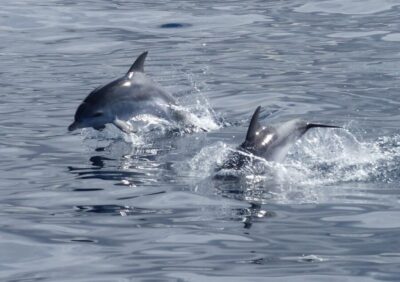
Los Cristianos Respectful No-Chase Whale and Dolphin Safari
Read our review →
Whale & Dolphin Eco-Cruise with Snacks & Drinks
Read our review →
Dolphin & Whale Watching Cruise with Swim Stop
Read our review →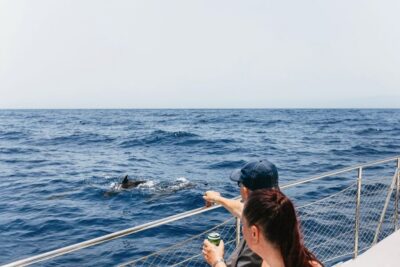
Whale & Dolphin Watching Cruise with Swim Stop
Read our review →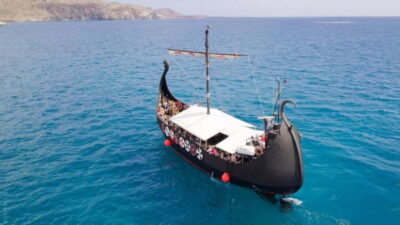
Whale & Dolphin Watching with Drinks and Snacks
Read our review →Browse the lists this tour appears in