
Review · WHALE AND DOLPHIN WATCHING TOURS
Basque Country : Whale and Dolphin Watching Boat Tours
The remarkable part of this outing is the setting: you leave Saint-Jean-de-Luz and head toward the Gouf de Capbreton, an underwater canyon that drops from a few dozen metres near shore to more than 4,000 metres offshore. That sudden change in depth helps support a busy food chain, so this stretch of Basque coast can attract more than 15 cetacean species.
I like the small-group Zodiac boat and the chance to see dolphins behaving freely, rather than performing on cue. I also like the early return, planned for about 12:30 PM, which leaves your afternoon open. The main consideration is comfort: there is no toilet on the boat for roughly four and a half hours, and the open sea can be rough or chilly.
Key points at a glance
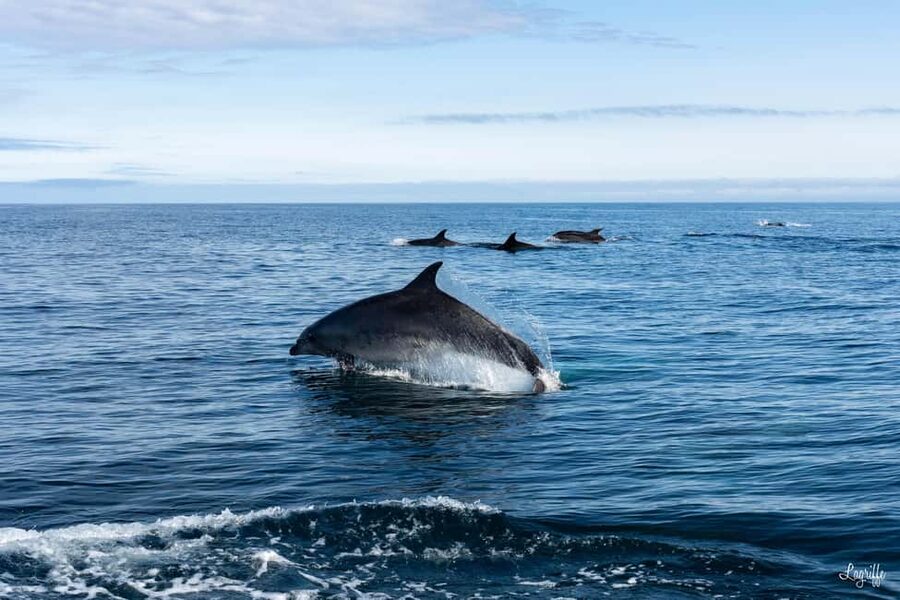
- More than 15 cetacean species: Common sightings include striped, common, and bottlenose dolphins.
- The Gouf de Capbreton: This underwater canyon is the main reason the area supports so much marine life.
- Dolphin pods can be large: You might see small groups or hundreds of dolphins moving together.
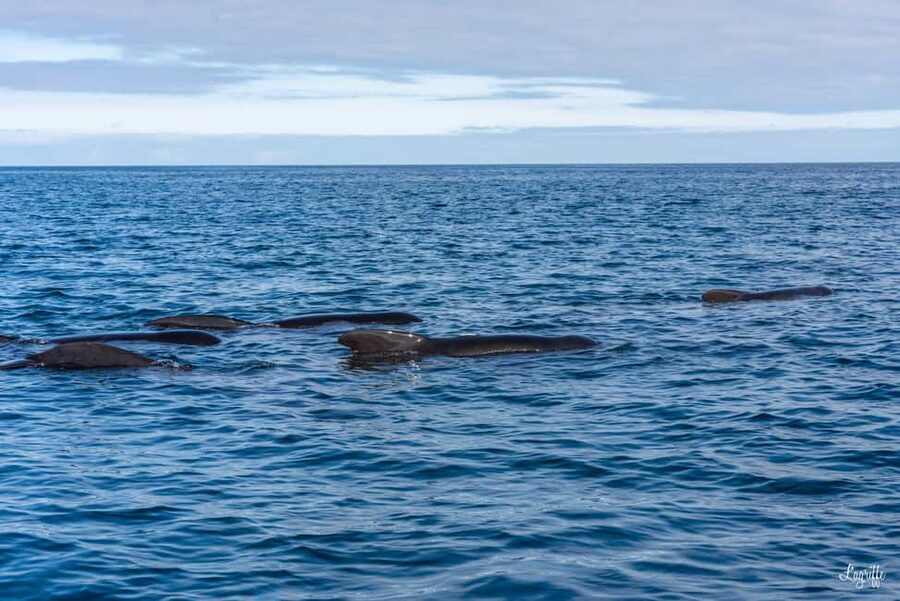
- Spring brings a chance of pilot whales: Rarer sightings include fin whales, sperm whales, Risso’s dolphins, harbor porpoises, and beaked whales.
- A 4.5-hour morning on a Zodiac RIB: The boat spends about 45 minutes reaching the observation area, then returns to port.
- Come prepared for sea conditions: Warm clothing, water, sunglasses, sunscreen, and motion-sickness tablets are sensible choices.
Why the Gouf de Capbreton matters
This is not simply a scenic cruise along the French coast. The boat heads offshore to a remarkable underwater canyon known as the Gouf de Capbreton. Close to Capbreton, it begins only a few dozen metres below the surface, then drops to more than 4,000 metres farther out.
That depth change creates a productive marine zone. Plankton supports fish, fish support larger predators, and marine mammals pass through in search of food. More than 15 cetacean species have been recorded in the wider area, which gives the outing a stronger natural focus than a standard coastal boat ride.
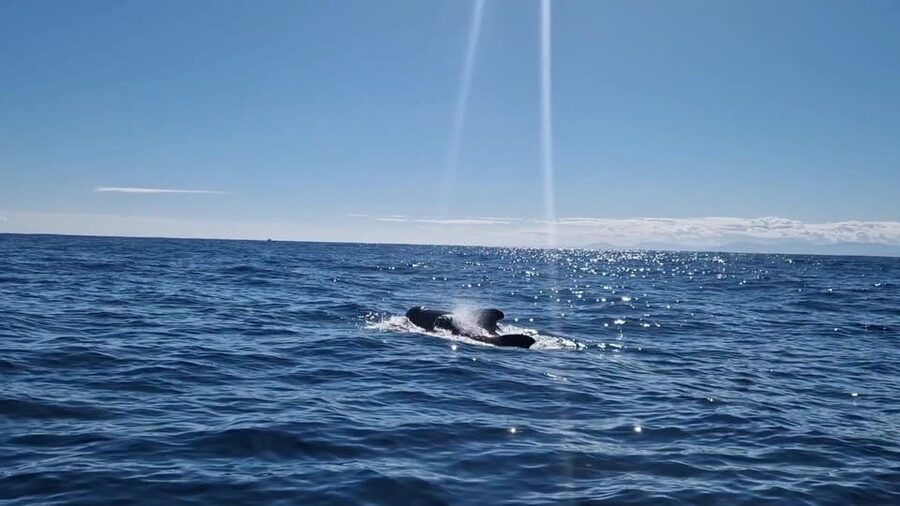
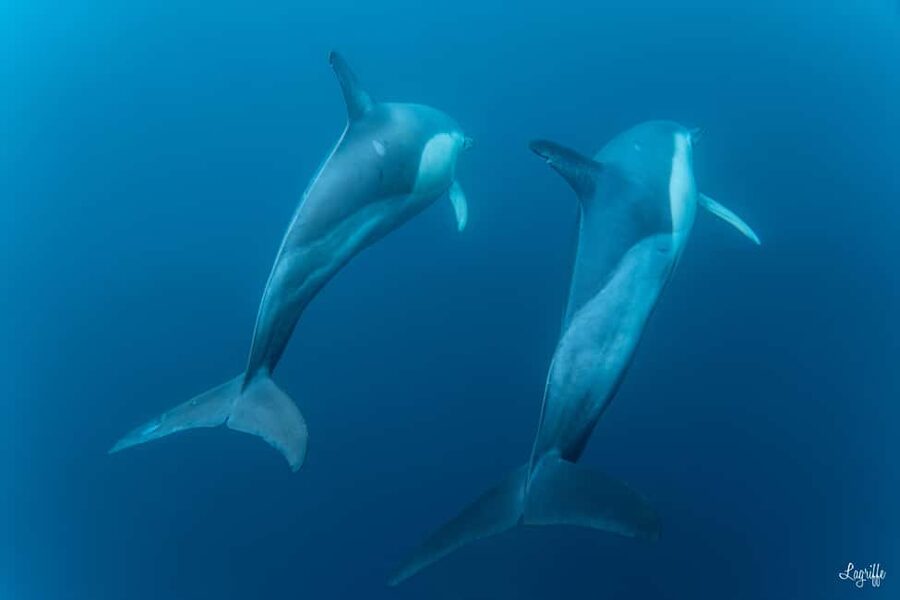
You are not guaranteed a particular animal. That is part of the deal with wildlife watching. The trip may produce a large dolphin display, a distant whale, or simply a better understanding of how much life exists beyond the shoreline. The most common possibilities are striped dolphins, common dolphins, and bottlenose dolphins.
In spring, pilot whales are seen more often. The less frequent possibilities include Risso’s dolphins, harbor porpoises, fin whales, sperm whales, and beaked whales. Those sightings are not promised, but the variety makes the search worthwhile for anyone interested in marine life.
More Whale and Dolphin Watching Tours in the world:
- Tenerife: Eco-Yacht Whale and Dolphin Watching and Swimming
★ 4.7 · 15,619 reviews - Los Cristianos Respectful No-Chase Whale and Dolphin Safari
★ 4.6 · 12,782 reviews - From Funchal: Ecological Catamaran Dolphin Whale Watching
★ 4.5 · 8,204 reviews
Meeting at 8:00 AM in Saint-Jean-de-Luz
You meet at 14 Quai de l’Infante, at Pontoon A. This is also the pontoon used by the maritime shuttle, so look for that exact point rather than wandering along the waterfront.
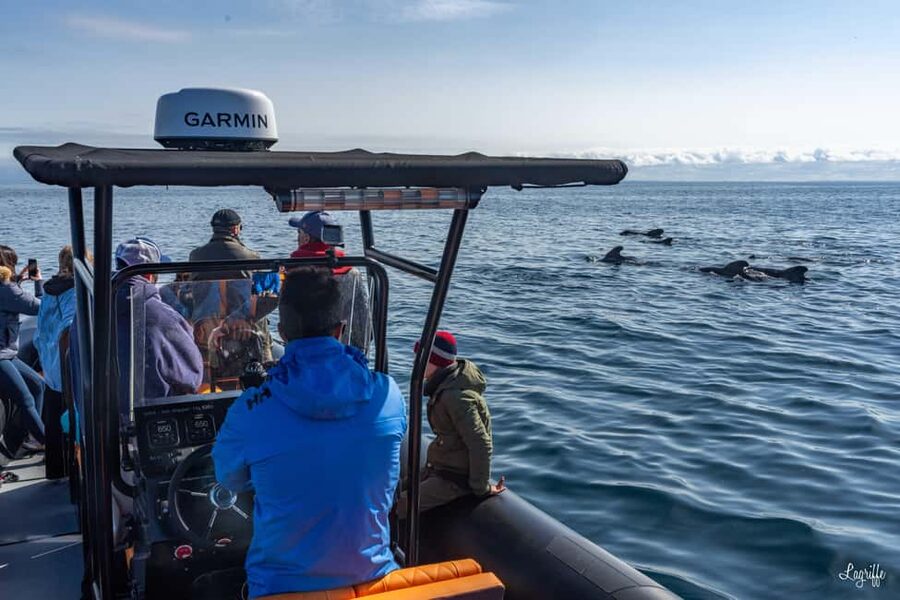
The scheduled meeting time is 8:00 AM. After a short briefing, you board the Zodiac RIB with an experienced skipper and head out of the harbor. Coffee is included, a small but welcome touch at that early hour.
The guides speak French and English. Some departures have been led by Paul or Antoine, both praised for being friendly, careful, and attentive. The exact guide can vary, so you should not book on the assumption that one named skipper will always be present.
The group is described as small, though no fixed number is provided. That matters on a wildlife trip. A smaller boat gives you a closer connection to the sea and makes it easier to follow the guide’s direction when animals appear. It also means you feel the movement of the water more directly than you would on a large covered vessel.
The 45-minute ride to the observation zone
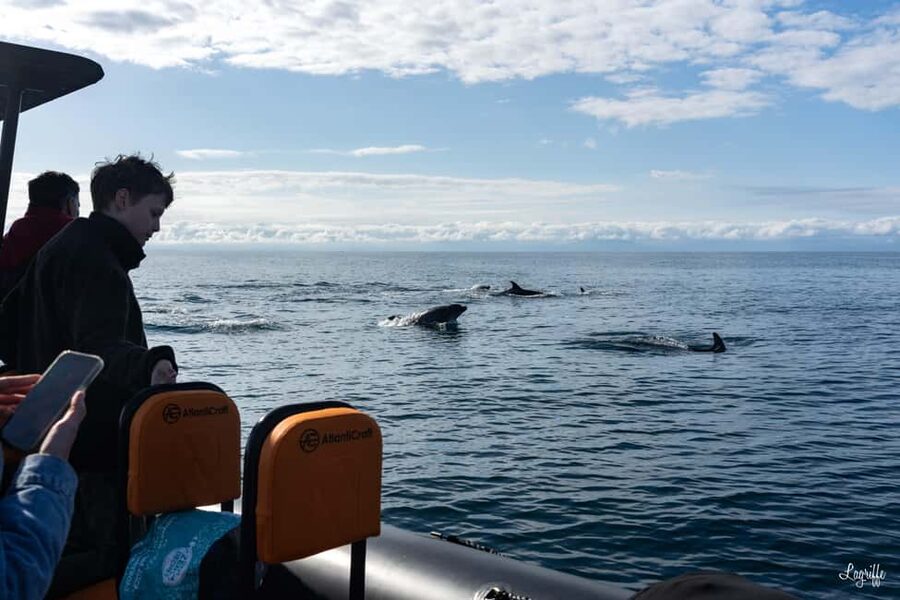
The first 45 minutes are spent traveling offshore by speedboat. This is transport rather than a sightseeing stop, but it is an important part of the experience.
A Zodiac RIB is an open, rigid-hulled inflatable boat. You should expect exposure to wind, spray, and changing temperatures. Even on a warm morning in Saint-Jean-de-Luz, the ride offshore can feel cool. Warm layers are not optional decoration here. They make a real difference.
The open design gives you wide views and puts you close to the water, but it also means less shelter. Bring sunglasses and sunscreen, since reflected light can be strong at sea. Keep a bottle of water with you as well.
Motion sickness is worth taking seriously. One person specifically advised using travel tablets, and that is practical advice for a long open-water ride. If you are prone to nausea, prepare before departure according to the medicine’s instructions. The boat does not have a toilet, so managing seasickness early is especially important.
Searching for dolphins in the Gouf area
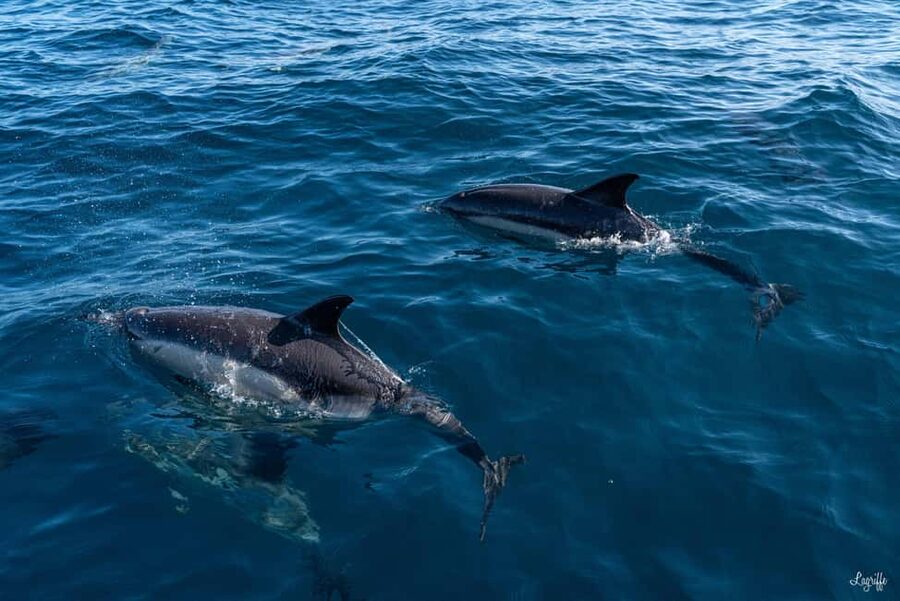
Once the boat reaches the observation zone, the pace changes. This is the part where you watch the water, follow the skipper’s instructions, and wait for signs of movement.
Dolphins may appear in small groups or in pods numbering in the hundreds. The common dolphin, striped dolphin, and bottlenose dolphin are the species you are most likely to see. Their behavior can vary from quick surface appearances to groups moving alongside the boat.
A large pod can create the kind of natural spectacle that makes the morning memorable. You may see repeated surfacing, animals changing direction, or several groups spread across the water. Still, wildlife does not perform on schedule. You should expect periods of searching between sightings.
The boat operator’s approach is important. The stated policy is to give the animals space and avoid disrupting their natural behavior. That means the skipper may not chase a pod or position the boat as close as possible. For me, that is the right tradeoff. A respectful encounter is more valuable than a forced close-up.
The observation portion is listed as about three and a half hours in the route details. The full activity lasts 270 minutes, or four and a half hours, with a return planned around 12:30 PM. Since the listed travel times and observation duration do not line up perfectly, confirm the timing when you book, especially if you have another activity scheduled after lunch.
More whale watching around the world worth comparing
- Reykjavík: Whale Watching and Marine Life Cruise
★ 4.6 · 9,838 reviews - Juneau Wildlife Whale Watching
★ 5.0 · 7,379 reviews - Juneau Wildlife Whale Watching & Mendenhall Glacier
★ 5.0 · 6,236 reviews - Funchal: Dolphin and Whale Watching Catamaran Cruise
★ 4.5 · 5,697 reviews
The chance of whales and rarer cetaceans
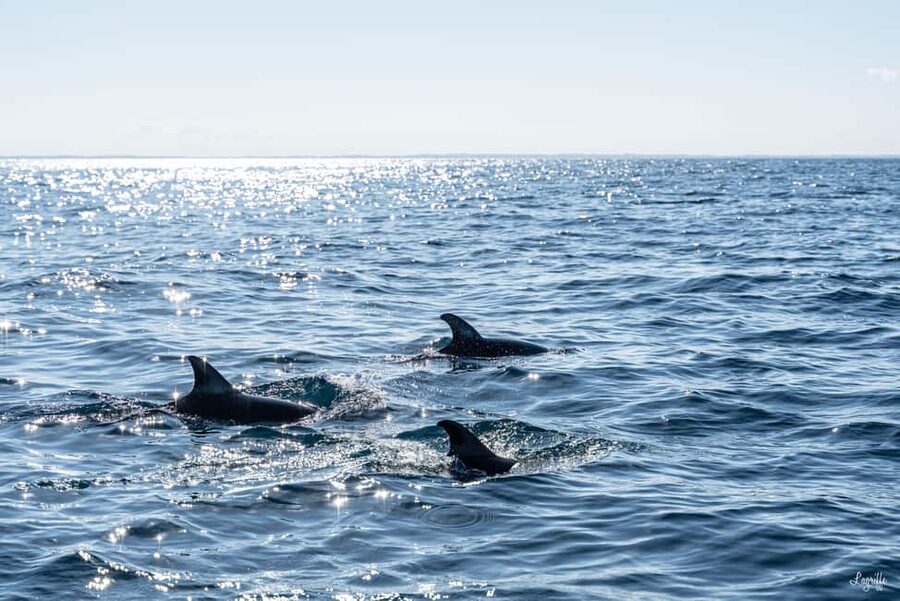
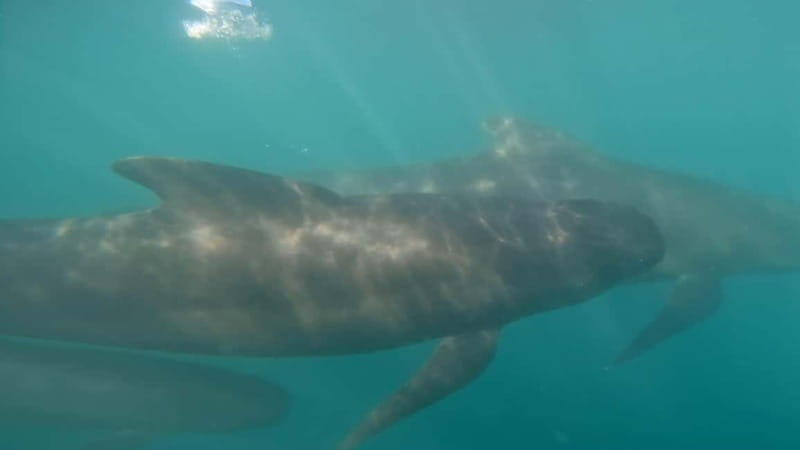
Dolphins are the main draw, but the trip is not limited to dolphins. Pilot whales are seen regularly in spring, making that season particularly appealing if whales are your priority.
The wider area has also produced sightings of fin whales, sperm whales, Risso’s dolphins, harbor porpoises, and beaked whales. These are less common possibilities, not expected results. You should book this as a search for marine life rather than a guaranteed whale encounter.
One useful way to think about the outing is that the Gouf creates a good chance of seeing something, but it cannot control what appears on a particular morning. Even the absence of whales does not mean the trip failed. A pod of dolphins moving naturally across open water can be the main event.
That distinction helps set expectations. If your only goal is to photograph a whale, this may feel uncertain. If you enjoy wildlife and accept that the animals set the schedule, the experience has much stronger appeal.
Respectful wildlife watching from a fast boat
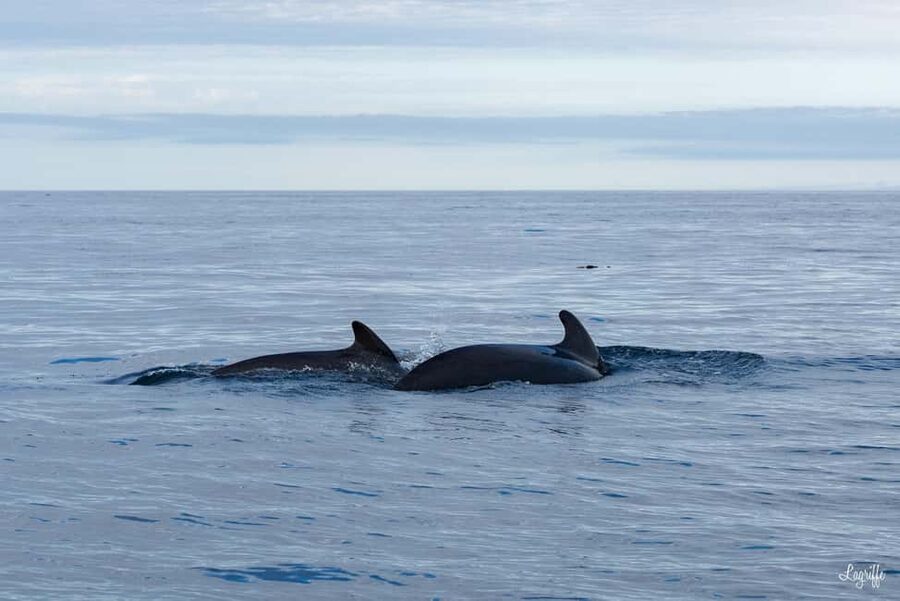
The skipper is responsible for both navigation and the way the boat approaches marine life. The excursion promises careful behavior around the animals, with priority given to their peace and natural movements.
That matters because a good cetacean trip should not turn into a chase. Dolphins may come near the boat, but the crew should not pressure them to stay. You may get a close view one moment and see only open water the next.
The boat’s speed is useful because the Gouf is about 45 minutes from shore. It lets you reach the offshore feeding area during a half-day outing. The cost is a bumpier, more exposed ride than a larger sightseeing boat might offer.
One point to note is safety communication. A German-speaking participant felt that a fuller safety briefing would have been helpful and expected adults might wear life jackets. The provided details confirm a short briefing, but they do not specify life-jacket policy. If you have concerns, ask the operator about safety equipment before departure.
What the $199 price includes
At $199 per person, this is not a budget harbor cruise. You are paying for a specialized wildlife trip, an experienced skipper, a Zodiac RIB, insurance, coffee, and several hours offshore in a marine area known for cetaceans.
The value depends on what you want from the morning. For a casual ride with a guaranteed view, the price may feel high. For a small-group outing focused on wild dolphins and the possibility of whales, it is easier to justify, especially since the boat travels to the Gouf rather than staying close to the harbor.
The strongest value comes when you appreciate the full setting: the offshore run, the canyon’s unusual depth, the search process, and the possibility of seeing animals in their own environment. You are not buying a guaranteed show. You are paying for access to a productive marine zone and for the skipper’s experience in finding and approaching wildlife responsibly.
Coffee and insurance are included, but you should bring your own water and all clothing and sun protection. There is no mention of food being provided, so do not treat this as a catered morning.
Comfort, clothing, and practical limits
Dress for a cool, exposed boat ride, not just the weather at the harbor. Bring warm clothing, sunglasses, sunscreen, and water. Layers are the sensible choice because conditions can feel different once the boat leaves shore.
The lack of a toilet is the clearest comfort limitation. Plan for roughly four and a half hours without onboard facilities. Use the restroom before boarding and avoid bringing more equipment than you can manage in a small boat.
The trip is not suitable for children under five, pregnant women, or wheelchair users. Those restrictions reflect the boat type and the time spent offshore. If anyone in your group has mobility or medical concerns, contact the operator before reserving.
Weather and sea safety control the final decision. The excursion can be changed or canceled without notice if conditions are not suitable. A minimum number of participants is also required, so the departure depends on both the sea and the booking level.
Cancellation is free up to 24 hours before departure, and you can reserve now and pay later. Those policies help if your schedule is still changing, but they do not remove the need to confirm your available dates before booking.
Who will enjoy this morning most
I would choose this for someone who wants a serious wildlife outing rather than a short coastal cruise. It suits adults, older children over five, photographers, marine-life fans, and anyone happy to spend a long morning watching the sea for a chance encounter.
It is also a good choice if you want your afternoon free. The meeting time is early, but the planned return around 12:30 PM leaves time for lunch and other plans in Saint-Jean-de-Luz.
I would hesitate if you dislike open boats, get seasick easily, need regular access to a restroom, or require a guaranteed sighting. The price and exposure make more sense when the search itself is part of the attraction.
The experience has received a perfect 5.0 rating from seven listed bookings, with particular praise for the dolphin sightings, friendly guides, and well-run outings. The most useful practical note is not the praise, but the warning about motion sickness, limited facilities, and the need for a clearer safety briefing for some passengers.
Should you book the Saint-Jean-de-Luz cetacean tour?
Book it if you want a small-group morning in open water and would be thrilled to see dolphins traveling freely near the boat. The possibility of pilot whales in spring and rarer species adds interest, while the Gouf de Capbreton gives the trip a clear ecological reason for going offshore.
Before you reserve, check the forecast, confirm the available date, and prepare for cold spray, movement, and no toilet. Bring layers and motion-sickness tablets if needed.
I would not book this for a guaranteed whale photograph or a gentle, sheltered cruise. I would book it for the chance to watch dolphins in one of the Basque coast’s most productive marine areas, with a skipper who treats the animals as wildlife rather than entertainment.
FAQ
Where does the boat tour begin?
Meet at 14 Quai de l’Infante in Saint-Jean-de-Luz, at Pontoon A. This is the same pontoon used by the maritime shuttle.
What time does the excursion start and finish?
The meeting time is 8:00 AM, and the return to the harbor is scheduled for around 12:30 PM. The total duration is listed as 270 minutes.
Which animals might I see?
The most commonly seen species are striped dolphins, common dolphins, and bottlenose dolphins. In spring, pilot whales are also frequently seen. Rarer possibilities include Risso’s dolphins, harbor porpoises, fin whales, sperm whales, and beaked whales.
Is a whale sighting guaranteed?
No. The tour searches for cetaceans in the wild, so sightings and species cannot be guaranteed. Dolphins are the most common possibility.
What should I bring?
Bring warm clothing, sunglasses, sunscreen, and water. Motion-sickness tablets are also worth considering if you are sensitive to boat movement.
Is the tour suitable for everyone?
The excursion is not suitable for children under five, pregnant women, or wheelchair users. It can also be changed or canceled because of weather, safety conditions, or an insufficient number of participants.
New whale trips around the world
- Broome Sunset & Whale Watching Cruise★ 5.0 · 2 reviews
- Bremer Bay: Bremer Canyon Killer Whale Expedition★ 4.9 · 114 reviews
- Boavista: Whale Watching half day trip★ 4.4 · 15 reviews
- Bremer Canyon Orca Experience from Bremer Bay★ 4.6 · 35 reviews
- Beluga Whale Sanctuary – Admissions★ 3.5 · 8 reviews
- Mauritius Eco Whales Quest, 3-4 hours Expedition★ 3.7 · 23 reviews
- Boa Vista: Whale Watching Trip with Motoryacht★ 4.3 · 115 reviews
- Augusta: Whale Watching Tour★ 4.5 · 9 reviews
Whale and Dolphin Watching Tours, compared.
Eco-Yacht Whale and Dolphin Watching and Swimming
Read our review →
Los Cristianos Respectful No-Chase Whale and Dolphin Safari
Read our review →

Whale & Dolphin Eco-Cruise with Snacks & Drinks
Read our review →
Dolphin & Whale Watching Cruise with Swim Stop
Read our review →
Morro Jable: Dolphin & Whale Watching Cruise, Drinks & Swim
Read our review →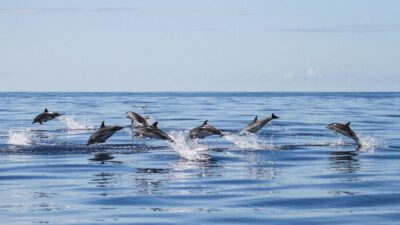
Browse the lists this tour appears in