
Review · ORCA WATCHING TOURS
Skjervøy: Whale and Orca Watching Tour by RIB Boat
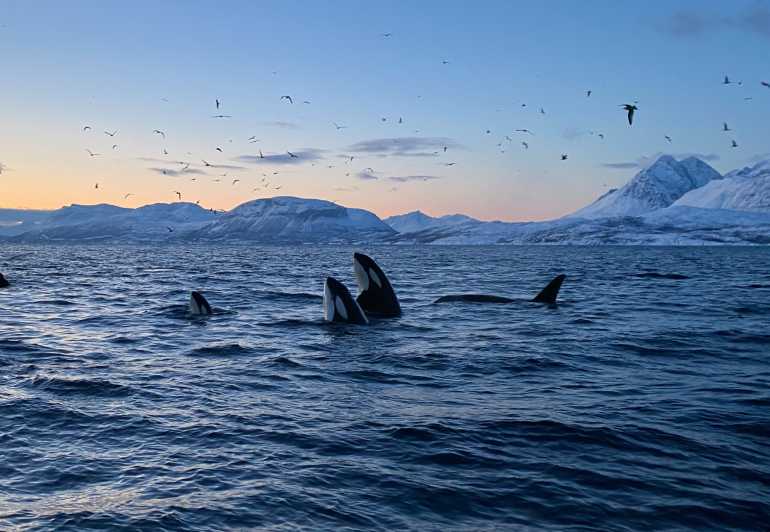
Skjervøy’s whale tour gets you out where the action is, not behind a large boat window. A fast RIB carries you along Norway’s Arctic coast in search of orcas, humpback whales, fin whales, and sperm whales, with the chance to see feeding, breaching, and other wild behavior.
I like two things here: the tiny two-person group, which gives the crew room to focus on you, and the practical winter kit, including a thermal suit, life vest, mittens, and goggles. The main drawback is simple but important: whales are wild animals, and one January departure produced no sightings even though another group nearby saw eight orcas.
Key points before you book
- A three-hour RIB trip from Strandveien 70: You leave and return to the same central Skjervøy meeting point.
- Four whale possibilities: The search includes orcas, humpback whales, fin whales, and sperm whales.
- A maximum of two participants: This is unusually small for a wildlife trip and should feel personal.
- Winter equipment is supplied: Thermal suits, life vests, mittens, and goggles are included.
- Orca feeding may be possible: If orcas are found, the crew may take you to watch a feeding session.
- Sightings are not guaranteed: You should book this for the search and setting as much as for a particular species.
Setting out from central Skjervøy
Your meeting point is the Explore 70 Degrees office at Strandveien 70, in the center of Skjervøy. Look for the red door next to Elon, along with the company logo and Explore 70 Degrees lettering. This is a useful detail in a small Arctic town, where a clear landmark saves time in cold weather.
The trip lasts three hours from departure to return. That is long enough to get away from the harbor and cover some water, yet short enough to fit into a busy Skjervøy schedule. You do not need to arrange separate boat transportation. The RIB leaves from the meeting area and brings you back there.
The crew speaks English and Norwegian. Since the group is limited to two participants, you can ask questions without trying to catch a guide’s attention across a crowded boat. That matters on a wildlife trip, where the difference between hearing a quick explanation and missing it can be one sudden splash.
The company does not provide food or drinks, so eat beforehand and bring anything you need for the three-hour outing. Alcohol and drugs are not allowed. Warm clothing is still required, even though the operator supplies a thermal suit. Wear useful base layers and sturdy clothing rather than treating the provided suit as a complete substitute for winter preparation.
More Zodiac and RIB Whale Watching in Norway
- Bleik: Whale Watching by Speedboat with Puffins and Muffins
★ 4.7 · 326 reviews - Whale Watching RIB Safari at Skjervøy
★ 4.8 · 136 reviews - Skjervøy: Whale Watching with RIB Boat and Local Guide
★ 4.9 · 109 reviews
The RIB ride and the Arctic view
A RIB is a lively way to travel. You sit close to the water, feel the boat respond beneath you, and move between areas faster than you would in a slower sightseeing vessel. That speed is useful here because whales can surface far from the starting point and may not remain in one place for long.
The tradeoff is comfort. A RIB gives you exposure to wind, spray, and motion. The thermal suit, mittens, goggles, and life vest are not decorative extras. They are central to making the trip manageable in winter. Put the suit on carefully, keep your hands protected, and use the goggles when the boat is moving quickly.
You should also expect the ride itself to be part of the experience. The high-speed transport helps the crew search a wider area, while the open design gives you a direct view of the sea and surrounding Arctic scenery. It is a more active outing than watching whales from a heated cabin.
The boat is not just racing around at random. The crew uses its experience to look for cetaceans and explain their behavior and ecology. You may learn about the species in the area while scanning the water, rather than receiving all the information in a formal talk before departure.
Searching for four kinds of whales
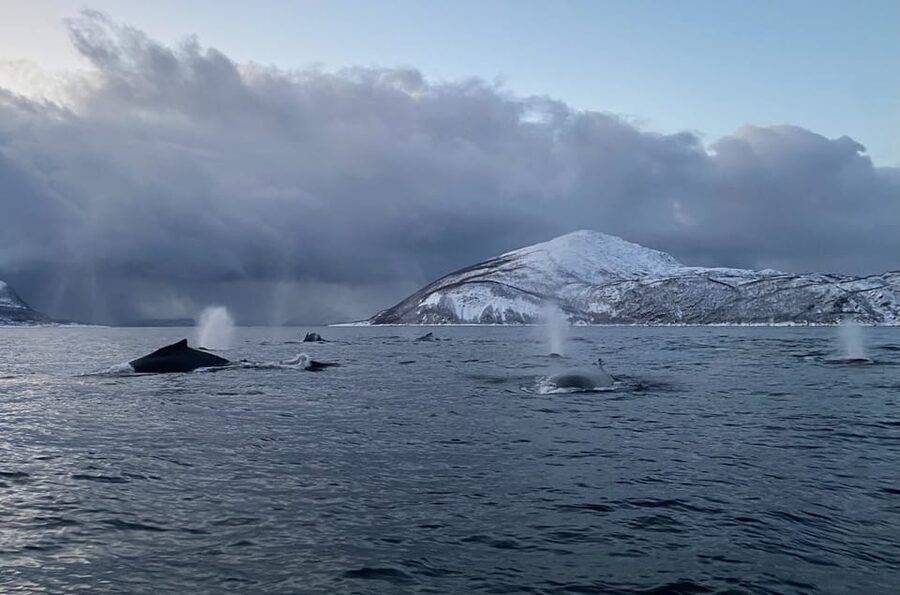
The advertised search includes four very different animals, and that variety gives the trip its appeal.
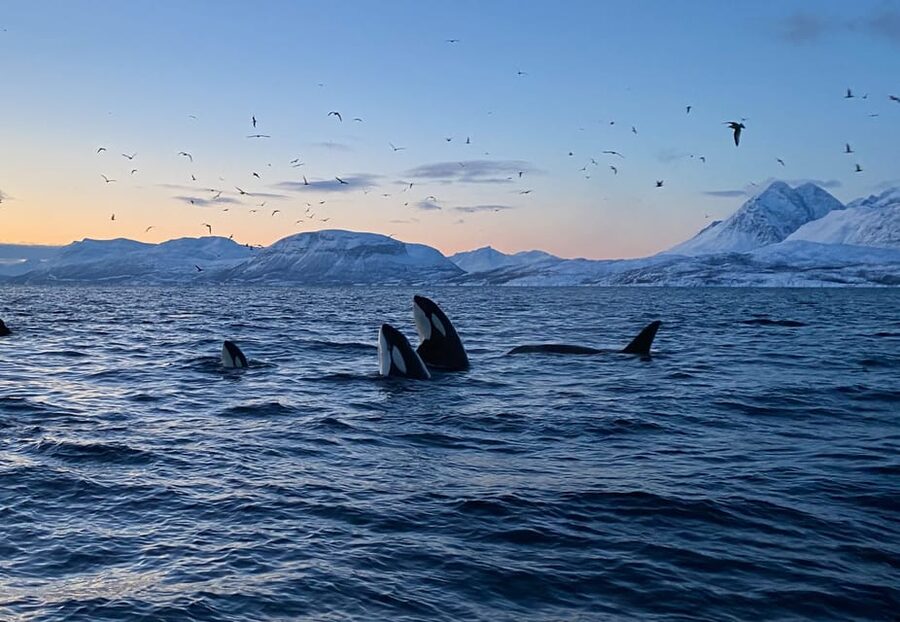
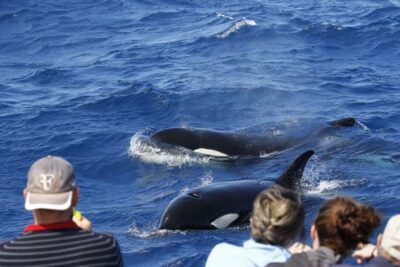
Orcas are the species many people most hope to see. If the crew locates them, you may watch their coordinated movement and, when conditions allow, observe a feeding session. Orcas are fast, intelligent animals, so even a brief sighting can be memorable. The important point is that feeding is a possibility tied to finding the animals, not a guaranteed part of every departure.
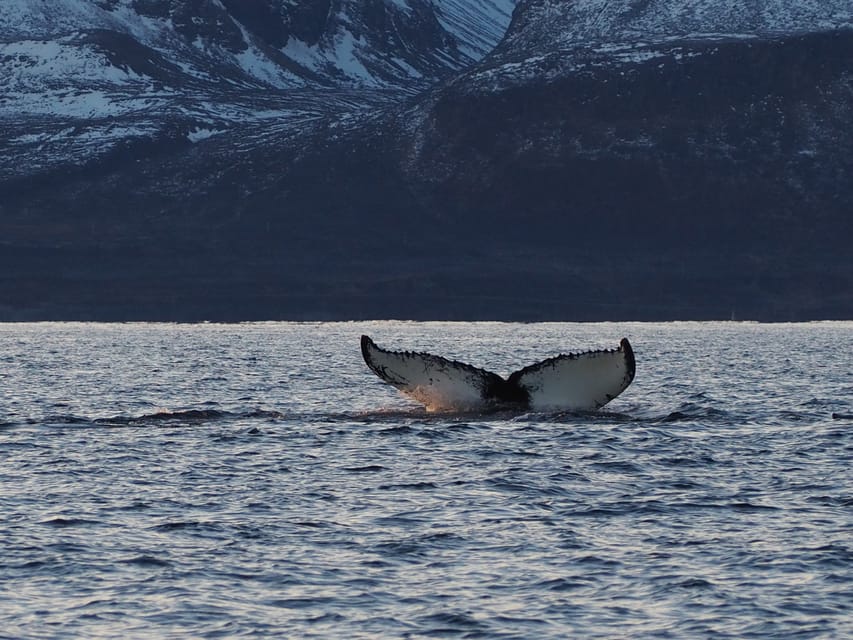
Humpback whales offer the dramatic moments many people picture when they think of whale watching. Their size, surface behavior, and possible breaches make them exciting to spot. The crew may help you understand what you are seeing, from a broad back at the surface to more active movement.
Fin whales are also on the search list. They are large, fast-moving whales, and their presence adds another layer to the trip. Seeing more than one species can turn the outing into a lesson in comparison, with the crew helping you notice differences in size, movement, and behavior.
Sperm whales are included as well, though no species is guaranteed. Their presence means the trip is not limited to one seasonal target. You are heading out to look for the cetaceans using the Arctic coastline, with the actual result shaped by wildlife and sea conditions.
The crew may point out a whale before you see it. Keep your eyes on the water, especially after a call from the guide. In a small RIB, everyone has a fair chance to follow the action, but whales can appear and disappear quickly.
Why the two-person group matters
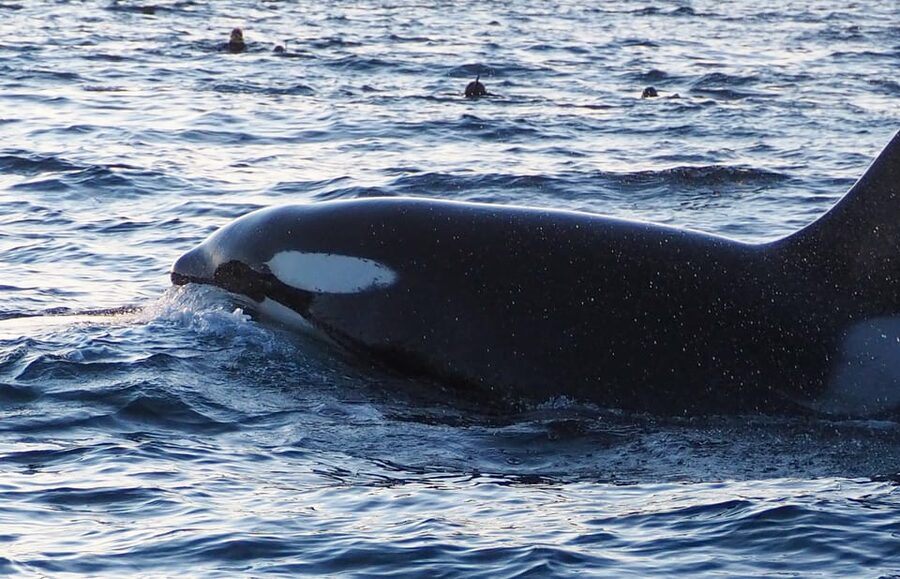
A maximum of two participants changes the feel of the trip. You are not competing with a boatload of people for the best view, and the crew can adjust explanations to your interests. If you want to ask about orca behavior, whale ecology, or the practical details of the search, there is room for a real exchange.
It also makes the experience more personal if the animals appear. On a larger boat, a breach can be hidden behind heads, cameras, or a crowded rail. Here, the small group should make it easier to follow the crew’s directions and move your attention quickly when a whale surfaces.
There is a possible downside: a small boat has less space and less room to spread out. If you find open-water motion difficult, the RIB format may feel demanding. The tour is not suitable for people with back problems, children under six, or anyone shorter than 120 centimeters.
The narrow age and height rules are practical safety measures, not minor booking details. A thermal suit, life vest, and RIB seating need to fit properly. Check these restrictions before paying, especially if you are arranging the trip for a family.
More Orca Watching Tours in Norway:
- From Tromsø: All-Inclusive Whale & Orca Safari
★ 4.5 · 1,221 reviews - Tromsø: Orca and Whale Watching comfort heated boat Trip
★ 4.8 · 107 reviews - Skjervøy: Orca and Whale-Watching comfort heated Boat Trip
★ 4.9 · 27 reviews - Snorkeling with Orcas In Norway, 4 days All-Inclusive expedition
★ 5.0 · 9 reviews
What the recent results suggest
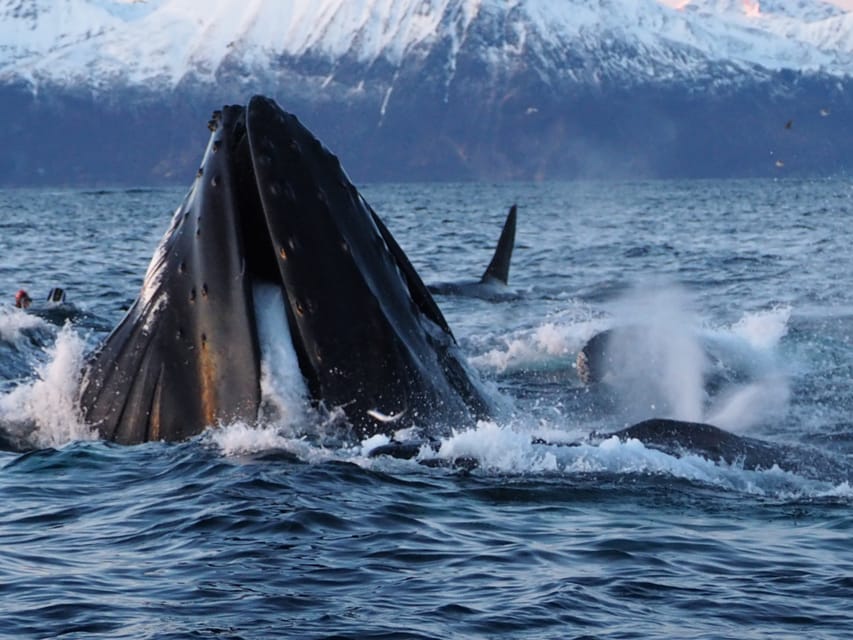
The experience has a rating of 4.1 from 87 reviews, which points to a generally positive but uneven outcome. That makes sense for wildlife watching. One January 14 departure produced many orcas, humpback whales, and fin whales, along with strong Arctic scenery and smooth organization. Another person described seeing orcas in the wild as a long-held dream finally fulfilled.
Those are the kinds of results that justify the price for a wildlife enthusiast. Seeing several species in one three-hour outing can be a major highlight of a Norway trip, and the small group adds value beyond the basic boat ride.
But you should not treat a successful departure as a promise. On January 17, one group saw no animals at all. The complaint was especially sharp because another group reportedly saw eight orcas in the same general period, suggesting that wildlife location and timing can make a huge difference.
That is frustrating, especially at around $240 per person. The price pays for specialist crew time, safety gear, a fast boat, and a small group rather than a guaranteed sighting. If your entire Norway visit depends on seeing an orca, consider giving yourself more than one possible whale-watching day if your schedule allows. The operator’s free cancellation until 24 hours before departure gives you some flexibility, but it cannot remove the basic uncertainty of nature.
Is $240 a fair price?
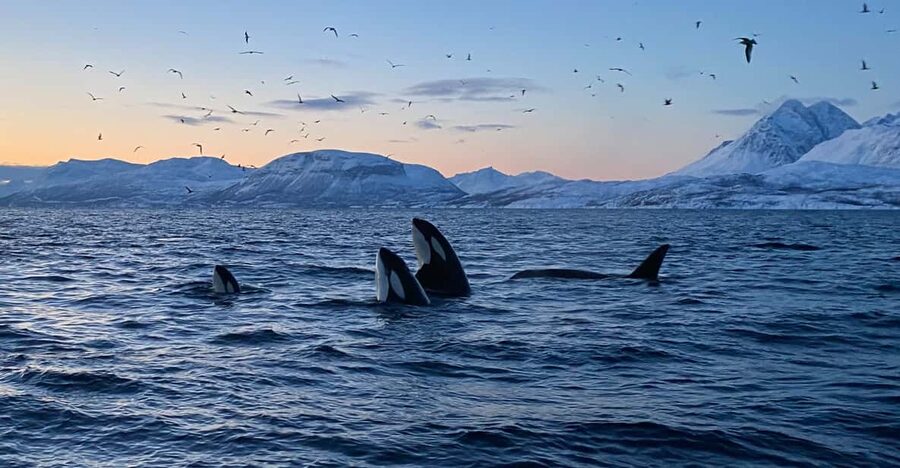
At $240 per person, this is not a casual harbor cruise. It is a premium small-group wildlife outing. The strongest value comes from the two-person limit, the RIB’s speed, the supplied thermal equipment, and the crew’s ability to search and explain what you are seeing.
The value becomes weaker if you view the tour as a guaranteed whale encounter. No responsible wildlife operator can promise every listed species, and one recent departure returned without sightings. You need to be comfortable paying for the attempt, the Arctic setting, and the chance of a remarkable encounter.
I would compare the price with your priorities. For a dedicated whale watcher or photographer, the focused format may be worth it. For someone who simply wants a low-cost boat ride, it is probably too expensive. The lack of included food and drinks is minor during a three-hour trip, but it means you should plan a meal or snack separately.
The reserve-now-and-pay-later option can help if you want to hold a place while keeping cash available. Still, read the timing carefully and cancel at least 24 hours ahead if your plans change and you want a full refund.
How to prepare for the cold and motion
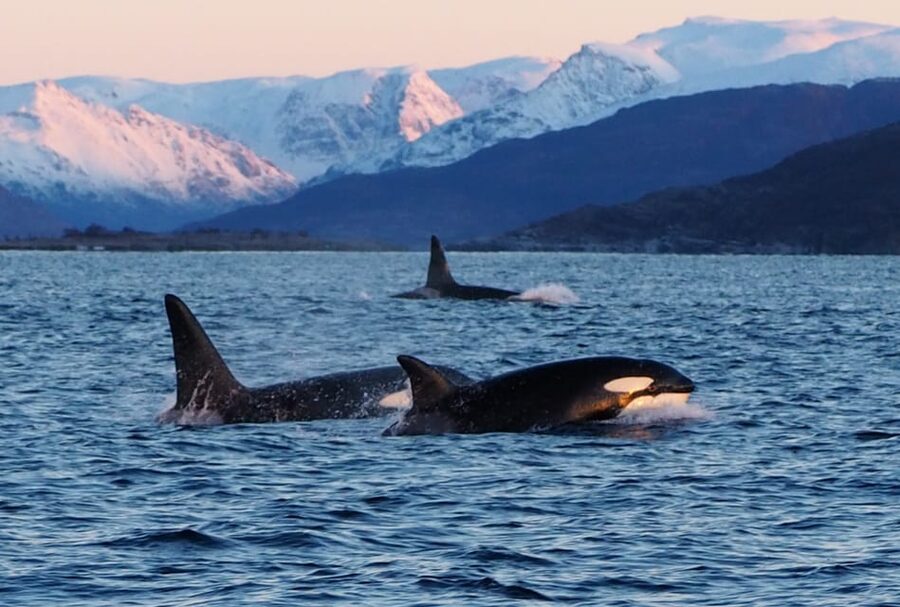
Start with warm clothing, even though the operator provides a thermal suit. A good base layer is more useful than bulky cotton, and warm socks matter when your feet are exposed to cold air for several hours. Bring clothing that you can wear comfortably under the supplied suit.
The operator provides:
- Thermal suit
- Life vest
- Mittens
- Goggles
- RIB transportation
- Guide
You do not need to bring special safety equipment. You should bring personal essentials, but food and drinks are not included, and there is no indication that refreshments are served on the boat.
Expect the trip to be active rather than restful. The boat moves quickly, and you may need to hold your position while watching the water. The suitability rules exclude people with back problems, children under six, and people under 120 centimeters, so take them seriously.
Who will enjoy this trip most?
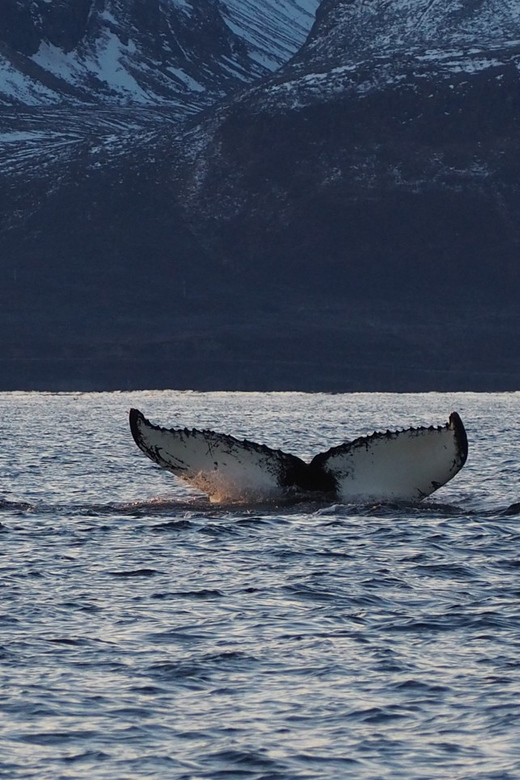
I would recommend it most strongly to adults or older children who want a close, energetic wildlife search and who can handle winter conditions. The two-person format suits people who value direct contact with a guide and do not want a crowded boat.
It is also a good match for anyone interested in more than photographs. The crew discusses whale behavior and ecology, so the outing can help you understand the animals instead of simply collecting a quick sighting.
I would be cautious if you dislike cold, motion, or uncertainty. This is not the right choice if you need guaranteed orca sightings, a calm indoor ride, or an accessible option for someone with back trouble. The possibility of seeing nothing is real, and the price makes that risk significant.
Should you book the Skjervøy RIB tour?
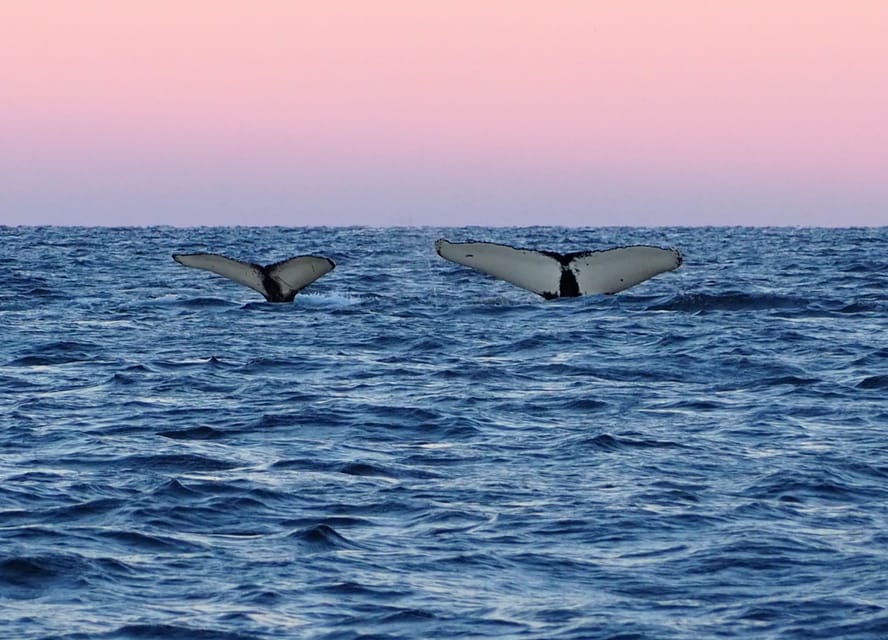
Book it if you want a small, fast, winter wildlife search and can accept that nature sets the schedule. The best case is excellent: orcas, humpback whales, and fin whales in the same outing, with a crew close enough to explain what is happening and guide you toward the action.
Think twice if $240 feels too high for a chance rather than a promise. The tour’s strongest features are the two-person group, the supplied cold-weather equipment, and access to several whale species. Its central weakness is the same thing that makes wildlife watching honest: sightings cannot be guaranteed.
For the best chance of feeling good about the purchase, plan enough time in Skjervøy to handle an unlucky departure. If you can accept the risk and prepare properly for the cold, this is a focused and exciting way to search Norway’s Arctic waters.
FAQ
Where does the whale-watching tour meet?
Meet at the Explore 70 Degrees office at Strandveien 70 in central Skjervøy. It is marked by a red door next to Elon, with the company logo and Explore 70 Degrees lettering.
How long does the tour last?
The tour lasts three hours, including the boat outing and the return to Strandveien 70.
Which whales might I see?
The crew searches for orcas, humpback whales, fin whales, and sperm whales. Sightings of every species are not guaranteed.
Is the tour conducted in English?
Yes. The live guide speaks English and Norwegian.
How many people can join?
The group is limited to two participants.
What equipment is provided?
The operator provides a thermal suit, life vest, mittens, goggles, RIB transportation, and a guide.
What should I bring?
Bring warm clothing. Food and drinks are not included, so plan those separately.
Who cannot take this tour?
The tour is not suitable for children under six, people with back problems, or people shorter than 120 centimeters. Alcohol and drugs are not allowed.
New whale trips around Norway
- From Svolvær: Whale Watching Day Trip to Andenes★ 3.8 · 27 reviews
- Tromsø Whale Safari with MS Keiser Wilhelm★ 4.3 · 161 reviews
- Tromsø: Whale Watching on hybrid boat with scenic bustrip★ 4.1 · 30 reviews
- Tromsø: Responsible Whale Watching Cruise Aboard MS Alba★ 4.7 · 53 reviews
- Tromsø: 24hr Northern Lights & Whale Watching Cruise★ 4.9 · 46 reviews
- Tromsø: Orca and Whale Watching comfort heated boat Trip★ 4.8 · 107 reviews
- Whale Watching RIB Boat Tour in Skjervoy from Tromso★ 4.5 · 102 reviews
- 24hr Northern Lights & Whale Watching Cruise★ 5.0 · 114 reviews
Orca Watching Tours, compared.
Orca, Whale and Dolphin Watching Boat Experience
Read our review →
Bremer Bay: Bremer Canyon Killer Whale Expedition
Read our review →
Orca and Whale Watching comfort heated boat Trip
Read our review →Browse the lists this tour appears in