
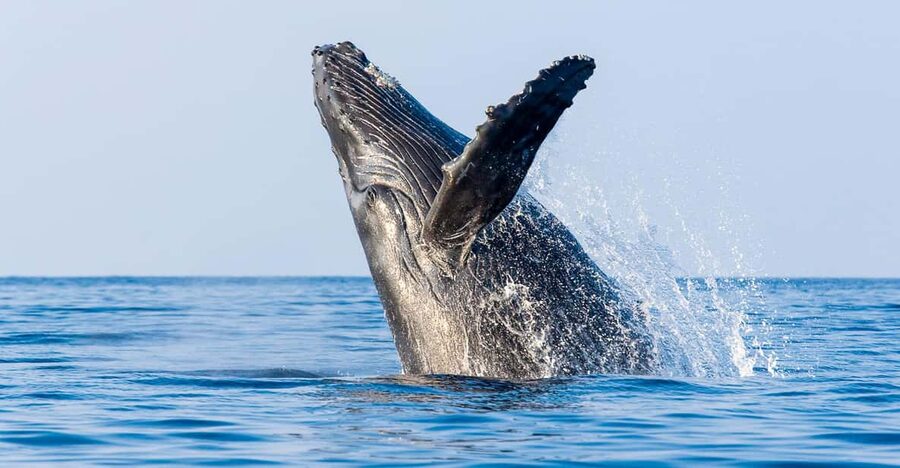
Review · WHALE WATCHING CRUISES
Kailua-Kona: Whale Watching Cruise on the Big Island
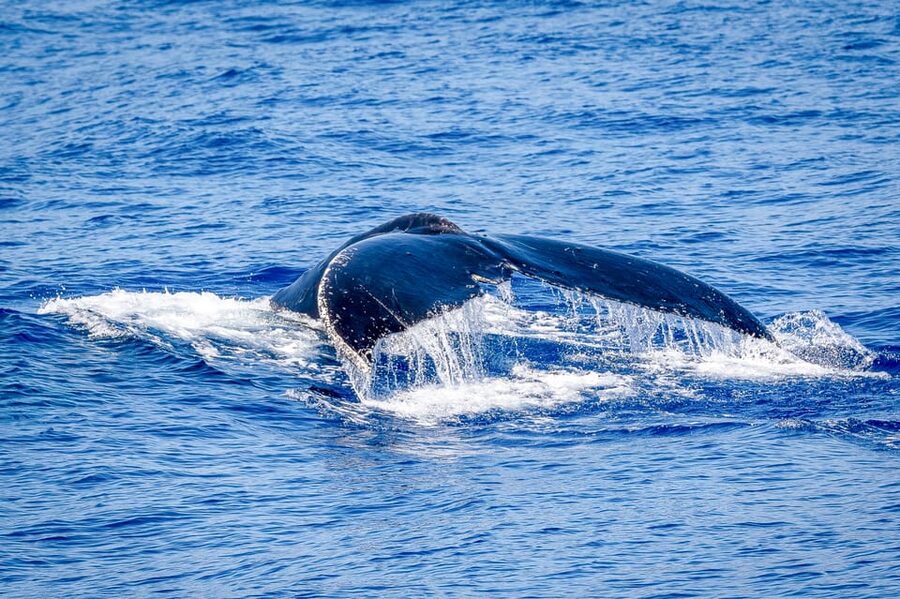
The best part of this Kona whale-watching cruise is not simply seeing a humpback surface. It is hearing one sing through an underwater hydrophone, then watching the captain search for the next blow, breach, or tail slap. Hawaii is where these whales mate, give birth, and nurse their calves, so you are seeing an important part of their life cycle.
I like the small boat feel, with a covered 24-person catamaran, and I like how much the crew works at finding wildlife rather than treating the cruise as a quick ride offshore. The main consideration is simple: whales are wild animals. You might see a spectacular breach, or you might spend time scanning quiet water for a distant back.
Key points
- Whale songs through a hydrophone: You can hear the sounds beneath the boat, not just watch for movement above it.
- A 150-minute search: The captain has time to look for several sightings instead of rushing back after one pass.
- Mothers and calves: Winter and early spring can bring sightings of humpback adults traveling with young whales.
- More than whales: Dolphins, flying fish, sharks, rays, and other sea life have appeared during past cruises.
- Covered catamaran: The boat offers shelter, though you still need sun protection and a warm layer.
- No-sighting promise: If no whales are seen, you receive another cruise, not a cash refund.
Why Kona is a good place for humpback whales
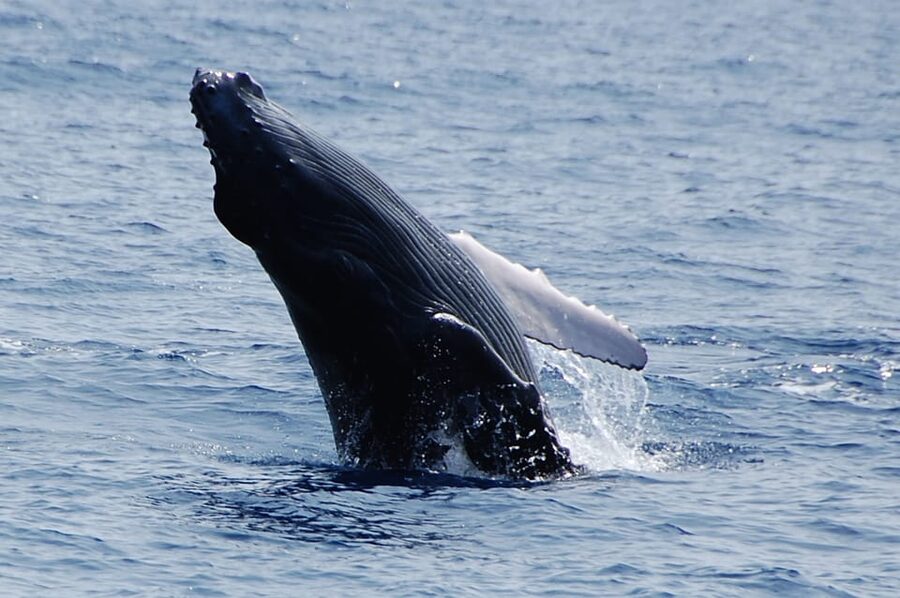
Hawaii is the only U.S. state where humpback whales mate, calve, and nurse their young. The warm water is a major reason they come, but it is not the only one. The islands offer clear water, several ocean depths, and few natural predators.
That makes the waters off the Big Island a useful nursery. A mother can stay with her calf while the young whale grows stronger. You might see a calf traveling beside its mother, a pair surfacing in sequence, or a whale lifting its tail before disappearing for a while.
I like having this context before the boat leaves Honokohau Harbor. A whale is not just a moving shape to photograph. It may be an adult conserving energy, a calf learning to swim, or a male competing with others for access to a female. The crew explains these patterns during the cruise, helping you understand why the animals behave as they do.
You should still keep your expectations sensible. A whale can surface only briefly, and a breach is never scheduled. The cruise improves your odds by putting you on the water for two and a half hours, but it cannot control the animals.
More Whale Watching Cruises in the USA
- Boston: City Cruises Whale Watching Cruise
★ 4.5 · 4,710 reviews - City Cruises Boston Whale Watching Cruise by High-Speed Boat
★ 4.5 · 3,115 reviews - San Diego Whale Watching Cruise
★ 5.0 · 2,317 reviews
Leaving Honokohau Harbor for open water
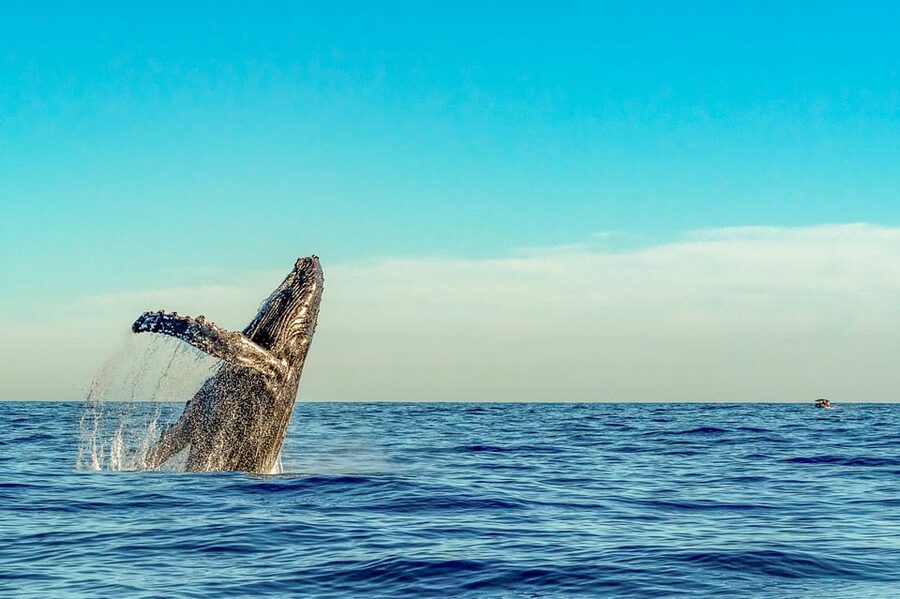
The meeting point is at Honokohau Harbor, north side, about 4.5 miles south of Kona International Airport and 3.5 miles north of Kailua-Kona. After turning into the harbor, take the first right, follow the road as it bends left, and continue to the large parking lot.
From there, drive left toward the boat ramp. The crew meets you near the pavilion beside the public restrooms. This is a practical detail worth saving on your phone because the harbor road and parking area can be less obvious than the main highway.
There is no hotel pickup or drop-off, so you need to arrange your own way to the harbor. Arrive with enough time to park and find the pavilion without rushing. Check-in is near the pavilion and restrooms, not at a hotel desk or a separate shop in Kailua-Kona.
The cruise lasts 150 minutes. Starting times vary, so check the available departure when booking. The long run time matters because the captain may need to search a wide area, especially when whales are not gathered close to the harbor.
The boat, seating, and time on the water
The boat has been described as a covered 24-person catamaran. That is a useful size for this kind of trip. It is small enough for the crew to point out sightings and check on people, but it gives you more room than a tiny rigid boat.
The cover helps with direct sun, but it does not replace sunscreen. Bring a hat and sunglasses, and wear a long-sleeved shirt or sweatshirt. Conditions can feel cooler once the boat is moving, even on a warm Kona day.
The crew has included captains and guides such as Bryce, Aidan, Jacob, Simon, Eloe, and Ula. Names and crew assignments can change, but the pattern is clear: the captain handles boat positioning while crew members help direct your eyes to the animals. That makes a real difference. A humpback may surface somewhere beyond your first guess, and a crew member can point you toward the blow before it disappears.
There is also a practical family touch. Snacks include chips, granola bars, Rice Krispies treats, and fruit snacks. Drinks include water, juice, and ginger ale. These are basic boat snacks, not a meal, but they are useful during a 2.5-hour outing and help families avoid bringing a full lunch aboard.
Searching for the first whale
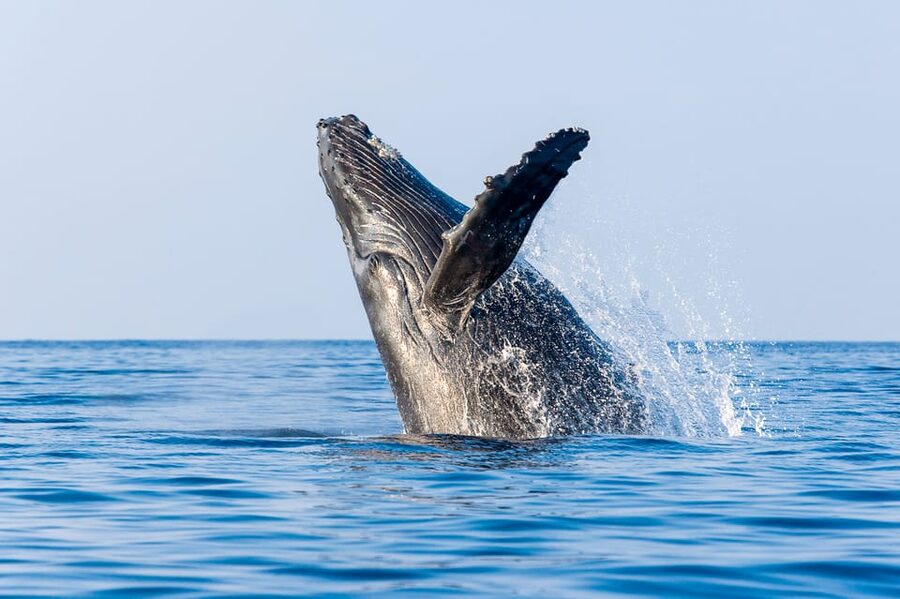
The first stretch is a search. You will scan the water for a blow, a dark back, a tail, or a sudden splash. The crew may direct you to one side of the boat, then reposition so more people can see.
This part can feel slow if you expect constant action. I see it as the price of seeing wild whales rather than animals on a fixed schedule. The captain may stay with an area after the first sighting, continue looking after several whales surface, or keep searching for a better view.
The experience has produced very different kinds of sightings. Some departures have included whales close to the boat, while another group saw them from roughly 400 to 500 yards away. A few people have watched a breach directly in front of the boat. The honest lesson is that close viewing is possible but never guaranteed.
That uncertainty is worth explaining to children before departure. Tell them that spotting a whale is the goal, not a guaranteed performance. The waiting becomes easier when everyone understands that a quiet sea is part of the outing.
Same sea, a different boat:
- Juneau Wildlife Whale Watching
★ 5.0 · 7,379 reviews - Juneau Wildlife Whale Watching & Mendenhall Glacier
★ 5.0 · 6,236 reviews - Whale Watching Tour in Gloucester
★ 5.0 · 4,460 reviews - Maui Eco-Raft Tour: Eye-Level Whale or Dolphin Watching – Lahaina
★ 5.0 · 2,482 reviews
Hearing the whales through the hydrophone
The hydrophone is the feature that changes this from a simple wildlife search into a more complete experience. You can listen for humpback songs through the boat’s hydrophone speaker while watching the water above.
Whale song is especially useful when the animals are below the surface. You may hear activity even when you cannot see a whale. The sound gives you another way to connect the surface sighting with what is happening underwater.
I would not book this only for the hydrophone, since the sound depends on the whales and the conditions. But when the crew finds singing whales, it can be the most memorable part of the cruise. One person described the sound as sending chills through the boat, and that reaction makes sense: you are hearing an animal communicate in its own environment, not listening to a recorded presentation.
The boat’s public address system has not been perfect for everyone. One report described poor sound on the main deck, with music making the guide hard to understand. If the narration matters greatly to you, stay near the crew when possible and ask them to repeat important information. The island music adds a pleasant mood for some people, but loud music can distract from whale watching.
Mothers, calves, breaches, and tail slaps
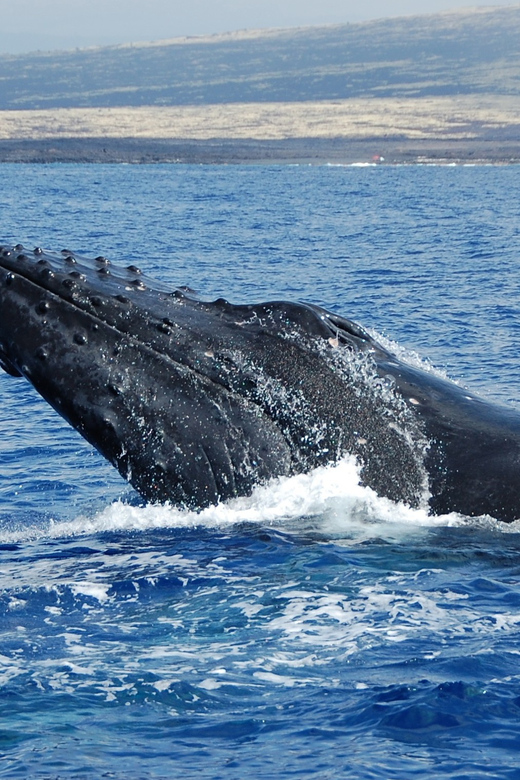
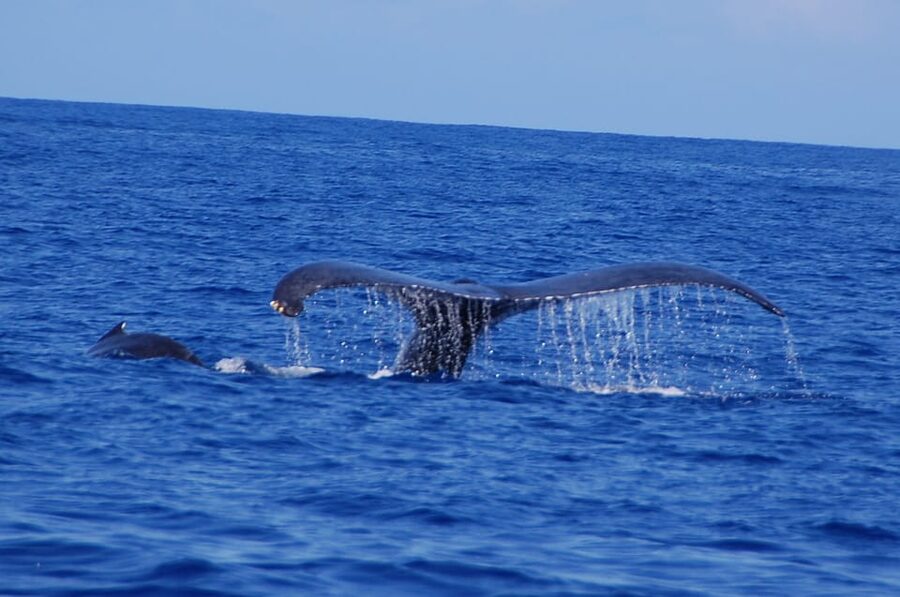
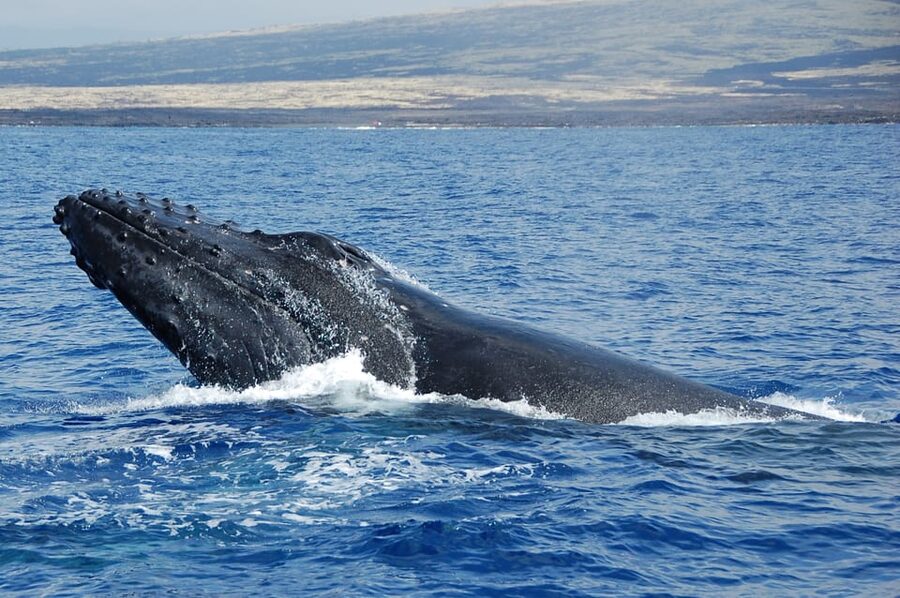
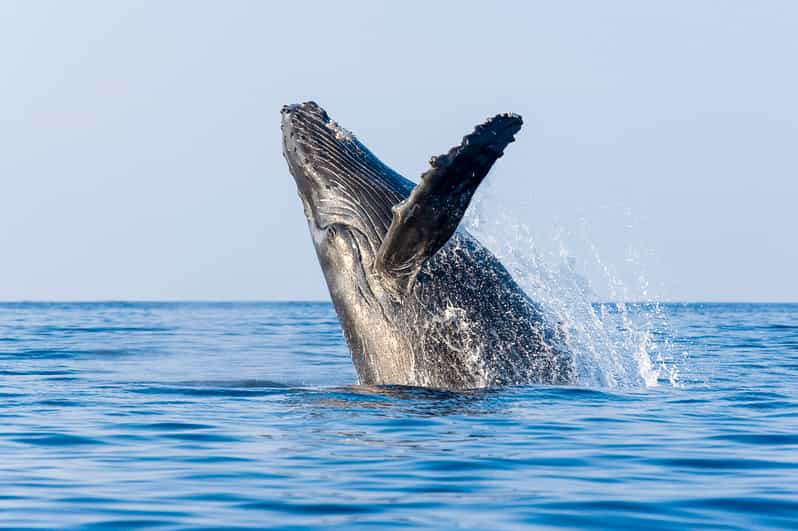
The most exciting sightings can come in several forms. A whale may breach, slap the water, raise its tail, or surface beside another whale. Mothers and calves may travel together, with the calf’s smaller body making the difference clear.
A breach is the scene people hope for, but it is only one possibility. A whale surfacing repeatedly, circling the boat, or slapping the water can be just as absorbing. One cruise included around 15 minutes of repeated slapping, creating a loud, steady sound across the water.
The captain’s positioning matters here. A good boat position gives you time to watch without constantly turning your head. Past cruises have had captains reposition several times for better views, and some crews stayed out longer than expected while searching for a stronger encounter.
The boat is not allowed to make the whales perform. That is a benefit, not a weakness. You are watching animals that choose when and where to surface. The crew’s job is to look for them and give you a clear view while respecting their space.
Dolphins and other surprises near Kona
A whale cruise can produce more than humpbacks. Spinner dolphins have appeared near the harbor and farther along the route. You might see them racing the boat or flipping through the water, though their behavior is also unpredictable.
Past outings have included dolphins, flying fish, sharks, rays, and even a whale shark. These sightings are extras, not promised parts of the cruise. Still, they make the time between whale sightings more interesting.
This variety is one reason I prefer the 150-minute format. If whales are quiet for a stretch, the crew can continue searching and keep an eye out for other life. You are not limited to a short harbor loop.
Do not turn the trip into a checklist, though. If you see a dolphin but not a whale, the main purpose of the excursion has not been met. The no-sighting policy provides some protection: if no whales are spotted, you receive another cruise for free. It is a replacement cruise, not a refund, so this matters most if you have enough flexibility in your Kona schedule.
Crew style and the value of the $115 price
At $115 per person, this is not a bargain-bin harbor ride. I think the price can make sense if you value the full 2.5 hours, the hydrophone, the covered boat, and an active search led by a captain and crew.
The strongest part of the service is the human attention. Captains such as Bryce, Jacob, Aidan, and Simon have been singled out for their humor, whale knowledge, and ability to keep searching. Crew members have also helped passengers stay comfortable, directed people to sightings, offered snacks and drinks, and kept children occupied with small touches such as bubbles.
That does not mean every departure is flawless. The sound system can be hard to follow from the main deck, and music may not suit people who want a quiet natural experience. The wildlife itself can also make the value feel uneven. A boat full of breaches is a superb deal; a day with distant blows and no close approach may feel expensive.
I would compare this cruise with the cost of other Kona whale trips by asking what is included, not just looking at the headline price. A shorter trip may cost less but give the captain less time to search. A larger boat may offer more space but less personal direction. Here, the snacks and drinks are modest, but they remove the need to pack much beyond water and personal medication.
Who should book this cruise
This outing suits families, couples, first-time whale watchers, and anyone who wants a structured way to see winter wildlife off Kona. Children can enjoy the movement, dolphins, and snacks, while adults may appreciate the hydrophone and the explanations about whale behavior.
It is also a good choice if you want a boat experience without committing to a full-day trip. Two and a half hours is long enough to give the crew a fair chance, but short enough to fit around other Big Island plans.
You should think twice if you are pregnant or have heart or back problems, since the experience is specifically listed as unsuitable for those conditions. Motion sickness is another real concern. Bring medication, and take it at least one hour before departure, or the night before when appropriate, since waiting until you feel ill is less effective.
Bring sunscreen, a hat, sunglasses, and a sweatshirt or long-sleeved jacket. Pack a camera if you like, but keep your attention on the water. The best moment may last only a few seconds.
Booking details and cancellation terms
The cruise is conducted in English with a live guide. You can reserve now and pay later, which helps if you are still arranging your Kona schedule.
The booking information allows cancellation up to 24 hours in advance for a full refund, but it also states that tours canceled within 48 hours are nonrefundable. Because those time limits conflict, confirm the exact policy shown for your selected departure before paying.
If the operator cancels the trip within the stated conditions, the replacement arrangement may depend on weather and availability. If the boat goes out but no whales appear, the stated remedy is another cruise at no charge. There is no cash refund for a no-sighting departure.
Should you book the Honokohau whale cruise?
I would book it if you are visiting Kona during humpback season and can accept wildlife’s lack of a timetable. The hydrophone, long search time, covered catamaran, and attentive crew give this trip more substance than a quick ride out and back.
I would not choose it if you need guaranteed close-up views, a silent boat, or hotel transportation. The sound system may be weak from some seats, music can distract, and a close encounter remains a matter of luck.
For most people, the sensible approach is to schedule the cruise early enough in your stay that you could use the free replacement trip if no whales appear. Bring motion sickness medicine, dress for sun and wind, and treat every breach as a gift rather than a promise. That is the right mindset for this enjoyable, well-supported Kona wildlife outing.
FAQ
Where does the whale-watching cruise leave from?
The meeting point is Honokohau Harbor on the north side, near the pavilion and public restrooms.
How far is Honokohau Harbor from Kona Airport?
The harbor is about 4.5 miles south of Kona International Airport.
How far is the harbor from Kailua-Kona?
Honokohau Harbor is about 3.5 miles north of Kailua-Kona.
How long does the cruise last?
The cruise lasts 150 minutes, or 2.5 hours.
What can I hear during the cruise?
You can hear humpback whale songs using the boat’s underwater hydrophone speaker.
What snacks and drinks are provided?
Snacks include chips, granola bars, Rice Krispies treats, and fruit snacks. Drinks include water, juice, and ginger ale.
Is hotel transportation included?
No. Hotel pickup and drop-off are not included.
What happens if no whales are seen?
You receive another cruise for free. The stated policy does not provide a cash refund for a departure with no whale sightings.
What should I bring?
Bring sunscreen, a hat, sunglasses, a long-sleeved jacket or sweatshirt, and motion sickness medicine.
Is the cruise suitable for everyone?
The activity is not considered suitable for pregnant women or people with heart or back problems.
New whale trips around the USA
- Cape May: Weekend Whale and Dolphin Watching Cruise★ 4.7 · 71 reviews
- Cape May: Jersey Shore Whale and Dolphin Watching Cruise★ 4.4 · 230 reviews
- Cape May: Scenic Whale and Dolphin Watching Cruise★ 4.0 · 27 reviews
- Anacortes: Orca Whales Guaranteed Boat Tour near Seattle★ 4.7 · 33 reviews
- Anacortes: Full Day Whale/Wildlife Tour; Friday Harbor Stop★ 5.0 · 5 reviews
- Anacortes: Whale Watching Adventure Tour Near Seattle★ 4.8 · 45 reviews
- Juneau: 3.5-Hour Small Group Whale Watching Tour★ 5.0 · 2 reviews
- Ultimate 3.5 hour Whale Watch & Snorkel★ 5.0 · 87 reviews
Whale Watching Cruises, compared.

Whale & Dolphin Eco-Cruise with Snacks & Drinks
Read our review →
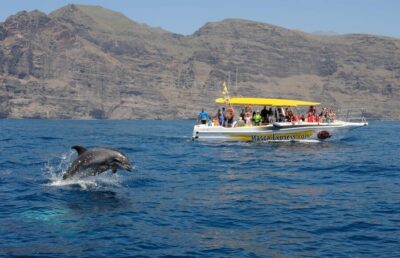
Dolphin & Whale Watching Cruise with Swim Stop
Read our review →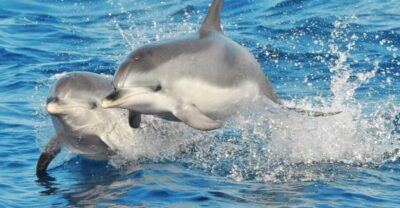
Morro Jable: Dolphin & Whale Watching Cruise, Drinks & Swim
Read our review →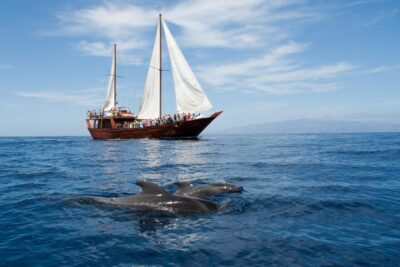
Whale & Dolphin Watching Cruise with Swim Stop
Read our review →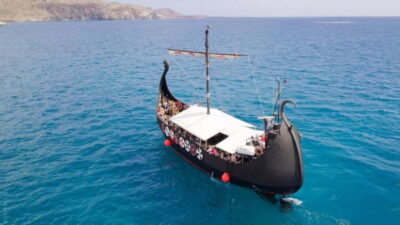
Browse the lists this tour appears in