Review · GUIDED
From Naha: Whale Watching with Pickup and English Guide
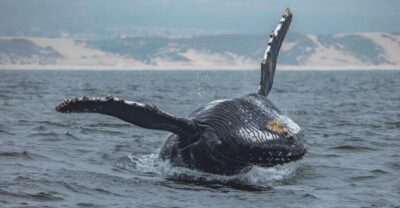
Humpback whales gather around the Kerama Islands each winter to mate and give birth, making Okinawa one of Japan’s best places to look for them. This three-hour boat trip gives you a real chance to see breaching whales, splashing tails, and spouts in open water, not in a tank or show.
I like the choice between port check-in and Naha pickup, and I like that the tour includes free digital whale photos after the boat returns. The seasonal no-sighting guarantee is another useful safeguard, though it applies only during the stated February 1 to March 15, 2026 period.
The main drawback is the limited spoken commentary. The crew can assist in English and Japanese, but much of the whale information comes through a smartphone audio guide, and some departures can feel crowded. Bring your own earphones and expect a wildlife search, not a guaranteed performance.
Key points to know before you book
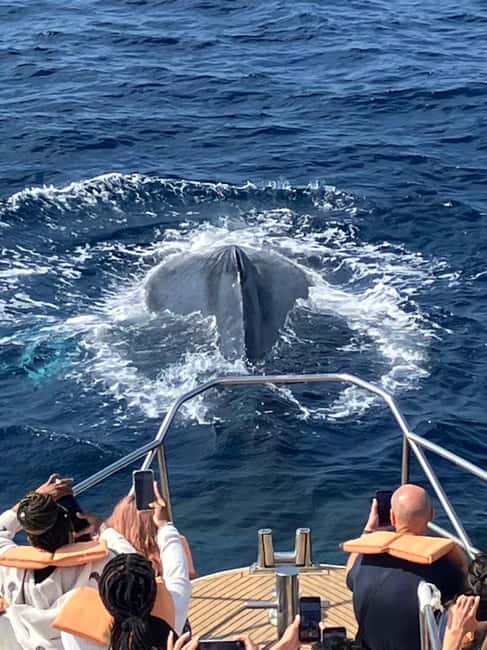
- Humpback season: Whales visit Okinawa’s warm waters each winter while migrating through the Kerama Islands.
- Three hours at sea: The boat normally departs around 9:00 or 13:45 and returns around 12:00 or 16:45.
- One-hour viewing rule: Once whales are located, observation time is limited to about one hour under Okinawa whale-watching regulations.
- Pickup from Naha: Hotel and city pickup is available from listed stops, but you must arrange it by 3:00 p.m. the day before.
- Digital guide: Scan a QR code for whale information in English, Spanish, French, Japanese, Cantonese, Mandarin, Simplified Chinese, and Korean.
- Sightings remain wild: A whale blow seen at a distance can count as a completed tour, and the no-sighting refund policy is seasonal.
Why Okinawa is a good place to look for humpback whales
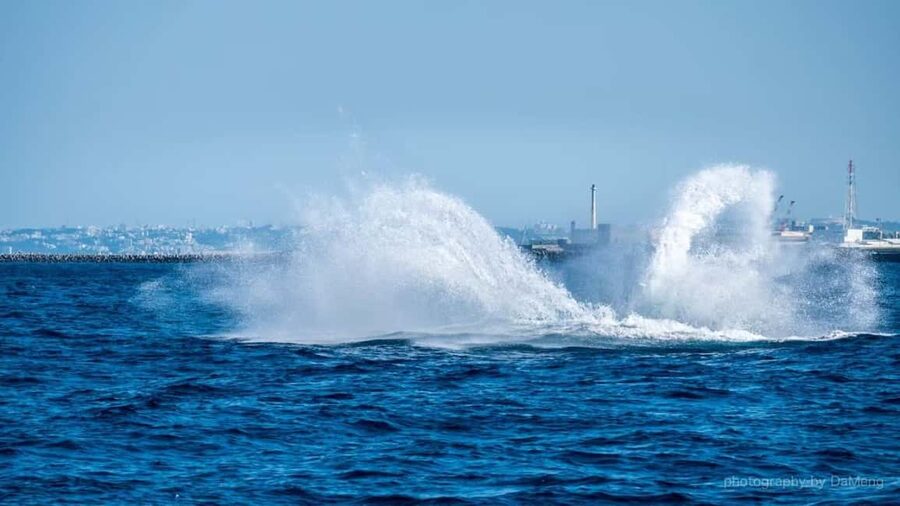
Okinawa’s whale-watching season is tied to the annual movement of humpback whales into the waters around the Kerama Islands. The whales come to mate and give birth before continuing their long journey across the Pacific.
That seasonal purpose gives the trip more meaning than simply chasing a fin on the horizon. You are looking for animals using these waters as part of a major migration route. The setting is warm and generally more pleasant than the cold-water whale trips found in many other parts of the world, though the sea can still feel rough and windy.
The whales are wild, so the captain has no control over when or where they appear. You may see a full breach, a tail rising above the water, or only a distant blow. A sighting can be brief. I would book this as a chance to observe wildlife, not as a guaranteed photo session.
The operator allows up to one hour of close observation after whales are found. That limit follows local whale-watching rules designed to reduce pressure on the animals. It may feel short if a whale is active, but the rule helps keep boat traffic from crowding the same animals for too long.
More Guided Trips in the world:
- Húsavík: Whale Watching Tour with Guide
★ 4.6 · 2,761 reviews - Reykjavik: Whale Watching Tour with Expert Guide
★ 4.3 · 2,422 reviews - Whale Watching Tour with Professional Guide from Reykjavik
★ 4.5 · 744 reviews
Starting at Miegusuku Port
The main meeting point is inside the Naha Miegusuku Port waiting room. Look for staff wearing blue Cerulean Blue shirts. Check-in begins at the stated activity time, and you will sign a consent form before boarding.
The boat normally leaves around 9:00 in the morning or 13:45 in the afternoon. The full outing lasts about three hours, although the return can be earlier if the crew finds whales quickly. The advertised return times are approximately 12:00 and 16:45.
Give yourself enough time to locate the waiting room. The port is not the sort of place where you want to arrive at the last moment while carrying sunscreen, drinks, and a jacket. Life jackets must be worn throughout the trip, not just during departure.
The meeting area can get crowded, especially when several groups check in at once. Keep your booking details easy to access and listen carefully for instructions. There have also been complaints about incorrect tour times and ticket information, so I recommend checking the confirmed departure time in the message sent the day before.
Naha pickup: useful, but check the details carefully
Pickup can make this trip much easier if you are staying in central Naha. The listed stops include T Galleria in Omoromachi, Saion Square, Tenbusu Naha, Hotel Collective, the Okinawa Prefectural Assembly, Hotel Torifito Naha Asahibashi, Pacific Hotel Okinawa, DoubleTree by Hilton Naha Asahibashi, Okinawa NaHaNa Hotel and Spa, Prince Smart Inn Naha, Hotel Aqua Citta Naha, and Hotel Peace Island Naha.
The schedule is tightly arranged. Morning pickup begins at 7:45 at T Galleria, with later stops running roughly every five to fifteen minutes. Afternoon pickup begins at 12:30. Exact times should be sent by WhatsApp or email the day before, so provide a WhatsApp number with the country code if you use that option.
Pickup must be requested by 3:00 p.m. Japanese time on the day before the tour. Book after that cutoff and you may need to make your own way to Miegusuku Port, even if you selected pickup while booking.
A few stops have special limits. Tenbusu, Hotel Collective, and some other Kokusai Dori locations may not be available on Sundays because of pedestrian-road restrictions. Read the pickup instructions rather than assuming the bus will stop directly outside your hotel.
If your hotel is not on the list, the port option is the safer choice. The tour includes transportation from the listed Naha points, not general citywide hotel service.
What happens once the boat leaves
Once everyone is aboard, the captain and crew search the surrounding waters for whale blows. The trip can feel quiet at first. You may spend much of the time scanning the horizon, watching the sea, and waiting for a sudden white splash or dark back.
The captain is described as a veteran, and the crew provides English and Japanese assistance. Still, you should not expect a long naturalist talk in English. The detailed whale information is mainly delivered through the digital guide on your smartphone.
The guide is accessed by scanning a QR code. It covers whale behavior, migration, and conservation, with language options including English, Spanish, French, Japanese, Cantonese, Mandarin, Simplified Chinese, and Korean. This is a smart way to support an international group, but it also means you need a charged phone and your own earphones.
Wi-Fi, earphones, and a dedicated audio device are not included. Downloading or opening the guide at the start may be difficult if your connection is poor, so prepare before leaving the port if possible. A portable battery is also sensible, although it is not listed as a required item.
The spoken information has been described as fairly limited on some departures. If you want detailed explanations from a marine specialist, this may feel light. If you mainly want the boat ride and the chance to see whales, the guide gives you enough background to make the waiting time more useful.
More whale watching around the world worth comparing
- Tenerife: Eco-Yacht Whale and Dolphin Watching and Swimming
★ 4.7 · 15,619 reviews - Los Cristianos Respectful No-Chase Whale and Dolphin Safari
★ 4.6 · 12,782 reviews - Reykjavík: Whale Watching and Marine Life Cruise
★ 4.6 · 9,838 reviews - From Funchal: Ecological Catamaran Dolphin Whale Watching
★ 4.5 · 8,204 reviews
The whale encounter and the one-hour limit
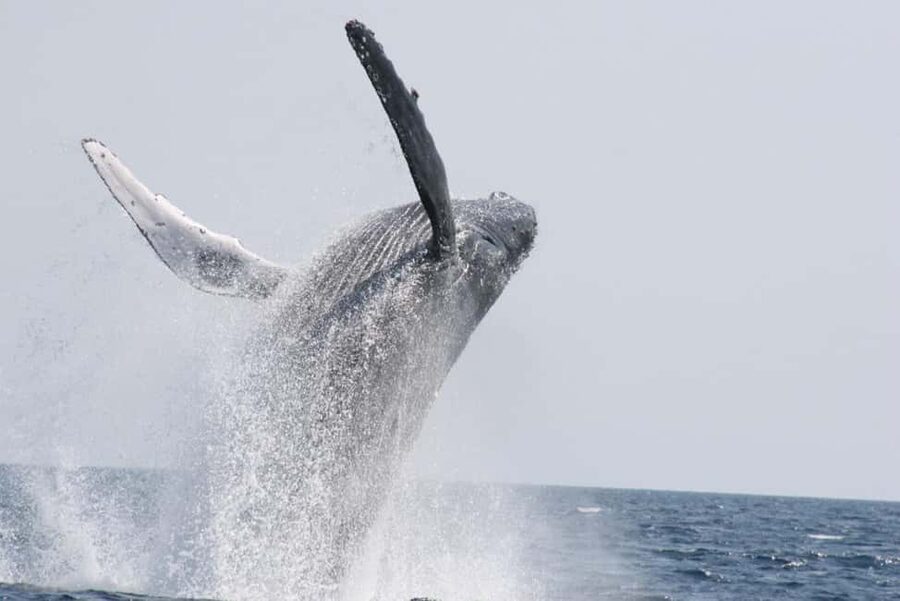
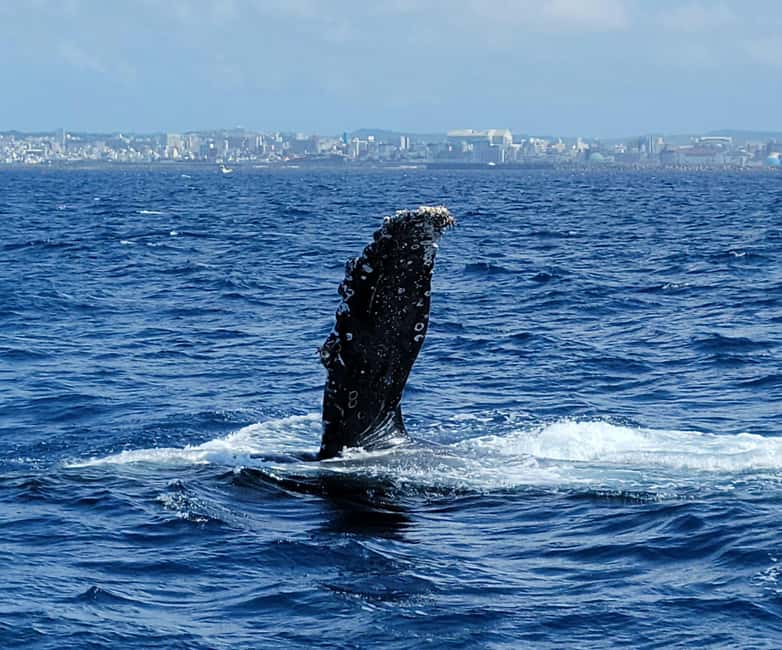
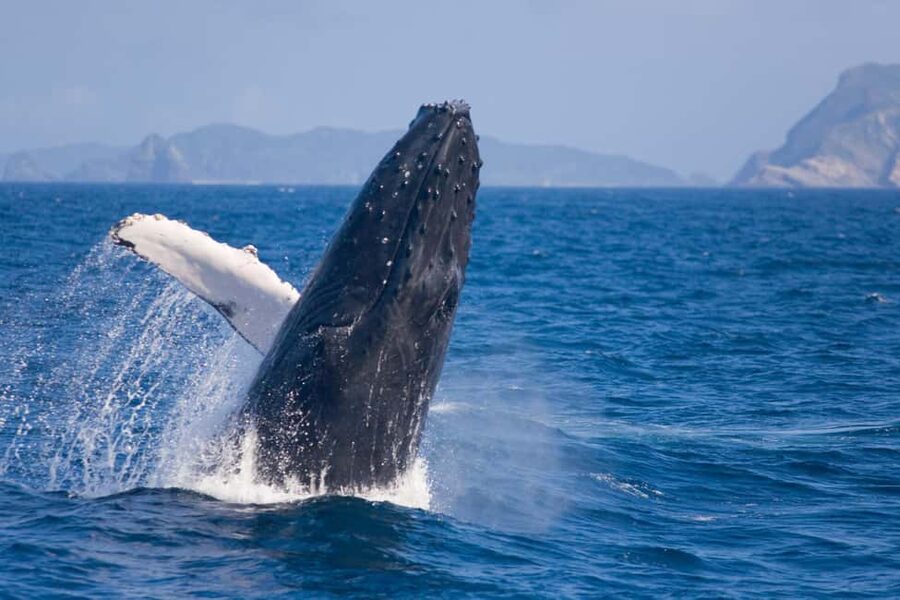
The best part of the trip is the moment the search turns into a sighting. Humpbacks can breach, slap the water, raise their tails, or surface close to the boat. Even a blow at a distance can be exciting because you are watching a free animal choose its own movements.
The boat may approach within a few meters, but do not count on that distance. Conditions, whale behavior, and the position of other boats all affect the encounter. Keep your camera ready, but do not spend the whole sighting looking at a screen. A whale can disappear before you frame the shot.
Once a whale is found, viewing is limited to about one hour. This rule is part of an Okinawa-wide agreement intended to keep observation respectful and low-stress. You may be asked to leave even when the whale remains nearby.
The tour is considered complete if a whale’s blow is seen from a distance or if anyone aboard spots one. That wording matters. A quick, distant sighting may satisfy the tour conditions even if you hoped for a close breach.
If no whale is found, the boat returns after about three hours. The general information says no refund or re-boarding is available outside the seasonal guarantee period. For February 1 through March 15, 2026, the stated policy offers a full refund or free re-boarding if no whale is seen.
One detail needs checking before payment: some tour wording refers to February 1 through March 15, 2025, while the current guarantee information states 2026. Ask the operator to confirm the exact year and conditions for your date.
Comfort, safety, and what to bring
The boat has life jackets, and wearing one is compulsory. Swimming is not allowed, and alcohol, drugs, and intoxication are prohibited. The operator may refuse boarding to anyone who is ill, hungover, or intoxicated, without a refund.
Pregnant people and those with a cold are listed as unsuitable for the tour. Infants may also be refused in extreme sea conditions. These limits are worth taking seriously because a small boat on open water can be tiring even on a calm day.
Motion sickness is the most practical concern for many people. Medicine is not included, so bring your own prevention before boarding rather than waiting until the boat starts moving. You should also bring:
- Sunglasses
- Sunscreen
- A towel
- Drinking water
- A jacket
- Motion sickness medication
- Earphones for the digital guide
The water may be warm compared with northern whale-watching destinations, but the boat ride can feel cool and windy. A jacket is useful even on a sunny day. Food and drinks are not included, so eat beforehand and bring water.
The boat has been described as somewhat overcrowded on some departures. That can make it harder to find an unobstructed viewing position and may reduce the quiet, spacious feeling you want during wildlife watching. Arrive on time, follow the crew’s directions, and avoid bringing bulky bags.
How much value do you get for $30?
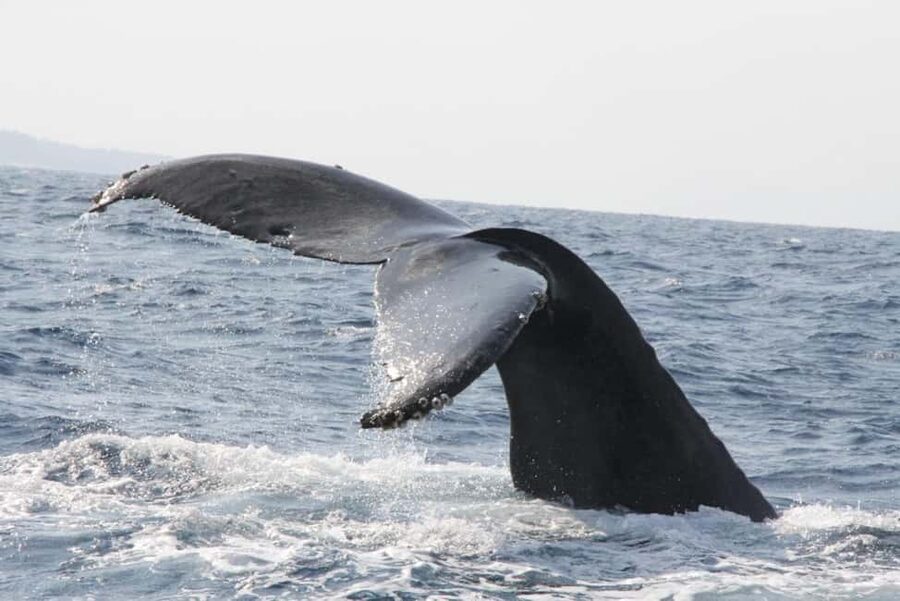
At $30 per person, this is an inexpensive way to spend three hours on the water near Naha. The price includes the boat, insurance, life jacket, whale-watching fee, English-speaking support, digital audio guidance, and free digital whale photos after the trip.
The value is strongest if you are already staying in Naha and can use the pickup service. You avoid arranging a separate taxi to the port, and the tour takes only half a day. It also works well as an add-on to a longer Okinawa itinerary.
The low price comes with limits. You are not buying a private boat, a small-group charter, or a fully narrated marine biology lesson. The boat may be crowded, and the English commentary may be brief. The photos are a pleasant extra, but you should not book solely for professional-quality images.
I consider the price fair for a wildlife search with transport options, especially during the seasonal guarantee period. Outside that period, the risk is higher because you can spend three hours at sea and receive no refund if the only sighting is distant or another person spots the whale first.
Free cancellation is available up to 24 hours before departure, and reserve-now-pay-later booking may be offered. Read the final conditions for your date, especially if you need pickup.
Who will enjoy this trip most?
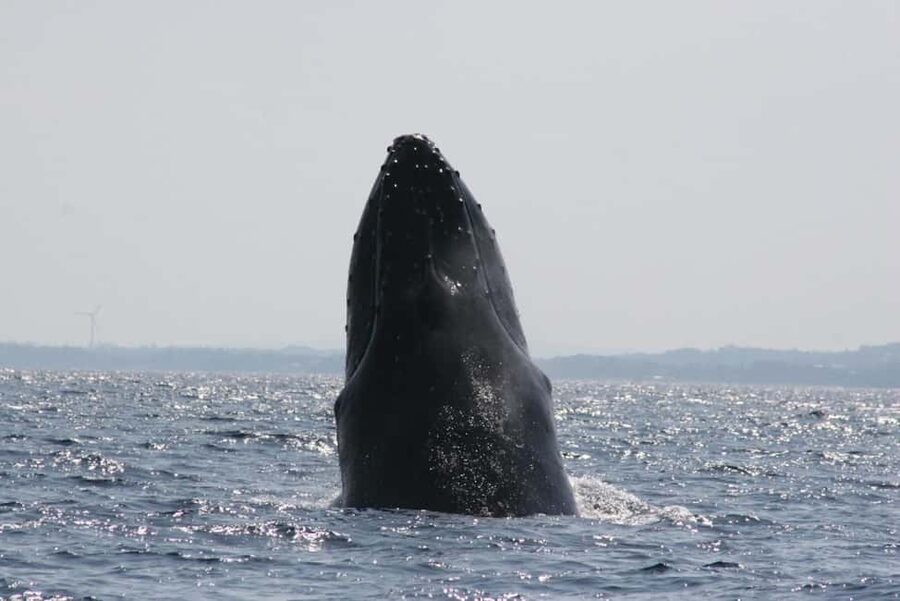
I would choose this outing if you are staying in Naha, want a short nature experience, and understand that wildlife does not follow a timetable. Families with older children, couples, photographers, and first-time whale watchers are natural fits, provided everyone is comfortable on a boat.
It is also useful for people who want multilingual support. The digital guide reaches a wide range of languages, while crew assistance is available in English and Japanese. Traditional Chinese is also listed among the live tour languages.
I would hesitate if you are pregnant, ill, nursing a cold, prone to severe motion sickness, or expecting a quiet, spacious boat. I would also look elsewhere if your main goal is a detailed live lecture in English.
The experience suits a flexible schedule. Poor sea conditions or too few participants can cancel the outing, with notice normally sent the day before and a choice of rescheduling or refund. Do not place this tour on the same day as an unmissable flight or fixed evening booking.
Should you book this Naha whale-watching tour?
Book it if you want an affordable chance to see humpback whales in their natural winter habitat and you can accept uncertainty. The seasonal refund or free re-boarding policy makes February 1 through March 15, 2026 the most reassuring time to go, subject to confirmation of the final terms.
Choose port check-in if your booking is close to the pickup cutoff or your hotel is not one of the listed stops. Bring a jacket, water, sunscreen, motion sickness protection, and earphones. Most of all, treat the trip as a respectful search for wildlife rather than a guaranteed show.
FAQ
Where does the whale-watching tour begin?
Check-in takes place inside the Naha Miegusuku Port waiting room. Staff wear blue Cerulean Blue shirts, and the boat normally departs around 9:00 or 13:45.
Is hotel pickup available in Naha?
Yes. Pickup is available from listed hotels and city stops, including T Galleria, Saion Square, Tenbusu, Hotel Collective, DoubleTree by Hilton Naha Asahibashi, Pacific Hotel Okinawa, and several others.
When must I request pickup?
Pickup must be arranged by 3:00 p.m. Japanese time on the day before the tour. Reservations made after that time may require you to meet at Miegusuku Port instead.
How long does the activity last?
The tour lasts about three hours. The usual return times are around 12:00 for the morning departure and 16:45 for the afternoon departure, although the boat may return earlier if whales are found quickly.
Are whale sightings guaranteed?
No. Whales are wild animals, and sightings cannot be guaranteed. The tour can count as complete if a whale blow is seen from a distance or if anyone aboard spots a whale.
What is the seasonal whale guarantee?
For the stated period of February 1 through March 15, 2026, the operator offers a full refund or free re-boarding if no whales are spotted. Outside that period, no refund or re-boarding is provided for a missed sighting.
Is the tour guided in English?
English and Japanese assistance is available from the crew. Detailed whale information is mainly provided through a QR-code digital guide, with audio options in several languages.
What should I bring?
Bring sunglasses, a towel, drinks, sunscreen, a jacket, motion sickness prevention, and earphones for the smartphone audio guide.
Who cannot join the tour?
Pregnant people and those who are ill, intoxicated, hungover, or suffering from a cold may not board. Infants may also be refused in extreme sea conditions, and swimming is not allowed.
New whale trips around the world
- Broome Sunset & Whale Watching Cruise★ 5.0 · 2 reviews
- Bremer Bay: Bremer Canyon Killer Whale Expedition★ 4.9 · 114 reviews
- Boavista: Whale Watching half day trip★ 4.4 · 15 reviews
- Bremer Canyon Orca Experience from Bremer Bay★ 4.6 · 35 reviews
- Beluga Whale Sanctuary – Admissions★ 3.5 · 8 reviews
- Mauritius Eco Whales Quest, 3-4 hours Expedition★ 3.7 · 23 reviews
- Boa Vista: Whale Watching Trip with Motoryacht★ 4.3 · 115 reviews
- Augusta: Whale Watching Tour★ 4.5 · 9 reviews
Guided, compared.
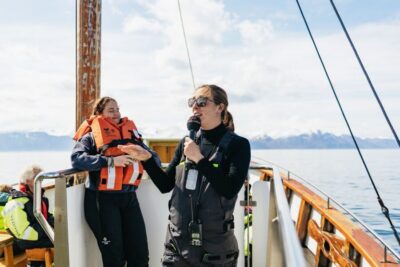
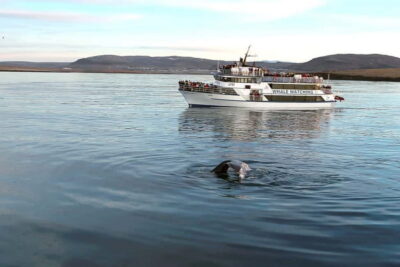
Whale Watching Tour with Professional Guide from Reykjavik
Read our review →
Whale-Watching Boat Tour with Expert Guide from Reykjavik
Read our review →