
Review · WHALE WATCHING CRUISES
Genoa: Pelagos Sanctuary Whale Watching Cruise
The best part of this Genoa cruise is the move from the harbor to 1,000 to 1,500 meters of open water, where large cetaceans are more likely to surface. A biologist leads the search, while the crew watches with binoculars for dolphins, sperm whales, beaked whales, and other marine life.
I like two things here: the guides treat the animals with care, and the trip offers real value at about $51 for four hours. The main drawback is simple: you may spend much of that time waiting, watching, and riding over open water without a guaranteed sighting.
Key points
- Deep-water search area: After about 30 minutes, the boat reaches water 1,000 to 1,500 meters deep.
- Biologist-led trip: Expect explanations about cetacean habits, with English and Italian offered.
- Wild animals, no fixed schedule: Sightings can happen at any point, but no meeting time or place can be promised.
- Strong sightings are possible: Past trips have seen striped dolphins, sperm whales, fin whales, Cuvier’s beaked whales, minke whales, turtles, and seabirds.
- Free second chance: If no animals of any kind are seen, you can return for another excursion within one year.
- Genoa’s easy harbor meeting point: Meet at Calata Mandraccio near the Bigo and the Coast Guard patrol boats.
Leaving Genoa’s Porto Antico at 1 p.m.
Your meeting point is Calata Mandraccio in Genoa’s Porto Antico, near the Bigo and close to the patrol boats of the Genoa Coast Guard. The departure is scheduled for 1 p.m., giving you a clear afternoon plan in the city.
The harbor setting is convenient for combining this cruise with time around Genoa’s waterfront. Still, allow enough time to find Calata Mandraccio, especially if you are coming from the historic center or arriving by train. The departure point is specific, so do not simply head to any boat along the port.
The first 30 minutes are spent leaving the harbor and reaching open sea. This part is less about wildlife and more about getting into position. Once the boat reaches deeper water, the search begins.
That change matters. Inshore waters may be pleasant for a coastal ride, but the operators are looking for animals that use deeper offshore areas. The setting becomes less predictable and much more exposed to wind and waves, so your comfort can depend heavily on the day.
More Whale Watching Cruises in the world:
- Reykjavík: Whale Watching and Marine Life Cruise
★ 4.6 · 9,838 reviews - Funchal: Dolphin and Whale Watching Catamaran Cruise
★ 4.5 · 5,697 reviews - Costa Adeje: Whale & Dolphin Eco-Cruise with Snacks & Drinks
★ 4.6 · 5,096 reviews
Four hours of patient searching
This is not a short sightseeing ride with a guaranteed animal encounter. The crew scans the surface, waits for a blow or fin, checks likely areas, and moves when something is spotted. You may see dolphins quickly, or you may wait nearly an hour before the first sighting.
That waiting is part of the experience, not a flaw in the schedule. These are wild animals, and they do not gather at a fixed location for boats. Calm seas make the search easier because a smooth surface helps the crew notice animals as they come up to breathe.
The best conditions are calm and windless. You can still go out in less perfect weather, but rough water makes it harder to spot a small dorsal fin and can make the ride tiring. Early and late season trips in April, May, and October may benefit from less shipping traffic, though conditions remain the key factor.
The cruise operates with a minimum number of passengers, so it does not depend on filling a large boat before going ahead. The exact group size can vary. One important point is that a busy departure can feel more like a standard boat excursion than a small personal outing, making individual conversation with the biologist harder.
What you might see in the Pelagos Sanctuary
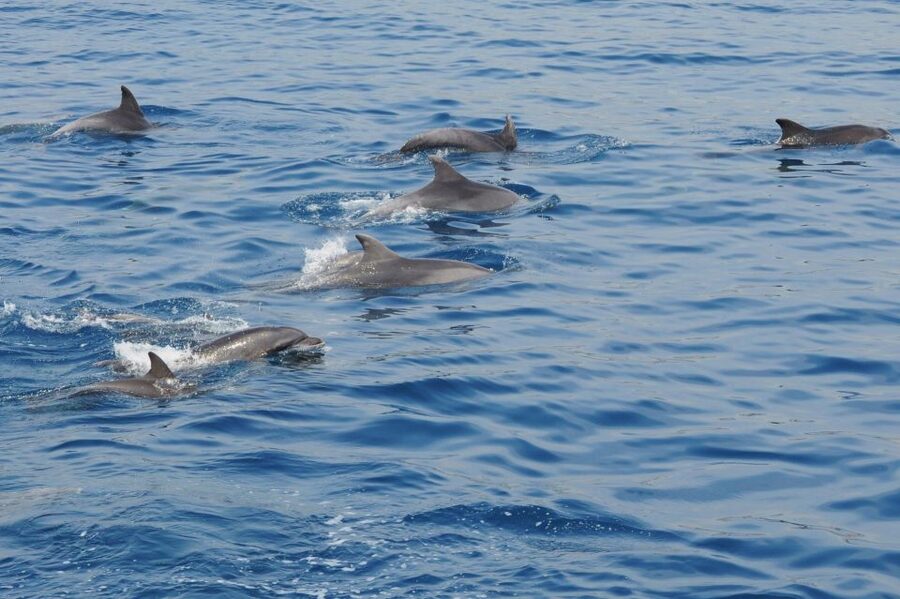
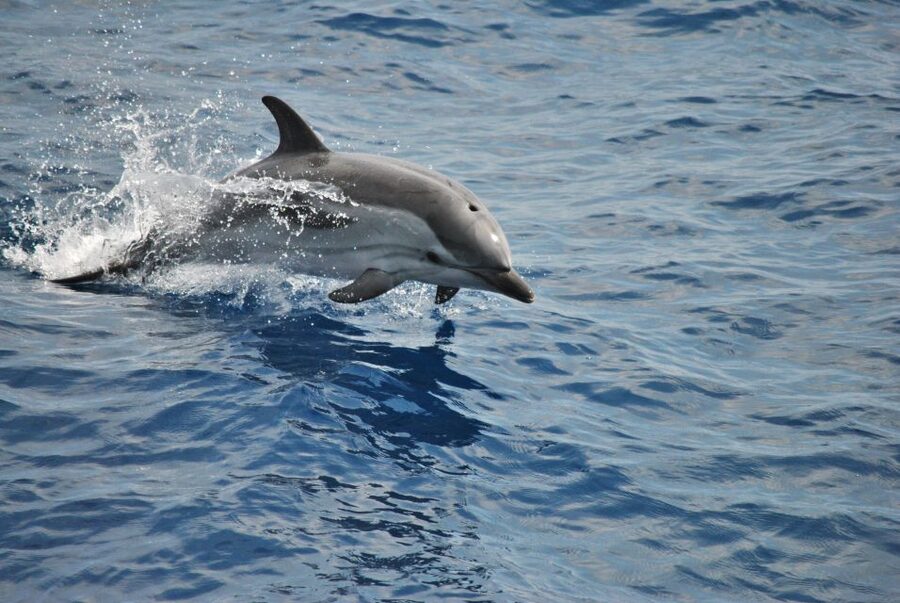
The Pelagos Sanctuary is known for a range of cetaceans, and this trip is designed to search for several species rather than chase one particular animal. Possible sightings include striped dolphins, pilot dolphins, sperm whales, Mediterranean whales, fin whales, minke whales, and Cuvier’s beaked whales.
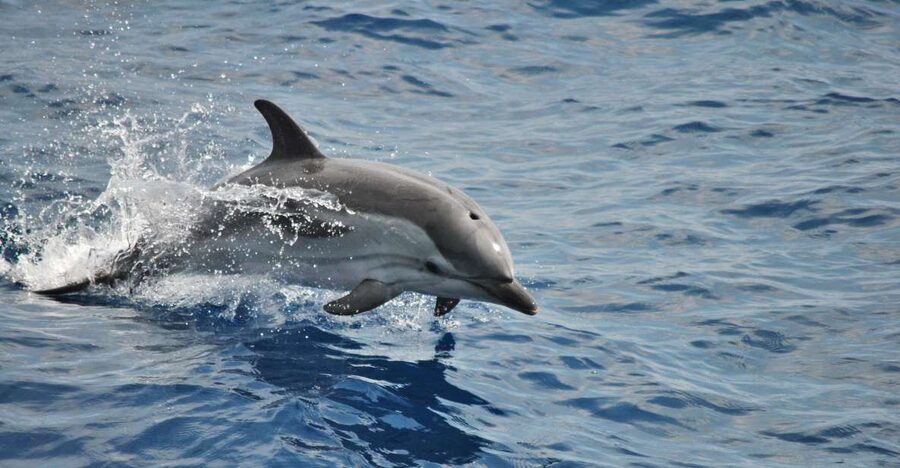
Dolphins are often the most reliable reward. Large pods may travel beside the boat, pass underneath, or race along the bow. Sightings have included groups of more than 25 striped dolphins, along with mothers and calves. That can provide far more action than a single brief whale appearance.
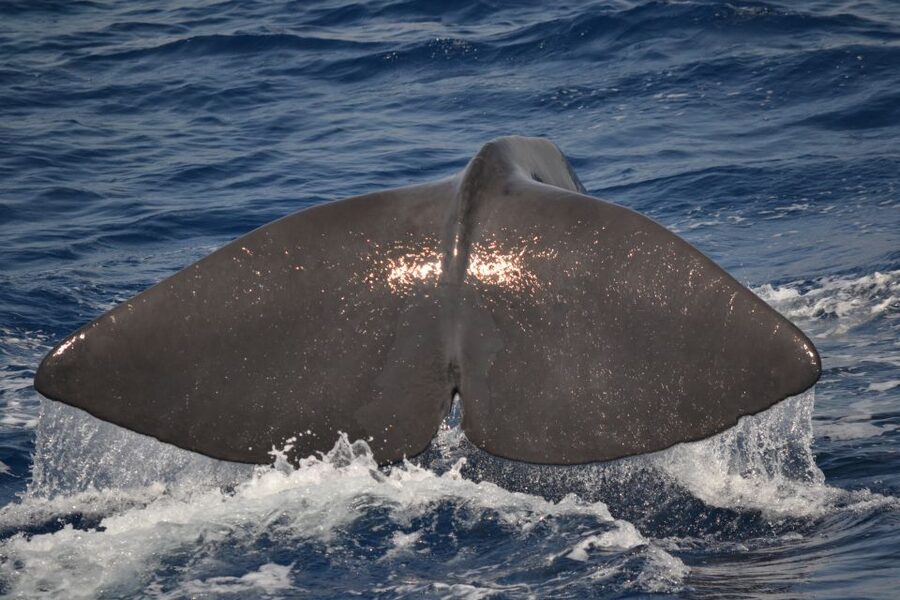
Whales require more patience. A sperm whale may surface, breathe, and disappear again, leaving you with only a short window to watch. Cuvier’s beaked whales are especially elusive, since they spend much of their time below the surface and are rarely seen by chance.
You might also see loggerhead or other sea turtles, seabirds, and smaller whales. Some outings have produced several species in one afternoon, including dolphins, beaked whales, turtles, and a sea turtle. Other days have brought dolphins but no whales. Both outcomes are normal for a wild-animal search.
The crew’s response after a sighting is part of what shapes the experience. Spotters use binoculars and alert the captain, who can move toward the area before the animals disappear. At the same time, the boat is not supposed to chase wildlife aggressively. That balance matters if you care about watching animals without turning the encounter into a pursuit.
A biologist in charge of the explanations
A biologist accompanies every excursion. The guide explains animal habits and answers questions, adding useful context to what might otherwise be a long period of staring at empty water.
English and Italian are available. An English or German-speaking guide may also be available when requested, but the listed activity languages are English and Italian. One useful caution is that commentary can be harder to follow when information is being translated while the boat is moving or when several people are speaking at once.
The strongest part of the guiding is the link between behavior and timing. You learn why a whale may vanish after one breath, why calm water helps, and why the crew may pause rather than continue toward an animal. This turns the waiting into observation instead of dead time.
Ask questions when the guide is free, but do not expect a private lesson. The boat can carry a substantial number of people, and the crew’s first job is to scan the sea and coordinate with the captain. If you want a quiet, intimate discussion with a marine scientist, this may feel more public than you hoped.
More whale watching around the world worth comparing
- Tenerife: Eco-Yacht Whale and Dolphin Watching and Swimming
★ 4.7 · 15,619 reviews - Los Cristianos Respectful No-Chase Whale and Dolphin Safari
★ 4.6 · 12,782 reviews - From Funchal: Ecological Catamaran Dolphin Whale Watching
★ 4.5 · 8,204 reviews - Juneau Wildlife Whale Watching
★ 5.0 · 7,379 reviews
Why the $51 price can make sense
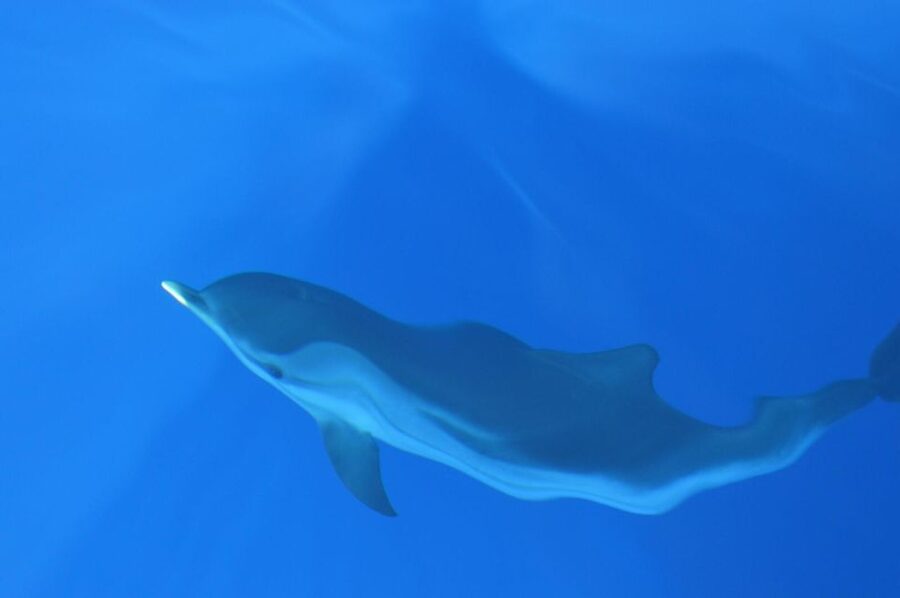
At about $51 per person, this is a reasonably priced half-day activity in Genoa. You receive a four-hour boat cruise, a biologist guide, and a serious search in offshore water rather than a short harbor ride.
The value improves on a day with several pods, whales, or turtles. Some outings have produced sperm whales and dolphins, while others have included fin whales or rare Cuvier’s beaked whales. A day with dolphins alone can still feel worthwhile when the pods stay near the boat and remain active for several minutes.
The price needs to be judged against the uncertainty. You are paying for time on the water and an organized search, not a guaranteed whale sighting. If your only goal is to photograph a whale, you may find the risk frustrating. If you enjoy marine life, open-sea views, and the chance of a rare encounter, the cost is easier to justify.
The free return option adds real value. If you see no animals at all, you can take another excursion within one year of the first trip. Contact the provider to arrange the second booking. This does not help if you see dolphins but hoped for a whale, since the offer applies when there is no sighting of any kind.
Weather, seasickness, and the right seat
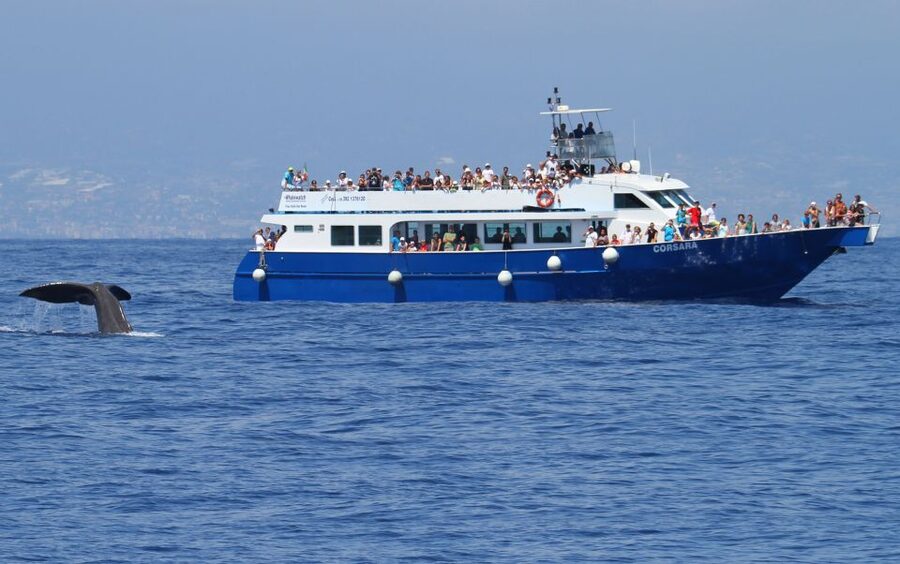
Calm weather is your friend. It helps the crew spot animals and usually makes the long periods of waiting more pleasant. Wind and chop can hide a surfacing animal and may bother anyone prone to seasickness.
One person on a past outing felt unwell near the end while the boat was drifting. That is a useful warning because even people who normally handle boats well can feel uncomfortable after several hours offshore. If you are sensitive, take your usual personal precautions before departure.
Bring protection from sun and wind, though the precise onboard facilities are not fully detailed. The boat has toilets, and drinks can be purchased onboard. You should still plan for a long stretch at sea without a normal shore-side break.
This is not suitable for people with mobility impairments. The trip requires getting onto a boat and spending four hours offshore, so consider your ability to manage boarding, movement, and a potentially moving deck.
Choosing the best month and day
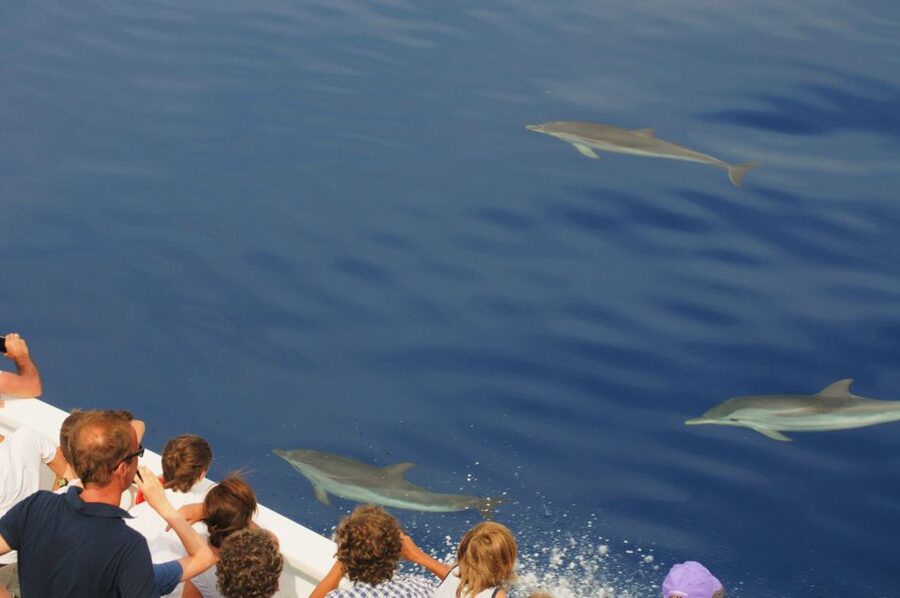
The cruise runs from April through October, mainly because conditions are more suitable during this period. The chance of a sighting is described as similar throughout those months, so there is no guaranteed magic month for whales.
April, May, and October departures are on Sundays. From June through September, departures are on Wednesdays, Fridays, and Sundays. All listed departures leave Genoa’s Porto Antico at 1 p.m.
The early and late season months may offer lighter shipping traffic. That can help the crew search with fewer interruptions, though calm seas still matter more than the calendar. A quiet day in June may be better than a windy Sunday in October.
I would choose the date that gives you flexibility afterward. A four-hour cruise can run slightly over if the crew is with animals, and one outing finished late enough to affect a train connection. Avoid booking a tight train or timed attraction soon after the return.
What the ride feels like in practice
Expect a mix of motion, open views, and long pauses. The boat heads out, reaches the deeper search area, and then the crew works the surface with binoculars. When something appears, the mood changes quickly as passengers are directed toward the sighting.
A dolphin encounter can be lively. Pods may move alongside the boat, cut across its path, or follow the vessel for a time. A whale sighting is often quieter and more fleeting, with everyone watching for the next breath or the curve of a back.
The crew may accelerate toward an animal before it disappears, but responsible operators avoid trying to force close contact. That means you may not always get a perfect photograph. In return, the animal’s behavior remains its own, rather than being staged for the boat.
The views are a genuine part of the outing. Once you are offshore, Genoa becomes a distant starting point and the sea takes over. Even on a day without whales, the open-water setting, fresh air, and changing light give the trip a purpose beyond a checklist.
Who should book this cruise?
I would recommend it to anyone who can accept uncertainty and enjoys nature on its own schedule. Families with children may find the dolphins exciting, and the educational side gives the ride more substance than a simple boat trip.
It also suits you if you have already seen Genoa’s main sights and want an activity tied to the surrounding sea. The four-hour length is long enough for a serious search, but not so long that it takes the entire day.
I would think twice if you need a guaranteed result, dislike sitting on a moving boat, or have a hard train connection afterward. The large-group feel can also disappoint you if you are seeking a private encounter with a biologist.
Book with realistic expectations. The most successful mindset is to hope for whales but value the search itself. Striped dolphins, turtles, seabirds, and the chance of a rare beaked whale can make the day worthwhile even when the largest animals stay below.
Free cancellation is available up to 24 hours before departure, and you can reserve now while paying later. Those options are useful when your Genoa schedule or weather plans are still changing.
Should you book the Pelagos Sanctuary cruise?
Book this trip if you want a fairly priced, science-led search for wild marine life from Genoa, and if you have room in your schedule for weather and animal behavior to dictate the day. The strongest reasons are the four-hour offshore search, the biologist guide, and the free return option after a completely empty outing.
Skip it if you need certainty or if open-water motion is a serious concern. For everyone else, I would give yourself a flexible afternoon, choose a calm-weather date when possible, and treat a whale as a bonus rather than a promise.
FAQ
Where does the whale-watching cruise leave from?
The meeting point is at Genoa’s Porto Antico, specifically Calata Mandraccio near the Bigo and close to the Genoa Coast Guard patrol boats.
What time does the cruise depart?
The listed departure time is 1 p.m. from Genoa’s Porto Antico.
How long does the excursion last?
The excursion lasts about four hours.
How far does the boat travel before searching?
After about 30 minutes of navigation, the boat reaches open water with depths of roughly 1,000 to 1,500 meters, where the crew begins the main search.
What animals might I see?
Possible sightings include dolphins, striped dolphins, pilot dolphins, sperm whales, fin whales, minke whales, Cuvier’s beaked whales, turtles, and seabirds.
Are whale sightings guaranteed?
No. The animals are wild, and there are no fixed times or locations for sightings. Calm seas and little wind make it easier to see animals when they surface.
What happens if no animals are seen?
If there is no sighting of any kind, you can take a second excursion free of charge within one year of the original trip. You need to contact the activity provider to arrange it.
What languages are available?
The listed languages are English and Italian. An English or German-speaking guide may also be available if requested.
Is the cruise suitable for people with mobility impairments?
No. The activity is not considered suitable for people with mobility impairments.
Can I cancel or pay later?
You can cancel up to 24 hours before departure for a full refund. A reserve-now, pay-later option is also available.
New whale trips around the world
- Costa Adeje: Whale and Dolphin-Watching Boat Excursion★ 4.7 · 157 reviews
- Costa Adeje: Whale Watching Eco Experience with Hydrophone.★ 5.0 · 11 reviews
- Puerto Colon: Dolphin and Whale Watching Speedboat Tour★ 5.0 · 92 reviews
- Costa Adeje: Whale & Dolphin Watching Cruise with Swim★ 4.7 · 154 reviews
- Nanaimo: Whale Watching Semi-Covered Boat Tour★ 4.9 · 48 reviews
- Cape Town: Hermanus Whale Watching Tour★ 3.2 · 5 reviews
- Coral Bay: 3-Hour Whale Watching Experience★ 4.9 · 25 reviews
- Cape Town: Hermanus Whale Watching Shared Boat & Penguins★ 3.3 · 6 reviews
Whale Watching Cruises, compared.
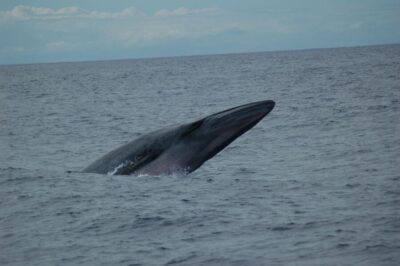

Whale & Dolphin Eco-Cruise with Snacks & Drinks
Read our review →
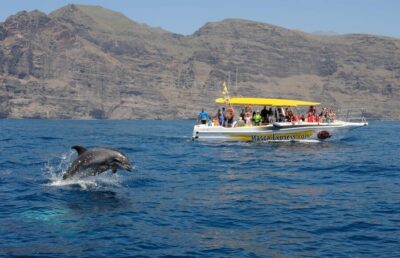
Dolphin & Whale Watching Cruise with Swim Stop
Read our review →
Morro Jable: Dolphin & Whale Watching Cruise, Drinks & Swim
Read our review →
Whale & Dolphin Watching Cruise with Swim Stop
Read our review →
Browse the lists this tour appears in