
Review · TROMSO WHALE WATCHING TOURS
From Tromso: Whale Watching in Magic Skjervoy
Orcas and humpback whales gather around Skjervøy in winter to feed on herring, and this trip puts you in a fast RIB boat among the fjords rather than behind glass or on a large sightseeing vessel. The best sightings can happen soon after leaving the harbor, but nature decides the schedule.
I like the small boat limit of 12 people, which gives you a better chance at a clear view and lets the crew respond quickly to whale activity. I also like the careful approach to the animals. The crew keeps a respectful distance, even when other boats crowd a feeding area.
The catch is the price, $356 per person, and the day is long. You leave Tromsø before sunrise, spend roughly seven hours on the road, and may face a rough, cold ride on open water. This is a serious Arctic outing, not a gentle harbor cruise.
Key points before you book
- Whale season runs from October to late January: Skjervøy is at its best when herring draws orcas and humpbacks into the fjords.
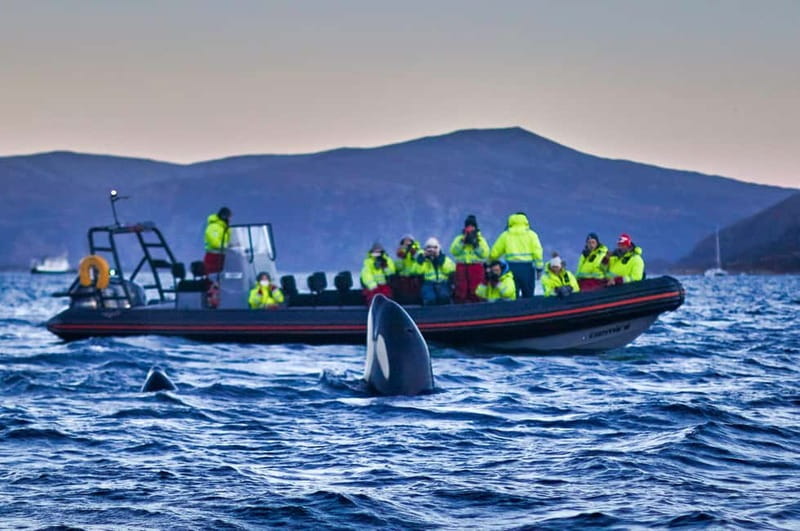
- The RIB holds only 4 to 12 people: A small group means less crowding, though seating and camera space are limited.
- The boat ride lasts 2.5 to 3 hours: Expect speed, wind, spray, and bouncing over waves.
- Your thermal gear is supplied: You still need warm layers underneath, waterproof clothing, and spare clothes.
- The full day lasts about 12 hours: The bus ride from Tromsø to Skjervøy is a major part of the outing.
- Whale sightings are never guaranteed: You may see orcas, humpbacks, fin whales, or several species, but the crew cannot control the animals.
Why Skjervøy is the right place for winter whale watching
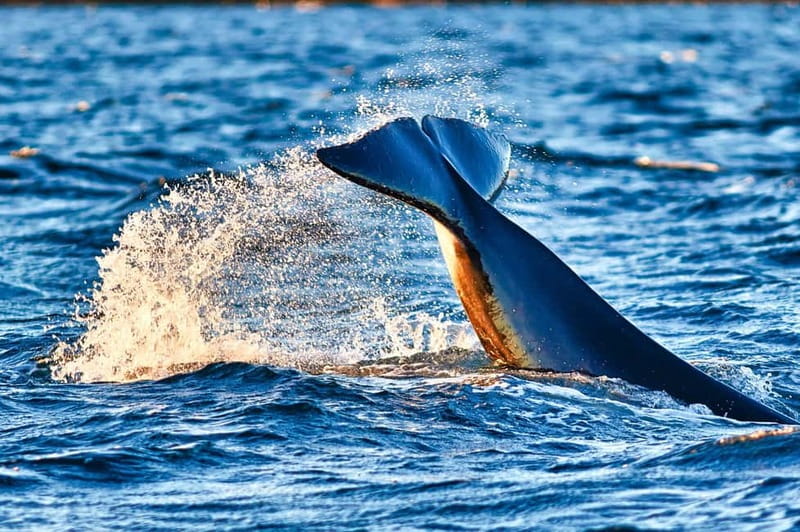
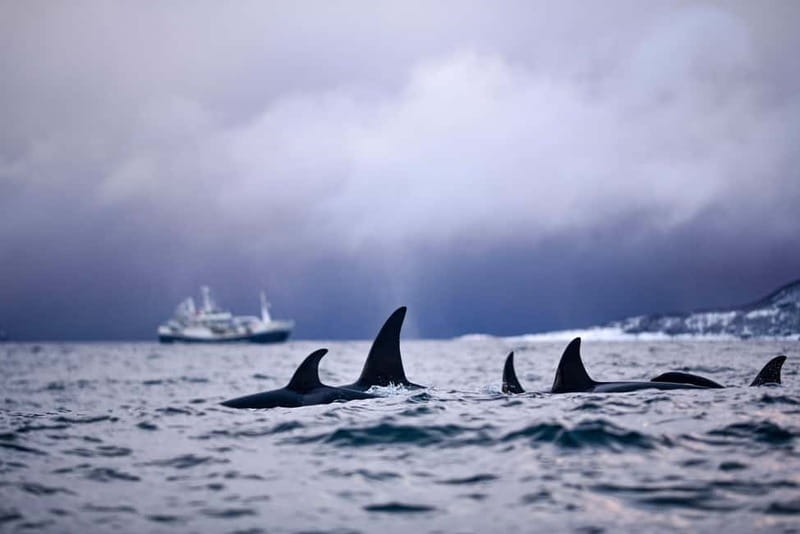
Skjervøy sits among the northern fjords of Norway, where winter herring attracts large numbers of fish-eating whales. Orcas follow the herring, while humpback whales join the feeding activity. That gives you a real chance to see several species in one outing.
The season listed for this trip runs from October through late January. Early winter brings dark mornings, snow-covered peaks, and low Arctic light. By January, daylight is still limited, but the pale sky can make the fjords look dramatic. If you are hoping for Northern Lights, the early bus ride or return journey may offer a chance, though that is not part of the whale tour and cannot be promised.
You are not visiting a marine park. The whales remain wild, unpredictable, and free to move away. Some departures have produced huge gatherings, with dozens or even hundreds of orcas and several humpback whales. Other days bring fewer sightings. That difference is part of the deal, and it is worth understanding before paying a premium price.
More whale watching around Norway worth comparing
- Tromsø: Whale Watching Tour by Hybrid-Electric Boat
★ 4.5 · 4,217 reviews - Tromsø Whale Safari with MS Gabriele
★ 4.3 · 1,937 reviews - From Tromsø: All-Inclusive Whale & Orca Safari
★ 4.5 · 1,221 reviews
The 5:20 a.m. meeting in Tromsø
The day begins at Prostneset Bus Terminal, on Samuel Arnesens gate 5. Go to the ground floor behind the Magic Ice bar and look for the large red Bussring or Arctic Route bus. The scheduled departure is 5:30 a.m., and you should arrive by 5:20.
This early start is not just a minor inconvenience. You need to be awake, dressed, and ready before dawn, then settle in for a long road journey. Bring a phone charger. After filming whales from the RIB, your battery may disappear quickly.
The bus has been described as comfortable, with Wi-Fi, USB outlets, and a toilet on some vehicles. The toilet is compact, and you should not count on a long stop during the drive. Bring water and extra snacks, since food is supplied after the boat ride rather than throughout the road journey.
The bus ride takes roughly three and a half hours each way. That means the road portion can occupy about seven hours of your day. It is a practical way to reach Skjervøy, but it is also the main reason this trip feels demanding. Sit back, look out for moose and snowy scenery, and treat the ride as part of the Arctic journey rather than dead time.
Arriving in Skjervøy and getting ready
Once you reach Skjervøy, the pace picks up. You go to a warm changing area, meet the local team, and put on the protective clothing supplied for the boat.
The package includes a flotation suit, waterproof boots, mittens, a balaclava, and ski goggles or eye protection. These items matter. The boat moves fast, and cold air over wet water can feel far harsher than the temperature shown on your phone.
Wear as many warm layers as you can comfortably fit beneath the suit. A thermal base layer, fleece, wool socks, and a warm mid-layer are sensible choices. Bring an extra set of clothes in case spray or snow gets through. One piece of advice is especially useful: bring gloves even though the operator supplies mittens, since small gaps around your hands can still feel cold while handling a phone or camera.
Changing into the gear can feel hurried, since the crew wants to get you onto the water quickly. That is not a sign of poor planning. The useful hours of daylight are limited, and the whales may be feeding far from the harbor.
What the RIB ride feels like
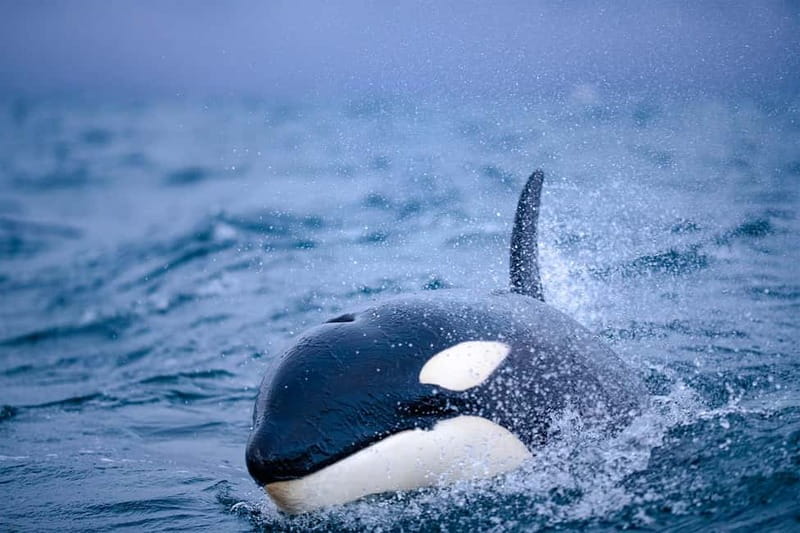
The RIB is fast, open, and built for maneuvering. It can reach whale activity more quickly than a large boat, but you pay for that speed with movement. The ride can be rough, with the boat rising and landing over waves. Several departures have been described as bumpy, windy, and wet, especially during the run out from the harbor.
You should be comfortable climbing into and out of the boat and sitting for several hours in bulky gear. The activity is rated as medium difficulty, and the minimum height is 140 centimeters. It is not suitable for people who are pregnant or who have back, heart, respiratory, mobility, or seizure conditions. The operator also lists claustrophobia, pre-existing medical conditions, and a weight limit above 120 kilograms as reasons not to take part.
Seasickness is the big practical question. Some people who expected trouble managed well, while others found the rough water hard. If you get motion sick quickly, this is not the safest choice for a carefree day. Ask a medical professional about suitable precautions before you go, since the provided information does not include a seasickness plan.
The small boat is a real advantage when the whales appear. With no more than 12 people, you are not packed into rows of seats or looking over a large crowd. The disadvantage is that camera space is tight, and the flotation suit makes it harder to turn your body. A 24 to 105 millimeter lens has been enough for close encounters. A large prime lens may be awkward, particularly if you sit away from the front.
Keep your phone or camera in a waterproof case. Spray can reach you even when the sea looks calm. A cover with a wrist strap is more useful than a loose phone in a deep pocket.
Same sea, a different boat:
- Silent Whale Watching by Hybrid-Electric Boat from Tromsø
★ 4.5 · 1,017 reviews - Bleik: Whale Watching by Speedboat with Puffins and Muffins
★ 4.7 · 326 reviews - Whale Watching RIB Safari at Skjervøy
★ 4.8 · 136 reviews - From Alta: Whale and Seabird Cruise
★ 4.6 · 136 reviews
Finding orcas, humpbacks, and fin whales
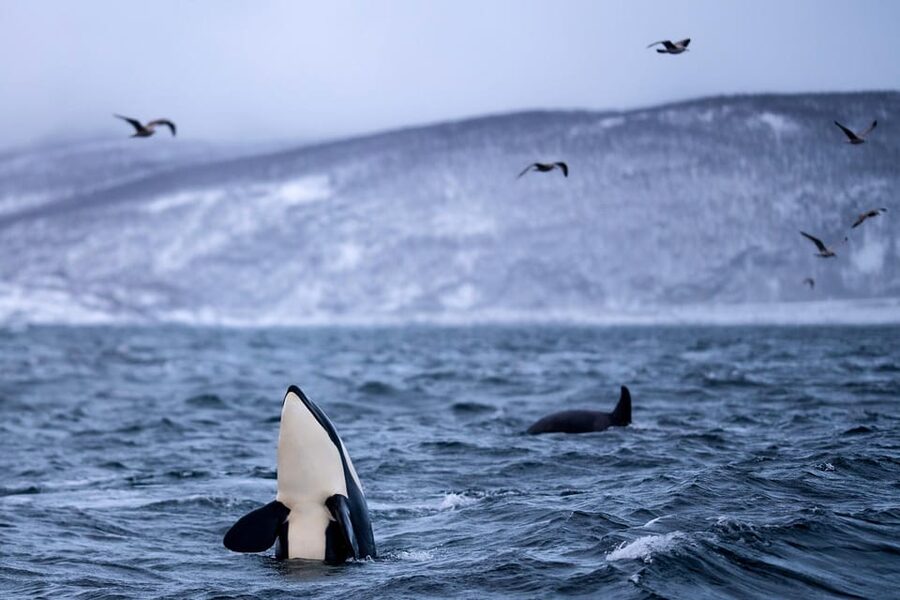
The crew uses local experience and current conditions to search for feeding whales. Guides including Kristina, Christina, Norbert, and Brigit have been praised for explaining Arctic animals, answering questions, and directing people toward activity. On a fast-moving boat, clear pointing and short instructions are valuable because a whale can surface and disappear before you finish looking.
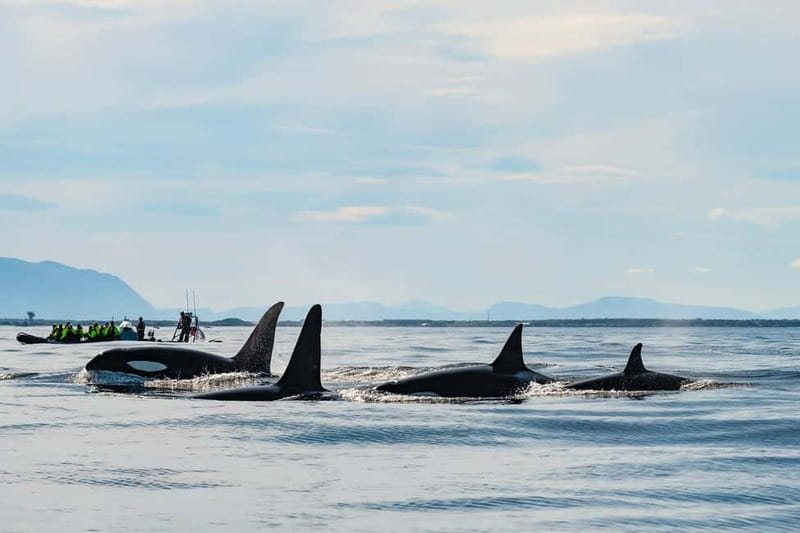
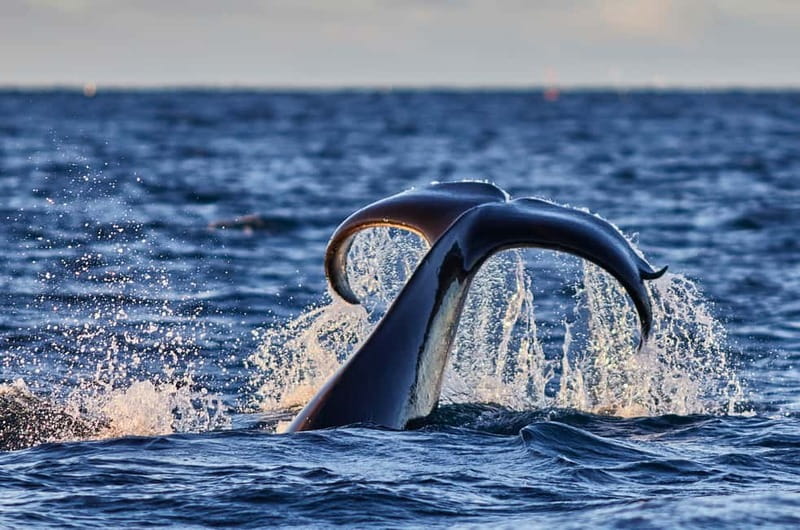
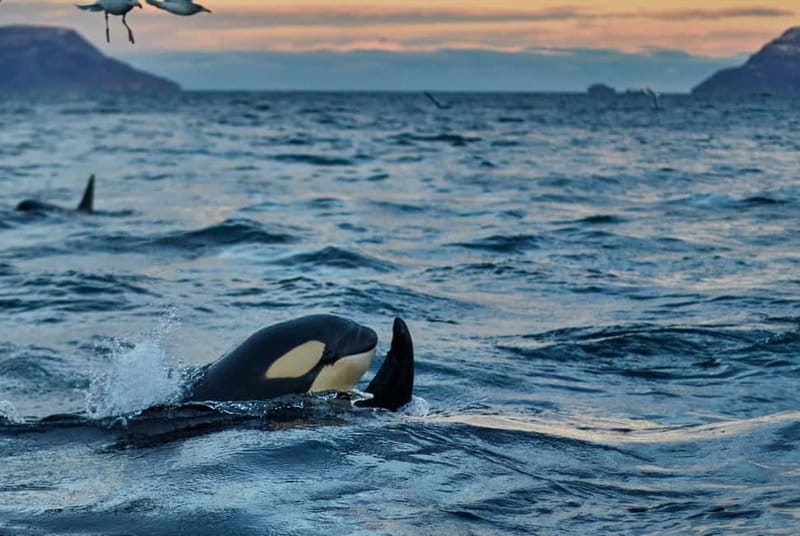
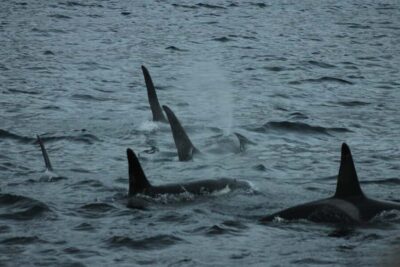
The most exciting encounters happen around herring bait balls. Orcas may work together to feed, and humpbacks can arrive in the same area. You might see a dorsal fin first, then a group of orcas surfacing in sequence. Humpbacks can appear as broad backs, blows, flukes, or sudden breaches. Fin whales have also been spotted, although no species is assured on a particular day.
The boat may stop for long periods when the animals are nearby. This is when the outing becomes less about speed and more about watching behavior. You may see calves with a pod, whales moving through the same feeding area, or fish breaking the surface as predators chase them.
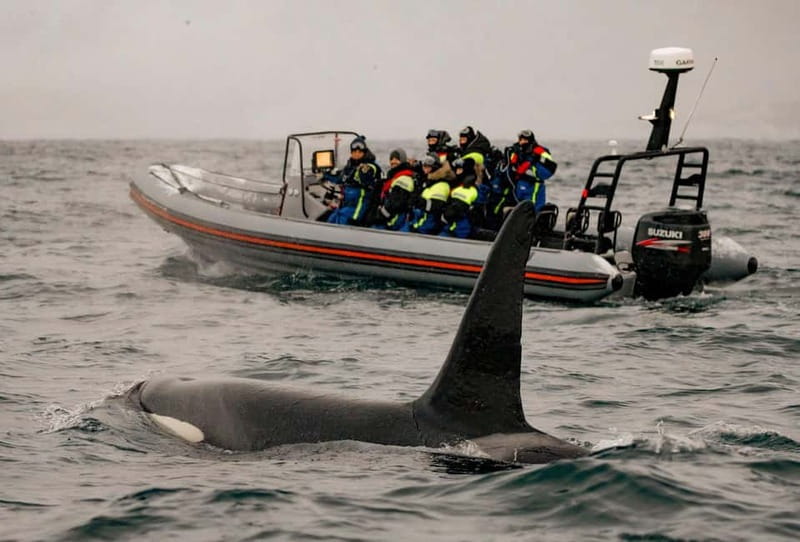
The crew’s approach to distance matters. Some boats may move too close to fishing activity or other vessels in search of a better view. This operator has been praised for following the rules and allowing whales to approach on their own terms. A pod coming within roughly 10 meters is possible, but it should be understood as the animals choosing that distance, not the crew forcing it.
You may not always have the best view from your side of the boat. Wildlife does not perform on cue, and the action can stay on one side for several minutes. A good guide should try to reposition when safe, but a moving RIB cannot instantly give every person the same angle. Put the camera down from time to time and watch the water directly in front of you.
The fjords are part of the experience
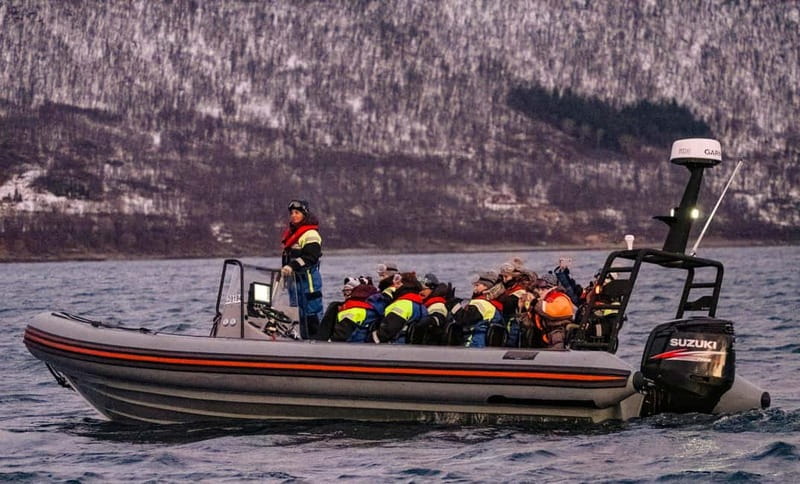
Even during a quiet spell, Skjervøy gives you something to look at. Snow-covered mountains rise around the water, and the fjords create a powerful sense of scale. The contrast between a small RIB and the surrounding peaks is one of the reasons this outing feels different from a standard whale cruise.
Weather changes the mood quickly. Clear conditions bring wide views and clean Arctic light. Snow, wind, and low cloud can make the trip feel more remote, but they also reduce comfort and visibility. The crew may cancel or alter a departure in unsafe conditions. A past departure was able to run when other outings did not, but you should never treat that as a promise that every scheduled trip will operate.
The mountain scenery also makes the bus ride worthwhile. You pass through northern Norwegian scenery on the way to the water, and the return drive may offer a chance to see moose or, if conditions cooperate, the Northern Lights. Neither is guaranteed, so consider them bonuses rather than part of the tour’s value.
Food, warmth, and the ride back
After the RIB portion, you return to a warm changing area and clubhouse. Fresh baguettes are available with chicken, ham and cheese, or cooked egg fillings. Tea, coffee, and biscuits are also provided.
That food is simple, but it arrives at exactly the right time. After three hours in cold air and spray, a sandwich and hot drink can feel like a proper meal. If you have dietary needs, contact the operator beforehand. If you eat a lot or have a long gap between meals, bring extra food for the bus.
You can change out of the wet gear before the return journey. This is another reason to bring spare clothes. Even when the thermal suit works well, your face, gloves, or outer layers may have taken spray.
Photos from the excursion are included, and you receive one year of access to an exclusive documentary series about orcas. Those extras add some value, especially if you prefer to keep your phone protected rather than taking pictures in rough conditions.
The return bus to Tromsø is long. Some people sleep; others watch the scenery or review photos. Plan for a late arrival and avoid scheduling another major activity that evening.
Is $356 a fair price?
At $356 per person, this is expensive. You are paying for the round-trip bus transfer, boat, guides, safety equipment, food, photos, and a small group rather than just a seat on a boat.
The price makes more sense if you value access to a fast RIB and a limited passenger count. A large vessel may offer more indoor comfort, but this format puts you closer to the water and lets the crew move quickly between sightings. You also avoid arranging a separate overnight stay in Skjervøy.
Still, the value depends heavily on your tolerance for uncertainty. You could see a remarkable gathering of orcas and humpbacks, as some departures have done. You could also spend the day in rough water with fewer sightings. No honest whale operator can guarantee the animals, and the cost does not buy certainty.
I would book it if seeing Arctic whales is a major reason for your Tromsø visit and you can accept the physical demands. I would hesitate if you dislike long bus rides, need a calm boat, or want a relaxed half-day activity.
Who should book this Skjervøy whale trip?
This suits you if you:
- Want wild orcas and humpback whales rather than an aquarium-style encounter
- Can manage a 12-hour day with an early departure
- Are comfortable in a fast, bumpy RIB
- Enjoy photography but can work with limited space
- Are willing to dress warmly and accept changing Arctic weather
- Value guides who respect wildlife rules and explain what you are seeing
It is a poor fit if you have one of the listed medical restrictions, are under 140 centimeters, weigh more than 120 kilograms, or cannot tolerate cold and rough water. It is also not ideal if your main goal is a leisurely cruise with plenty of room to move.
The operator offers free cancellation up to 24 hours before departure and a reserve-now, pay-later option. Those terms help with planning, but they do not remove the need to check the forecast and your own physical readiness.
Should you book it?
Book this tour if the chance to watch orcas feeding in their natural home is worth a long, cold, costly day. The strongest parts are the small RIB, the striking Skjervøy fjords, the experienced crew, and the company’s reported care around the whales.
Go prepared: arrive at the Tromsø bus terminal by 5:20 a.m., wear serious layers, protect your camera, carry a charger, and bring dry clothes. If you do that and accept that nature writes the schedule, this can be one of the most memorable outings from Tromsø.
FAQ
How long does the Tromsø to Skjervøy whale-watching tour last?
The full round trip lasts approximately 12 hours. The bus journey takes about three and a half hours each way, and the RIB whale-watching portion lasts about 2.5 to 3 hours.
Where do I meet the tour in Tromsø?
Meet at Prostneset Bus Terminal, Samuel Arnesens gate 5, on the ground floor behind the Magic Ice bar. Arrive by 5:20 a.m. for the 5:30 a.m. departure and confirm the bus with the driver.
What whales might I see?
The main targets are orcas and humpback whales feeding on herring. Fin whales and other cetaceans have also been seen, but sightings and species vary with nature and weather.
What clothing and equipment are provided?
The operator provides warm flotation suits, mittens, balaclavas, waterproof boots, and ski goggles or eye protection. You should still bring warm layers, waterproof clothing, and an extra set of clothes.
How many people are on each RIB boat?
Each boat carries between 4 and 12 participants. The small group size gives you more room than a large sightseeing boat, though camera and seating space remain limited.
Who should not take part?
The activity is not suitable for pregnant women or people with back, mobility, heart, respiratory, seizure, or other pre-existing medical conditions. It is also not suitable for people with claustrophobia, people over 120 kilograms, or anyone under 140 centimeters tall.
New whale trips around Norway
- Andenes: Responsible Whale Watching with Classic Catamaran★ 4.1 · 86 reviews
- Alta: 3.5 Hour Fjord & Whale Watching Cruise★ 4.4 · 8 reviews
- Whale Watching RIB Safari at Skjervøy★ 4.8 · 136 reviews
- Skjervøy: Whale Watching with RIB Boat and Local Guide★ 4.9 · 109 reviews
- Alta: Altafjord Whale Watching in a Heated Boat★ 5.0 · 80 reviews
- Alta: Alta Fjord Whale Watching Tour★ 4.7 · 26 reviews
- From Alta: Whale and Seabird Cruise★ 4.6 · 136 reviews
- From Alta: Small Group Whale Watching by RIB★ 4.9 · 28 reviews
Tromso Whale Watching Tours, compared.
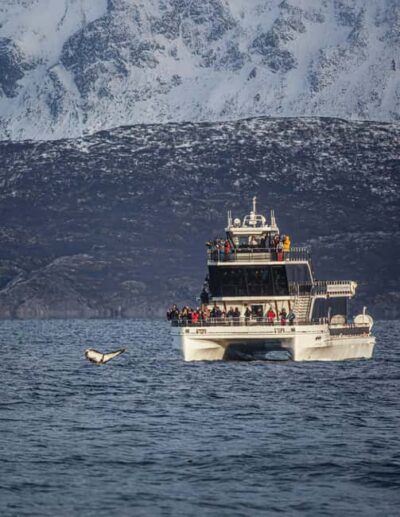
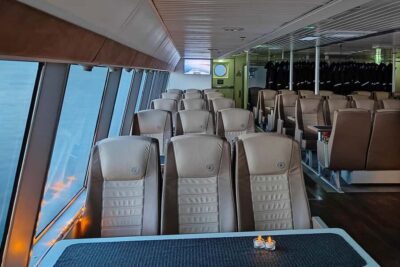
Silent Whale Watching by Hybrid-Electric Boat from Tromsø
Read our review →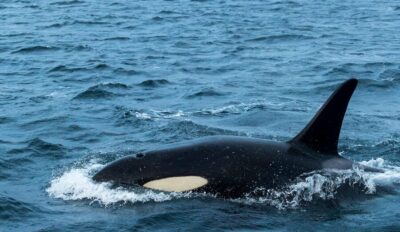
Browse the lists this tour appears in