
Review · TENERIFE WHALE WATCHING TOURS
Costa Adeje | Cetacean sighting in Tenerife South
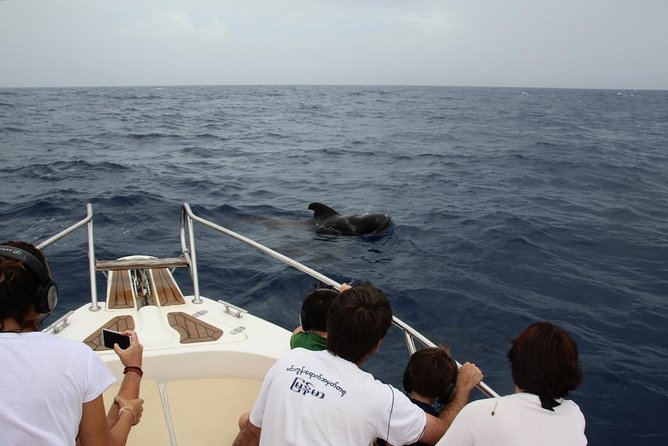
Tenerife’s most memorable wildlife encounter may happen with the engine off. On this small-group cetacean tour, the boat settles near pilot whales while you wait for them to surface, and a hydrophone brings their eerie calls up from below. You may also see dolphins, turtles, seabirds, flying fish, and, on a lucky outing, a larger whale.
I like the calm, respectful approach and the access to a biologist who can explain what you are seeing as it happens. I also like the close-to-the-water boat, with no more than 10 passengers, and the fact that guides such as David, Mirna, and Claudine record whale identities and share conservation details rather than treating the animals like a stage show.
The main drawback is the sea itself. This is an open-water trip, and motion sickness can still be a problem even on a sturdy boat. Sightings are never guaranteed, and the quiet, wildlife-first style will not suit anyone hoping for loud music, a party, or a full meal at sea.
Key points to know before booking
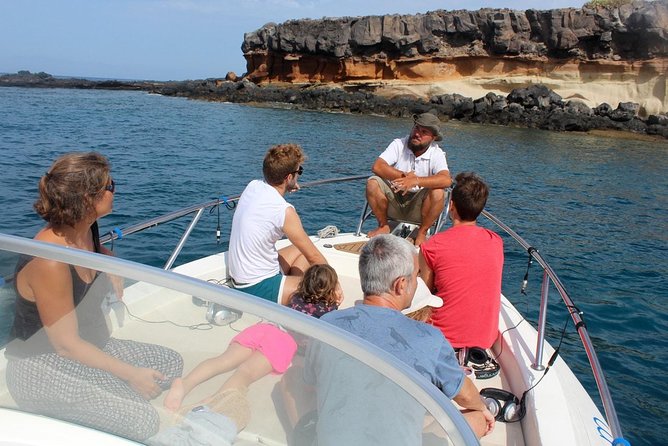
- Small boat, maximum 10 people: You get room to shift around for a view and more time to speak with the guides.
- Pilot whales are the main attraction: The waters off Costa Adeje are known for regular sightings, with dolphins and other wildlife also possible.
- A hydrophone makes this more than a viewing trip: When the engine is off, you can hear underwater whale communication.
- Biologist-led interpretation: David explains animal behavior, local marine life, and conservation in an engaging, easy-to-follow way.
- Quiet, non-chasing approach: The crew may leave an area if too many boats are already near the whales.
- Bring sun protection and prepare for movement: A hat with a secure strap, sunglasses, sunscreen, and water are sensible choices.
Why this Costa Adeje whale trip feels different
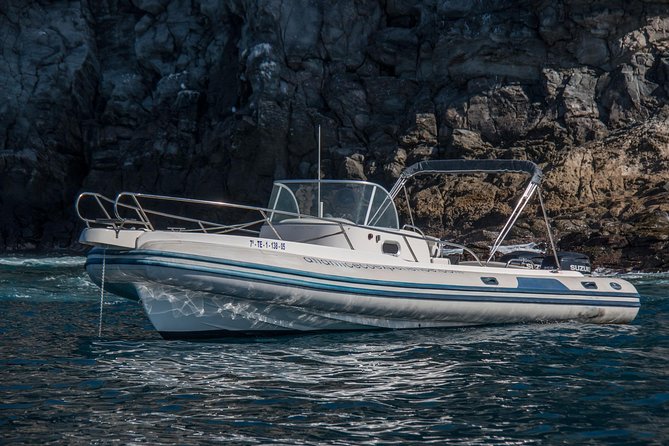
Many boat outings from Tenerife are built around fitting as many people as possible on the water. This one takes the opposite approach. The vessel, Papacho 2, carries no more than 10 passengers, so you are not looking over a crowd or fighting for a place at the rail.
That smaller scale matters most when whales surface close to the boat. You can move your gaze from one side to the other, listen to the guide, and still keep watching the water. On some departures, the group has been as small as four passengers plus two crew members.
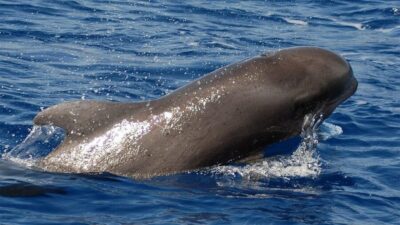
The boat also sits low enough to give you a near-water view. That makes a pilot whale’s rounded back feel much closer than it would from a large upper deck. It also means you should expect more spray and motion. The sea decides the comfort level, not the brochure.
More whale watching around Tenerife worth comparing
- Tenerife: Eco-Yacht Whale and Dolphin Watching and Swimming
★ 4.7 · 15,619 reviews - Los Cristianos Respectful No-Chase Whale and Dolphin Safari
★ 4.6 · 12,782 reviews - Costa Adeje: Whale & Dolphin Eco-Cruise with Snacks & Drinks
★ 4.6 · 5,096 reviews
From Puerto Colón to the open sea
You meet at Av. de Colón 4, at Puerto Colón Marina in Costa Adeje. The activity returns to the same meeting point, which makes it easy to fit into a day based in the resort area.
The crew gives you an initial welcome and explanation before departure. Once out of the marina, the biologist sets the tone: this is a wildlife observation trip, not a performance. The crew looks for groups of cetaceans, sea turtles, and seabirds while keeping a respectful distance.
The boat does not simply race from one sighting to the next. At times, it slows or stops and waits. That can feel less dramatic than chasing a fin across the water, but it is the right choice if you want to see natural behavior. A whale surfacing on its own terms is more meaningful than one being pushed along by several boats.
The crew may also avoid an area if too many other vessels are already present. That reduces pressure on the animals, though it can mean leaving a promising sighting before you feel finished. This is one of the few compromises built into the eco approach.
Pilot whales, dolphins, and the luck factor
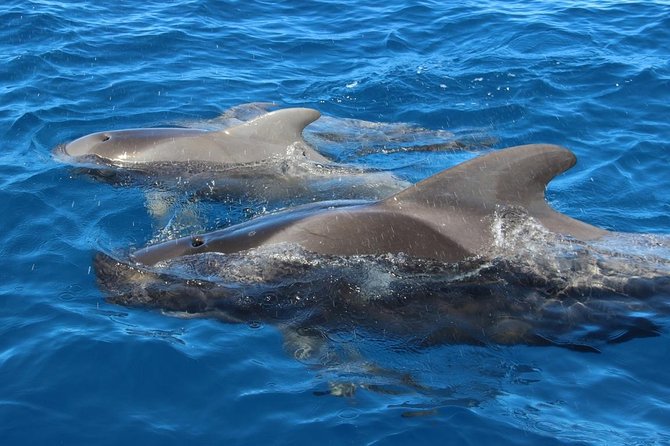
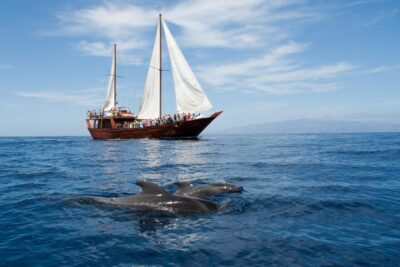
Short-finned pilot whales are the regular stars of the trip. The crew has identified individual whales and family groups from photographs of their dorsal fins, and guides can sometimes tell you which group you are watching. Seeing adults with young adds another layer to the outing, since you are not just looking at anonymous animals but at a social family group.
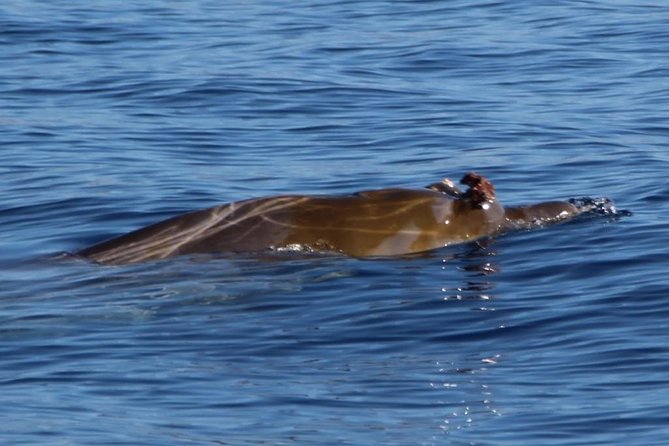
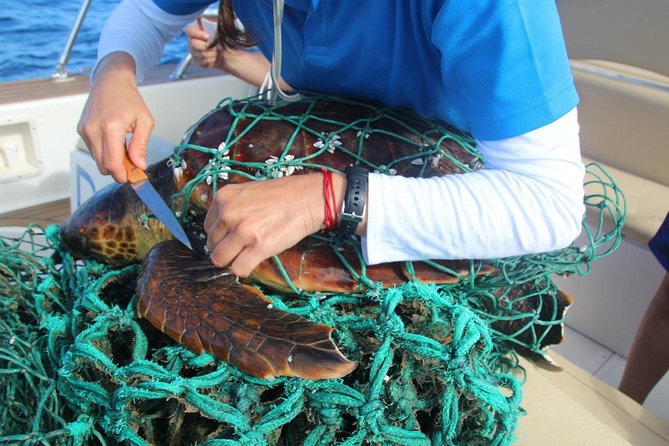
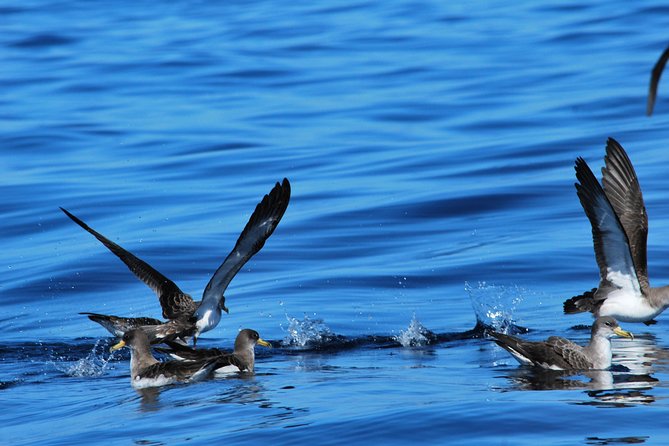
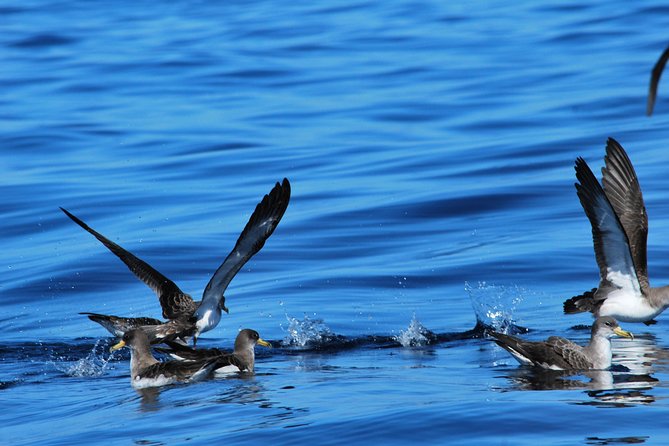
Dolphins are also possible, including sightings of more than one kind. One outing included striped dolphins, while others included pilot whales and dolphins close to the boat. Porpoises, turtles, seabirds, and flying fish are also within the stated range of wildlife.
A fin whale and even orcas have been seen on individual trips, but you should treat those as fortunate surprises, not promised parts of the route. The dependable value is the chance to observe marine life with a crew that can explain it. No responsible whale trip can guarantee a particular species.
That uncertainty is worth accepting. If you need a fixed list of animals and a guaranteed close approach, this is not the right activity. If you enjoy watching the sea and learning how to read it, the lack of certainty becomes part of the experience.
The hydrophone is the special feature
The boat’s hydrophone is more than a small technical extra. During sightings, the crew switches off the engines and lowers the listening device into the water. You then hear the sounds whales use to communicate or search for food.
This changes the mood on board. Instead of a running motor and shouted instructions, you get a quiet stretch of sea and the faint, haunting sounds of animals below. The visual sighting may last only a few seconds, but the underwater audio gives you another way to understand that the whales are active even when they are out of sight.
The engine-off policy also supports the trip’s conservation aims. It reduces noise at the moment when the animals are nearby and gives the group a better chance to observe without adding needless disturbance. You will still need patience. A quiet boat does not make wildlife appear on command.
Same sea, a different boat:
- Los Gigantes: Dolphin & Whale Watching Cruise with Swim Stop
★ 4.7 · 4,539 reviews - Costa Adeje: Whale Watching Catamaran Tour with Drinks
★ 4.7 · 3,653 reviews - Tenerife: Whale & Dolphin Watching Cruise with Swim Stop
★ 4.7 · 3,227 reviews - Los Cristianos: Viking Cruise Whales & Dolphins Watching
★ 4.6 · 3,132 reviews
David, Mirna, and the teaching on board
The guides are a major part of the value. David serves as the biologist and interpreter, while Mirna and Claudine are named as captains and crew members on different departures. The precise team may vary, but you can expect a mix of marine biology, boat handling, and practical field observation.
David’s style is lively rather than formal. He explains pilot whale behavior, local ocean conditions, evolution, and conservation, and he uses stories to make the science stick. One subject that may come up is Pakicetus, an ancient ancestor of modern whales. Another is the remarkable life of short-finned pilot whales, which can travel to great depths in search of squid.
The crew also gathers information about the animals. Photographs of dorsal fins help identify known whale families, and images may be shared after the trip through WhatsApp. That scientific record gives the outing a purpose beyond taking pictures for your phone.
You should not expect a classroom lecture from start to finish. The strongest moments come when the explanation connects directly to what is floating beside you. A guide can point out a young whale, a family relationship, or a behavior that you might otherwise miss.
A conservation-first way to watch whales
Atlantic Eco Experience presents this as an environmentally focused trip, and the details support that claim. The crew approaches animals without trying to force an interaction, cuts the engines during sightings, and avoids crowding whales with other boats.
The organization is described as a Blue Flag Certified Whale Watching Organisation. The crew also takes part in observations and data gathering. On at least one outing, passengers helped collect plastic litter from the sea. That is a small action, but it reinforces the larger point: the ocean is not just a backdrop for photographs.
This approach may feel slower than conventional whale watching. You might spend time coasting in one place, and you may leave animals if the area becomes too busy. I see that as a fair trade if your priority is responsible viewing.
The trip does not promise that every moment will be exciting. It offers a better kind of connection: you watch, listen, and learn while giving the animals room to behave normally.
What the 2.5 hours feel like
The advertised duration is about two hours and 30 minutes. The trip begins with the welcome and briefing, continues along the coast and into the sighting area, and ends back at the marina.
The early part is useful for settling into the boat and learning what to look for. Once wildlife is found, the pace becomes flexible. You may spend time moving slowly, waiting for a surfacing pattern, or listening through the hydrophone.
A cold drink is served toward the end on some departures, and there are toilet facilities below deck. These are modest but useful comforts, especially after sitting in full sun.
The time can pass quickly when animals are active. It can feel longer if the sea is rough or sightings take time. This is not a cruise with constant entertainment, so bring patience and accept that nature sets the schedule.
Is $71.35 good value?
At $71.35 per person, this costs more than a basic large-boat outing may cost, but the comparison is not quite fair. You are paying for a maximum group of 10, a small vessel, a biologist, a captain, a hydrophone, and a careful approach to wildlife.
The strongest value comes from the access to the guides. On a crowded boat, even good information can get lost in the noise. Here, you have a real chance to ask questions and hear the explanation while the animal is still nearby.
The price also includes an experience that is more focused than a general party cruise. There is no indication that a large meal, alcohol service, or music is central to the trip. If those features matter most to you, spend your money elsewhere. If you want marine life, calm observation, and useful interpretation, the price is reasonable.
The free sharing of crew photographs on some trips is another pleasant bonus, though you should not book solely for that. The main value is the encounter and the learning.
Who should book this experience?
I would choose this tour for families, couples, solo visitors, and anyone who prefers a quieter outing. Children can benefit from the guides’ storytelling, and one seven-year-old reportedly stayed engaged for the full 2.5 hours. The small group also makes it easier for the crew to include younger passengers.
It suits people who care about conservation and want to understand what they are seeing. It is also a good choice if you have already done a standard boat trip and want something more personal.
You should think twice if you suffer badly from motion sickness. One passenger still became ill despite taking medication in advance. Ask a medical professional for advice before using any remedy, and remember that no boat can remove ocean motion.
Most people can participate, and service animals are allowed. For reduced mobility, contact the company before booking because access depends on the type of mobility need and current sea conditions.
Practical tips for a better outing
Wear sunscreen before you reach the marina. The boat offers little escape from the sun, and the reflection off the water makes protection important.
Bring a hat with a toggle or other secure fastening. A loose hat can quickly become marine litter. Sunglasses, water, and light clothing are also sensible.
Keep your camera ready, but do not watch the whole trip through a screen. Whales may surface beside the boat and disappear before you frame the shot. The crew’s own photographs may give you better identification images afterward.
If you are prone to seasickness, plan ahead. The boat is described as sturdy, but rough waves can still affect you. Sit where the crew advises and tell them early if you feel unwell.
The tour is offered in English. Confirmation arrives within 48 hours of booking, subject to availability, so do not assume a last-minute place is guaranteed.
Should you book this Tenerife cetacean tour?
Book it if you want small-scale whale watching with real marine education. The combination of a 10-person limit, engine-off viewing, hydrophone sounds, and passionate guides gives this outing a clear purpose.
I would especially recommend it to anyone choosing between a crowded sightseeing boat and a quieter conservation-minded option. You may see pilot whales, dolphins, turtles, seabirds, or something rarer, but the sighting list is never guaranteed.
Skip it if you want a party boat, a large lunch, constant movement, or a completely smooth ride. For everyone else, this is one of the better ways to spend a half-day on Tenerife’s south coast.
FAQ
Where does the cetacean tour start?
The meeting point is Av. de Colón 4, 38660 Costa Adeje, at Puerto Colón Marina. The activity ends back at the same meeting point.
How long does the tour last?
The experience lasts approximately two hours and 30 minutes.
How many people can join the boat?
The boat has a maximum of 10 travelers.
What animals might I see?
Possible sightings include pilot whales, dolphins, porpoises, sea turtles, seabirds, and flying fish. Larger whales and orcas have also been seen on individual outings, but no particular species is guaranteed.
Will the boat chase the whales?
The tour is designed to approach animals respectfully without interfering with natural behavior. The crew may leave an area if too many boats are already nearby.
Can I hear the whales?
Yes. The crew uses a hydrophone after switching off the boat’s engines, allowing you to hear sounds used by the animals to communicate or hunt.
Who leads the experience?
A biologist leads the wildlife interpretation. Guides named during the experience include David, while Mirna and Claudine are named as captains and crew members on different departures.
Is the tour available in English?
Yes. The experience is offered in English.
Is the boat suitable for people with reduced mobility?
Accessibility depends on the type of reduced mobility and current sea conditions. You should contact the company before booking to ask about access to the boat.
What happens if bad weather cancels the tour?
If poor weather causes cancellation, you will be offered another date or a full refund. The activity may also be canceled if its minimum number of participants is not reached.
Can I cancel for a full refund?
Yes, if you cancel at least 24 hours before the local start time. Cancellations or changes made less than 24 hours before departure are not accepted for a refund.
New whale trips around Tenerife
- Costa Adeje: Whale and Dolphin-Watching Boat Excursion★ 4.7 · 157 reviews
- Costa Adeje: Whale Watching Eco Experience with Hydrophone.★ 5.0 · 11 reviews
- Puerto Colon: Dolphin and Whale Watching Speedboat Tour★ 5.0 · 92 reviews
- Costa Adeje: Whale & Dolphin Watching Cruise with Swim★ 4.7 · 154 reviews
- 3h Whale Watching Private tour Beneteau Oceanis 440★ 4.5 · 6 reviews
- 3h Whale watching Share Tour Costa Adeje Lina7 Mizendoha★ 3.5 · 11 reviews
- Tenerife: Accessible Whale Watching & Ocean Experience★ 4.8 · 15 reviews
- 3h Whale Watching Private Tour Costa Adeje Lina7 Mizendoha★ 5.0 · 3 reviews
Tenerife Whale Watching Tours, compared.
Eco-Yacht Whale and Dolphin Watching and Swimming
Read our review →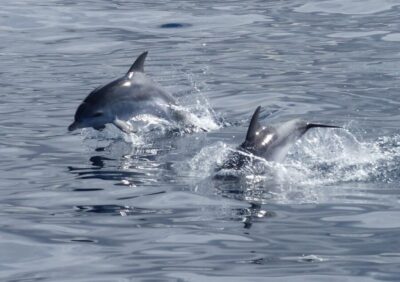
Los Cristianos Respectful No-Chase Whale and Dolphin Safari
Read our review →
Whale & Dolphin Eco-Cruise with Snacks & Drinks
Read our review →
Dolphin & Whale Watching Cruise with Swim Stop
Read our review →
Whale & Dolphin Watching Cruise with Swim Stop
Read our review →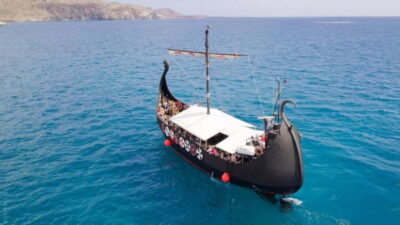
Whale & Dolphin Watching with Drinks and Snacks
Read our review →Browse the lists this tour appears in