
Review · WHALE WATCHING CRUISES
Whale Watching Cruise from Busselton, Augusta or Dunsborough
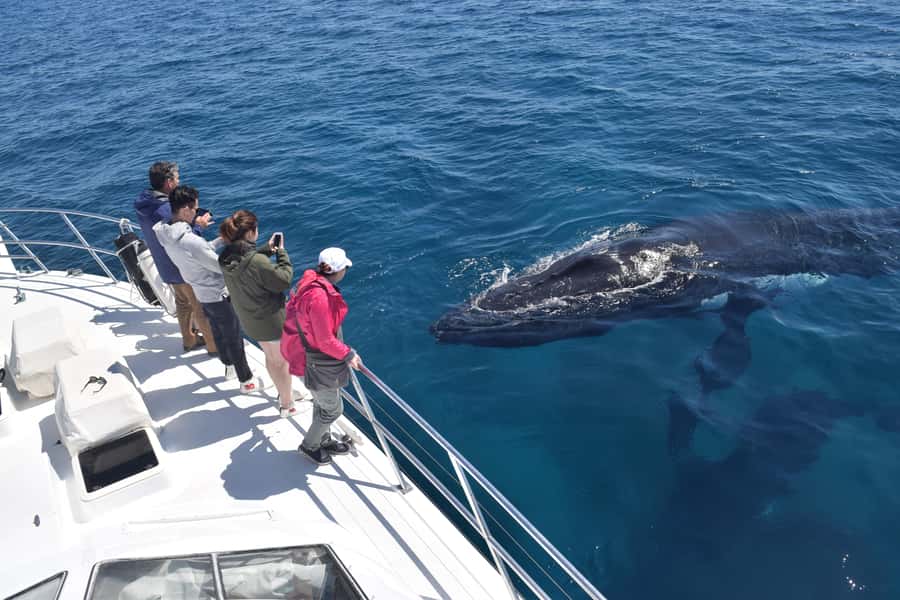
Humpback whales are the main event here, and the best trips can put you among several pods, with dolphins nearby and the occasional blue whale in view. The purpose-built whale-watching boat has two levels and a full walk-around deck, so you can change position instead of peering over someone’s shoulder.
I like the choice of departure points and the strong guiding. You can watch whales from Augusta during the northward migration, or from Busselton and Dunsborough as whales return south. I also like that a marine biologist is often onboard, with Captain Zip and other crew adding plenty of practical commentary. The catch is simple: this is an ocean trip, and the ride can be rough. Bring warm clothes and consider motion-sickness tablets if you are prone to seasickness.
Key points at a glance
- Choose your migration window: Augusta operates from mid-May to mid-August, while Busselton and Dunsborough operate from late August during the southern migration.
- Use all three viewing levels: The boat has an upper level, lower deck and full walk-around access, plus a cabin for quiet time.
- Expect more than humpbacks: Dolphins, seals, seabirds, southern right whales, pygmy blue whales and minke whales may appear.
- Learn as you watch: Captain Zip and marine biologists explain whale behavior, migration and signs such as footprints on the water.
- Good value at $67: A 2 to 2.5-hour cruise includes tea and coffee, with a complimentary repeat trip if no whales are seen.
- Plan for open water: Warm clothing is essential, and anti-nausea wristbands are available onboard for $10.
Why this whale cruise works so well
Whale watching is one of those outings where the boat and crew matter almost as much as the animals. You cannot schedule a breach or tell a pod where to swim. What you can control is how safely and comfortably you search, how long you stay with the animals, and how much you learn along the way.
All Sea Charters has been running whale trips for 15 years, and the skipper is said to have had fewer than 10 tours without whale sightings. That is not a guarantee, and nature keeps the final say, but it suggests an operator with plenty of experience reading the water and whale behavior.
The strongest feature is the boat. It is built for whale watching rather than adapted from a general sightseeing vessel. You get two levels, a safe walk-around deck and several angles for photos. The smaller passenger load also matters. On a crowded boat, the best view can disappear behind a line of people. Here, you have a better chance of moving from the bow to the side or upper deck as the whales change direction.
The setup suits families, too. Younger children can move around under supervision, while the cabin gives them somewhere to sit with books when the open water loses its charm. Educational whale books are available, and the crew provides plenty of explanation for older children and adults.
More Whale Watching Cruises in Australia
- Sydney: Whale Watching Adventure Cruise
★ 4.2 · 1,790 reviews - Brisbane Whale Watching Cruise from Redcliffe or Sunshine Coast
★ 5.0 · 997 reviews - Freedom 3/4 Day Hervey Bay Premium Whale Watching Cruise
★ 5.0 · 919 reviews
Choosing Augusta, Busselton or Dunsborough
Your departure point should follow the whale season and your holiday plans.
Augusta is the choice from mid-May to mid-August, when humpbacks travel north. The cruise leaves from Augusta Boat Harbour and heads toward the waters where whales rest during their migration. Several passengers have reported seeing whales very soon after leaving the harbour, though that will depend on the day.
Augusta also comes with a small bonus after the cruise: you receive 10 percent off at the Colour Patch Cafe. That makes this option easy to pair with a relaxed meal or coffee after returning to shore. Hotel pickup and drop-off are not included, so you need to make your own way to the meeting point.
Busselton and Dunsborough are used from late August, when humpbacks head south toward Antarctica. Geographe Bay can offer calm-looking coastal views before the boat reaches open water, though conditions can change quickly. Busselton is especially convenient if you are staying near the jetty and nearby holiday areas. Dunsborough suits visitors based around the northern end of Geographe Bay.
The central point is not just convenience. The departure location matches the direction of the migration. Augusta works for the northbound season, while Busselton and Dunsborough work later in the year for the return south. Check the selected option carefully, since the meeting point changes with the departure you book.
What the 2 to 2.5 hours look like
You board, settle into the boat and head out toward the whale grounds. There is no fixed sequence of whale behaviors, so the crew spends the trip searching, tracking and adjusting the route when animals appear.
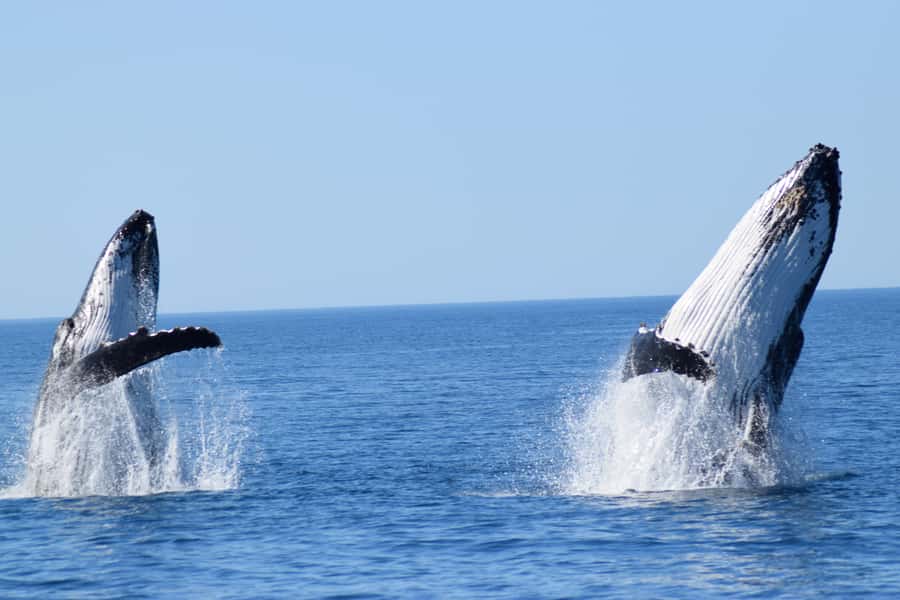
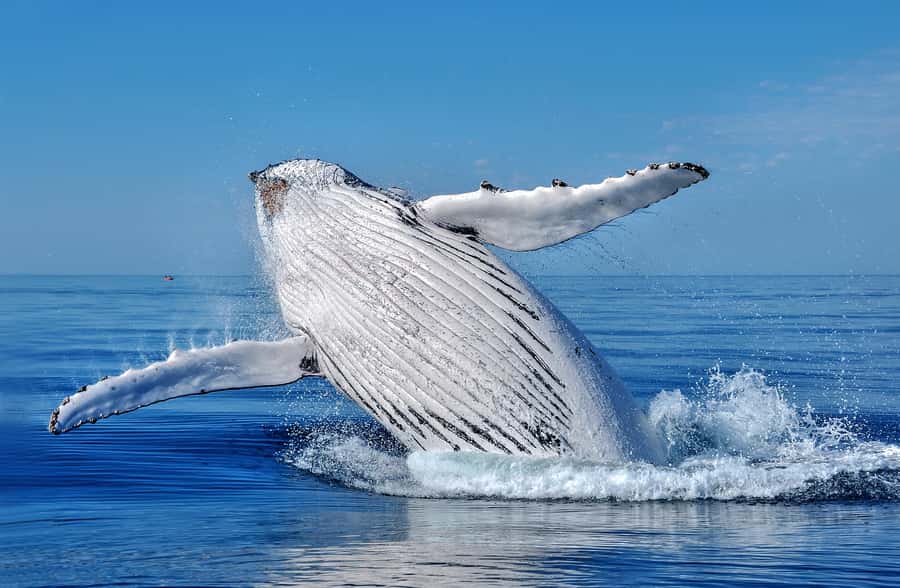
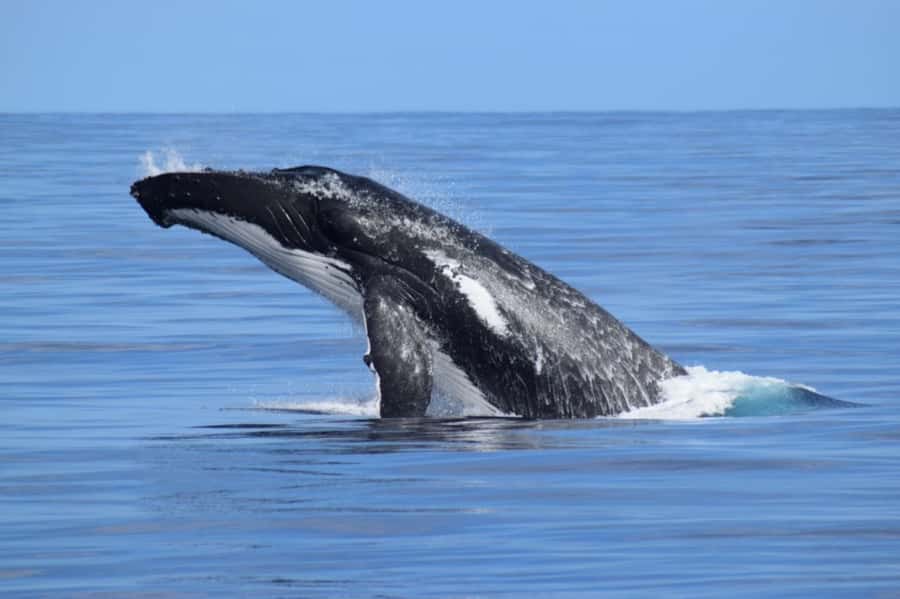
The boat may slow near a whale or pod so you can watch breathing, surfacing, tail movements and changes in direction. Some trips produce a quiet sighting of a whale traveling steadily through the bay. Others are far more active, with breaching, tail slapping, fin waving or whales approaching the boat.
The crew can point out signs that are easy to miss. A whale’s blow is the obvious clue, but experienced guides also watch for footprints, surface movement and changes in the water. One particularly useful detail shared during the trip is the term mugging, used when whales remain close to or around the boat.
Your time on the water may also include dolphins, seals and seabirds. Several sightings have included dolphins close to the boat, while other trips produced southern right whales with a calf, pygmy blue whales or a blue whale. Those species are possible, not promised, so book this as a humpback cruise with extra wildlife in the mix.
The advertised duration is two hours to 150 minutes. That is enough time to search properly without making the outing feel like a full-day commitment. One trip continued for an extra hour because whales stayed active around the vessel, but that was an unusual response to the conditions, not something to count on.
The boat, viewing spots and comfort
I would choose this cruise partly for the layout. A full walk-around deck lets you move with the action. If the whales surface on the opposite side, you are not locked into one forward-facing seat.
The upper level can give you a wider view, while the lower deck may feel more sheltered. The front of the boat is useful when animals are ahead, but it can also take more spray and movement. If you are unsure about seasickness, stay near the middle of the vessel and use the cabin when you need a break.
The boat is described as stable and purpose-built, but stable does not mean still. The ocean can be rough, and one passenger specifically found the ride challenging enough to recommend travel-sickness tablets. That is worth taking seriously. The operator offers anti-nausea wristbands for $10, compared with a stated recommended retail price of $20, but you may prefer to bring your own medication if you already know you are sensitive.
Tea and coffee are available onboard. These are welcome on a cool morning, but do not treat the cruise as a catered outing. The key comfort item is warm clothing. Even on a pleasant day at the harbour, the boat can feel cold once it is moving.
Same sea, a different boat:
- Whale Watching Tour with Spirit of Gold Coast
★ 4.5 · 884 reviews - Sydney Whale-Watching Cruise Including Lunch or Breakfast
★ 4.5 · 878 reviews - Sydney: 2-hour Express Whale Watching Cruise
★ 4.2 · 756 reviews - Spirit of Gold Coast 2.5-Hour Whale Watching Tour
★ 4.2 · 703 reviews
The crew and the learning side
The commentary is a major part of the outing. Captain Zip is known for keeping the trip lively, while crew members such as Pete, Paul, Jess, Bugsy and Tesh have been praised for guiding, steering, answering questions and helping people find the whales.
Crew names and staffing can change, so do not book expecting one particular person. What you can expect is English commentary and an effort to explain what you are seeing rather than simply point at a distant blow.
A marine biologist is onboard for some or many departures, and marine researchers are also often present. This adds useful depth to the trip. You may learn about migration routes, whale behavior, the difference between species and why a whale may remain at the surface or disappear for several minutes.
That information makes a big difference. A distant whale can look like a brief splash if you do not know what to watch for. With guidance, you are more likely to notice a blow, dorsal movement, tail lift, calf behavior or a changing travel pattern.
What you might see in Western Australia
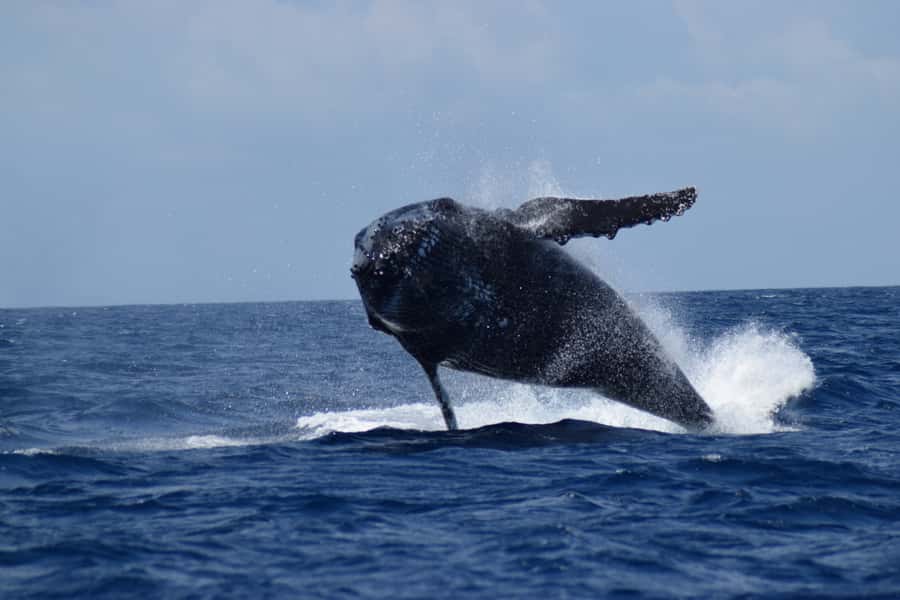
Humpback whales are the regular target. They pass along the Western Australian coast during long seasonal migrations between feeding and breeding areas. The timing helps explain the two operating areas: Augusta in the earlier northward season, then Busselton and Dunsborough later in the year as whales travel south.
Southern right whales may also appear. They are especially memorable when a mother and calf are together, though sightings depend on location and conditions.
The list of possible wildlife is unusually broad for a two-hour cruise. You might see pygmy blue whales, minke whales, dolphins, seals and a wide range of seabirds. Blue whale sightings have occurred, but they should be treated as a rare bonus rather than a normal part of the trip.
The best sightings are not always the most dramatic. A whale surfacing beside the boat can be more rewarding than a far-off breach because you can watch its body rise, breathe and slip back below. Keep your camera ready, but spend some time simply looking. Breaches are quick, and a phone held too tightly to your face can make you miss the animal itself.
Price and overall value at $67
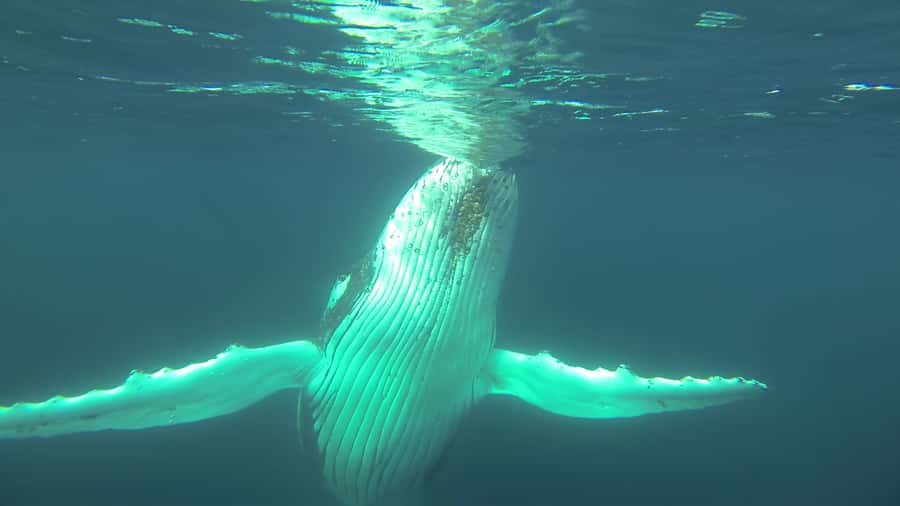
At $67 per person, this is a strong-value wildlife outing if you are already staying in the region. You receive roughly two to two and a half hours on the water, an experienced skipper, onboard commentary, a purpose-built boat and the chance to see several kinds of marine life.
The value improves because the boat is not described as a high-capacity vessel packed with passengers. A smaller group gives you more room to move and a better chance of finding an unobstructed view. That matters more than a fancy snack service on a whale trip.
You are also protected against the biggest disappointment. If no whales are sighted, the operator offers a complimentary repeat tour. That does not remove the need to plan around weather and availability, but it shows a fair approach to an experience built around wild animals.
The price does not include hotel pickup or drop-off, so add transport costs if you are not near the harbour. Tea and coffee are available, and Augusta passengers receive the 10 percent Colour Patch Cafe offer after the cruise.
Who should book this cruise?
I would recommend it to anyone who wants a focused wildlife outing without giving up most of a day. Families get a boat with room to move, a cabin and educational material. Couples and photographers benefit from the open viewing areas and the chance to change position quickly.
It is also a good fit if you care about learning as much as seeing. The marine biologist presence and skipper commentary make this more than a simple search for splashes.
You should think twice if you become seasick easily or dislike cold, windy conditions. The boat is stable and purpose-built, but the ride may still be rough. Bring warm layers, and consider taking motion-sickness medicine before boarding if you know you need it.
The cruise is less suitable for anyone expecting guaranteed breaches, a particular whale species or a calm ride every time. The operator offers a repeat trip for no whale sightings, but animals remain unpredictable.
Practical details before you go
Wear warm clothing, even if the weather looks mild at the harbour. Bring a camera, but keep both hands free when the boat is moving and follow the crew’s instructions around the viewing decks.
Pets are not allowed. English is the operating language, and hotel transfers are not included. Confirm the meeting point for your chosen departure because Augusta, Busselton and Dunsborough use different locations.
Cancellation is flexible up to 24 hours before departure, with a full refund available under the stated policy. You can also reserve now and pay later, which helps if your route through Western Australia is still changing.
Should you book the All Sea Charters whale cruise?
Yes, if you are in the region during the right season and want a reasonably priced, well-guided wildlife trip. The small-group feel, flexible viewing decks and experienced crew are the strongest reasons to choose it.
Pick Augusta from mid-May to mid-August for the northward migration, or Busselton and Dunsborough from late August for the southward journey. Pack for cold and motion, keep your expectations realistic, and let the wildlife set the pace. If you can accept that no wild animal performs on schedule, this is a very good way to spend a morning or afternoon on Geographe Bay.
FAQ
How much does the whale-watching cruise cost?
The listed price is $67 per person.
How long is the cruise?
The cruise lasts between two hours and 150 minutes, depending on the selected departure and conditions.
Where can I join the cruise?
You can choose a departure from Augusta, Busselton or Dunsborough. The meeting point varies with the option booked.
When does the Augusta cruise operate?
Augusta departures operate from mid-May to mid-August during the northward humpback migration.
When do Busselton and Dunsborough departures operate?
Busselton and Dunsborough departures operate from late August, when humpbacks travel south toward Antarctica.
What wildlife might I see?
Humpback whales are the main target. Southern right whales, pygmy blue whales and minke whales may also appear, along with dolphins, seals and seabirds.
What should I bring?
Bring warm clothing and a camera. If you are prone to motion sickness, consider bringing travel-sickness tablets. Anti-nausea wristbands are available onboard for $10.
What happens if no whales are seen?
In the unlikely event that no whales are sighted, you are offered a complimentary repeat tour.
New whale trips around Australia
- Broome Sunset & Whale Watching Cruise★ 5.0 · 2 reviews
- Bremer Bay: Bremer Canyon Killer Whale Expedition★ 4.9 · 114 reviews
- Bremer Canyon Orca Experience from Bremer Bay★ 4.6 · 35 reviews
- Augusta: Whale Watching Tour★ 4.5 · 9 reviews
- Albany’s Whale Story★ 5.0 · 4 reviews
- Nelson Bay: Whale and Dolphin Watching Catamaran Cruise★ 4.6 · 47 reviews
- Philip Island: Dolphin and Whale Cruise★ 4.4 · 48 reviews
- Moreton Island: Tangalooma Whale Watching & Dolphin Feeding★ 4.7 · 57 reviews
Whale Watching Cruises, compared.

Whale & Dolphin Eco-Cruise with Snacks & Drinks
Read our review →
Dolphin & Whale Watching Cruise with Swim Stop
Read our review →
Morro Jable: Dolphin & Whale Watching Cruise, Drinks & Swim
Read our review →
Whale & Dolphin Watching Cruise with Swim Stop
Read our review →
Browse the lists this tour appears in