
Review · PORTUGAL WHALE WATCHING TOURS
Azores Whale Watching Tour – Ponta Delgada
The best part of this Ponta Delgada outing is the chance to watch Azorean dolphins and whales in their own Atlantic home, not in a tank or staged show. Marine biologists lead the trip, explain the animals, and adjust the route to recent sightings. You might see common dolphins, Atlantic spotted dolphins, pilot whales, sperm whales, sei whales, humpback whales, or other visitors to these waters.
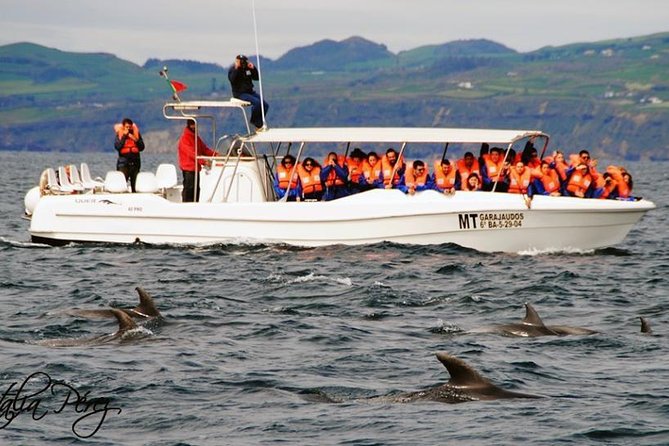
I like the choice of boats and the serious care given to wildlife. The speedboat puts you close to the water and makes the ride exciting. The catamaran gives families and anyone prone to seasickness more room, a covered cabin, and a toilet. I also like the clear sighting policy: if you see no whale or dolphin at all, you receive a full refund.
The main drawback is the sea itself. It can be rough, windy, and wet, especially on the rigid inflatable boat. The exact animals are never guaranteed, and a whale watching trip can become a dolphin watching trip, so bring realistic expectations and motion sickness medicine if you need it.
Key points before you book
- Two very different boat rides: Pick the speedy zodiac-style rigid inflatable boat, or the larger catamaran with shelter and a toilet.
- Up to three hours at sea: Time on the water depends on where the animals are feeding and how far the boat must travel.
- Marine biologists lead the trip: You receive a safety briefing and explanations about cetaceans and local protection work.
- Dolphins are often the safer expectation: Whales can appear, but sightings depend on season, weather, and the animals’ movements.
- The coast is part of the show: Even on a day with fewer whales, you get broad Atlantic views and a fresh look at São Miguel.
- Weather can change the plan: Poor conditions may cause a delay, rebooking, or full refund, and children may not be allowed on a rough-water departure.
Setting out from Marina Pêro de Teive
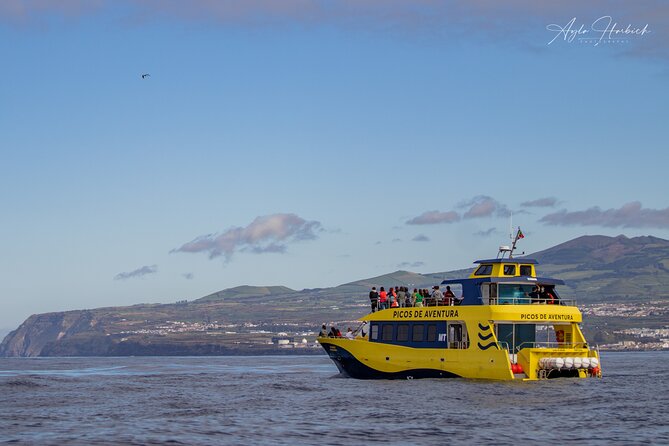
You begin at Picos de Aventura in Marina Pêro de Teive, along Avenida João Bosco Mota Amaral in Ponta Delgada. Arrive 15 to 20 minutes before departure. This gives you time to check in, collect the required life vest, and get ready without a last-minute rush.
The marina location is practical if you are staying in Ponta Delgada. It is near public transportation, and the tour ends at the same place, so you do not need to arrange a separate return ride. Hotel pickup and drop-off are not included, so plan your route to and from the marina before departure.
The first briefing lasts about 15 to 20 minutes. You learn the safety rules, how to behave around whales and dolphins, and which animals may appear in Azorean waters. This is more than a formality. On an open boat, you need to know where to sit, how to hold your camera, and what the crew expects when the boat changes speed or direction.
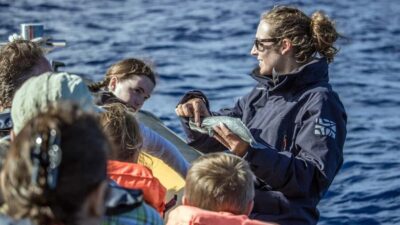
The guides are marine biologists or other marine life specialists. Their role is not only to find animals, but also to explain what you are seeing and keep the encounter at a safe distance. That matters in the Azores, where the appeal is observing wild creatures without turning the experience into a performance.
More whale watching around Portugal worth comparing
- From Funchal: Ecological Catamaran Dolphin Whale Watching
★ 4.5 · 8,204 reviews - Funchal: Dolphin and Whale Watching Catamaran Cruise
★ 4.5 · 5,697 reviews - From Ponta Delgada: Whale and Dolphin Watching Trip
★ 4.7 · 4,109 reviews
Choosing between the speedboat and catamaran
The boat choice can shape your whole day.
The rigid inflatable speedboat is the livelier option. It is built for speed and gives you a close-to-the-water position, which can make dolphin sightings feel immediate and exciting. You may get to distant observation areas faster, but the ride can be rough. Reviews describe choppy water, sharp turns, strong wind, and, on one outing, passengers becoming completely soaked.
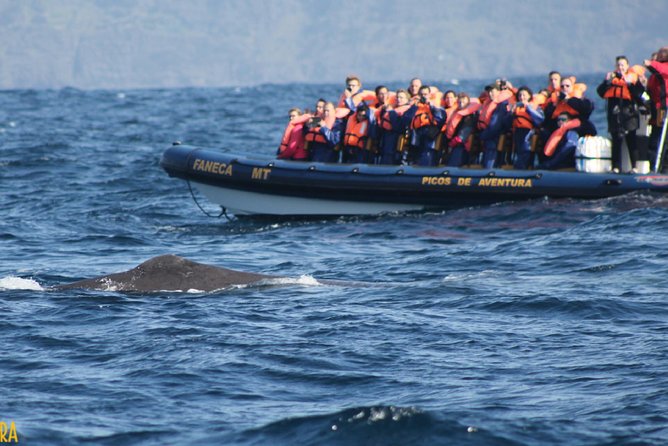
You receive a raincoat and life vest for the small boat. The raincoat is useful as a windbreak even if the sky is clear. Keep valuables in the available lockers, and do not bring more loose items than you need. A camera with a strap is far more useful than a bag that can shift around when the boat moves.
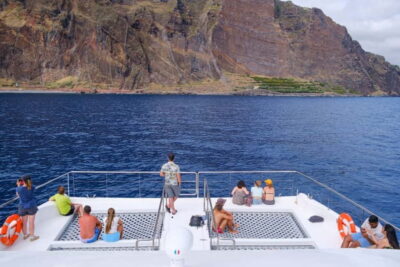
The catamaran is the better fit for comfort. It has more room, a covered cabin, an open-air upper deck, and a toilet. You can move around more easily, and the larger hull usually softens the effect of the waves. Families with small children should give this option serious thought, since rough conditions can limit children’s participation on the smaller boat.
The catamaran does not mean you avoid all motion. You are still on the Atlantic, and the sea can be windy or unsettled. It does mean you have more ways to manage the ride. If you are unsure, seasick, pregnant, traveling with young children, or simply prefer a calmer setup, the larger boat is the sensible choice.
Following the southern coast to the animals
After the briefing, you leave the marina and head along the southern coast of São Miguel. The crew does not follow one fixed sightseeing route. Instead, the day’s path changes according to recent reports from a series of observation points.
That flexible plan is important. Whales and dolphins do not appear on a schedule, and a boat that stayed in one small area would have fewer chances. The crew may travel a fair distance before reaching the best area. One account describes being around 10 miles from shore in rough water, while another notes that much of a three-hour trip can be spent reaching the animals.
This is the tradeoff of a real wildlife trip. You may spend time scanning empty water, watching seabirds, and waiting for a blow or fin. The ride itself becomes part of the experience, but it can feel long if you expected nonstop sightings from the marina.
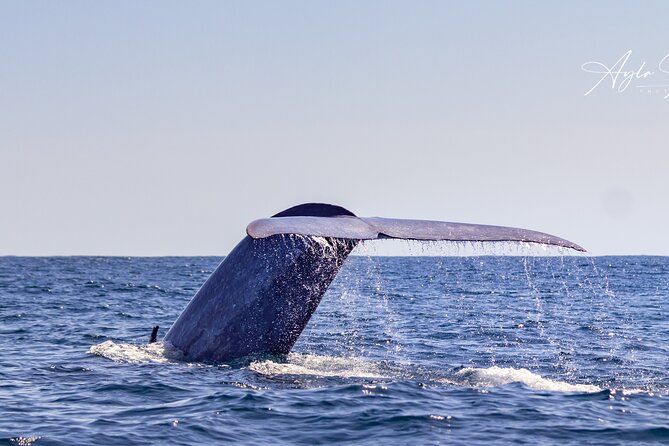
Keep your eyes moving rather than staring at one spot. Dolphins may appear in groups and vanish quickly. Whales can show only a blow, a back, or a tail before slipping below the surface. The biologists help identify small details and direct your attention, which is especially useful when several people are pointing in different directions.
What you might see in Azorean waters
The waters around the Azores are known for a wide range of cetaceans, with more than 20 species recorded in the region. The exact mix depends on the day and the time of year, but the possibilities include common dolphins, Atlantic spotted dolphins, bottlenose dolphins, pilot whales, sperm whales, sei whales, humpback whales, and other baleen whales.
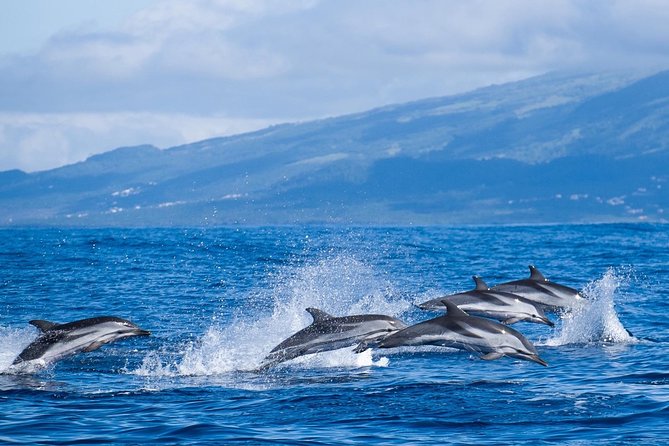
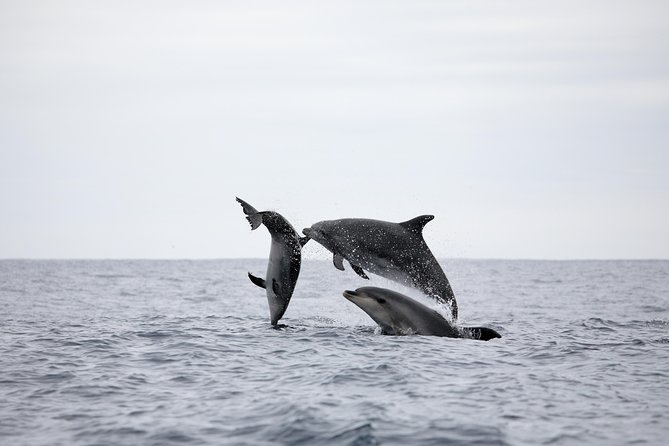
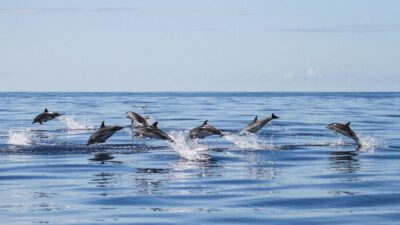
Dolphins are often the most active part of the trip. They may travel beside the boat, appear in large groups, or move in and out of the wake. Atlantic spotted dolphins are a particular possibility, and several species can appear during one outing. For children, the quick movement and visible play make dolphins easier to enjoy than a whale that surfaces only briefly.
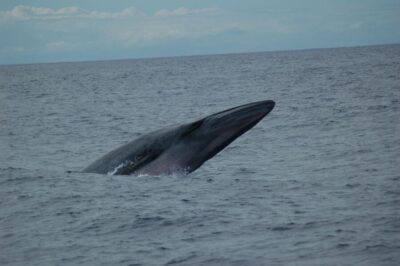
Whales require more patience. A sperm whale may offer only a distant back or blow, yet that small glimpse can be the day’s great moment. Migratory baleen whales may also pass through the archipelago, including humpbacks and sei whales. Sightings can be close enough for clear photographs, or distant enough that you mainly watch a blow and a changing shape on the horizon.
You should understand the guarantee carefully. The company guarantees cetacean sightings, meaning you receive a full refund if you see no whales or dolphins. It does not guarantee a whale, a particular species, or a close encounter. A day with several dolphin species but no whale still meets the stated sighting guarantee.
Same sea, a different boat:
- Azores: Whale Watching & Islet Boat Tour w/ Marine Biologist
★ 4.7 · 2,945 reviews - Funchal Bay: Dolphin & Whale Watch Luxury Catamaran Cruise
★ 4.2 · 2,684 reviews - All Inclusive Whale and Dolphin Watching Luxury Tour
★ 4.9 · 2,573 reviews - Madeira Dolphin and Whale Watching on a Ecological Catamaran
★ 4.5 · 1,957 reviews
The natural limits of whale watching
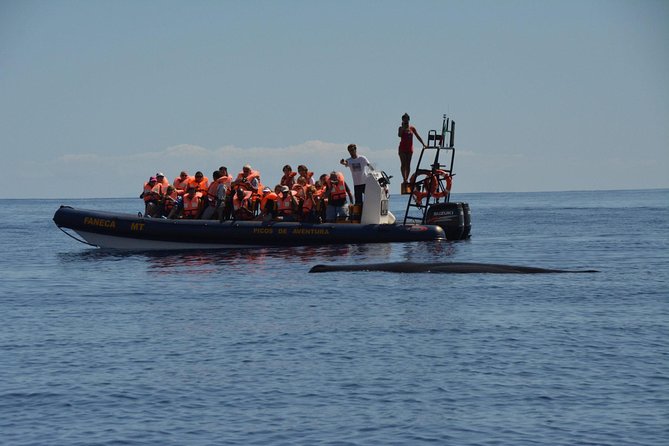
There is no dependable promise of a whale on every departure. Some periods bring more migratory species, while other times may produce strong results with sperm whales or dolphins but fewer baleen whales. The operator describes August as a month with a high rate of sightings of large species, but that is not a promise for your specific date.
This distinction helps you choose the tour honestly. If your only goal is to photograph a whale, you are taking a chance. If you want time on the Atlantic, a chance to see wild dolphins, and a guided look at Azorean marine life, the odds are much more favorable.
The experience can also be affected by weather. Two days of cancellations followed by a successful third departure is possible. Poor conditions may lead to a different date or a full refund. That flexibility is useful, but it can affect a short visit to São Miguel, so avoid placing this tour on the last possible morning of your trip.
The crew’s conservation approach is another strength. The guides aim to give animals room and explain local protection efforts. The best encounters are not the ones that force the boat close. They are the ones where you can watch natural behavior without chasing or crowding the animals.
Why the guide makes a difference
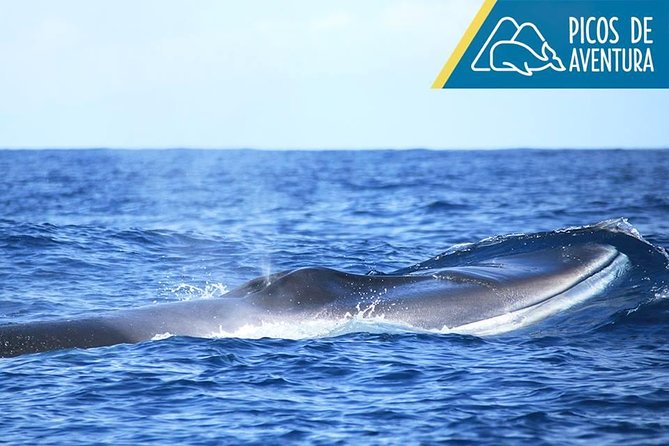
A good boat ride needs a good interpreter. The marine biologists identify species, explain behavior, and help you understand why the boat is slowing, turning, or waiting. Their enthusiasm matters because wildlife can be subtle. A whale blow that looks like a small puff to you may tell an expert what species is nearby.
Most feedback about the crew points to careful preparation, friendly service, and strong knowledge of marine life. One less positive account described limited explanation during a trip, so the quality of commentary may vary somewhat by guide and group. The company has stated that education is an important part of the experience, and the standard briefing includes animal information and conservation.
The group can reach up to 75 people. That is a fairly large maximum, particularly if you prefer a quiet, small-group outing. The catamaran spreads people out better than a small speedboat, while the inflatable boat gives you a more personal feel simply because seating is limited. If you want the best view, listen carefully when the crew explains where to look and move only when it is safe.
Comfort, clothing, and seasickness
Dress for wind, not just sunshine. A sweater or warm layer is useful, and the provided raincoat helps block spray and cold air. The sea can feel much cooler than the marina, even on a pleasant day.
If you get motion sickness, prepare before boarding. Several reports describe choppy water, and the speedboat is the harder choice for sensitive stomachs. The catamaran usually offers more ways to find a steadier position, but no boat can remove ocean motion completely.
Bring water and a snack if you need them, since food and drinks are not included. Keep your camera ready, but protect it from spray. The guides provide life vests, and life jackets are mandatory on the small boats.
Children must be accompanied by an adult. Weather may limit children’s participation for safety reasons, especially on the speedboat. For a family with small children, the catamaran is the practical choice, provided the day’s conditions allow the outing to run.
Is $78.60 a fair price?
At $78.60 per person, this is not a casual harbor cruise, but the price is reasonable for two to three hours at sea with a specialist crew, safety equipment, and a wildlife sighting guarantee. You are paying for the boat, the search time, and the crew’s ability to adjust the route rather than follow a fixed coastal circuit.
The value is strongest if you choose the trip for the whole experience. You receive explanations about cetaceans, views of the southern coast, and a chance to see several species in one outing. The value is weaker if you judge it only by the number of whales photographed.
The full refund policy if no whale or dolphin appears removes some of the risk, although it cannot refund your time or guarantee the species you hoped to see. Free cancellation is available up to 24 hours before departure. Changes or cancellations inside that window are not accepted, except when the operator cancels because of poor weather or an insufficient number of participants.
Who should book this Ponta Delgada trip?
I would choose this tour if you want an active morning or afternoon on the water and accept that nature controls the schedule. It suits couples, families with older children, photographers, and anyone curious about Azorean wildlife.
Choose the catamaran if comfort matters most, if you are prone to seasickness, or if you are bringing young children. Choose the speedboat if you want a faster, more exciting ride and do not mind spray, wind, and sharper movement.
This is not the right pick if you need a guaranteed whale, dislike open water, or have no flexibility for weather changes. It is also not ideal for the final few hours of a tightly planned visit, since a cancellation may require a new date.
FAQ
Where does the Azores whale watching tour leave from?
The tour leaves from Picos de Aventura at Marina Pêro de Teive, Avenida João Bosco Mota Amaral, 9500-771 Ponta Delgada, Portugal.
How long does the experience last?
The full outing takes about two to three hours. The time at sea can vary depending on where the whales and dolphins are located.
Are whales guaranteed?
No. The tour guarantees that you will see a whale or dolphin, with a full refund if you see neither. A specific whale species or a whale sighting alone is not guaranteed.
What animals might I see?
Possible sightings include common dolphins, Atlantic spotted dolphins, bottlenose dolphins, pilot whales, sperm whales, sei whales, humpback whales, and other baleen whales.
Which boat is better for families?
The catamaran is designed for greater comfort, with more space, a covered cabin, an open-air upper deck, and a toilet. Children must be accompanied by an adult, and weather conditions may limit children’s participation.
What should I bring?
Bring warm layers, water or a snack, and motion sickness medicine if needed. The operator provides a raincoat and life vest, and the raincoat can help block wind as well as rain.
What happens if bad weather cancels the tour?
You will be offered another date or a full refund. Free cancellation is also available if you cancel at least 24 hours before the scheduled start time.
Should you book it?
Yes, if you treat it as a wild ocean outing rather than a guaranteed whale photograph. The marine biology guidance, flexible search route, and choice between a lively speedboat and a family-friendly catamaran give this tour real substance.
For the best odds of a comfortable day, choose the catamaran, book early enough to allow a weather backup, and keep your expectations open to dolphins. If you see a sperm whale, humpback, sei whale, or several species in one trip, you may get a remarkable bonus. Even on a whale-free day, the Azorean coast, open Atlantic, and wild dolphins can make the time well spent.
New whale trips around Portugal
- Watching whales and dolphins on Terceira Island★ 5.0 · 150 reviews
- Whale and Dolphin Watching Tour at Terceira Island★ 5.0 · 39 reviews
- Terceira Island Whale Watching and Jeep Tour★ 4.9 · 27 reviews
- Terceira: Whale & Dolphin Watching | Best Wildlife Tour★ 4.7 · 55 reviews
- Terceira: Half-Day Dolphin and Whale Watching Tour★ 4.6 · 219 reviews
- Terceira: Whale and Dolphin Watching in a Zodiac Boat★ 4.8 · 230 reviews
- Madeira: Whale Watching Excursion in a Traditional Vessel★ 4.7 · 273 reviews
- Funchal: RIB Whale Watching Cruise and Optional Dolphin Swim★ 4.6 · 273 reviews
Portugal Whale Watching Tours, compared.
Whale Watching & Islet Boat Tour w/ Marine Biologist
Read our review →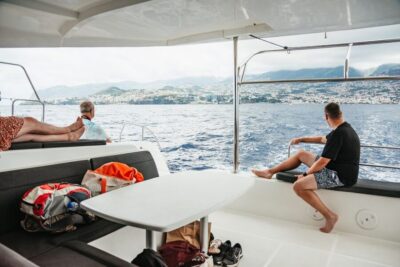
Funchal Bay: Dolphin & Whale Watch Luxury Catamaran Cruise
Read our review →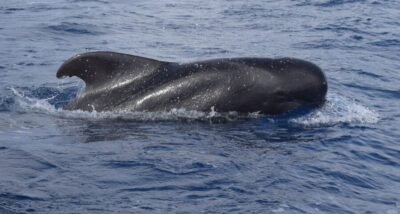
All Inclusive Whale and Dolphin Watching Luxury Tour
Read our review →
Madeira Dolphin and Whale Watching on a Ecological Catamaran
Read our review →
Dolphin and Whale Watching by Luxury Catamaran
Read our review →Browse the lists this tour appears in