
Review · PORTUGAL WHALE WATCHING TOURS
Azores Whale Watching & Islet Boat Tour
The best part of this outing is the mix of wildlife watching and volcanic scenery. You head into open Atlantic water in a fast RIB, guided by a lookout on land, then return along Vila Franca do Campo for a close look at the Princess Ring Islet. The Azores have year-round marine life, but nature keeps its own schedule.
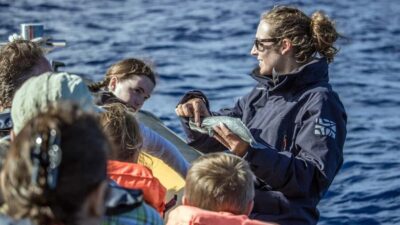
I like the live commentary from a marine biologist and the small-boat setting, which puts you close to the water without a megaphone blaring over the waves. I also like the respectful approach to the animals, with the guide collecting field data and answering questions as you go. Guides named Mateo and Inez have drawn particular praise for their care and clear explanations.
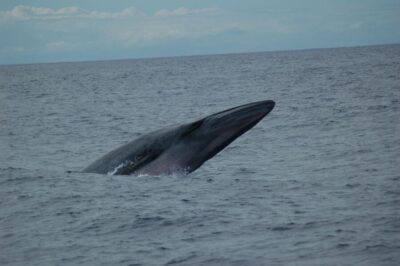
The tradeoff is simple: sightings are never guaranteed. You could see sperm whales, pilot whales, dolphins, turtles, or even an unusual orca, humpback, or blue whale, but you could also spend three hours at sea without seeing a whale or dolphin. The RIB ride can be rough and wet, so this is not the right pick if you dislike motion or spray.
Key points to know before you book
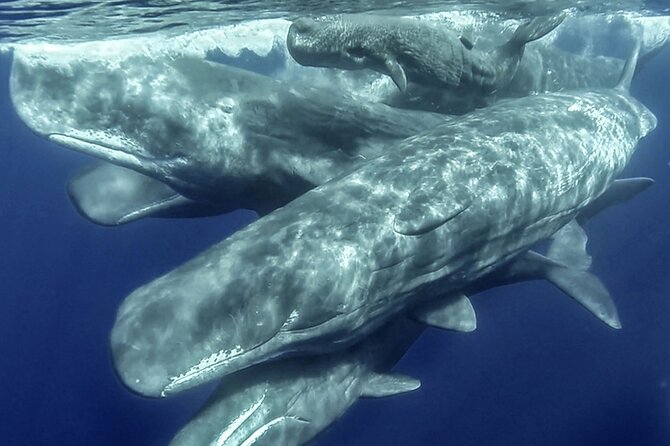
- Resident sperm whales: The Azores offer year-round chances to see sperm whales, along with several other cetacean species.
- Two-part outing: Most of the time is spent searching open water, followed by a scenic circuit around the Princess Ring Islet.
- Fast RIB ride: The Zodiac boat can carry 12 or 28 people, with a maximum group size of 28.
- Marine biologist guide: Expect a short briefing on local species, migration, behavior, and safety before boarding.
- Come prepared for spray: Full waterproof suits and life vests are supplied, but bring sunscreen, lip balm, warm layers, and your own water.
- A real wildlife gamble: Dolphins may appear in large pods, but no particular animal or sighting time can be promised.
Why the Azores are a strong whale-watching choice
The Azores sit in the Atlantic along routes used by several kinds of whales and dolphins. That gives you a good chance of seeing marine life throughout the year, rather than relying on one short seasonal window.
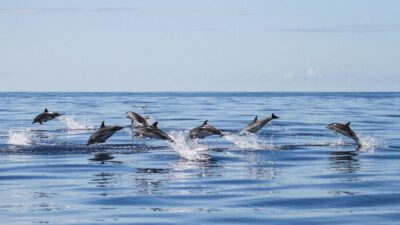
Sperm whales are resident in the area, and the outing can also encounter pilot whales, bottlenose dolphins, Risso’s dolphins, common dolphins, striped dolphins, and sea turtles. The range is part of the appeal. You are not booking a trip aimed at one guaranteed species. You are going out to see what the ocean offers that day.
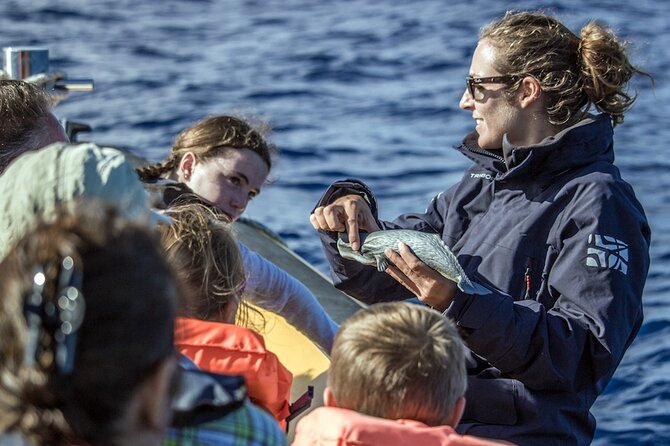
I appreciate that the guide begins with local context instead of rushing you straight to the boat. The opening briefing explains the cetaceans found here, their behavior, migration patterns, and the safety rules for the ride. That helps you recognize what you are seeing later, especially when a whale surfaces for only a few seconds.
The crew also gathers images and information for local research. That does not change the basic outing for you, but it adds purpose to the work. The guide is watching animal behavior, not just trying to produce a quick photo for the group.
More whale watching around Portugal worth comparing
- From Funchal: Ecological Catamaran Dolphin Whale Watching
★ 4.5 · 8,204 reviews - Funchal: Dolphin and Whale Watching Catamaran Cruise
★ 4.5 · 5,697 reviews - From Ponta Delgada: Whale and Dolphin Watching Trip
★ 4.7 · 4,109 reviews
Starting at Vila Franca do Campo
The meeting point is Azores Whale Watching TERRA AZUL at Marina de Vila Franca do Campo. This matters because the tour is often presented as a Ponta Delgada activity, yet the marina is about 25 minutes away by car from Ponta Delgada.
You should plan your own route carefully and allow extra time. Pickup is offered, but the supplied information does not set out the pickup area or exact transfer arrangements, so confirm those details when booking. If you are staying in Ponta Delgada, do not assume the boat leaves from the city.
At the marina, you receive an impermeable full suit and life vest. The protective clothing is useful, but it is not a reason to arrive in delicate clothes. Wear warm layers underneath and secure anything you bring. A phone or camera is worth carrying, especially when dolphins approach, but spray and fast movement can damage loose equipment.
The briefing is short and practical. You learn how to board, what to expect from the sea, and how to behave around wildlife. After that, the guide and skipper lead you to the assigned Zodiac RIB.
The RIB ride into open Atlantic water
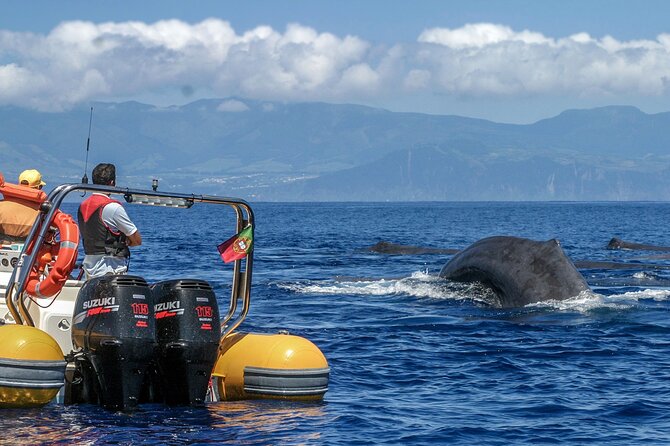
The boat is one of the defining features of this outing. A RIB is quick and open, giving you a low position close to the ocean. The same design that makes the ride exciting also means you feel every wave more than you would on a larger covered boat.
A land-based lookout searches for animals from high ground and sends directions to the boat by VHF radio. The skipper may then travel at speed toward the first possible sighting. This saves time and gives the group a better chance of reaching wildlife before it moves on.
I like this system because the crew is not simply wandering offshore and hoping for luck. There is an organized search, communication between shore and boat, and a guide who explains what is happening. Still, the sea can change quickly, and animals move freely. A good search effort does not turn wild creatures into a scheduled show.
The ride itself can be bumpy. Several people have found the speed thrilling, while others have found the motion aggressive or uncomfortable. If you are prone to seasickness, eat lightly before departure. Bring only a small amount of food if needed, since light food is permitted onboard.
Searching for whales, dolphins, and turtles
Once the boat reaches the search area, the pace usually changes. The skipper approaches wildlife carefully, and the marine biologist explains the species, behavior, and distance rules. The guide remains available for questions, so ask about surfacing patterns, group behavior, or how to tell one dolphin from another.
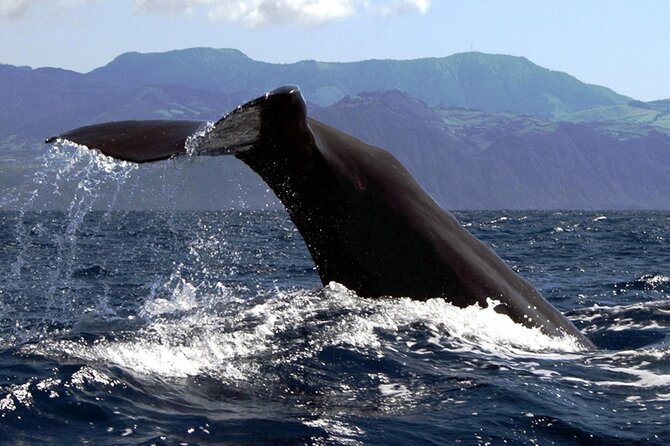
Sperm whales are an important possibility here. They are resident in the region, which gives this trip a stronger year-round basis than an outing built around a passing seasonal population. You may also encounter pilot whales, bottlenose dolphins, Risso’s dolphins, common dolphins, or striped dolphins.
The range of possible sightings is broad. Some outings have produced large groups of jumping dolphins, while others have included sperm whales with a calf. More unusual sightings have included humpback whales, blue whales, and orcas. Those are exciting possibilities, not promises.
Sea turtles and other marine life may also appear. Keep your eyes moving and listen to the guide. A whale may surface behind the boat, while dolphins can appear at the bow or cross from one side to the other. The guide’s explanation helps you understand the moment instead of simply pointing a camera at open water.
The honest point is that you might see only dolphins, or no large animals at all. One outing had no whales or dolphins despite a full three hours at sea and determined work by the crew. Bad weather can make the ride less pleasant as well. I would book this because you want time on the Atlantic, not because you need a guaranteed photograph.
Same sea, a different boat:
- Azores: Whale Watching & Islet Boat Tour w/ Marine Biologist
★ 4.7 · 2,945 reviews - Funchal Bay: Dolphin & Whale Watch Luxury Catamaran Cruise
★ 4.2 · 2,684 reviews - All Inclusive Whale and Dolphin Watching Luxury Tour
★ 4.9 · 2,573 reviews - Madeira Dolphin and Whale Watching on a Ecological Catamaran
★ 4.5 · 1,957 reviews
The Princess Ring Islet finale
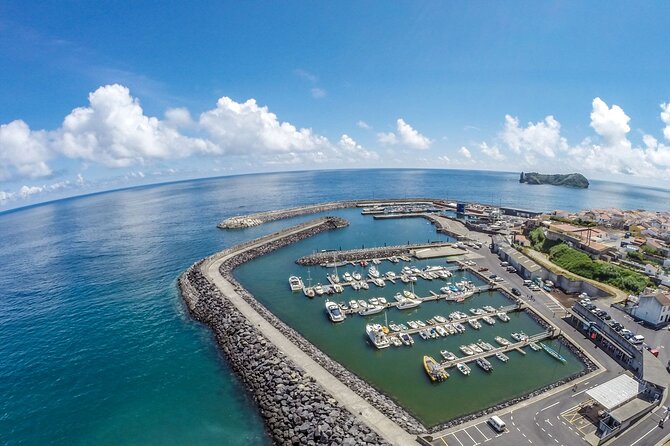
After the wildlife search, the boat returns toward Vila Franca do Campo and circles the Princess Ring Islet. This volcanic formation is a strong second act, particularly if the animals stay out of sight.
The islet is a volcanic marvel with unusual coastal shapes and resident wildlife. Seeing it from the water gives you angles that are not available from the marina. The route also includes views back toward the beaches and coast of Vila Franca do Campo, with open Atlantic around you.
This portion is less dependent on animal behavior. Even on a quiet wildlife outing, you still get a scenic boat trip and a closer look at one of the area’s notable volcanic features. It does not replace whales or dolphins, but it makes the three-hour schedule feel more varied.
The circuit around the islet is also a calmer way to finish than simply returning to the dock. Keep your camera ready, but protect it from spray. The supplied full suit helps with clothing, not necessarily with every piece of electronics you bring.
What the guide adds to the outing
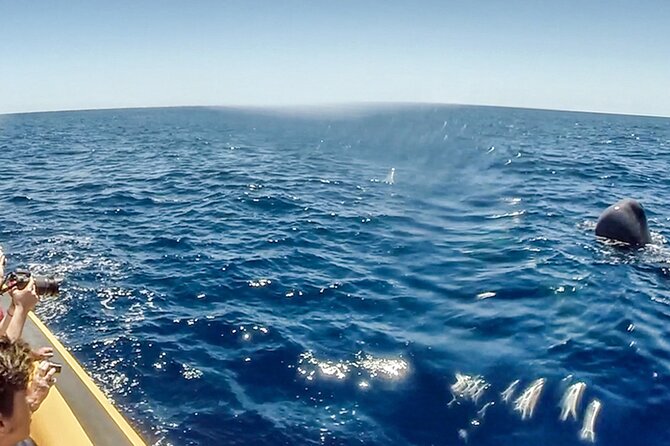
A strong guide makes a major difference on a wildlife trip. You are not only looking for a fin on the horizon. You are learning why the boat stops, what species may be nearby, and how the crew avoids putting pressure on the animals.
The live commentary is delivered without megaphones, so you can hear the guide while keeping the natural sounds of the sea around you. The guide also collects field images and data for local research. I see that as a good sign: the outing connects tourism with a closer understanding of the local marine environment.
Mateo has been singled out for being helpful and friendly, while Inez has been praised for explaining different species clearly to a mixed-age family ranging from 14 to 77. Those details suggest the tone is approachable rather than highly technical. You do not need to arrive with a background in marine biology to follow along.
The skipper matters just as much. A careful driver must balance speed, safety, good viewing positions, and respect for the animals. The best moments come when the boat gives you time to watch instead of rushing from one sighting to the next.
Price, group size, and practical value
At $71.83 per person, this is a reasonable price for a three-hour RIB outing that includes a wildlife guide, skipper, waterproof suit, life vest, insurance, and taxes. You are paying for more than a boat ride. The fee covers a coordinated search operation, an experienced crew, marine interpretation, and the islet circuit.
The value depends on your expectations. If you see sperm whales and dolphins, the outing can feel like a terrific use of a morning or afternoon. If you see only dolphins, you still receive the full boat experience and coastal tour. If you see nothing, the price will feel harder to justify, even though the crew may have worked properly and the animals simply stayed away.
The boat holds either 12 or 28 people, with a maximum of 28 on the activity. That is small enough to feel more personal than a large excursion vessel, though a full 28-person RIB will not feel private. The exact boat size may affect how easy it is to move around and find a clear view.
There are departure times throughout the day, which helps you fit the outing around other plans. I would choose a time that gives you room before and after the trip. The schedule can be affected by weather, and rushing back to another appointment would take the fun out of a ride that may run on ocean time.
How to prepare for the three hours
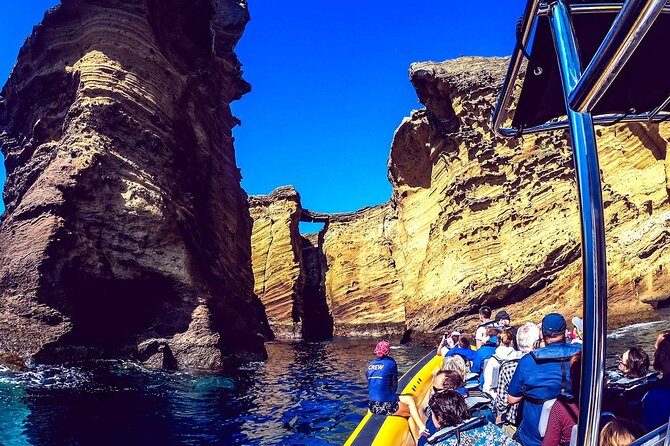
Eat lightly before you go. A fast, bumpy boat and a heavy meal are a poor combination, especially if you already know you get seasick.
Bring your own water because personal water is not included. Sunscreen and lip balm are useful even on a cloudy day, and warm clothing belongs in your bag. The supplied suit helps keep spray off, but the Atlantic air can still feel cool.
Wear secure footwear and keep valuables to a minimum. Camera equipment should be protected, and a phone should not sit loose in a pocket that opens easily. A camera is worth bringing, but watching the animals with your own eyes is often more rewarding than trying to capture every surface.
Expect to get wet. One practical tip is to wear the full green waterproof jacket and trousers rather than treating them as optional. Rain and spray can reach you even when the weather begins clear.
Service animals are allowed, and most people can participate. The activity does require good weather, and the operator can cancel for poor conditions or if the minimum number of participants is not reached. In those cases, you are offered another date or experience, or a full refund.
Who should book this boat trip
I would recommend it to anyone who wants a lively Atlantic outing with real wildlife potential and useful instruction along the way. It suits couples, families, and mixed-age groups, provided everyone is comfortable with a fast open boat.
It is a particularly good match for people who value responsible wildlife watching. The guide explains animal behavior, the crew approaches with care, and the work includes collecting images and data for local research.
I would be cautious if you have strong seasickness, dislike cold spray, or need a guaranteed whale sighting. The trip can be exciting and rough, and the ocean does not follow a booking calendar.
Should you book Azores Whale Watching TERRA AZUL?
Book it if you can accept uncertainty and want two experiences in one: a serious search for marine life and a close boat tour around a volcanic islet. The year-round presence of sperm whales, the chance of several dolphin species, and the attentive guide service give it solid value at $71.83.
For the best chance of enjoying it, eat lightly, bring water, wear warm clothes under the waterproof suit, and protect your camera. Most important, measure success by the quality of the outing, not by a particular species. If you can do that, this is a lively and well-focused way to spend three hours around Vila Franca do Campo.
FAQ
Where does the whale-watching tour start?
It starts at Azores Whale Watching TERRA AZUL, Marina de Vila Franca do Campo 4, 9680-187 Vila Franca Do Campo, Portugal. The activity ends back at the same meeting point.
How long does the tour last?
The outing lasts approximately three hours.
What animals might I see?
Possible sightings include sperm whales, pilot whales, bottlenose dolphins, Risso’s dolphins, common dolphins, striped dolphins, sea turtles, and other marine life. Orcas, humpback whales, and blue whales have also been seen, but no species is guaranteed.
Are whale or dolphin sightings guaranteed?
No. Wild animals control their own behavior, so the operator cannot guarantee a particular species or a sighting at a specific time.
What is included in the price?
The price includes a live wildlife guide, experienced skipper, Zodiac RIB boat, impermeable full suit, life vest, insurance, and all fees and taxes.
What should I bring?
Bring your own water, sunscreen, lip balm, warm clothing, and a camera if you want photographs. Eat lightly, and protect personal equipment from spray.
What happens if the tour is canceled?
If poor weather causes a cancellation, or the minimum number of participants is not reached, you can choose another date or experience, or receive a full refund. You can also cancel for a full refund up to 24 hours before the start time. Cancellations within 24 hours are not refunded.
New whale trips around Portugal
- Terceira: Whale & Dolphin Watching | Best Wildlife Tour★ 4.7 · 55 reviews
- Watching whales and dolphins on Terceira Island★ 5.0 · 150 reviews
- Whale and Dolphin Watching Tour at Terceira Island★ 5.0 · 39 reviews
- Terceira Island Whale Watching and Jeep Tour★ 4.9 · 27 reviews
- Terceira: Half-Day Dolphin and Whale Watching Tour★ 4.6 · 219 reviews
- Terceira: Whale and Dolphin Watching in a Zodiac Boat★ 4.8 · 230 reviews
- Madeira: Whale Watching Excursion in a Traditional Vessel★ 4.7 · 273 reviews
- Funchal: RIB Whale Watching Cruise and Optional Dolphin Swim★ 4.6 · 273 reviews
Portugal Whale Watching Tours, compared.
Whale Watching & Islet Boat Tour w/ Marine Biologist
Read our review →
Funchal Bay: Dolphin & Whale Watch Luxury Catamaran Cruise
Read our review →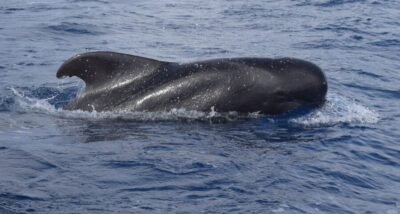
All Inclusive Whale and Dolphin Watching Luxury Tour
Read our review →
Madeira Dolphin and Whale Watching on a Ecological Catamaran
Read our review →
Dolphin and Whale Watching by Luxury Catamaran
Read our review →Browse the lists this tour appears in