
Review · AUSTRALIA WHALE WATCHING TOURS
AAA NOOSA Whale watching experience in Noosa Whalesongsnoosa
The special part of Whalesongs Noosa is not only seeing humpback whales and dolphins, but hearing them underwater through a live hydrophone. A researcher joins Captain Albie and first mate Peppie, explaining what you are watching as the boat runs out from Noosaville toward Noosa Heads and Sunshine Beach.
I like the small group size, capped at 10 people, and the chance to learn from a crew that clearly cares about marine life. I also like the sheltered deck, which gives you cover while you wait for wildlife. The tradeoff is the boat’s size: it feels personal and gives you a clear view, but rough water can make the ride uncomfortable for some people.
Whalesongs Noosa at a glance
- Hear live whale songs: An onboard hydrophone picks up whale and dolphin calls as the animals communicate underwater.
- Travel with a marine researcher: The explanations add meaning to sightings, from mothers and calves to dolphins escorting whales.
- Keep the group small: The boat carries a maximum of 10 people, making the outing more personal than a large cruise.
- Look for wildlife near Noosa Heads: The route reaches the waters off Noosa Heads and Sunshine Beach, known for close-to-shore whale sightings.
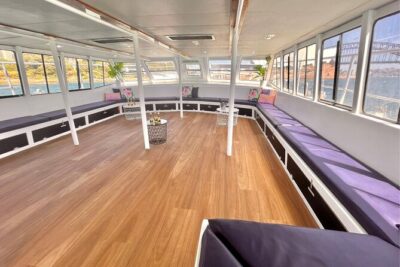
- Stay sheltered between sightings: A roof helps protect you from the strong Queensland sun.
- Plan for a moving boat: A small craft can rock more than a large vessel, especially when conditions turn rough.
Why the hydrophone changes the whale-watching experience
Most whale trips are built around waiting for a blow, a breach, or a flash of a tail. Those moments can be thrilling, but they are also unpredictable. Whales may surface far away, stay calm, or disappear before you can lift your camera.
Whalesongs Noosa adds another sense to the trip. The hydrophone lets you hear whale and dolphin sounds in real time. That matters because it gives you something to focus on even when the animals are below the surface. You are not simply scanning the water. You are listening for life beneath it.
The sound also helps explain the social side of the animals. A mother and calf, several whales moving together, or a pod of dolphins can become more than shapes on the horizon. The crew can connect what you hear with what you see, including behavior such as dolphins swimming alongside whales or animals moving close to the boat.
I would not book this expecting nonstop action. Wildlife remains wildlife. Some trips bring breaching whales, playful dolphins, and animals swimming under the boat. On another day, a whale may appear only in the distance. The hydrophone and the crew’s interpretation give the quieter stretches real value, but they cannot guarantee a close encounter.
More whale watching around Australia worth comparing
- Sydney: Whale Watching Adventure Cruise
★ 4.2 · 1,790 reviews - Brisbane Whale Watching Cruise from Redcliffe or Sunshine Coast
★ 5.0 · 997 reviews - Freedom 3/4 Day Hervey Bay Premium Whale Watching Cruise
★ 5.0 · 919 reviews
Leaving Noosaville for Noosa Heads
The meeting point is The Big Pelican at 180 Gympie Terrace, Noosaville. The tour returns to this same point after roughly two hours, so you do not need to arrange a separate pickup at the end.
One practical point deserves attention: check the exact meeting details before setting out. One poor experience involved confusion because the premises used a different company name and street number from what the person expected. Allow time to find the departure point, and look for the operating name, Whalesongs Noosa, rather than relying only on a general map pin.
Once aboard, you have room to walk around the boat and can use the roofed area for shelter. The small format is useful here. With no more than 10 people, you should have a better chance of moving to the side with the best view than you would on a large sightseeing vessel.
The boat’s size also brings a clear warning. A smaller craft may feel more connected to the sea, but it can rock more sharply. One person specifically noted that some passengers did not handle the sea well. If you are prone to motion sickness, think carefully about the conditions and prepare accordingly. The supplied information does not specify whether medication or special seating is available, so ask the operator before departure if this is a concern.
Noosa Heads: the main wildlife search
The first major area is Noosa Heads. This is where the boat looks for humpback whales and dolphins in the coastal waters near the national park and beach.
The location is important because whales can pass relatively close to shore along this part of Queensland. That does not mean you will always see them right beside the boat. It means the area gives the crew a promising setting for a short wildlife trip, rather than requiring a long run far offshore.
This is also where the crew’s skill matters most. Albie and Peppie do more than point toward an animal. They explain what the whale is doing, help you distinguish a whale from a distant splash, and use the hydrophone to add sound to the sighting.
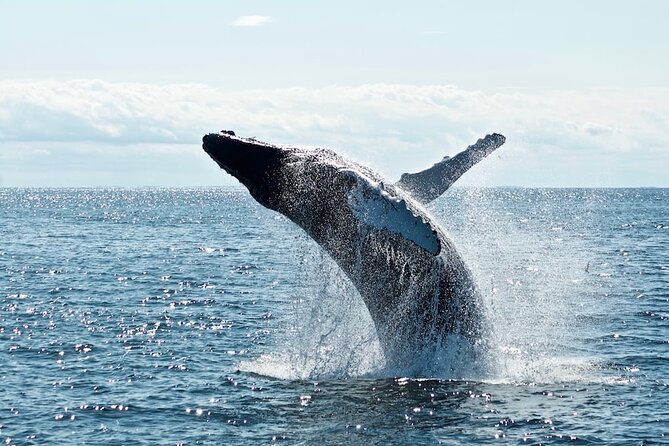
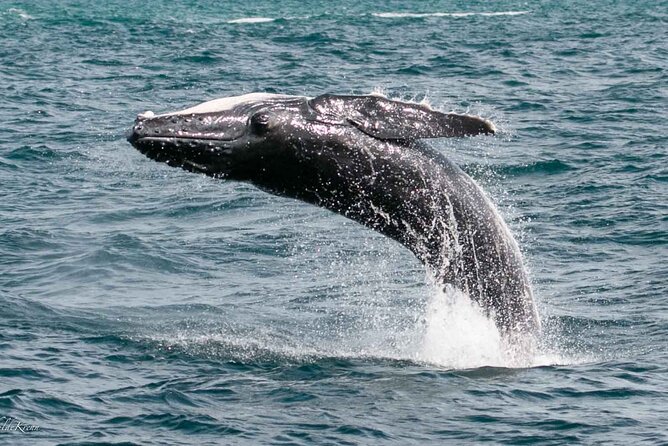
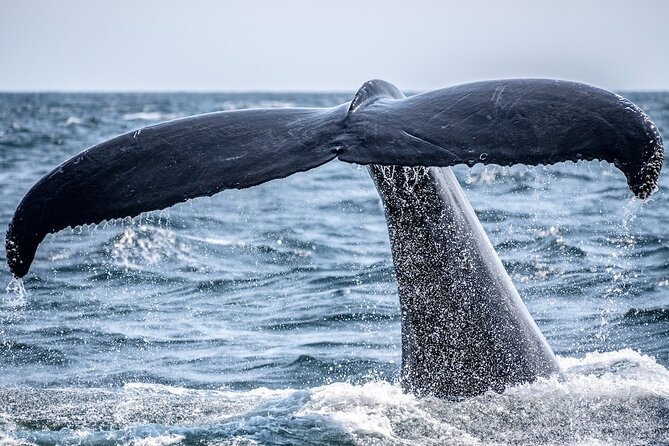
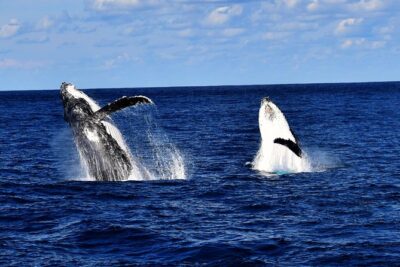
Past trips have included several whales staying with the boat for much of the outing, a mother and calf, groups of male whales, dolphins, and turtles. Breaching whales have also made appearances. Those are memorable possibilities, not promises, so keep your expectations flexible.
Bring patience. You may spend part of the two hours scanning open water, listening, and waiting for the next surface. That waiting is easier when the crew is actively teaching you what to notice.
Sunshine Beach and the turn back
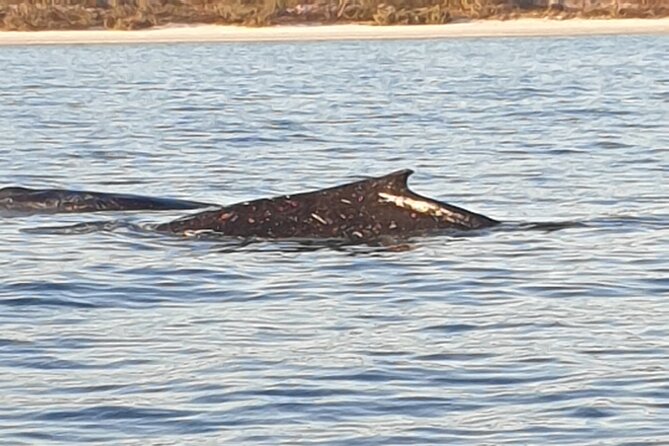
The route also reaches Sunshine Beach. Like Noosa Heads, this stop is less a fixed attraction than a wildlife-search area. The boat moves through the waters here looking for signs of whales and dolphins before returning toward Noosaville.
This part of the trip gives the crew more room to respond to what is happening at sea. If animals are spotted in one direction, the boat can focus there rather than follow a rigid sightseeing schedule. That flexibility is useful, but it also means the exact experience can vary from one departure to another.
You might see dolphins traveling in pods, whales surfacing in pairs, or animals moving under the boat. You might also have a quieter run with a distant sighting. The return journey completes the loop back to The Big Pelican, with the whole activity lasting about two hours.
The route is compact enough to fit neatly into a Noosa day. You can schedule it before or after other plans, and different departure times are available. Still, avoid packing an important appointment immediately afterward. Wildlife trips can be shaped by sea conditions and animal movements, and you will want a little breathing room.
Same sea, a different boat:
- Whale Watching Tour with Spirit of Gold Coast
★ 4.5 · 884 reviews - Sydney Whale-Watching Cruise Including Lunch or Breakfast
★ 4.5 · 878 reviews - Sydney: 2-hour Express Whale Watching Cruise
★ 4.2 · 756 reviews - Spirit of Gold Coast 2.5-Hour Whale Watching Tour
★ 4.2 · 703 reviews
The crew: Albie, Peppie, and a research-based approach
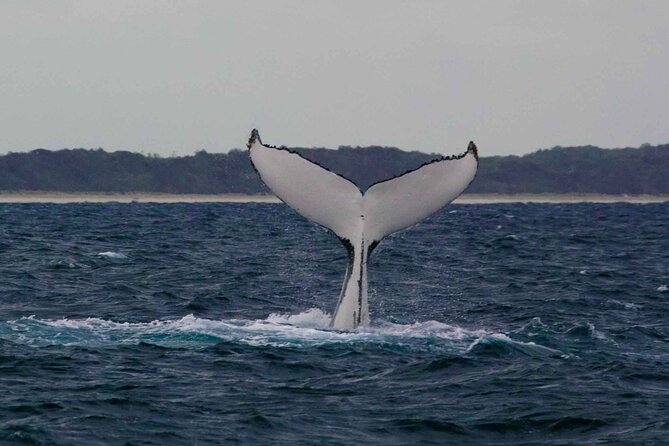
The human side of this trip receives especially strong praise. Captain Albie and first mate Peppie are repeatedly described as friendly, enthusiastic, and deeply informed about whales and dolphins.
That enthusiasm matters. Spotting a whale can be a brief event, and the crew’s reaction helps you understand why it matters. They explain behavior without turning the outing into a dry lecture. The researcher onboard adds another layer, offering insight into whale communication and the actions you are seeing.
The best examples are specific. A pod of dolphins escorting humpback whales becomes more interesting when you understand the possible interaction. A mother and calf means more when the crew can point out the relationship and explain the behavior. Hearing whale songs while watching the animals move nearby creates a fuller experience than either sight or sound alone.
The crew also makes an effort when conditions are less dramatic. A quiet whale day cannot be fixed, but good guidance can prevent the trip from feeling empty. This is one of the strongest reasons to choose a research-focused boat rather than a basic ride that depends entirely on luck.
What the small boat means for your day
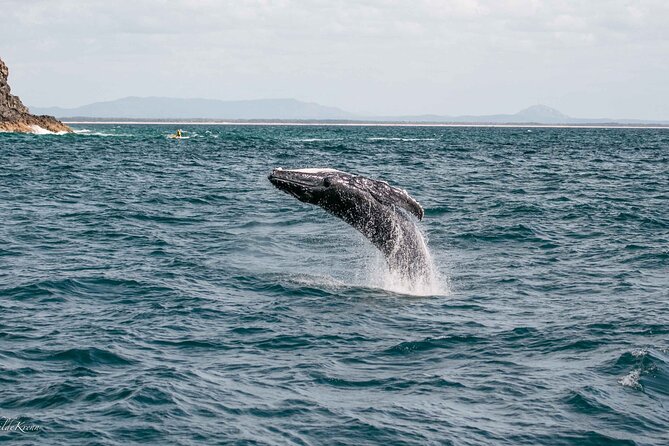
The maximum group size is 10 people. That is a major selling point if you dislike crowded boats or want space around the rail for photographs.
A small group also makes it easier to hear the guide and ask questions. The outing feels personal rather than like a large, scripted cruise. You may get more direct attention from the crew, and the captain can respond to the group’s interests.
The downside is comfort in rough water. A small boat transfers more movement to the people aboard. The ride may be lively even when the trip is going well, and some people may feel unwell. The tour information says most people can participate and that you have freedom to walk and move around the boat, but it does not promise a smooth ride.
The roof is a useful feature, not a luxury detail. Queensland sun can be intense, and you may spend time waiting between sightings. You can keep out of direct sun while still staying part of the action. Bring sensible sun protection anyway, since the boat also has open viewing areas.
Service animals are allowed, and the departure point is near public transportation. The activity is described as suitable for most people. For any specific mobility or medical concern, contact the provider before booking because the information supplied does not explain boarding arrangements in detail.
Is $82.48 a fair price?
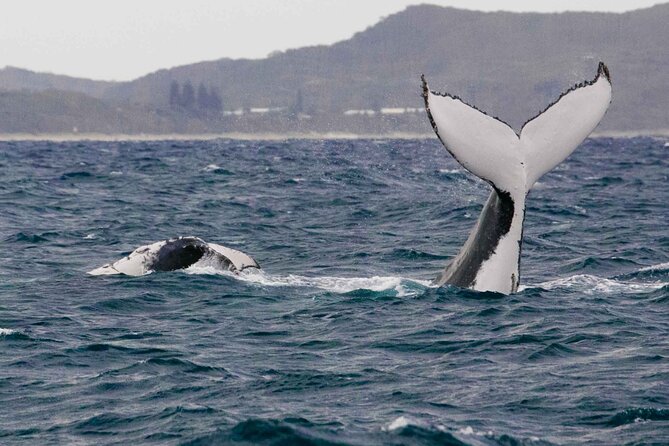
At $82.48 per person, this is not simply a boat ride. You are paying for about two hours on the water, a small group, a marine researcher, live underwater sound, and the chance to see whales and dolphins around Noosa.
The value is strongest when you care about learning as well as photographs. A standard sightseeing trip might give you a similar chance of spotting an animal, but the hydrophone and research commentary make the quiet stretches more worthwhile. The small group also has practical value because you are less likely to fight for a viewing position.
The price is harder to justify if your only goal is a guaranteed close-up whale encounter. No wildlife operator can control the animals, and one outing may bring whales breaching beside the boat while another produces a distant sighting. You need to accept that uncertainty before booking.
The tour is booked, on average, about 18 days ahead. That suggests you should reserve early during popular whale-watching periods, especially if your Noosa schedule is fixed. The mobile ticket is convenient, and confirmation is provided at booking.
Who should book this experience?
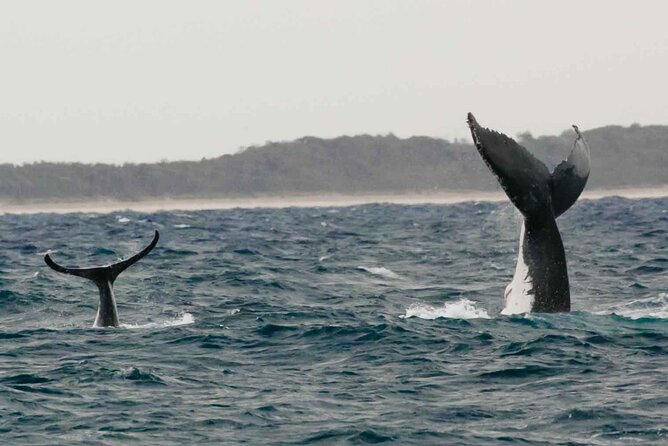
I would recommend it to families, couples, and solo visitors who want a close, personal outing with plenty of interpretation. Children who can manage a moving boat may find the combination of whales, dolphins, and underwater sound especially memorable.
It also suits anyone who has already seen wildlife from shore and wants a different view. The Noosa National Park area can offer coastal sightings, but a boat gives you a chance to watch animals from the water and follow their movement.
Photographers should appreciate the small group, since there is less jostling for a clear angle. Still, the boat’s movement and changing light can make photography difficult. Bring patience rather than expecting every frame to be perfect.
I would be cautious about booking if you are very sensitive to motion or need a fully calm ride. The short duration helps, but a small boat can rock. Also consider the weather policy: the trip needs good conditions, and a cancellation caused by poor weather leads to a different date or a full refund.
Cancellation and practical planning
You can cancel free of charge up to 24 hours before the experience begins for a full refund. Changes or cancellations made less than 24 hours before departure are not accepted for a refund.
Weather is an important part of the plan. If poor conditions cancel the trip, you are offered another date or a full refund. Keep that flexibility in mind when arranging other Noosa activities.
The tour ends where it starts, at The Big Pelican on Gympie Terrace. You receive a mobile ticket, and confirmation arrives at booking. The operator offers other activities, including snorkeling, private guided trips for up to 10 people, and surf charters, but this review concerns the whale and dolphin outing.
Should you book Whalesongs Noosa?
Book it if you want more than a quick wildlife sighting. The live hydrophone, research-based commentary, and small group make this a thoughtful two-hour experience, not just a search for a breaching whale.
Go in with realistic expectations. Some days bring dolphins, turtles, calves, whales beneath the boat, and spectacular breaches. Other days may be quieter. If you can accept that uncertainty, the crew, sound equipment, sheltered deck, and personal scale give this outing strong value at $82.48.
FAQ
How long does the Whalesongs Noosa tour last?
The experience lasts approximately two hours.
Where does the tour begin?
The meeting point is The Big Pelican, 180 Gympie Terrace, Noosaville, Queensland 4565.
Where does the tour finish?
The activity ends back at the meeting point at The Big Pelican.
How many people can join the boat?
The tour has a maximum of 10 people.
Can I hear the whales and dolphins?
Yes. An onboard hydrophone lets you hear whale and dolphin communication live underwater.
Who leads the experience?
Captain Albie and first mate Peppie are named as the main crew, and a whale and dolphin researcher is onboard to provide information and education.
Is there shelter from the sun?
Yes. The boat has a roofed, sheltered deck.
What happens if bad weather cancels the trip?
You can choose another date or receive a full refund if poor weather causes the cancellation.
New whale trips around Australia
- Coral Bay: 3-Hour Whale Watching Experience★ 4.9 · 25 reviews
- Byron Bay Whale Watching with Marine Biologist★ 4.9 · 66 reviews
- Byron Bay: Whale Watching Tour★ 5.0 · 3 reviews
- Broome: Whale Watching & Sunset Cruise★ 4.9 · 41 reviews
- Bundaberg: Whale Watching Sightseeing Cruise with Lunch★ 4.9 · 24 reviews
- Broome Sunset & Whale Watching Cruise★ 5.0 · 2 reviews
- Bremer Bay: Bremer Canyon Killer Whale Expedition★ 4.9 · 114 reviews
- Bremer Canyon Orca Experience from Bremer Bay★ 4.6 · 35 reviews
Australia Whale Watching Tours, compared.
Brisbane Whale Watching Cruise from Redcliffe or Sunshine Coast
Read our review →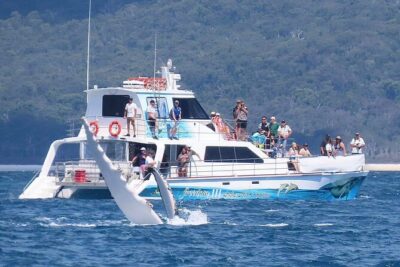
Freedom 3/4 Day Hervey Bay Premium Whale Watching Cruise
Read our review →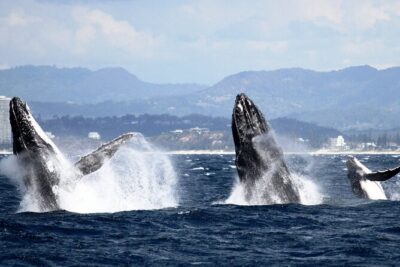

Sydney Whale-Watching Cruise Including Lunch or Breakfast
Read our review →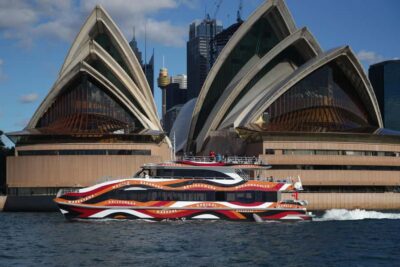
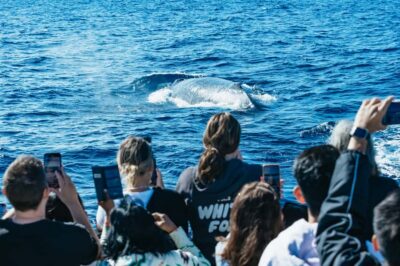
Spirit of Gold Coast 2.5-Hour Whale Watching Tour
Read our review →
Browse the lists this tour appears in