
Review · SRI LANKA WHALE WATCHING TOURS
Whale Watching Mirissa with Eagle Eye
The main draw here is simple: you go looking for blue whales, the largest animals on Earth, from a large trimaran rather than a cramped little boat. I like the stable vessel and the effort to keep a respectful distance from the animals. I also like that breakfast, water, snacks, hot drinks, and sea-sickness pills are included, so you are not left to fend for yourself before sunrise.
The weak point is shore-side organization. Pickup is offered around Mirissa, but several departures have involved late confirmations, crowded tuk-tuk transfers, or confusion about where to meet. Whale sightings are never guaranteed, either. Some days bring several whales and dolphins, while others bring only open water and a long ride.
Key points before you book
- Blue-whale search: The trip focuses on finding blue whales, with possible dolphin and turtle sightings.
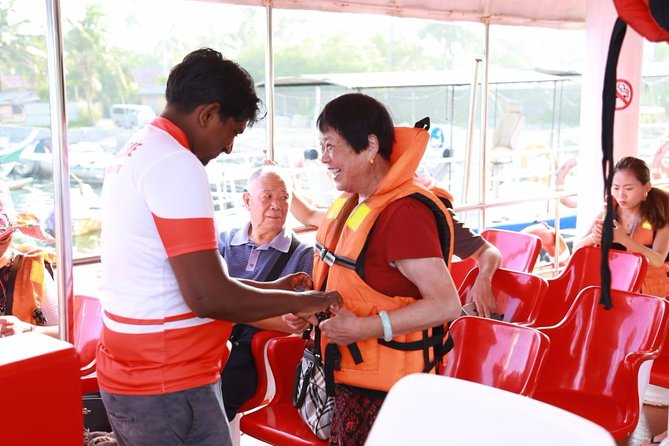
- Large trimaran: A brand-new, stable vessel offers life jackets, first-aid equipment, Wi-Fi, and more room than a small fishing boat.
- Included food: Breakfast, snacks, hot drinks, and water are provided during the morning at sea.
- Mirissa pickup: Hotel pickup and return are available around the Mirissa area, but confirm the details by WhatsApp.
- Wildlife is not guaranteed: Whale locations change, and some departures see nothing despite spending several hours at sea.
- Good cancellation terms: Cancel at least 24 hours before departure for a full refund, subject to the stated weather and minimum-booking rules.
The 7:00 am start in Mirissa
Your morning begins at 7:00 am, normally with pickup from a hotel around Mirissa. That is useful because you do not need to find a taxi before dawn, but do not treat the pickup as fully automatic. Confirm the time and meeting point directly with Eagle Eye in advance, preferably by WhatsApp.
The advertised pickup area is Mirissa and its immediate surroundings. If you are staying farther away, clarify the cost and availability before paying. Fuel prices and distance can affect transfers, and the phrase around Mirissa does not mean every hotel on the south coast is covered.
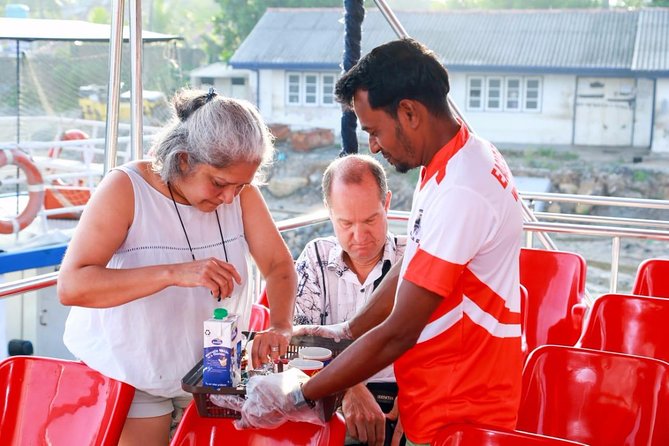
This is the part of the experience most likely to test your patience. A few departures have suffered from late pickup information or too few tuk-tuks. In one case, passengers waited in strong heat and were placed together in a cramped vehicle. Another departure involved a small fishing boat taking people out to the main vessel after a pickup mistake.
That does not erase the convenience of included transport, but it does change how you should use it. Confirm your pickup the evening before, ask for the exact time rather than relying only on the booking app, and keep enough flexibility in your morning schedule. The stated start time and the actual pickup time have not always matched.
More whale watching around the world worth comparing
- Tenerife: Eco-Yacht Whale and Dolphin Watching and Swimming
★ 4.7 · 15,619 reviews - Los Cristianos Respectful No-Chase Whale and Dolphin Safari
★ 4.6 · 12,782 reviews - Reykjavík: Whale Watching and Marine Life Cruise
★ 4.6 · 9,838 reviews
Boarding the large trimaran
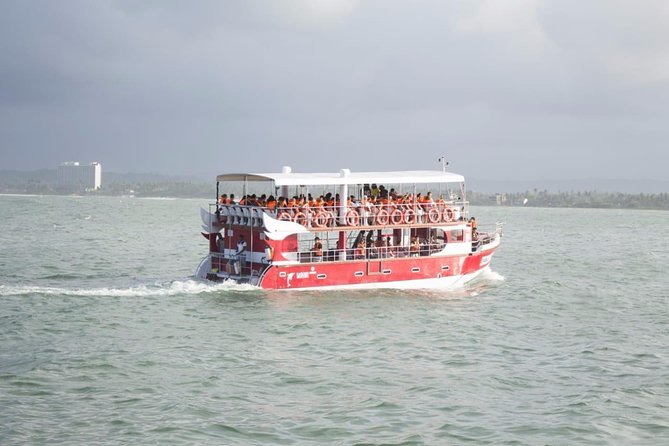
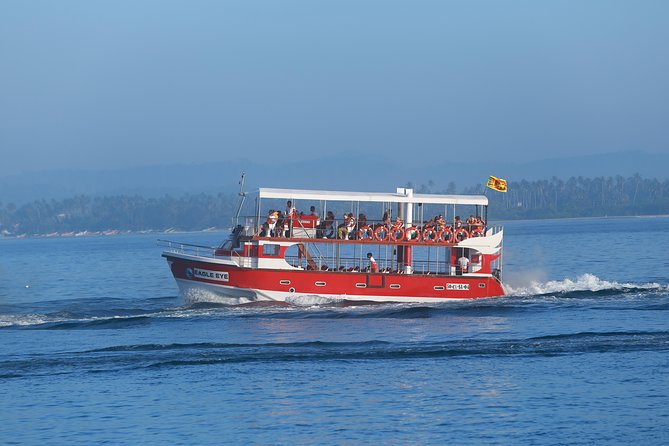
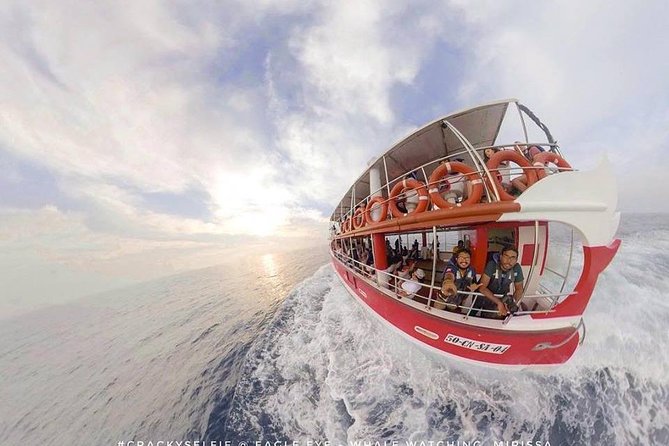
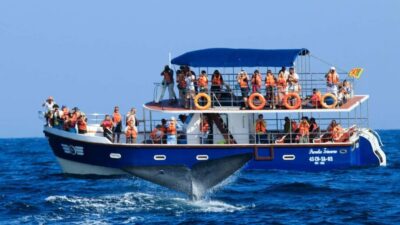
The trimaran is the strongest practical feature of this outing. Three hulls generally make for a steadier platform than a narrow single-hull boat, which matters when you are spending several hours offshore. You have more room to move around, more than one place to look for wildlife, and a better chance of finding a comfortable position if the sea begins to roll.
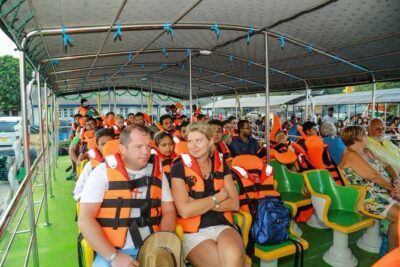
The boat is described as brand new and fully equipped with life jackets and first-aid supplies. Wi-Fi is also available, though the real value is the safety equipment and the vessel’s size. At sea, comfort and stability are not minor extras. They can determine whether you enjoy the search or spend the morning holding onto a rail.
The maximum group size is 70 people. That is not a small private cruise, so do not expect a quiet, personal trip with every passenger receiving individual attention. Still, a larger trimaran can feel less confining than a small boat packed beyond comfort.
Sea-sickness deserves serious thought. Pills are available, but one passenger still became very ill after taking one and saw almost none of the outing. If you are prone to motion sickness, ask the crew about the timing of the medication, eat lightly, stay where there is fresh air, and avoid waiting until you feel ill.
Breakfast and the first hours offshore
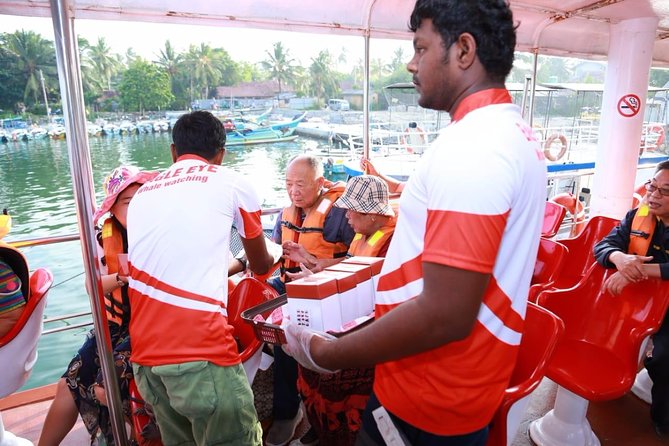
Once the boat is underway, the morning has a practical rhythm. You have breakfast, snacks, water, and hot drinks while the crew searches for signs of wildlife. That food matters more than it sounds. Early pickup, boat motion, and several hours at sea can leave you tired and uncomfortable if you have no breakfast.
The crew’s stated purpose is to protect the whales while giving you a good view. The boat is meant to maintain a respectful distance rather than rush directly toward an animal. That is important in Mirissa, where several boats may gather around the same pod.
The wildlife search is not a set route with guaranteed stops. The crew receives a briefing about current whale conditions, but locations change. A mother and calf may remain in an area for several days, then move away. A pod may surface briefly, leaving only a spout or a glimpse of a back.
Some outings have lasted about five hours on the water rather than the advertised four-hour duration. That extra time can be welcome when whales are nearby, but it can feel long when the sea is empty. If you have an afternoon train, flight, or fixed appointment, leave a generous buffer.
What you might actually see
Blue whales are the headline attraction. These animals can reach about 100 feet, or 30 meters, in length, but size alone does not make them easy to spot. A whale can surface far away, show a blow, expose part of its back, and disappear again before the boat reaches a good viewing position.
This is a search, not an aquarium presentation. You may see several whales, with one or two showing clearly, or you may see only distant spouts. One successful outing produced around 15 whales, including three that were especially prominent. Another found no whales at all. Both outcomes fit the reality of wildlife watching.
Dolphins are another possible reward. They may appear in groups and can provide more frequent action than the whales. Turtles have also been spotted. You may find that dolphins become the main wildlife event of the morning, especially if whales stay below the surface.
The crew cannot promise a sighting, and that point should shape your decision. If seeing a blue whale is the one reason you are visiting Mirissa, you are paying for the search and the boat service, not a guaranteed encounter. If you can enjoy a morning at sea even when nature refuses to cooperate, the outing makes more sense.
Same sea, a different boat:
- From Funchal: Ecological Catamaran Dolphin Whale Watching
★ 4.5 · 8,204 reviews - Juneau Wildlife Whale Watching
★ 5.0 · 7,379 reviews - Juneau Wildlife Whale Watching & Mendenhall Glacier
★ 5.0 · 6,236 reviews - Funchal: Dolphin and Whale Watching Catamaran Cruise
★ 4.5 · 5,697 reviews
Responsible whale watching and boat behavior
Eagle Eye says the crew keeps its distance from the animals. That is the right standard, especially when several boats are competing for the same sighting. Chasing a whale closely may produce a better photograph, but it places pressure on the animal and makes the encounter less responsible.
The challenge is that you cannot control the behavior of every boat in the area. When a dolphin group appears, multiple vessels may gather around it. If you see several boats moving toward a small group, you may feel less comfortable with the spectacle, even if your own crew is trying to behave carefully.
The best approach is to pay attention to how your boat moves once wildlife is found. A respectful operator should avoid cutting across an animal’s path, should not force repeated approaches, and should give the whale space to surface naturally. The stated policy is reassuring, but the experience still takes place in a busy whale-watching area.
Plastic floating at sea has also been noticed during some outings. That is not the company’s fault, but it can affect the mood and serves as a reminder that this is a working ocean, not a controlled wildlife park.
Food, Wi-Fi, and safety equipment
The included breakfast and snacks help justify part of the $70 price. You are not simply buying a seat on a boat. You are also receiving food, drinks, Mirissa-area transfers, safety gear, and a crew-led search that can last several hours.
Wi-Fi is an unusual extra on a whale boat. Do not book the trip for internet access, since the signal may vary offshore, but it can be handy for sending a message or checking in when available. The more important inclusions are life jackets, first aid, water, and hot drinks.
Service animals are allowed, and the activity is described as suitable for most people. That does not mean it will suit everyone equally. Anyone with severe motion sickness, mobility concerns, or a strong dislike of open-water travel should ask questions before booking.
The boat has a maximum capacity of 70. Families and groups may appreciate the straightforward setup, while couples seeking a quiet private encounter may prefer a smaller charter if one is available.
Is $70 fair for this morning?
At $70, Eagle Eye sits in the part of the market where you should expect a proper vessel and a packaged service, not a bargain fishing trip. The value is strongest when pickup works, breakfast is useful, and you see whales or dolphins during the search.
The price also covers the convenience of not arranging a taxi, plus the boat’s equipment and onboard supplies. A successful morning with several whales can feel worthwhile, especially when the crew works hard to locate animals and gives clear information in English.
The value drops sharply if you see no wildlife and spend much of the time dealing with poor transfers. That is not entirely avoidable in nature tourism, but the transport problems are avoidable. This is why I would judge the price on two separate points: the wildlife result, which nobody can promise, and the service organization, which the operator can improve.
If you compare the trip with a cheaper local option, ask what type of boat is used, what food is included, whether transfers are covered, and how the company handles whale encounters. The lowest price may not provide the same stability or equipment. At the same time, a higher price does not guarantee a whale.
The practical booking plan I would use
I would book only after checking the season and the crew’s current briefing. The supplied information makes clear that whale locations cannot be guaranteed, so ask what the present chances look like for your date. Do not expect a promise, just a realistic update.
I would then confirm four details:
- Your exact pickup time
- Your pickup location and return arrangement
- Whether your hotel is within the Mirissa pickup area
- The expected duration on the water
Bring sun protection, water-resistant clothing, and a phone case. The boat provides water and hot drinks, but you still want protection from sun, spray, and glare. If you use sea-sickness medicine, plan ahead rather than waiting until the boat moves.
Keep your afternoon open. The official duration is about four hours, but some outings have remained at sea for five hours. A flexible schedule makes the trip less stressful, particularly if the crew finds whales and stays longer in the area.
Who will enjoy this trip most
I would recommend it to you if your priority is a stable shared boat, a serious attempt to find blue whales, and a package that includes food and Mirissa-area pickup. It suits people who understand that wildlife watching is uncertain but still want a well-equipped vessel.
Families may appreciate the trimaran, safety equipment, and food. The boat’s size can also make the ride feel less intimidating than a small fishing craft. However, parents should consider the early start, open water, group size, and possible motion sickness.
It is less suitable if you need a perfectly timed transfer, dislike shared tours, or would be deeply disappointed by a whale-free morning. It is also a poor fit if you have a tight same-day schedule, since the time at sea may run longer than four hours.
Cancellation and final decision
You can cancel for a full refund up to 24 hours before departure. Changes made inside that window are not accepted, and there is no refund for a late cancellation. If poor weather cancels the trip, you are offered another date or a full refund. The same applies if the minimum number of participants is not reached.
So, should you book it? Yes, if you value the boat and the full package as much as the wildlife result. The trimaran, onboard supplies, safety equipment, and chance of seeing blue whales, dolphins, and turtles make $70 reasonable when the operation runs smoothly.
I would book with two conditions: confirm pickup directly and accept that nature may provide nothing. If you need a guaranteed sighting, a private boat, or faultless transport timing, choose another plan. If you can treat the morning as a well-equipped search at sea, Eagle Eye offers a sensible way to try for Mirissa’s famous blue whales.
FAQ
Where does the whale-watching trip start?
The stated start time is 7:00 am, with pickup offered from the Mirissa area. Confirm your exact pickup point and time directly with Eagle Eye before departure.
How long does the experience last?
The listed duration is approximately four hours. Some outings have spent about five hours on the water, so leave extra time afterward.
Are blue-whale sightings guaranteed?
No. Whale locations change, and the crew specifically advises you to check the briefing for your travel date. Some departures see several whales, while others see none.
What other wildlife might I see?
Possible sightings include dolphins and turtles. Dolphins may appear in groups, and whale sightings can range from distant spouts to several clear animals.
What is included in the price?
The package includes Mirissa-area pickup, breakfast, snacks, water, hot drinks, Wi-Fi, life jackets, first-aid equipment, and sea-sickness pills.
How many people can join the boat?
The maximum group size is 70 people.
Is the trip suitable for most people?
The activity states that most people can participate, and service animals are allowed. You should still consider your own ability to manage an early start and possible sea conditions.
Can I cancel for a refund?
Yes. You can receive a full refund if you cancel at least 24 hours before the start time. Poor weather or failure to meet the minimum number of participants may also lead to another date or a full refund.
New whale trips around the world
- Costa Adeje: Whale and Dolphin-Watching Boat Excursion★ 4.7 · 157 reviews
- Costa Adeje: Whale Watching Eco Experience with Hydrophone.★ 5.0 · 11 reviews
- Puerto Colon: Dolphin and Whale Watching Speedboat Tour★ 5.0 · 92 reviews
- Costa Adeje: Whale & Dolphin Watching Cruise with Swim★ 4.7 · 154 reviews
- Nanaimo: Whale Watching Semi-Covered Boat Tour★ 4.9 · 48 reviews
- Cape Town: Hermanus Whale Watching Tour★ 3.2 · 5 reviews
- Coral Bay: 3-Hour Whale Watching Experience★ 4.9 · 25 reviews
- Cape Town: Hermanus Whale Watching Shared Boat & Penguins★ 3.3 · 6 reviews
Sri Lanka Whale Watching Tours, compared.
Whales and Dolphins Watching-Luxury Super Grade Cruiser(Hotel Pick up offered)
Read our review →
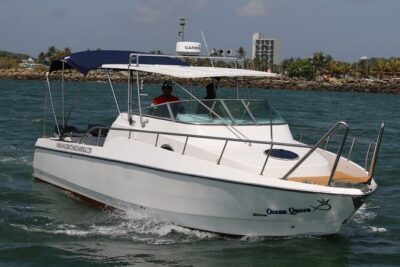
Sports Boat- Private Whale Watching Trip( free breakfast & paid pick-up)
Read our review →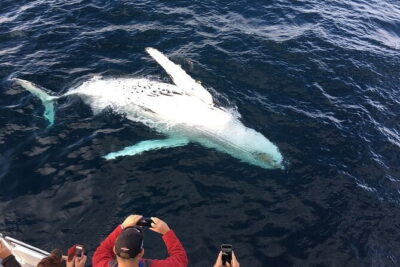
All Inclusive Mirissa Whale and Dolphin Watching Boat Ride
Read our review →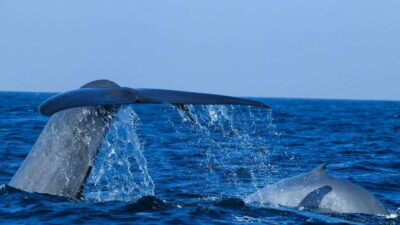
Whale & dolphin Watching Boat Tour with Breakfast
Read our review →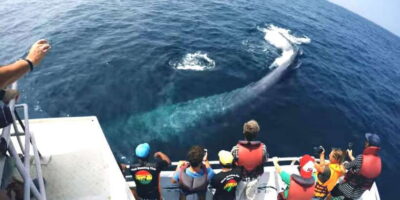
Whale & Dolphin Watching Trip with Private Transfer
Read our review →
Browse the lists this tour appears in