
Review · WHALE WATCHING CRUISES
Wake Up With the Whales Cruise on Seasmoke
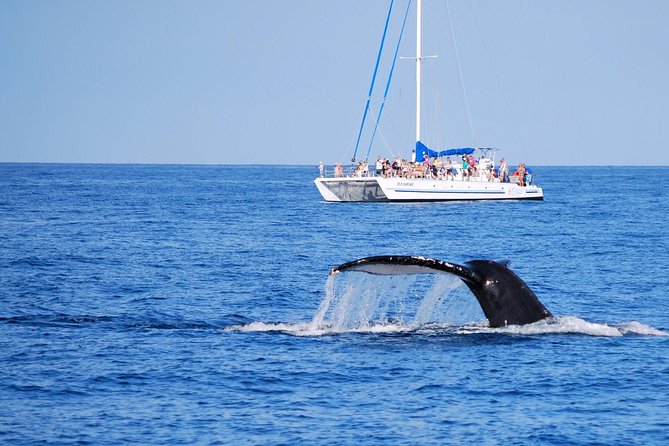
The best part of this cruise is how quickly you reach whale country. Ocean Sports leaves from ʻAnaehoʻomalu Bay, already inside the Hawaiian Islands Humpback Whale National Marine Sanctuary, so you spend less of your 90 minutes getting to open water. I especially like the early 8 a.m. departure, when the sea is often calmest, and the underwater microphone that lets you hear whales, not just scan for them.
I also like the free whale-sighting guarantee and the simple all-in price, which includes soft drinks, granola bars, beer, and wine. The main thing to watch is the meeting point: you board from the beach, using a smaller boat to reach the catamaran, and some booking apps have shown confusing directions to the bay.
What makes this whale cruise worth your morning
- Whale Sanctuary departure: You begin inside protected humpback habitat, reducing time spent motoring to the viewing area.
- Underwater hydrophone: Listen to humpback songs through a microphone lowered beneath the boat.
- Calm 8 a.m. sailing: Early morning usually brings smoother water and softer light for photographs.
- Stable catamaran: The spacious boat gives you room to move around for better views.
- Free return promise: If you do not see a humpback, you can take the trip again at no charge.
- Included refreshments: Granola bars, soft drinks, beer, and wine are included rather than sold as extras.
Starting at ʻAnaehoʻomalu Bay at 8 a.m.
Your morning begins at ʻAnaehoʻomalu Beach, near the Waikōloa Beach Resort area on the Kohala Coast. The listed address is 69-275 Waikōloa Beach Drive, but the actual check-in point can be harder to spot than a normal harbor office. ʻAnaehoʻomalu Bay does not have a standard physical address that maps neatly online.
I would not rely only on the pin in a third-party booking app. Read the confirmation email carefully, look for the operator’s directions to the closest parking area, and allow extra time to walk to the beach hut. Calling Ocean Sports before departure is sensible if anything looks unclear. A few minutes spent getting your bearings is far better than watching the boat leave without you.
The start time is early, but that is part of the appeal. Morning conditions are generally calmer than later in the day, and the light is good for spotting a whale’s blow against the water. You also finish around 9:30 a.m., leaving most of the day for breakfast, the beach, or another Big Island activity.
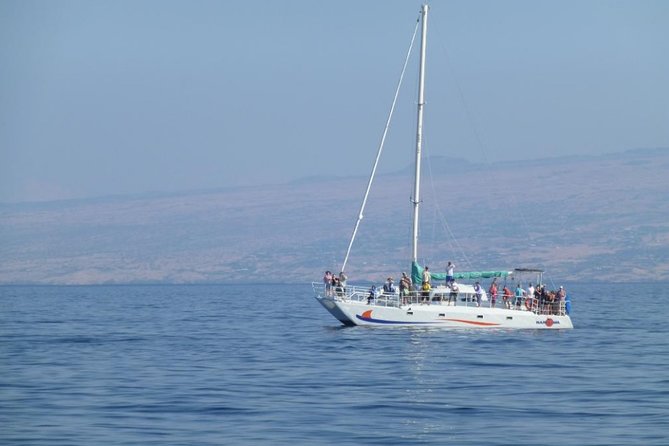
The cruise is limited to a maximum of 49 people. That is not an intimate private charter, but it is a manageable group for a catamaran of this type. The boat’s open decks let you move from side to side as sightings shift, which matters when one whale surfaces behind you and another blows off the bow.
More Whale Watching Cruises in the USA
- Kailua-Kona: Whale Watching Cruise on the Big Island
★ 4.7 · 273 reviews - Sunset Cruise with the Whales on our Sailing Catamaran
★ 5.0 · 48 reviews - Kailua Kona: Humpback Whale Watching Adventure Cruise
★ 4.5 · 33 reviews
Beach boarding and the ride to the catamaran
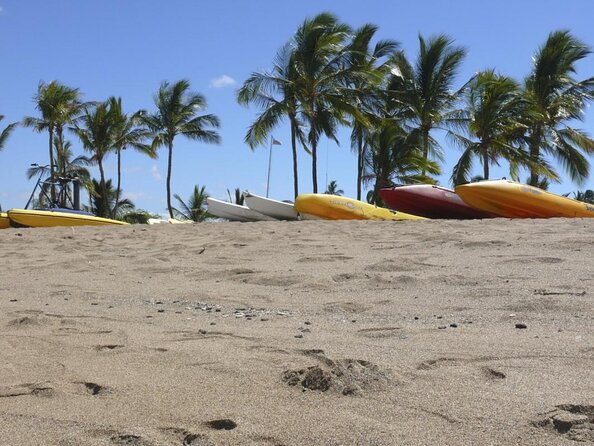
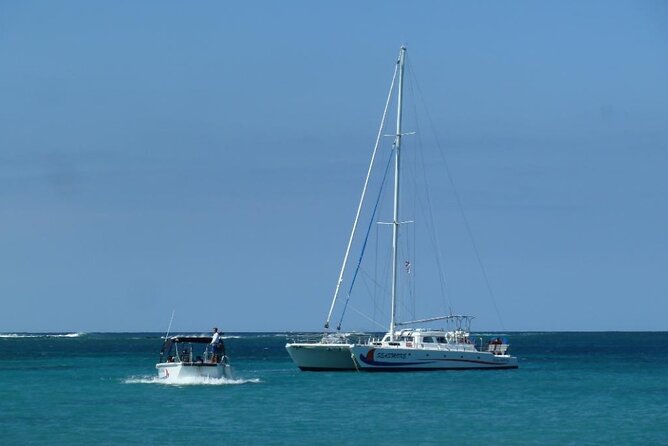
This is not a dock departure. You board a smaller vessel from the beach, then transfer to the main catamaran offshore. The process is organized and described as safe, but it does require a beach transfer and some movement between boats.
That detail matters for anyone with limited mobility. A dock departure from Kawaihae may be a better choice if stepping from a beach boat onto a catamaran would be difficult. Children must be accompanied by an adult, and most people can participate, but the beach launch is worth considering before you reserve.
Once aboard, you have a stable, spacious platform rather than a cramped sightseeing boat. The ability to walk around is one of the cruise’s practical strengths. You can look from the front, sides, or rear and find a clearer angle for photographs without having to fight for one fixed seat.
Bring a light layer even if the shore feels warm. The boat is exposed to wind and spray, and you will be standing outside for much of the trip. A hat, sunscreen, sunglasses, and a camera with a secure strap are useful. Keep expectations realistic with whale photography: a fast phone can capture a blow or tail, but a full breach remains a lucky moment rather than a scheduled event.
Why the sanctuary location saves time
Humpback whales gather around Hawaiʻi during their winter season. The Kohala Coast is part of the Hawaiian Islands Humpback Whale National Marine Sanctuary, and ʻAnaehoʻomalu Bay sits within sanctuary waters.
In practical terms, you are not starting with a long ride out from a distant harbor. The crew can begin looking for activity soon after the catamaran leaves the bay. That gives the 90-minute trip a useful balance: less transit, more time watching the sea.
Ocean Sports has run cruises along the Kohala Coast since 1981. That long local history matters because whale watching depends on reading conditions, knowing the coast, and recognizing the difference between a bird, a whitecap, and a distant blow. The crew’s marine naturalists provide live commentary rather than leaving you to guess what you are seeing.
The exact wildlife show changes from day to day. You might see a single whale surface quietly, several animals traveling together, a mother and calf, or more active behavior such as tail slaps, pectoral slaps, and breaches. Dolphins have also appeared during some outings, but humpback whales are the focus and the only sighting covered by the guarantee.
The whale-watching portion: what you actually do
The basic activity is wonderfully simple. You scan the water, listen for instructions, watch for a spout, and wait for the whale to surface again. Humpbacks spend far more time below the surface than above it, so the crew helps you understand where to look and what behavior may come next.
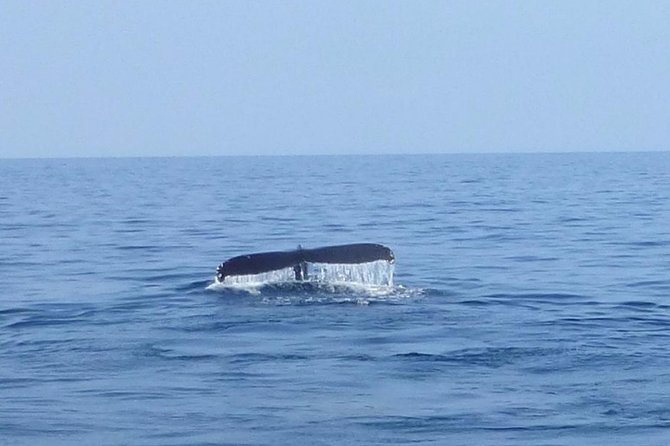
A blow is often your first clue. Then comes the back, dorsal fin, or tail fluke. If the whale is preparing for a deeper descent, the tail may rise clearly above the surface. A calf can be especially exciting because young whales often surface close to an adult, though there is no way to promise a particular type of sighting.
The crew may position the boat near active whales while respecting viewing rules and keeping a safe distance. You are there to observe, not chase. That slower rhythm is part of the experience. The best moments can last only a few seconds, so put the camera down now and then and watch the water directly.
This is also where the guides add real value. They explain humpback behavior, whale sounds, and aspects of Hawaiʻi seen from the water. Names associated with the crew have included DJ, Kai, and Dave, with captains such as Will and Sam mentioned on different sailings. Crew assignments can change, but the format remains the same: a captain handles the boat while marine staff interpret what you see.
More Whale Watching Cruises in Big Island:
- Kona Deluxe Catamaran Whale Watching Cruise
★ 4.4 · 18 reviews - Late Morning Whale Watch Cruise on Seasmoke
★ 5.0 · 7 reviews - Hilo: Humpback Whale-Watching Cruise with Snacks and Drinks
★ 4.1 · 5 reviews - Sunset Cruise with the Whales on our Power Catamaran
★ 5.0 · 2 reviews
Hearing the whales through the hydrophone
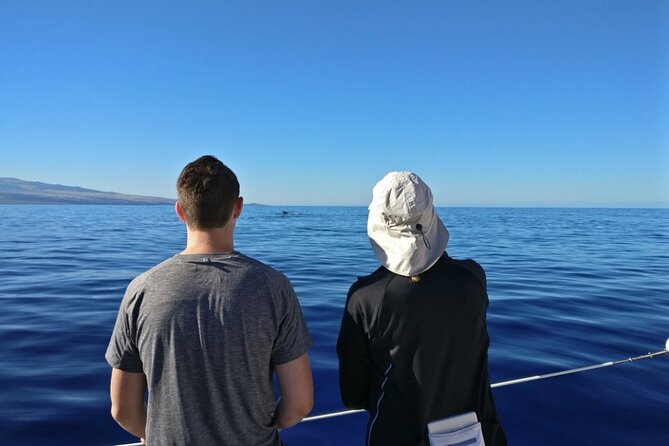
The underwater hydrophone is one of the strongest reasons to choose this cruise instead of simply looking for whales from shore. When conditions allow, the microphone is lowered into the sea so you can hear humpback songs through the onboard system.
The sound changes the experience. A whale may be out of sight, yet its low, eerie song can still connect you to what is happening below the surface. You are not just waiting for a splash. You are learning that the ocean around the boat remains active even when the surface looks empty.
The hydrophone does not guarantee constant sound. Whale songs depend on where the animals are and how they are behaving, and the boat’s position can affect what comes through. Still, it is a memorable feature and a useful reminder that whale watching is about listening as well as looking.
If you have children in your group, this can help hold their attention during quiet stretches. Adults often appreciate it just as much. The visual sightings may last a few seconds, while the sound gives you something to focus on between surfaces.
Comfort, refreshments, and the onboard mood
The catamaran is described as stable, spacious, and comfortable, with room to move around. That makes a real difference on a short cruise. You can change position, find shade or a better view, and avoid being locked into a single forward-facing seat.
Light refreshments are included. Expect crunchy granola bars, soft drinks, and other nonalcoholic choices. Beer and wine are also complimentary, making the price easier to understand because you do not need to add a drink package after boarding.
Alcohol is more useful after the main wildlife viewing or on the return portion of the cruise. At 8 a.m., many people will prefer juice, water, or a soft drink. The key point is that refreshments are part of the fare, not a surprise charge.
The crew’s tone appears to be friendly and lively without taking attention away from the whales. A good naturalist knows when to explain and when to let everyone listen and watch. On a boat this size, clear instructions also help keep the viewing organized when several whales surface in different directions.
Is $125 a good value?
The price is $125 per person. That is not the cheapest way to look for whales on the Big Island, but it is reasonable for a 90-minute boat excursion that includes a catamaran ride, marine interpretation, snacks, soft drinks, beer, wine, and a whale-sighting guarantee.
The short duration works in its favor. You are not committing half a day to reach a distant viewing area, and the sanctuary departure cuts down on wasted transit. For someone staying near Waikōloa Beach, the location is especially convenient, with the Fairmont Orchid and Waikōloa resorts nearby.
The guarantee adds practical value. If the boat does not see a humpback, you can take the cruise again for free until you do. Ocean Sports also allows you to upgrade to a Snorkel Adventure Cruise or Pau Hana Sunset Cruise by paying the difference in fares. That gives you some flexibility if whale activity is poor or your plans change.
Still, a guarantee does not make a whale appear on your preferred morning. You need enough room in your schedule to return, and the offer is less useful if you are leaving the island the same day. Book this with a little flexibility if seeing a humpback is your main goal.
Choosing the season and setting expectations
Humpback sightings are seasonal. Ocean Sports has indicated that the first whales are usually spotted around October and that whale-watching trips generally begin again around December 15. Confirm the operating dates for your visit, since the exact schedule can change.
Peak activity can bring remarkable encounters, including many whales in one outing, mothers with calves, competitive groups, tail slaps, and breaches. But even outside the busiest part of the migration, a sighting can still be worthwhile. The cruise’s guarantee is helpful because nature does not follow a timetable.
The most honest expectation is this: you will have a good boat ride with trained interpretation, but the number and behavior of whales are never fixed. Some mornings may bring repeated sightings. Others may offer one distant blow and a quieter trip. The early departure improves sea conditions, not wildlife certainty.
Who should book this cruise?
I would choose this for couples, families, and first-time whale watchers staying along the Kohala Coast. It suits anyone who wants a short morning outing rather than a full-day marine tour, and it works well for people who value explanation as much as photography.
It is also a good fit for anyone curious about whale sounds. The hydrophone gives the trip an extra layer that a simple lookout point cannot provide. Families may appreciate the snacks, open deck, and short time commitment.
I would think twice if you need step-free boarding or if you are depending on a third-party map to find the meeting point. The beach launch is the main physical consideration, and the check-in location requires careful attention. A Kawaihae departure may be better for some mobility needs, though that is a different departure option to arrange directly.
Booking and cancellation details
You can cancel for a full refund if you do so at least 24 hours before the 8 a.m. start time. Changes or cancellations inside that 24-hour window are not accepted for a refund, with cut-off times based on local time.
The cruise depends on suitable weather and a minimum number of participants. If Ocean Sports cancels for either reason, you can choose another date or experience, or receive a full refund. Confirmation is provided at booking, and it is wise to keep the operator’s contact details handy in case the meeting directions are unclear.
Should you book Wake Up With the Whales?
Yes, if you are staying near Waikōloa and want a well-priced, efficient whale cruise with strong interpretation and a real backup plan. The sanctuary departure, calm morning timing, hydrophone, movable viewing areas, and included drinks make the $125 fare easier to justify.
I would book it early, since it averages about 32 days of advance booking. Just verify the beach check-in instructions directly, arrive with time to spare, and remember that the free return promise helps only if your schedule allows a second outing. For a short Big Island morning built around humpbacks, this is a smart choice.
FAQ
Where does the Wake Up With the Whales Cruise start?
The cruise starts at ʻAnaehoʻomalu Beach, at 69-275 Waikōloa Beach Drive, Waikoloa Village, Hawaii. The activity ends back at the same meeting point.
What time does the cruise depart?
The scheduled start time is 8 a.m., and the cruise lasts approximately 1 hour and 30 minutes.
Are drinks and food included?
Yes. The fare includes light refreshments, crunchy granola bar snacks, soft drinks, beer, and wine.
What happens if no humpback whale is seen?
Ocean Sports offers a whale-sighting guarantee. If you do not see a humpback, you can take the trip again for free until you do, or upgrade to a Snorkel Adventure Cruise or Pau Hana Sunset Cruise by paying the difference in fare.
Is the boat boarding from a dock?
No. You board from the beach using a smaller boat that takes you to the catamaran. This is important to consider if someone in your group has limited mobility.
What is the cancellation policy?
You can cancel at least 24 hours before the start time for a full refund. Cancellations or changes made less than 24 hours before departure are not refunded or accepted. If poor weather or an insufficient number of participants cancels the cruise, you can choose another date or experience, or receive a full refund.
New whale trips around Big Island
- Sunset Cruise with the Whales on our Sailing Catamaran★ 5.0 · 48 reviews
- Sunset Cruise with the Whales on our Power Catamaran★ 5.0 · 2 reviews
- Whale Watching on Big island★ 4.5 · 19 reviews
- Small Group Whale Watching in Kona Hawaii★ 5.0 · 5 reviews
- Sunset Whale Watching Shared Activity★ 4.5 · 5 reviews
- Waikoloa Deluxe Whale Watch★ 4.5 · 124 reviews
- Kona’s Guaranteed Whale Watch: An Unforgettable Ocean Encounter★ 4.5 · 47 reviews
- Royal Humpback Whale Exploration★ 5.0 · 9 reviews
Whale Watching Cruises, compared.

Whale & Dolphin Eco-Cruise with Snacks & Drinks
Read our review →
Dolphin & Whale Watching Cruise with Swim Stop
Read our review →
Morro Jable: Dolphin & Whale Watching Cruise, Drinks & Swim
Read our review →
Whale & Dolphin Watching Cruise with Swim Stop
Read our review →
Browse the lists this tour appears in